


More news on this day
Delta Air Lines flight 906, an Airbus A321neo operating from Salt Lake City to Atlanta, diverted to Huntsville International Airport in Alabama in late July 2026, according to real-time flight tracking data and publicly available operational records.
Get the latest news straight to your inbox!
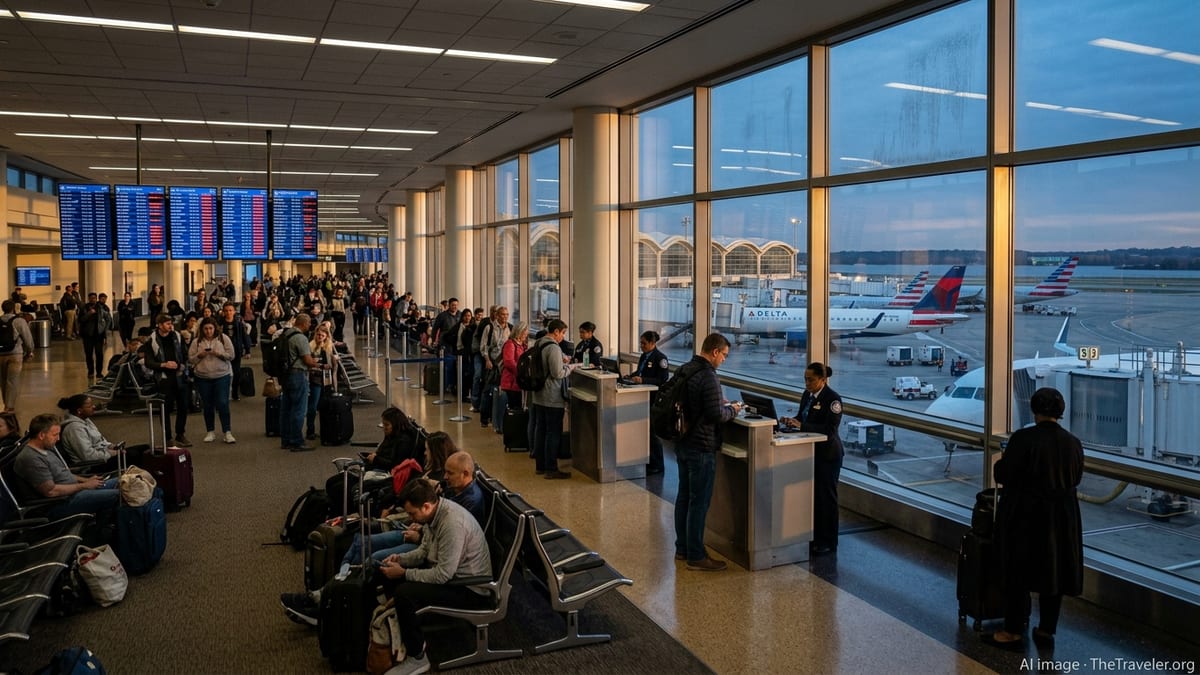
Unscheduled Stop for Salt Lake City to Atlanta Service
Flight data for Delta Air Lines service DL906 shows that the regularly scheduled evening flight from Salt Lake City International Airport to Hartsfield-Jackson Atlanta International Airport was disrupted on July 27, 2026, resulting in a diversion to Huntsville International Airport in northern Alabama. The aircraft involved was an Airbus A321-271NX, part of Delta’s Airbus A321neo fleet, which typically operates high-demand domestic routes.
Tracking information indicates that the flight departed Salt Lake City later than its scheduled time and did not continue directly to Atlanta. Instead, it landed at Huntsville, where the aircraft and passengers waited before continuing to their intended hub. Later records list a separate DL906 sector operating from Huntsville to Atlanta during the early hours, suggesting that the diversion extended the journey into the next day.
Publicly available schedules show DL906 as a standard Salt Lake City to Atlanta pairing operated by an Airbus A321neo, reinforcing that Huntsville was not a planned stop for this route. The irregular routing stands out in the flight history for this service, which otherwise shows nonstop operations between Utah and Georgia.
The date of the diversion coincided with a stretch of unsettled summer weather impacting southeastern hubs, as reflected in broader operational advisories and disruption patterns across multiple carriers. While specific operational details for DL906 have not been publicly itemized, the pattern matches previous days when capacity constraints and weather around Atlanta led to rerouting of traffic to regional airports.
Huntsville’s Expanding Role as a Diversion Airport
Huntsville International Airport, which primarily serves northern Alabama and parts of Tennessee, has been appearing more frequently in accounts of unscheduled diversions involving large mainline aircraft. Previous instances described in public forums and local coverage have highlighted occasions when multiple Delta flights routed through Huntsville during periods of thunderstorms and congestion in Atlanta, turning HSV into a temporary overflow point for diverted traffic.
The airport’s infrastructure and relatively uncongested airspace make it a practical alternate for flights that need to pause en route to Atlanta, particularly when that hub is temporarily constrained by weather or airfield operations. Discussions among travelers and aviation watchers have noted that Huntsville can receive a mix of narrowbody and widebody aircraft during such events, even though the airport’s day-to-day passenger schedule is comparatively modest.
Reports and community observations from earlier in 2025 and 2026 described waves of diversions into Huntsville during storm systems affecting the Southeast, including evenings when several Delta flights from different origins arrived unexpectedly. In those cases, passengers frequently remained onboard while refueling or waited in the terminal for clearance to continue to their final destinations.
The diversion of DL906 from Salt Lake City fits into this broader pattern, underscoring how regional airports in the southeastern United States support irregular operations for major hubs. For travelers, Huntsville has increasingly become a recognizable name in social media posts and anecdotal accounts when large numbers of flights are rerouted away from Atlanta.
Operational Context and Fleet Details
The Airbus A321-271NX, often referred to as the Airbus A321neo in Delta’s materials, is central to the airline’s domestic strategy, particularly on trunk routes linking its larger hubs. Company communications in early 2026 have emphasized the role of the A321neo in fleet renewal, noting its improved fuel efficiency and cabin features compared with older narrowbody types.
Delta’s published information on its Salt Lake City operations highlights the Utah hub as a key connecting point in the western United States, with a high proportion of departures operated by next-generation aircraft such as the A220, A321neo and A350. The use of an A321neo on DL906 is consistent with this strategy, pairing the western hub at Salt Lake City with Delta’s primary southeastern hub in Atlanta.
Irregular operations such as diversions are typically managed within the framework of Delta’s publicly available policies, which outline the options available to customers when flights are rerouted, delayed or canceled. These documents describe how passengers may be rebooked, and under what circumstances ground transportation or overnight accommodations might be provided, especially when flights arrive late in the evening or early morning at unscheduled airports.
While individual incident reports for specific flights are often limited to timetable updates and tracking data, patterns across multiple events show that Delta commonly uses a network of alternates, including airports like Huntsville, Columbus and others, when weather or congestion disrupts flows into major hubs such as Atlanta or Detroit.
Weather and Congestion Pressures in the Southeast
Summer 2026 has seen several periods of active weather over the southeastern United States, reflected in national air traffic advisories and carrier-specific operational updates. Atlanta’s status as one of the world’s busiest hubs means that even brief thunderstorms or staffing constraints can cascade into delays, ground stops and diversions for flights across the domestic network.
Publicly available advisories and recovery updates from Delta earlier in the year have highlighted how storm systems and severe weather near Atlanta and other East Coast hubs can rapidly reduce arrival and departure capacity. During such events, flights en route may be held in holding patterns, rerouted, or diverted to alternate airports to wait out the disruption, depending on their fuel reserves, gate availability and broader traffic management decisions.
Independent flight tracking and user reports for various Delta flights over the past year illustrate how diversions have become a recurring feature of complex storm days, with some services returning to their origin airports and others diverting to intermediate points for refueling or crew changes. In this context, the diversion of DL906 to Huntsville aligns with a documented pattern of rerouting in response to adverse weather or ground delays at major hubs.
For passengers, such disruptions can mean extended travel times and unexpected stops, but they also reflect safety-driven decisions and resource management within highly constrained airspace. The choice of Huntsville as an alternate for a Salt Lake City to Atlanta service highlights how Delta and other carriers balance proximity to the destination with available runway length, terminal capacity and regional weather conditions.
What the Diversion Means for Travelers
For customers aboard DL906, the diversion to Huntsville likely resulted in a longer travel day, with arrival into Atlanta pushed into the early hours after a secondary leg from Alabama. Data showing separate Salt Lake City to Huntsville and Huntsville to Atlanta segments under the DL906 flight number indicates that the journey was completed after a significant delay compared with the scheduled arrival.
Travelers experiencing diversions such as this typically rely on mobile apps, airport displays and gate announcements for updates about new departure times, gate changes and onward connections. Public information from Delta encourages customers to monitor their flight status digitally during disruptive events, as schedules can shift quickly once weather or air traffic constraints begin to ease.
Although Huntsville is not normally advertised as a connecting point between Salt Lake City and Atlanta, the airport’s growing role in weather-related rerouting suggests that more travelers may encounter it as an unplanned stop, particularly during peak summer thunderstorm periods. For some passengers, diversions can also provide an accidental introduction to smaller regional airports that seldom appear in standard itinerary planning.
As the 2026 summer travel season continues and storm patterns persist across parts of the Southeast, additional diversions into airports like Huntsville remain possible whenever conditions in Atlanta or surrounding airspace become temporarily restrictive. For Delta’s network and its Airbus A321neo operations, flights such as DL906 illustrate how even well-established hub-to-hub routes can be reshaped in real time by weather and operational constraints.