


More news on this day
Rail safety investigators are examining a fatal collision at a level crossing where preliminary findings indicate that warning systems failed to activate before a train struck a road vehicle, intensifying scrutiny of how such crossings are designed, monitored and maintained.
Get the latest news straight to your inbox!
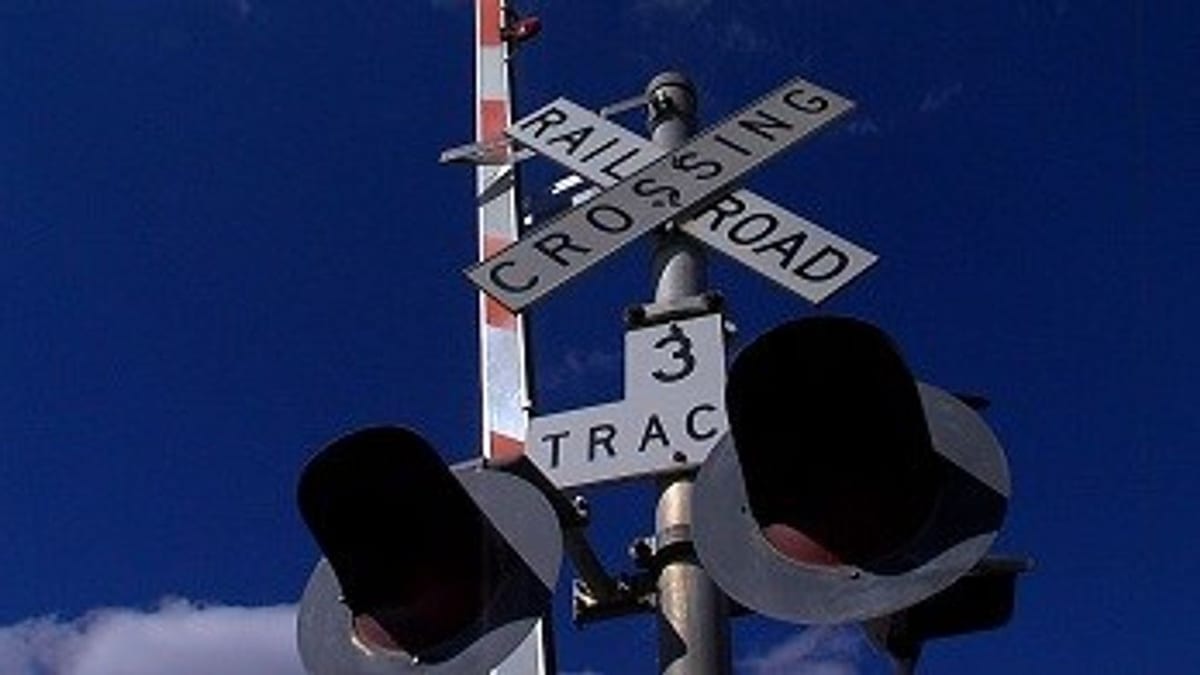
Early Findings Point to Silent Warning System
Initial information from publicly available investigative updates indicates that the road-rail crossing’s active protection did not operate as intended in the moments before the crash. Lights, bells and barriers that should have warned the driver of an approaching train reportedly remained inactive, leaving the crossing apparently clear despite the imminent arrival of a service travelling at line speed.
According to technical summaries released by rail accident investigators, event recorder data from the train suggests that the locomotive was operating normally and that the driver received no system alerts indicating a problem at the crossing. Attention has therefore focused on the interface between the signalling system, trackside sensors and the level crossing equipment responsible for triggering visual and audible warnings.
Specialist teams have been collecting and analysing circuit diagrams, maintenance logs and fault histories for the installation, looking for evidence of intermittent failures, wiring issues or configuration errors that could explain why the crossing remained open to road traffic. Investigators are expected to run simulations of train movements through the section to test whether the equipment would have been given sufficient time to activate under different conditions.
While the full investigation is ongoing, the early focus on a non-operational warning system distinguishes this crash from many historical level crossing tragedies where human error by a driver or pedestrian has been identified as the primary factor.
Sequence of Events Under Detailed Review
Reconstruction of the final minutes before the impact is now central to the inquiry. Based on timetable information and data downloaded from on-board recorders, the train appears to have been running close to its scheduled time, travelling at a speed that would not have allowed the driver to stop once the crossing came into view if no prior warning was displayed.
Dashcam footage from nearby vehicles, along with fixed CCTV where available, is being examined to determine how long the road vehicle was on or near the tracks before the collision. Investigators are comparing these visual records with the point at which warning lights and barriers should have begun operating under design standards for automatic level crossings.
Witness accounts reported in local media describe the barriers as remaining upright and the crossing lights unlit as the vehicle entered the tracks. Those accounts are being assessed against physical evidence at the scene, including impact marks on the barrier mechanisms and signal housings, to establish whether the system attempted to operate at the last moment or remained inactive throughout.
The inquiry is also reviewing radio and control-centre communications to understand whether any alarms, fault indications or unusual readings were registered in the minutes leading up to the crash, and if so, how they were interpreted and acted upon.
Maintenance History and Remote Monitoring Scrutinised
The condition and maintenance regime of the crossing are emerging as key lines of inquiry. Publicly available documentation from similar investigations in recent years has highlighted that warning systems can suffer from sporadic faults that are difficult to reproduce, especially when triggered only under specific traffic or environmental conditions.
Investigators are therefore checking whether the crossing had a recent history of reported anomalies, such as false activations, prolonged closures or intermittent failures, and whether any such reports led to temporary operating restrictions. They are also examining whether maintenance interventions changed component settings, wiring or software parameters shortly before the crash.
Many modern level crossings are equipped with remote health monitoring that transmits alarms to signalling centres when critical components malfunction. The investigation is expected to review archived monitoring data to see if any alerts were generated but not escalated, filtered out as nuisance alarms, or misinterpreted by staff overseeing large geographical areas.
Questions are also being raised about whether inspection intervals and testing procedures for this type of equipment are sufficient to catch rare but high-consequence failures, particularly at crossings on busy passenger or freight routes.
Systemic Safety Questions Beyond a Single Crossing
While this incident centres on one location, rail safety specialists note that failures of crossing protection systems have featured in previous crashes in several countries. Past investigative reports have documented cases where lights and barriers activated too late, failed to operate at all, or remained down for extended periods, encouraging risky behaviour by frustrated drivers.
Comparisons with these earlier cases are informing current questions about design redundancy, such as whether a single point of failure can leave a crossing effectively unprotected and whether rail signals should automatically default to a stop aspect when a connected crossing cannot be verified as operating correctly.
Advocacy groups for rail safety are renewing calls for higher standards at busy crossings, including the wider use of obstacle detection technology that can identify vehicles stopped on the tracks and feed that information directly into signalling systems. Proposals also include more conservative risk assessments that treat any evidence of irregular warning behaviour as grounds for urgent review.
The latest crash is likely to feature prominently in ongoing policy debates over how far rail infrastructure managers and regulators should go in upgrading or closing high-risk crossings, especially where the cost of full grade separation competes with other transport investment priorities.
Impact on Local Communities and Next Steps in the Inquiry
The collision has had a profound effect on the community surrounding the crossing, with residents and regular users of the route expressing concern about the apparent lack of warning on the day of the crash. Local news coverage reflects a mixture of grief and frustration, as people question whether earlier action on reported concerns or near-misses could have prevented the tragedy.
Rail operators have implemented temporary measures at the site, which may include speed restrictions, additional signage or manual supervision, while investigators continue their work. Such interim steps are intended to reduce risk without pre-judging the final conclusions of the inquiry.
Once the investigation is complete, a detailed report is expected to set out the immediate causes and underlying contributing factors, along with recommendations aimed at preventing a recurrence. These recommendations commonly address technical changes to equipment, adjustments to operating rules, enhancements to staff training and improvements in how data on faults and incidents is collected and acted upon.
For travellers, the incident is a stark reminder that the interface between road and rail remains one of the most complex points in the transport network. The findings of this investigation are likely to shape not only local responses but also wider thinking about how warning technology, human behaviour and regulatory oversight must interact to keep people safe at level crossings.