


More news on this day
As of late August 2026, the UAE’s four largest passenger airlines are operating near or at full scale again, with Emirates, Etihad, flydubai and Air Arabia all adjusting networks, schedules and capacity in response to strong demand and a more stable regional environment.
Get the latest news straight to your inbox!
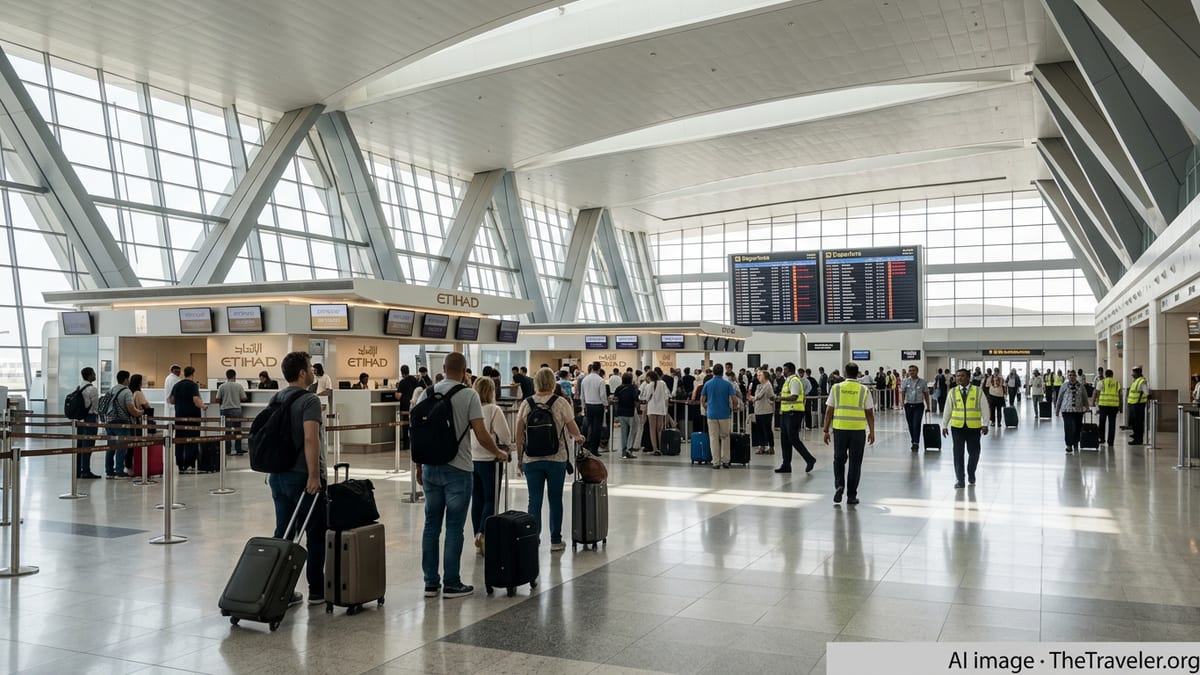
Emirates Nears Full Network Restoration in 2026
Publicly available information shows that Emirates has come close to a full restoration of its global network in 2026, following several years of phased recovery and periodic regional disruptions. In May 2026 the airline reported that it had reconnected 96 percent of its pre-crisis global network through Dubai, underlining a near-complete return of scheduled passenger and cargo services.
Financial disclosures for the 2025–26 year indicate that Emirates continued to grow capacity during the period, with total passenger and cargo capacity rising to about 60.6 billion available tonne-kilometres, an increase of 1 percent year on year. The measured pace of growth, focused on additional frequencies and selective route launches rather than aggressive expansion, suggests that the carrier is prioritising operational reliability and yield management over rapid network proliferation.
Group-level reporting for 2025–26 also highlights a record annual profit and strong cash reserves, which provide a buffer as the airline navigates lingering operational constraints such as airspace restrictions and infrastructure bottlenecks at certain airports. For travellers, this financial position supports continued investment in fleet, digital tools and disruption management, factors that contribute directly to perceived flight reliability and schedule resilience.
Emirates’ current schedule patterns indicate robust connectivity across Europe, Asia, Africa and the Americas, with capacity shifts primarily aligned to seasonal demand and macroeconomic trends. While specific day-to-day flight statuses remain subject to change, the overarching operational picture in 2026 is one of high utilisation, broad network coverage and an emphasis on maintaining consistent frequencies on core trunk routes.
Etihad Scales Back Then Rebuilds Its Schedule
Etihad Airways has taken a more dynamic approach to 2026 operations, temporarily curbing capacity during the first quarter and then progressively rebuilding its schedule from March onward. According to published coverage and airline statements, Etihad resumed a limited commercial flight programme from 6 March 2026, focusing initially on a defined list of key destinations from Abu Dhabi before gradually restoring additional routes.
Network and schedule data compiled for the northern summer 2026 season show that Etihad has been incrementally adding back services as conditions allow. Industry route trackers report frequency increases on a range of routes, including Brussels and other European cities, together with expanded seasonal flying to leisure markets such as Krakow, Palma de Mallorca and Zanzibar later in 2026. These adjustments reflect both pent-up demand and the airline’s strategy to strengthen Abu Dhabi’s role as a connecting hub.
Etihad has also been active in developing new long-haul connections in the North American market. Earlier announcements detailed the introduction of flights to Charlotte in North Carolina from May 2026 and the subsequent ramp-up to daily service, alongside a step-up to double-daily operations on the Abu Dhabi–Chicago route from mid-2026. These moves point to renewed confidence in transatlantic demand and a push to deepen partnerships that feed traffic beyond the US gateway cities.
Fleet data available in 2026 show Etihad operating a mix of Airbus A320 family jets and widebodies including Airbus A350s, Airbus A380s, Boeing 777-300ERs and Boeing 787 Dreamliners, supporting a dual focus on point-to-point regional flying and long-haul connectivity. While passengers have faced intermittent schedule changes and sold-out periods on some routes as the network is rebalanced, the overall trajectory through 2026 is one of gradual expansion from a temporarily reduced baseline.
flydubai Maintains Reduced but Expanding Schedule
Dubai-based low-cost carrier flydubai is operating with what it describes as a reduced schedule across its network in 2026, while still serving more than 100 destinations. Operational information on its public channels states that the airline continues to monitor regional conditions and adjust frequencies, with some routes subject to schedule optimisation and temporary timing changes.
Despite the note of reduced operations, recent corporate reporting points to a carrier that has been growing steadily. A 2025 performance overview from one of its key shareholders shows that flydubai launched 12 new routes during that year, operated a fleet of 97 Boeing 737 aircraft serving around 140 destinations in 58 countries, and benefited from an average fleet age of approximately 5.5 years. This combination of network breadth and relatively modern aircraft underpins its ability to redeploy capacity quickly as demand returns.
Route information published in 2026 indicates ongoing network diversification, including new services coming online in the second half of the year and tweaks at existing stations. For example, operational notices confirm changes such as the relocation of Riyadh operations to a different terminal at King Khalid International Airport from February 2026, illustrating the incremental adjustments that can affect the passenger experience even when overall capacity levels remain broadly stable.
For travellers planning itineraries that rely on flydubai’s connections from Dubai to secondary cities in Europe, the Middle East, Central Asia and East Africa, the key operational takeaway in 2026 is that most of the network is active, but schedules are subject to tighter calibration than before. Prospective passengers are widely encouraged in public information to check flight times close to departure and to monitor any airport or terminal changes that may affect transfers.
Air Arabia Pushes Further Network Growth From Multiple Hubs
Low-cost operator Air Arabia enters the second half of 2026 from a position of strength following its record financial performance in 2025. In February 2026 the airline reported its strongest-ever annual results, citing a net profit before tax of around AED 1.8 billion for 2025 and describing solid growth in revenue, passenger numbers and network size across the year.
According to its public disclosures, Air Arabia added 30 new routes across its six operating hubs during 2025, reinforcing its presence from bases in Sharjah, Abu Dhabi, Ras Al Khaimah, Casablanca, Alexandria and other locations. Previous fleet updates show that the group operates an all-Airbus A320-family fleet, including both A320 and A321LR aircraft, with additional deliveries scheduled to support continued growth through 2026.
The carrier’s strategy hinges on disciplined expansion into underserved markets across the Middle East, North Africa, South Asia and parts of Europe, supported by tight cost control and high aircraft utilisation. Investor-relations material updated in August 2026 reiterates this focus, highlighting a combination of route optimisation and capacity increases designed to maintain load factors while giving price-sensitive travellers more non-stop options.
Operationally, this means Air Arabia’s 2026 schedule is characterised by a large number of short and medium-haul flights linking secondary and tertiary cities to its hubs. While the airline has not detailed every route change for the current year in a single public document, the pattern of growth seen in 2025 combined with its strong financial position suggests that network breadth and frequency are expanding rather than contracting.
What UAE Passengers Can Expect Across the Four Carriers
Taken together, the 2026 operational picture for Emirates, Etihad, flydubai and Air Arabia suggests that the UAE’s aviation sector has largely transitioned from recovery to optimisation. Emirates is operating close to its full global network with incremental capacity growth, Etihad is rebuilding from a temporarily reduced schedule while pushing into new long-haul markets, flydubai is refining a wide low-cost network even as it notes a reduced timetable, and Air Arabia is pressing ahead with multi-hub expansion backed by record profits.
For passengers, the practical implications are mixed but mostly positive. Connectivity from Dubai, Abu Dhabi and Sharjah to key global and regional destinations is broadly robust, with multiple daily options on many trunk routes and a growing choice of point-to-point links to secondary cities. At the same time, ongoing schedule adjustments, seasonal variations and occasional regional constraints mean that individual flight statuses can still change at relatively short notice.
Public guidance from the airlines and airport operators continues to emphasise the importance of checking bookings frequently, ensuring contact details are up to date and allowing extra time at hub airports where terminal changes or congestion may affect processing times. With record financial results at several of the carriers and continued fleet investments, the overall capacity outlook for the remainder of 2026 remains one of gradual expansion, but travellers are likely to see that growth expressed through carefully targeted frequency increases and new routes rather than wholesale shifts in flight volumes.
Emirates Group 2025–26 results and operational overview
Etihad Airways 2026 network and schedule updates