


More news on this day
Summer travelers across the eastern United States faced a fresh wave of flight chaos this weekend as nearly 3,200 delays and more than 300 cancellations were recorded at major hubs in Atlanta, New York City, and Philadelphia, according to airline tracking data and aviation authorities.
Get the latest news straight to your inbox!
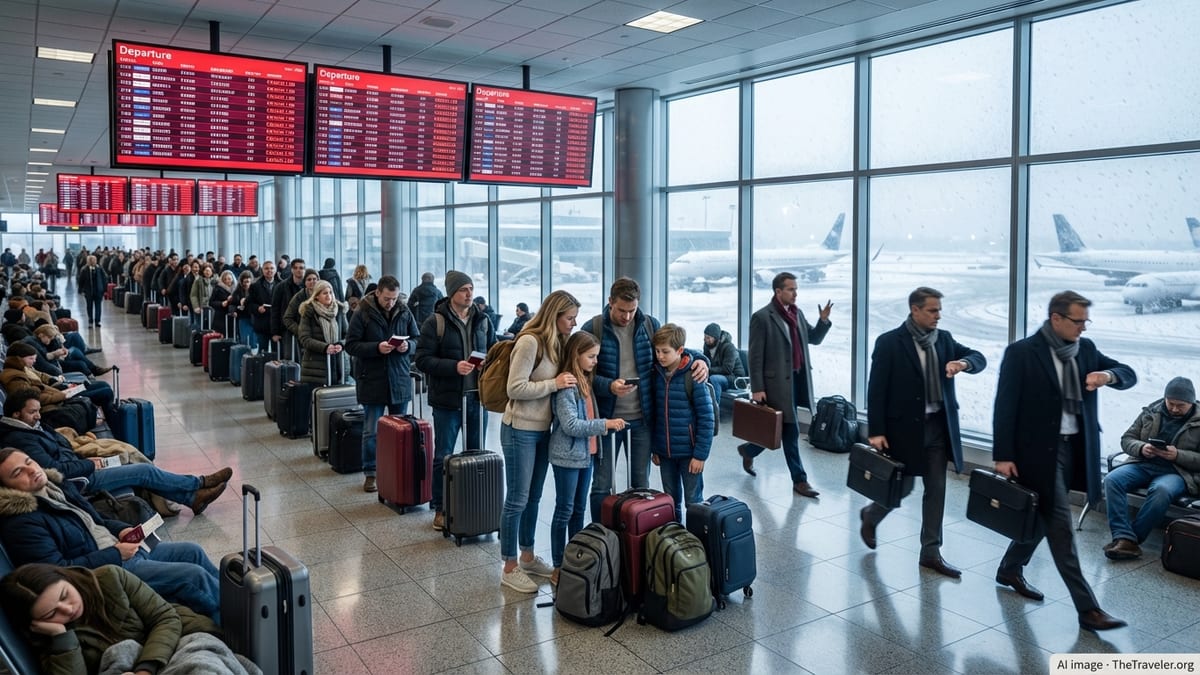
Storm Systems Snarl East Coast Flight Schedules
Air travel disruption intensified heading into the final weekend of August, with volatile storm systems sweeping across the Mid-Atlantic and Northeast and disrupting tightly packed flight schedules. The Federal Aviation Administration’s daily air traffic report for Friday, August 28, highlighted thunderstorms around Atlanta, New York–area airports, and the Washington corridor as a key driver of expected delays, particularly at Hartsfield-Jackson Atlanta International Airport (ATL), New York’s LaGuardia (LGA), John F. Kennedy (JFK), Newark Liberty (EWR), and airports in Florida and Texas.
These weather patterns collided with one of the busiest periods of the late-summer travel season, creating ripple effects that extended into Saturday, August 29, and Sunday, August 30. Airline tracking services and live departure boards showed traffic slowing as thunderstorms forced ground stops, airborne holding, and reduced arrival rates, especially during the afternoon and evening peaks.
Publicly available data indicate that the combination of convective weather and saturated schedules translated into thousands of delayed flights and hundreds of cancellations systemwide, with Atlanta, the New York City metro airports, and Philadelphia International Airport (PHL) forming the core of the disruption. Flights on key trunk routes between these hubs were particularly vulnerable when storms moved directly across their paths.
Atlanta, New York, and Philadelphia Hubs Bear the Brunt
Atlanta, the world’s busiest passenger hub by movements, saw extensive schedule pressure as storms triggered traffic management initiatives and departure slowdowns. Live departure boards for Atlanta on August 29 and 30 showed multiple banks of early-morning and mid-day departures to Northeast destinations, including New York and Philadelphia, subject to rolling delays or schedule changes as thunderstorms developed along key flight corridors.
In New York, LaGuardia’s real-time status page for August 30 reported general departure and arrival delays of up to 15 minutes, but tracking services and recent traveler reports suggest conditions fluctuated significantly during storm cells earlier in the weekend. When low clouds and lightning passed over the region, arrival rates were reduced and some flights were held at their departure airports, resulting in late-arriving aircraft and missed crew connections later in the day.
Philadelphia also experienced knock-on impacts, with its public flight information pages on August 29 listing a mix of on-time and delayed arrivals and departures as weather and flow-control decisions elsewhere in the system reverberated through East Coast schedules. Aircraft and crews shuttling between PHL, Atlanta, and the New York airports proved especially sensitive to any weather-related slowdown, with delays on one leg echoing across subsequent rotations.
Trunk Routes Show How Delays Cascade Across the Network
Individual route histories on busy business and leisure corridors illustrate how a single weather event can propagate across multiple days. On the Atlanta–New York LaGuardia route, for example, recent flight-tracking data show a Delta-operated service experiencing an extreme delay of more than seven hours on one late-August day, followed by more modest schedule deviations on surrounding days as the airline worked to rebalance aircraft and crews.
Similarly, flights between Atlanta and Philadelphia were repeatedly listed under schedule-watch by tracking platforms during the same period, with services operating both ways between ATL and PHL across August 26 to 30. While many of these flights ultimately departed and arrived near schedule, some services encountered late departures, extended taxi times, or arrival-hold procedures when congestion spiked following thunderstorms.
These examples underscore how an initial weather-triggered constraint at one hub can cascade through an airline’s broader network. When an early rotation arrives late into a hub, the aircraft and its crew may miss their next scheduled departure window, forcing airlines to adjust or consolidate later flights. Over the course of a busy day, such disruptions accumulate and can lead to cancellations when there are no spare aircraft or crew available.
Travel Waivers and Passenger Options During the Disruption
As storms built across the New York and Mid-Atlantic region on August 26 and 27, at least one major carrier introduced a travel waiver covering affected airports including New York–area hubs and Philadelphia for trips scheduled between August 26 and 31. Publicly posted information about this waiver indicated that customers were permitted to change to alternative flights within the specified window without change fees, provided they rebooked on the same airline.
Such waivers are a common tool carriers use during large-scale weather events to give travelers more flexibility and to smooth demand at the most congested times of day. By encouraging some passengers to shift to earlier or later flights, airlines can ease pressure on constrained departure or arrival banks, reducing the risk of further cancellations as storms evolve.
However, passenger experiences shared on travel forums in recent weeks highlight the uneven impact of these policies on individual journeys. Some travelers reported escalating delays followed by last-minute cancellations or overnight disruptions when weather and crew availability combined to push flights outside allowable duty-time limits. Others described spending many hours in smaller spoke airports while waiting for clearance to fly into heavily affected hubs such as the New York metro airports.
What Late-Summer Travelers Can Expect Next
With the Atlantic hurricane season and late-summer thunderstorm period still active, aviation planners anticipate continued volatility in East Coast operations into early September. The FAA’s daily air traffic reports emphasize that forecast-based planning offers only a “reasonable expectation” rather than a guarantee, and that actual delays can vary widely as storm cells shift or intensify throughout the day.
For travelers using major hubs such as Atlanta, New York, and Philadelphia during this period, industry guidance consistently stresses close monitoring of flight status and flexibility in rebooking options when severe weather appears in the forecast. Checking both airline apps and federal air traffic resources can provide a clearer picture of whether disruptions are localized or part of a broader system-wide slowdown.
Analysts note that even on days when official airport status pages report only minor average delays, localized thunderstorms can temporarily halt operations at a single runway or terminal, forcing airlines to compress or re-sequence departures and arrivals. When combined with high late-summer demand, these short interruptions may still produce sizable totals of delayed and canceled flights by day’s end, particularly along the heavily traveled corridor linking Atlanta, New York City, and Philadelphia.
FAA LaGuardia Airport real-time status