


More news on this day
The U.S. government has renewed warnings for Americans in the Middle East, urging heightened vigilance and contingency planning as regional tensions rise and the possibility of sudden escalation increases, including travel disruptions with little notice.
Get the latest news straight to your inbox!
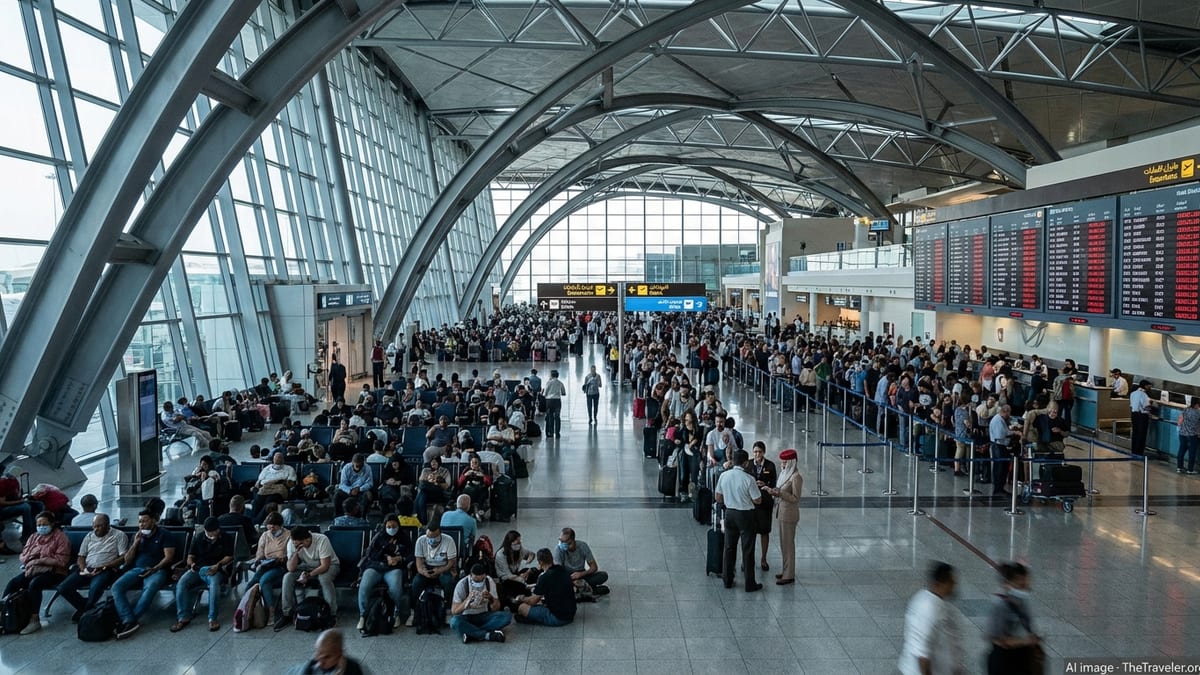
What The New U.S. Warning Says
Publicly available U.S. Department of State guidance has emphasized that the security environment connected to Middle East tensions remains complex and can shift quickly, including the potential for “unforeseen escalation.” The advisory language also highlights a practical travel concern: disruptions to commercial flights, including cancellations and periodic airspace closures.
The current U.S. messaging encourages Americans already in the region to monitor local conditions closely and be prepared for transportation changes. It also urges those outside the region to reconsider nonessential travel that involves transiting major Middle East hubs, where schedules can be affected by security developments and aviation restrictions.
Separate U.S. consular guidance for the Middle East directs travelers to rely on location-specific security alerts from nearby U.S. embassies and consulates and to use tools such as the Smart Traveler Enrollment Program for updates. It also provides U.S. contact numbers for consular assistance, an indicator that the alert is designed to help travelers act quickly if conditions change.
Why This Warning Is Surfacing Now
Published regional coverage in recent days has pointed to intensifying hostilities involving Yemen’s Iran-backed Houthi movement and Saudi Arabia, including attempted strikes that Saudi Arabia has publicly described as targeting the capital, Riyadh, and other locations. Reporting has also described attempted attacks on civilian infrastructure, widening concerns about spillover effects across air routes and cross-border movement.
The renewed travel caution is also landing against the backdrop of a broader U.S.-Iran confrontation that, according to multiple outlets, has already produced ripple effects across the region. Recent reporting has discussed U.S. military and diplomatic footprint concerns, as well as the way fast-moving developments can lead to sudden changes in security posture for travelers and expats.
For travelers, the key takeaway is that risk is not limited to a single country. The State Department’s global alert language has warned that U.S. diplomatic facilities and other U.S.-linked sites can be targeted outside the immediate conflict zone, a factor that can affect itineraries well beyond the Gulf and the Red Sea corridor.
Air Travel Risk: Cancellations, Reroutes, And Restrictions
The travel impact is often felt first in aviation. The U.S. alert messaging has specifically called out the possibility of flight cancellations and periodic airspace closures, and has advised travelers to confirm that flights remain scheduled directly with air carriers and to monitor airport and airline operations.
In addition to airline decisions, U.S. aviation rules can also shape routing. The Federal Aviation Administration maintains a list of flight prohibitions, restrictions, and notices, including Special Federal Aviation Regulations that can apply to specific Flight Information Regions. Country travel advisories, such as the U.S. advisory for Iraq, explicitly flag aviation safety concerns and reference FAA restrictions and notices tied to risks to civil aviation operating within or near certain airspace.
Commercial reality can differ by carrier and route on any given day. Industry operational updates and airline advisories referenced in recent published coverage have described ongoing schedule adjustments, suspensions on some routes, and the possibility of short-notice delays even when airports remain open. For passengers, that can translate into missed connections through major hubs, longer routings, and tighter rebooking availability during peak disruption periods.
What It Means For Popular Transit Hubs And Itineraries
Even travelers not stopping in the conflict zone can be affected because the Middle East functions as a major crossroads for journeys between North America, Europe, Asia, and Africa. Itineraries that route through Gulf hubs may be exposed to knock-on effects from airspace restrictions, heightened security postures, and shifting airline network plans.
Travelers heading to or through the region should expect that conditions can change quickly. Embassy alerts and country-specific advisories can shift without much lead time, and airline schedule changes may occur faster than third-party booking platforms can update. That is one reason U.S. guidance stresses checking directly with the carrier operating the flight.
It also matters where you will be within a country. U.S. travel advisory language for Saudi Arabia, for example, has warned of risks linked to drone and missile threats and notes that some locations, including areas near energy infrastructure and certain facilities, may pose elevated concerns. Travelers with fixed plans, such as events, tours, or religious travel, may want to build in flexibility to adjust lodging and ground transportation if local conditions or flight options shift.
Practical Steps U.S. Travelers Can Take Right Now
The State Department’s guidance focuses on preparedness rather than prediction. That includes enrolling in STEP for destination-specific alerts, monitoring U.S. embassy and consulate security messages, and keeping an eye on local news and airport operations if traveling in or through the region.
For those already abroad, travel planning becomes more resilient when key documents and contingencies are in place: confirming passport validity, keeping digital and paper copies of essential documents, maintaining access to funds, and having a plan if flights are delayed for days rather than hours. Travelers relying on tight connections or multiple tickets across carriers may want to verify rebooking rules before departure.
Finally, travelers should pay attention to the advisory levels for specific countries in their itinerary, including places where U.S. assistance can be limited. Some destinations in the region carry “Do not travel” warnings, and the State Department repeatedly notes that the U.S. government may have limited ability to provide emergency services in certain locations, a reality that can shape decisions about nonessential travel while the alert remains in effect.