


More news on this day
Passengers flying from the United Arab Emirates today are being urged to check the latest status of their Emirates, Etihad, Air Arabia and flydubai services, as the four main UAE carriers continue to adjust schedules and cancel flights in response to disrupted regional airspace and shifting security assessments.
Get the latest news straight to your inbox!
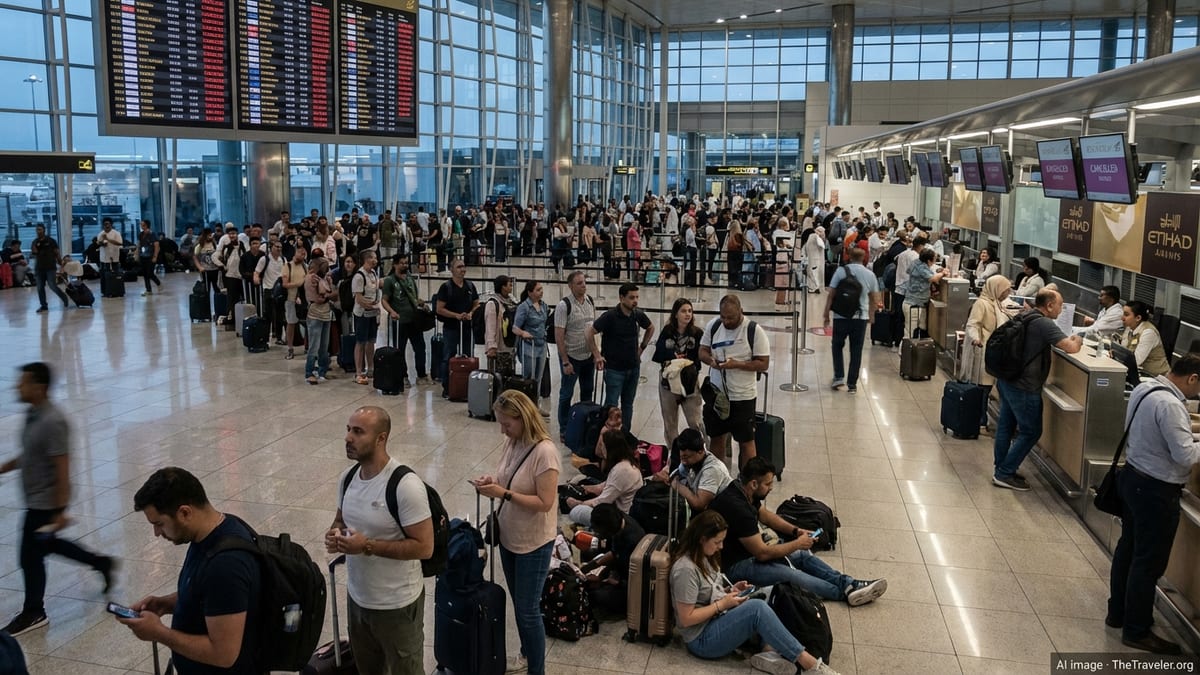
Regional airspace constraints still reshaping UAE flight schedules
Publicly available information from aviation trackers and travel advisories indicates that airspace closures linked to the ongoing regional crisis have not fully normalized, even though UAE airports are open and handling traffic again. Airspace restrictions across parts of the Gulf have forced airlines to reroute or temporarily suspend some services, particularly those crossing sensitive corridors.
Industry summaries show that Dubai International and Abu Dhabi’s main hub experienced large-scale disruption in March 2026, when airspace closures led to thousands of cancellations and the temporary suspension of operations by major Middle Eastern carriers. While schedules have since been rebuilt, operations remain more vulnerable than usual to late changes, with some routes operating on reduced frequencies and others appearing intermittently in booking systems.
For passengers departing the UAE today, this means that a confirmed booking does not completely eliminate the risk of disruption. Airlines may still pull flights at short notice, consolidate services or change routings to comply with evolving airspace restrictions, particularly on routes to Europe and parts of Asia.
Travel risk bulletins continue to advise passengers not to travel to the airport until they have verified that their specific flight is operating as scheduled. Online flight-status tools and airport departure boards are being updated more frequently than usual, reflecting the fluid operational environment.
Emirates: reduced frequencies and rolling cancellations on select routes
Emirates, the largest carrier based in Dubai, has restored a significant portion of its long-haul network since the worst of the March shutdown, but it is still making tactical cuts. Recent customer reports and schedule snapshots show that while high-demand trunk routes to major hubs in Europe, North America and Asia are largely operating, some secondary city pairs continue to see last-minute cancellations or alternating-day service.
According to published coverage charting recovery patterns at Gulf carriers, Emirates has been ramping up faster than many regional competitors, moving from a near-total halt in early March to a steadily increasing number of daily movements by early August. Even so, online discussions from the past few days point to individual Emirates flights that have disappeared from timetables or have stopped operating consistently after briefly resuming, underlining that the recovery is uneven across the network.
For travelers flying Emirates out of Dubai today, the immediate priority is to confirm the exact flight number and check its history over the past week on real-time tracking platforms. Routes that have operated reliably for several consecutive days are viewed as lower risk than services that show gaps or irregular patterns since the resumption of flights through UAE airspace.
Passengers are also being advised to leave extra time for connections in Dubai, as some long-haul itineraries are being re-accommodated onto alternative services when upstream segments are disrupted. Rebooking options remain available, but high demand on core routes is limiting flexibility on popular travel dates.
Etihad: gradually rebuilding from Abu Dhabi with targeted cuts
Etihad Airways, based in Abu Dhabi, has followed a similar trajectory, initially suspending departures during the March airspace closure and then resuming a limited commercial schedule in stages. Travel updates and community reports indicate that Etihad has prioritized key “spoke” destinations where it can sustain consistent traffic, while trimming or pausing less viable links.
Recent commentary from travelers transiting Abu Dhabi suggests that Etihad’s main long-haul corridors to Europe, North America and the Indian subcontinent are functioning with relatively fewer cancellations than during the height of the disruption. However, there are still cases where individual flights from secondary origin cities have been withdrawn from operation, even when onward connections from Abu Dhabi remain available.
Passengers holding Etihad tickets today are being urged to monitor whether their specific departure city has seen continuous service over the last two weeks. In several instances, travelers have been rebooked from smaller North American or European gateways onto more stable departure points, such as Chicago or major Western European hubs, to ensure that they can reach Abu Dhabi and connect onward.
Travel forums also highlight that some partner-operated segments within Etihad itineraries carry a higher risk of cancellation than Etihad-operated flights themselves. Where possible, travelers are encouraged to choose itineraries that keep as many legs as possible on Etihad metal, as these appear to be receiving priority in the carrier’s recovery strategy.
Air Arabia and flydubai: regional networks facing ongoing short-notice changes
Low-cost carriers Air Arabia and flydubai, which focus heavily on short- and medium-haul routes around the Middle East, North Africa and South Asia, are also still adjusting their schedules as regional airspace and demand patterns change. Public updates earlier in the year indicated that both airlines temporarily suspended a large number of flights during the initial airspace closure, then reintroduced a limited set of services for repatriation and essential travel.
More recent traveler accounts from May and June describe flydubai delaying or canceling certain flights to South Asia by several days, even while other services on similar sectors continued. Air Arabia, which operates from Sharjah and Abu Dhabi as well as other regional bases, has been running a narrower network than before the crisis, with some flights going ahead as scheduled and others reportedly being pulled close to departure.
For passengers booked on Air Arabia or flydubai today, the pattern appears highly route-specific. Services linking the UAE to major cities with strong point-to-point demand are more likely to operate, while thinner routes or those crossing complex airspace are more exposed to short-notice cancellations or substantial schedule changes.
Because these carriers often serve travelers with time-sensitive needs, such as expiring visas or onward connections on separate tickets, consumer groups are emphasizing the importance of contingency planning. This can include having alternative dates in mind, understanding refund or credit rules in advance, and considering flexible accommodation arrangements at origin and destination.
What UAE-bound and departing passengers should do before leaving home
Given the continued volatility across the region, travel experts and advisory notices are placing strong emphasis on pre-flight checks. The first recommendation for anyone flying from the UAE today is to confirm flight status directly through the airline’s official channels shortly before departing for the airport, rather than relying solely on older booking confirmations or third-party emails.
Real-time flight tracking services and airport departure boards provide additional reassurance that an aircraft is scheduled and expected to operate. Passengers connecting through Dubai, Abu Dhabi or Sharjah should pay particular attention to minimum connection times and any hints of rolling delays that could affect onward segments, especially on separate tickets.
Travel guidance issued since March also stresses the importance of understanding rebooking and refund policies before disruption occurs. Many carriers have temporarily relaxed certain change fees or offered broader rebooking windows during the crisis period, but specific rules can vary by fare type, route and date, and may tighten again as operations normalize.
For travelers with critical time constraints, such as fixed event dates or visa deadlines, the current environment may warrant additional buffer days or alternative routing strategies, even when flights appear to be operating normally. Although Emirates, Etihad, Air Arabia and flydubai have all made significant progress in restoring their networks, the lingering impact of regional airspace constraints means that cancellations and last-minute schedule shifts remain a realistic possibility for anyone flying from the UAE today.