


More news on this day
Flights between the United Arab Emirates and the Gulf states of Bahrain and Kuwait have been disrupted after Etihad Airways and Air Arabia cancelled services on select routes, according to recent travel advisories and industry updates.
Get the latest news straight to your inbox!
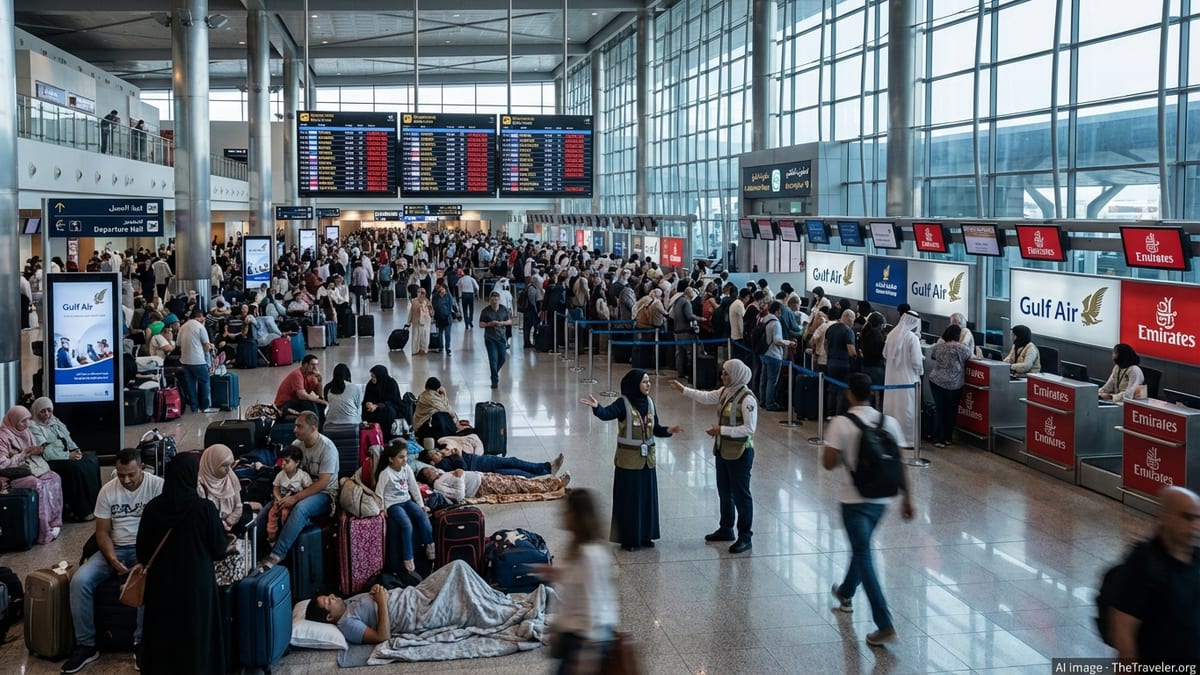
Carriers halt services on key Gulf routes
Recent operational updates from UAE-based airlines indicate that Etihad Airways and Air Arabia have cancelled a number of flights linking Abu Dhabi and Sharjah with Bahrain and Kuwait. Publicly available schedule data and trade bulletins show that services to both Gulf states have been suspended or significantly reduced on safety and operational grounds, with some cancellations flagged at short notice.
Etihad has already been operating under an extended disruption policy for parts of the Middle East in 2026, reflecting what airline documentation terms a wider "Middle East situation" affecting regional schedules and routing options. Those internal advisories outline a framework of waivers and rebooking options for passengers whose itineraries touch several Gulf points, including Bahrain and Kuwait, when services are withdrawn.
Separate service summaries tracking airline operations in the region list Bahrain and Kuwait among destinations where flights from certain international carriers have been suspended because of elevated risk levels and shifting airspace restrictions. The effect has been to intermittently sever some of the shortest intra-Gulf links that business and leisure travelers in the UAE have traditionally relied on for same-day returns.
While the exact number of affected rotations varies by day, evidence from reservation systems and traveler reports suggests a pattern of cancellations concentrated on select daily frequencies, rather than a blanket suspension of all operations. This has nevertheless created enough uncertainty that many passengers are rethinking near-term travel plans to Manama and Kuwait City.
Regional security concerns reshape airspace and schedules
The latest cancellations come against the backdrop of a wider reconfiguration of air routes across the northern Gulf. Open-source flight-tracking data and aviation forums show many airlines adjusting flight paths to keep a greater distance from sensitive airspace near Bahrain and Kuwait, while some have withdrawn passenger services altogether on risk-management grounds.
Advisory documents circulated within the travel trade in March and June 2026 describe a fluid security environment affecting multiple Middle Eastern destinations, with carriers revising schedules when threat assessments change. These summaries cite Bahrain and Kuwait as locations where service suspensions or delays have been introduced alongside broader warnings covering states across the region.
A number of recent traveler accounts point to cancellations and rescheduling on Gulf routes over the past two months, including services into Abu Dhabi and onward connections operated by Etihad. In some cases, passengers reported seeing flights to Kuwait and Bahrain removed from booking systems for extended periods, underscoring how quickly operational plans can shift when security conditions tighten.
Industry analysts note that even when airports in affected countries remain open, airlines may still choose to divert or cancel flights if risk profiles exceed internal thresholds. That appears to be the case on selected links from the UAE to its northern Gulf neighbors, where carriers are now weighing the commercial importance of short-haul services against evolving operational considerations.
Passenger options: refunds, rebooking and alternative routings
In line with industry practice during regional disruptions, Etihad has outlined options for customers booked on cancelled flights, including full refunds and rebooking onto alternative services once operations resume. Documentation circulated to travel agents earlier in the year lays out flexible change policies for tickets issued before the most recent escalation, allowing itinerary changes without standard penalties under specified conditions.
Advisories summarizing the position of multiple airlines in the Middle East also highlight the use of what they describe as a "reroute table," enabling affected passengers to be moved to other destinations within the same country or to nearby gateways where services remain available. For travelers heading to Bahrain or Kuwait from the UAE, this can sometimes involve connecting via third-country hubs, adding time and complexity to what would normally be a straightforward hop across the Gulf.
Reports from consumer forums indicate that some passengers have opted to cancel UAE–Bahrain and UAE–Kuwait trips entirely, while others are switching to carriers or routings that have maintained limited operations. However, conflicting information from call centers and booking platforms has occasionally left travelers uncertain about their rights, particularly in cases where outbound legs are cancelled but return journeys technically remain scheduled.
Travel agents advise checking booking status regularly in the days before departure and retaining documentation of any airline communications regarding cancellations or schedule changes. In practice, the availability of refunds or free changes often depends on when the ticket was issued, the type of fare purchased and whether the airline has formally designated the disruption as eligible for special handling.
Knock-on effects for UAE travel and tourism
The suspension of select flights to Bahrain and Kuwait is having a noticeable impact on short-haul corporate and government travel flows that typically support weekday demand from Abu Dhabi, Dubai and Sharjah. Many companies in the UAE rely on rapid turnarounds to offices and partners in Manama and Kuwait City, and are now having to rearrange meetings or shift to virtual formats while the situation evolves.
Tourism patterns are also being affected, particularly among residents who regularly combine UAE stays with brief leisure visits to neighboring Gulf capitals. With direct links reduced, some travelers are postponing regional breaks or refocusing on domestic destinations within the Emirates, from Abu Dhabi and Dubai city stays to beach and desert resorts in Ras Al Khaimah and Fujairah.
Hotel operators in Bahrain and Kuwait are monitoring booking trends closely, as short-notice flight cancellations can translate into late scrapped stays or no-shows. At the same time, hotels in the UAE report relatively solid demand from travelers who have decided to remain in-country rather than pursue multi-stop Gulf itineraries that may be vulnerable to disruption.
Travel management companies say the episode underscores the importance of dynamic risk assessments for itineraries in volatile regions, as well as clear communication between airlines, agents and end customers. With airspace patterns and schedules still subject to change, many are advising clients to build extra flexibility into upcoming trips within the Gulf, including refundable fares and contingency time between key appointments.
What travelers between UAE, Bahrain and Kuwait should watch
For residents and visitors planning to fly between the UAE and its northern Gulf neighbors, the most immediate priority is to verify whether their specific flight is operating. Schedules for Etihad and Air Arabia services to Bahrain and Kuwait remain under review, and travelers are encouraged by industry guidance to monitor booking tools for last-minute changes rather than relying on earlier itineraries issued weeks in advance.
Travel advisories from several governments currently urge heightened caution for journeys to parts of the wider region, a factor that airlines incorporate into their own operational decisions. While such notices do not automatically translate into airport closures, they can influence carriers to consolidate or withdraw services when risk indicators rise.
Given the potential for further disruption, industry observers recommend that travelers maintain flexible arrangements, including accommodation that allows changes without heavy penalties and ground transport that can be rescheduled at short notice. Those with time-sensitive commitments in Bahrain or Kuwait may wish to explore backup routings via alternative hubs, keeping in mind that capacity on such options can be limited when primary nonstop flights are pulled.
With the summer travel period under way, the situation on UAE–Bahrain and UAE–Kuwait routes remains fluid. Published coverage and operational summaries suggest that airlines will continue to adjust services in response to developments, meaning passengers should remain alert to new updates as departure dates approach.