


More news on this day
Travelers on Delta Flight DAL490 faced an unexpected change of plans when the service diverted to Washington Dulles International Airport, underscoring how quickly operational and weather conditions can reshape air travel across the busy U.S. East Coast corridor.
Get the latest news straight to your inbox!
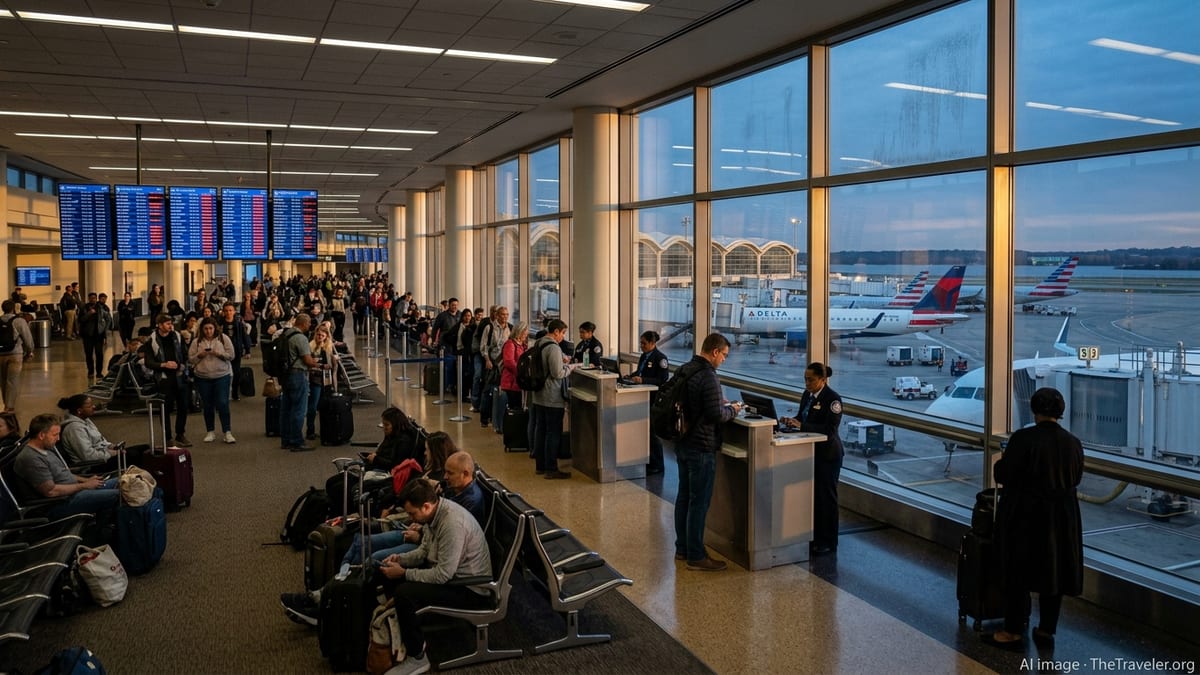
Unexpected Diversion on a Busy East Coast Corridor
Delta Flight DAL490 was operating as a regular domestic service when it diverted to Washington Dulles International Airport rather than continuing to its planned destination. Publicly available flight-tracking data and schedule information indicate that the aircraft altered course partway through its journey, adding another example to a season of irregular operations for major U.S. carriers.
The diversion routed passengers into Washington Dulles, a key international gateway for the Washington metropolitan area that frequently receives inbound flights during disruptions at other regional airports. While diversions are a standard safety and operational tool for airlines, they often create ripple effects for travelers relying on tight connections or time-sensitive itineraries.
The incident unfolded against a backdrop of heavy summer traffic and intermittent thunderstorms along the East Coast, conditions that can trigger rapid changes in routing. In such situations, crews and operations teams typically seek the nearest suitable airport that offers adequate runway length, ground handling, and available gates to manage unplanned arrivals.
While specific operational details for DAL490 were not immediately detailed in airline statements at the time of writing, available information about similar events suggests that a combination of weather impacts, traffic management initiatives, and local airspace constraints likely informed the decision to divert.
Why Washington Dulles Often Receives Diversions
Washington Dulles International Airport is frequently used as a diversion field for flights bound to or from other airports in the Mid-Atlantic and Northeast. The airport’s long runways, extensive ramp space, and around-the-clock operating capability make it an attractive option when smaller or more space-constrained airports encounter ground stops, low visibility, or capacity limitations.
Dulles also plays a complementary role to Washington Reagan National Airport and Baltimore/Washington International, which can both be affected by airspace restrictions, security-related limitations, or special events. When this occurs, inbound flights that are already airborne may be redirected to Dulles so they can land, refuel if needed, and either continue to their original destination when conditions improve or deplane passengers to be rebooked on alternative services.
For passengers on DAL490, the diversion to Dulles likely provided a relatively straightforward path to rebooking. The airport offers multiple domestic and international connections on major carriers, allowing airlines to reposition travelers onto later departures or different routings, even when the original destination remains under weather or traffic restrictions.
Such diversions can still be disruptive, particularly for those with time-sensitive plans or long onward journeys. However, industry practice tends to favor getting passengers safely on the ground at a well-equipped hub, after which airlines can address onward travel and accommodations.
Passenger Experience and Operational Knock-On Effects
When an unplanned diversion occurs, travelers commonly face a series of logistical steps, from waiting on the tarmac for a gate to become available to navigating rebooking lines and customer-service channels. For DAL490, passengers arriving unexpectedly at Dulles would likely have seen their original arrival times and connection plans change, with some needing overnight stays or major reroutes.
Published coverage of recent summer disruptions across multiple airlines points to a broader pattern, in which a single storm system or temporary ground stop can cause cascading delays and aircraft repositioning. Crew duty-time limits, aircraft maintenance windows, and gate availability all factor into how quickly an airline can recover from an interruption such as a diversion.
In many cases, carriers encourage affected passengers to use mobile apps and self-service tools to secure new itineraries. This approach helps ease pressure on in-person service desks at hub airports like Dulles, where multiple diverted flights can arrive within a short time frame, leading to long lines and crowded terminals.
Travelers on DAL490 would also have been subject to each country’s and airline’s existing rules on compensation, meal vouchers, and hotel arrangements, which can vary depending on whether the cause of the disruption is categorized as weather-related or operational. Publicly available consumer guidance notes that weather-related disruptions are often treated differently from controllable airline issues when it comes to reimbursements.
Summer Weather, Airspace Constraints, and Travel Planning
The diversion of DAL490 fits into a wider picture of summer flying in North America, where convective storms, high traffic volumes, and occasional airspace closures create a complex operating environment. Aviation observers have documented a rise in delays, cancellations, and reroutes during peak periods, particularly around major holidays and large-scale public events.
Reports on recent East Coast travel patterns show that even short-lived thunderstorm lines can force airlines to temporarily halt arrivals and departures, quickly backing up schedules. When airports such as Washington Reagan National or New York’s major hubs pause operations, inbound flights already in the air must either hold, slow down, or divert to nearby airports like Dulles that still have capacity.
Travel industry guidance increasingly encourages passengers to factor this volatility into their planning. Early-morning departures, longer connection windows, and flexible hotel and ground transport bookings are commonly suggested strategies to reduce the impact of last-minute disruptions, especially during peak thunderstorm season from late spring through early autumn.
For frequent travelers, the DAL490 diversion serves as another reminder that real-time monitoring through airline apps and flight-tracking platforms can be valuable. These tools often provide earlier visibility into changing gate assignments, revised departure times, and rebooking options, allowing passengers to react more quickly when conditions shift.
What the Diversion Signals for Future Operations
While diversions such as that of Delta Flight DAL490 are a routine part of airline operations, a cluster of such events in a short period can prompt carriers and airports to examine their planning assumptions. Industry analysts note that as traffic approaches or exceeds pre-pandemic levels, the margin for error in complex airspace regions becomes narrower, making proactive management of storms and congestion increasingly important.
Public data on airline performance has already shown carriers adjusting schedules, adding buffer time, and in some cases reducing frequencies on specific routes to improve reliability. Diversions to airports like Dulles may continue to play a role as pressure valves during irregular operations, particularly when high-demand airports face capacity constraints.
Travelers watching developments around DAL490 and similar incidents may see airlines place greater emphasis on communication, with more detailed status updates and clearer guidance on what passengers can expect in the event of a diversion. Industry observers suggest that the combination of robust digital tools and well-resourced hub airports can help minimize the disruption that such events inevitably bring.
For now, the DAL490 diversion stands as another illustration of how dynamic modern air travel has become. Even on routine routes, a combination of weather, traffic, and operational factors can quickly reroute an aircraft and its passengers, placing Washington Dulles and other major hubs at the center of efforts to keep the system moving.