


More news on this day
Passengers flying from the UAE today are being advised to closely monitor their flight status, as Emirates, Etihad Airways, flydubai and Air Arabia continue to adjust schedules on selected routes amid ongoing regional tensions and changing operational conditions.
Get the latest news straight to your inbox!
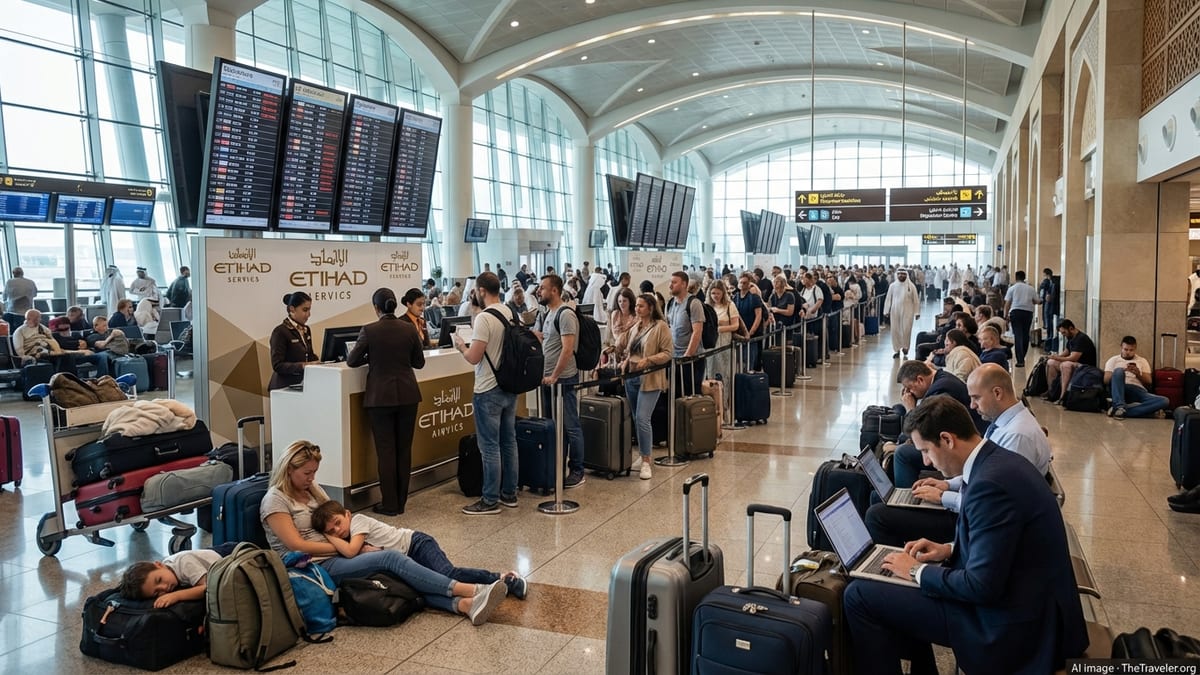
Regional tensions keep pressure on Gulf flight schedules
Publicly available information indicates that UAE-based carriers are still managing knock-on effects from recent instability in parts of the Gulf, particularly on services linking Dubai, Abu Dhabi and Sharjah with Bahrain and Kuwait. Coverage of the disruption shows that flight changes first escalated in mid-August and have continued in phases, with some services restored and others remaining suspended or subject to late adjustments.
Reports from aviation and passenger-rights platforms describe a patchwork of operations in which many flights are running as scheduled while a subset is delayed or cancelled, often at short notice. On 18 and 19 August 2026, for example, summaries of airline operations highlighted disrupted services between the UAE, Bahrain, Kuwait and select Saudi Arabian cities, even as the majority of other regional and long-haul routes continued normally.
By late August, Gulf-focused news outlets noted that several international airlines had still not fully returned to UAE routes, citing the broader security backdrop. For travellers departing today, that context means schedules can remain fluid during the day, especially on short-haul Gulf sectors where airlines have been quickest to trim or retime frequencies.
Emirates and Etihad: targeted cuts, mostly normal operations
Emirates is largely operating its global network from Dubai International, but regional coverage shows that selected services into Bahrain and Kuwait have been under review in recent weeks. On 18 August, industry summaries noted that Emirates restored one of its three daily Dubai–Bahrain flights while keeping two others cancelled, illustrating how the airline has been gradually rebuilding capacity while retaining flexibility on routes most affected by security considerations.
Etihad Airways, based in Abu Dhabi, has followed a similar pattern of selective adjustments. Passenger-rights analysis from mid-August detailed that Etihad was continuing core services to Bahrain and Kuwait while cancelling several Abu Dhabi–Bahrain rotations through at least 21 August. Later reporting in July and August pointed to extended cancellations on some Kuwait flights as the airline fine-tuned its schedule around demand, safety assessments and available airspace.
For travellers flying on Emirates or Etihad today, this recent history suggests that long-haul routes and many regional destinations are likely to be unaffected, while some Gulf services may still be operating on revised timings or reduced frequencies. Both carriers have publicly promoted flexible booking options around affected city pairs in recent weeks, signalling an ongoing willingness to rebook or reroute passengers whose flights are impacted.
flydubai and Air Arabia: Gulf routes under close review
Low-cost operators flydubai and Air Arabia have also been reshaping parts of their Gulf networks as conditions evolve. Mid-August disruption roundups highlighted that flydubai was generally maintaining its schedules across Bahrain, Kuwait and Saudi Arabia but advising passengers to reconfirm departures, with at least one Dubai–Jeddah flight reported delayed during that period.
Air Arabia, which operates from Sharjah as well as Abu Dhabi, has seen more visible changes on some short-haul services. Passenger-rights coverage from 18 August listed fresh cancellations on Abu Dhabi–Kuwait, Sharjah–Kuwait and Sharjah–Bahrain routes, naming multiple flights that were dropped from the schedule in response to regional risk assessments. These adjustments came on top of other tactical changes introduced earlier in the summer.
Live departure boards for Sharjah International Airport today show a mostly standard pattern of Air Arabia operations, with overnight and early-morning departures to Alexandria, Kathmandu, Malé and Doha still scheduled or estimated on time. At the same time, flight-tracking data for specific Air Arabia services between Sharjah and London Gatwick in recent days show repeated delays of up to two hours, underlining how even unaffected routes can experience punctuality issues as airlines and airports absorb wider operational strain.
What today’s travellers from the UAE should expect
While the underlying cause of disruption remains rooted in regional security dynamics, the practical impact for travellers departing today is highly route specific. Recent Gulf-focused aviation coverage from 25 August described a mix of scheduled, delayed and cancelled services across Emirates, Etihad, flydubai and Air Arabia, with some routes to Bahrain and Kuwait operating normally and others cut or retimed. That pattern continues into the final week of August, with no blanket shutdown of any UAE hub.
Airport information portals for Dubai, Abu Dhabi and Sharjah continue to promote normal operating hours and encourage passengers to check individual flight status rather than assume widespread cancellations. In some instances, technical issues have temporarily limited the public display of live flight lists, but third-party trackers and airline channels still provide real-time status updates for specific flights departing today.
For many travellers, the most noticeable effect is the possibility of longer-than-usual connection times, gate changes and rolling delays, particularly on short regional hops. Historical data for certain Gulf routes shows that, even when flights operate, average arrival delays can stretch beyond half an hour. Passengers connecting onward from regional legs to long-haul services may therefore want to build additional buffer time into their itineraries where possible.
Practical advice: check status early and plan for flexibility
Consumer and passenger-rights organisations tracking the situation advise travellers flying from the UAE today to regularly refresh their flight status on airline websites or apps rather than relying solely on printed itineraries. Because some cancellations and retimings are being confirmed less than 24 hours before departure, especially on Bahrain and Kuwait routes, early checks can provide additional time to reorganise plans.
Travel guidance published alongside recent disruption analyses suggests arriving at Dubai International, Abu Dhabi International and Sharjah International at least three to four hours before departure, particularly for morning and evening peak periods. This allows for potential congestion at check-in and security if multiple flights are retimed or consolidated. Passengers are also encouraged to keep contact details current in their airline bookings so that SMS or email alerts reach them quickly.
In cases where flights are cancelled or significantly delayed, publicly available information emphasises that airlines are generally offering rebooking on the next available service or refunds, depending on the fare conditions. For journeys touching regions covered by European air-passenger regulations, compensation may be limited where disruption is linked to wider security events, but carriers are still expected to provide care in the form of meals or accommodation during extended waits.
Given the fluid situation, anyone flying from the UAE today on Emirates, Etihad, flydubai or Air Arabia is likely to find their journey proceeding largely as planned, but with a heightened need to stay informed and flexible as schedules continue to evolve.
Gulf News: Flying from the UAE today? Emirates, Etihad, Air Arabia and flydubai updates
Gulf News: UAE flights today, delays and cancellations
AirHelp: Emirates, Etihad, Air Arabia and flydubai adjust Bahrain and Kuwait flights
Khaleej Telegraph: UAE flight disruptions continue amid regional tensions