


More news on this day
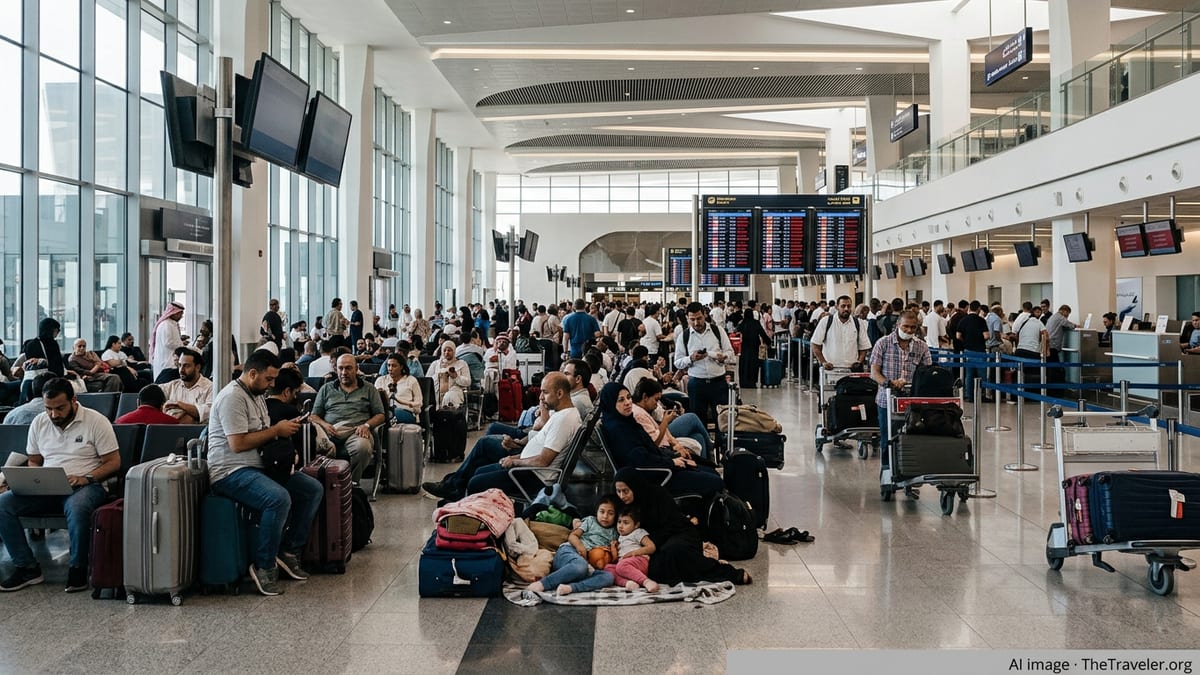
International travelers connecting through the United Arab Emirates on June 6 found itineraries abruptly upended as the Gulf state moved to block recent visitors from the Democratic Republic of the Congo, Uganda and South Sudan in response to a growing Ebola outbreak in Central and East Africa.
Get the latest news straight to your inbox!
New Entry Rules Take Effect With Immediate Impact
Publicly available information from Emirati government notices and airline travel advisories shows that, from 1 p.m. local time on June 6, 2026, the UAE began enforcing strict entry rules on passengers with recent stays in the three affected countries. The restrictions apply to travelers of any nationality who have been in the Democratic Republic of the Congo, Uganda or South Sudan within the previous 21 days, effectively shutting off a key transfer point between African and global air routes.
Coverage in regional outlets such as Khaleej Times and The National indicates that the measures include a suspension of most new visa issuance for nationals of the three countries and refusal of entry for travelers who have recently transited there, with limited exemptions for those who can demonstrate they have been outside the affected states for more than three weeks. Airlines based in the UAE have updated their travel advisories to reflect the new rules, instructing passengers to check their recent travel history before boarding.
For many passengers already en route when the announcement surfaced, the timing created confusion and last minute diversions. Social media posts and traveler reports described transit passengers being denied boarding for onward flights in African hubs once check in agents updated their systems to include the new UAE rules, forcing some to seek alternative routings via Europe or other Gulf states.
The UAE has previously positioned itself as a major connector between African markets and destinations in Asia, Europe and North America. The sudden tightening of health related entry rules therefore has an outsized ripple effect, altering travel plans not only for residents of the three countries but also for business travelers, aid workers and tourists who frequently use Dubai and Abu Dhabi as transit points.
Outbreak Escalation and Global Health Context
The move by the UAE comes less than three weeks after the World Health Organization determined that the Ebola outbreak caused by Bundibugyo virus in the Democratic Republic of the Congo and Uganda constitutes a Public Health Emergency of International Concern. Situation updates from WHO, the Africa Centres for Disease Control and Prevention and the United States Centers for Disease Control and Prevention describe an evolving outbreak centered in eastern Congo and western Uganda, with confirmed cases and deaths reported in cross border provinces.
Publicly available situation summaries note that cases have been detected along major mobility corridors linking Congo, Uganda and South Sudan, heightening worries about regional spread. Health agencies highlight the particular challenge posed by Bundibugyo virus, a less common Ebola species for which no licensed vaccine or specific therapeutic currently exists, unlike the more familiar Zaire strain.
International health guidance has generally cautioned against blanket travel bans during disease outbreaks, arguing that strict border closures can discourage transparent reporting without fully stopping the movement of people. In its emergency declaration, WHO reiterated that countries should not broadly close borders or suspend travel and trade, recommending instead targeted screening, contact tracing and support for health systems in affected areas.
Despite that position, a growing list of governments outside Africa has opted for tougher entry controls in recent days. Public information from the United States, Thailand, Mauritius and several Middle Eastern states shows a range of measures from mandatory quarantines to outright entry bans for travelers with recent stays in the outbreak zones. The UAE decision slots into this wider patchwork response, signaling a preference for precautionary border controls as the outbreak curve remains uncertain.
Shock and Disruption for Travelers From Affected Countries
For travelers from Congo, Uganda and South Sudan, the UAE measures arrived with little practical warning. Reports from African and Gulf based media describe students returning to universities, migrant workers heading to jobs in the Gulf and families connecting to long planned holidays who suddenly found visas cancelled or boarding passes refused.
Airlines with extensive African networks, including carriers that funnel passengers through Ethiopian, Kenyan and Rwandan hubs, have had to rapidly adjust schedules and rebook stranded travelers who planned to connect via Dubai or Abu Dhabi. Travel agents in Kampala, Kinshasa and Juba cited by regional newspapers reported a surge in calls as clients sought clarification on whether indirect routings through third countries might still trigger the UAE’s 21 day exposure rule.
Passenger rights advocates and online travel communities have raised concerns about inconsistent implementation across carriers and airports. In the first hours after the policy took effect, some travelers reported being allowed to board flights despite recent stays in affected areas, only to be flagged later at transfer points. Others described being turned away even when their passports showed exit stamps older than the 21 day window, reflecting confusion among front line staff interpreting new instructions.
The disruption is particularly acute for nationals of the three countries who live and work in the Gulf. Many rely on periodic travel through UAE hubs to renew visas, attend family events or access specialist medical care abroad. With new visas suspended and entry barred to anyone with recent exposure, those communities now face uncertainty about when they will next be able to travel through the country.
Regional Travel Hubs Reassess Connectivity
The UAE’s decision is reverberating across a wider network of regional travel hubs that depend on steady passenger flows from Central and East Africa. Aviation analysts quoted in business coverage note that routing patterns for freight, business travel and tourism have already been reshaped by earlier Ebola related restrictions introduced by other countries in late May and early June.
Some Gulf and European airports may see increased traffic as airlines and passengers reroute away from UAE gateways subject to the strictest rules. However, publicly accessible travel advisories show that several of those alternative hubs are imposing their own health measures, such as enhanced screening at arrival, quarantine requirements or targeted bans that mirror aspects of the UAE approach.
For African carriers, the shifting landscape raises operational and financial challenges. Airlines serving cities in Congo, Uganda and South Sudan risk losing lucrative connecting traffic to Asia and North America if key transit points remain closed to their customers. Aviation sector commentary suggests that some may temporarily reduce frequencies, consolidate routes or seek new code share partnerships with carriers that retain access to destination markets.
Tourism boards in countries that market combined itineraries featuring safaris in Uganda or regional business travel circuits through East Africa also face uncertainty. While the outbreak itself remains geographically concentrated, the perception of risk linked to high profile travel bans can prompt cancellations far beyond the directly affected areas, a pattern seen in previous Ebola and pandemic related crises.
Balancing Public Health Precaution and Mobility
The UAE’s Ebola travel ban captures the tension between national precaution and global mobility at a moment when international travel volumes are climbing in advance of major global events later in the year. Governments are under pressure to demonstrate decisive action to shield residents from imported infections, even as health agencies emphasize that robust surveillance, rapid diagnosis and strong clinical care at source are the most effective tools.
Analysts following the response note that the coming weeks will be a critical test of whether the outbreak can be contained within the affected regions of Congo and Uganda. If case numbers stabilize or decline, governments that moved quickly to impose strict travel rules, including the UAE, may face calls from tourism and aviation sectors to ease restrictions. If transmission accelerates or spreads into major urban centers or new countries, additional states could emulate or even go beyond the measures now in place.
For travelers, the UAE announcement reinforces the need to monitor health and entry requirements that can change with little warning. Publicly accessible travel advisories from airlines and national health agencies increasingly recommend that passengers check both their destination’s rules and the policies of any transit countries, particularly when itineraries involve regions where outbreaks are unfolding in real time.
As the global response to the Bundibugyo Ebola outbreak evolves, the UAE’s decision highlights how central air hubs can become focal points of containment strategies, reshaping travel patterns far beyond the immediate front lines of the disease.