


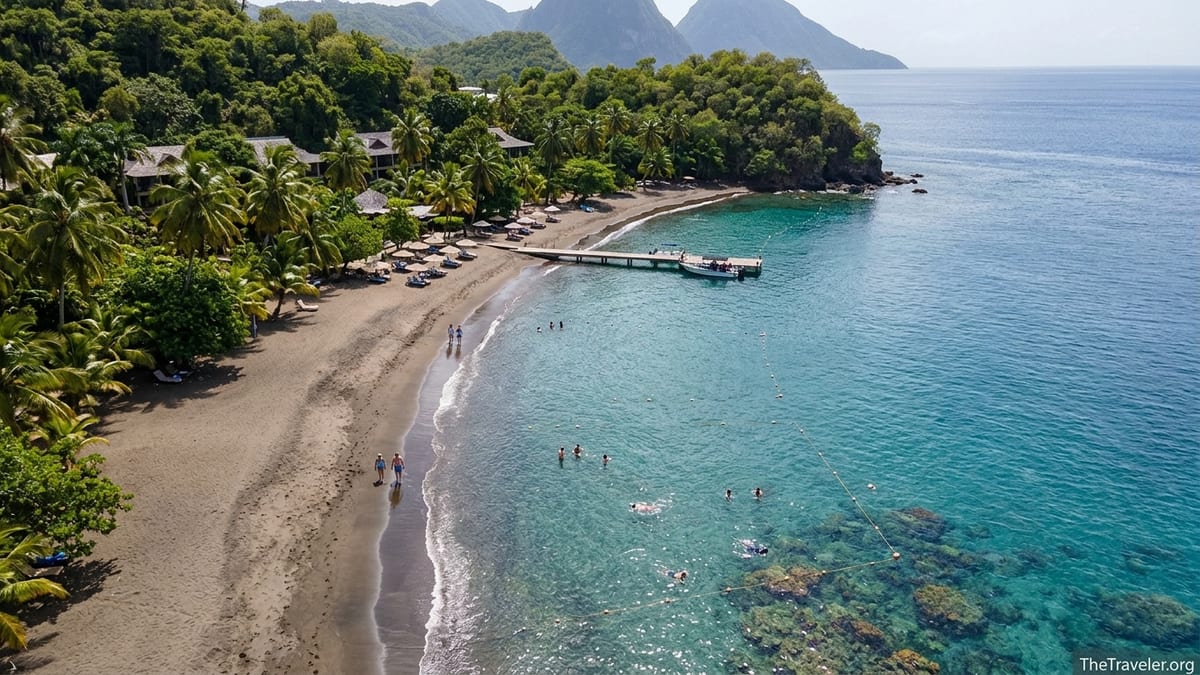
Anse Chastanet is one of Saint Lucia’s most talked-about beaches, a curve of dark volcanic sand framed by rainforest hillsides and coral-rich reefs just offshore. The beach sits in front of the Anse Chastanet Resort north of Soufrière, yet it remains a public shoreline where day visitors, cruise passengers and independent travelers can swim, snorkel and relax alongside hotel guests. This guide focuses on the practical details you need to plan a visit, from access and conditions to where to snorkel, what facilities you can realistically use, and how it works if you are not staying at the resort.
Get the latest updates straight to your inbox!
Public Access and Getting to Anse Chastanet
Like all beaches in Saint Lucia, Anse Chastanet is a public beach, even though it fronts a private resort. Under Saint Lucian law, beaches and the coastal strip known locally as the Queen’s Chain remain for public use, so anyone may walk, swim and enjoy the sand. In practice, that means you are allowed to visit Anse Chastanet whether or not you are staying at the resort, although the buildings, sun loungers and most services are reserved for guests or paying customers.
There are two realistic ways for non-guests to reach Anse Chastanet: by road from Soufrière or by boat along the coast. The road is a narrow, steep lane that leaves Soufrière, turns to rough concrete and gravel for the final stretch, and takes around 15 to 20 minutes in a taxi from the town center. Drivers familiar with the route are used to the potholes and blind turns, but first-time visitors often describe it as slow and bumpy rather than dangerous. Hiring a local taxi from Soufrière is common, and many will wait while you swim and bring you back later for a pre-agreed price.
Boat access is more scenic and often more comfortable. Several Soufrière-based water taxi operators run transfers and short beach trips that include Anse Chastanet, Sugar Beach and other coves along the coast. These small open boats usually pick up at the Soufrière waterfront or jetty and drop you directly at the Anse Chastanet landing, just beside the main beach. Prices vary with distance and bargaining, but visitors commonly report paying a moderate, per-boat rate rather than a high per-person charge for the short hop from town.
If you are arriving with a rental car, you follow the same hill road and park near the resort entrance, where security staff typically direct drivers. Parking space is limited, especially in the late morning and mid-afternoon, and you may be asked which restaurant or facility you are using. Being clear that you are visiting the public beach and planning to buy food or drinks on site usually makes access straightforward, provided the resort is not at full capacity.
Beach Layout, Volcanic Sand and Swimming Conditions
Anse Chastanet is a long, gently curving bay of dark gray-brown volcanic sand with a backdrop of palm trees and forested slopes. The beach is not the white powder often associated with the Caribbean, but instead a fine, soft sand made from volcanic rock and coral fragments. It feels comfortable underfoot yet absorbs more heat under the midday sun, so sandals or water shoes make walking more pleasant in the middle of the day.
The swimming area starts shallow and then drops away gradually, making it suitable for confident children and adults who prefer an easy wade-in rather than a sharp shelf. Water clarity is usually good, particularly in the mornings and on calm days, with visibility often sufficient to see the sandy bottom and small fish close to shore. The bay is partly sheltered by headlands and by the reefs that form the Anse Chastanet Marine Reserve, which helps keep the water relatively calm compared with open-coast beaches.
On most days the sea is suitable for casual swimming and floating with only small waves lapping the shoreline. After heavy rain or during winter swells, there can be more surge and a bit of suspended sediment that temporarily reduces visibility, especially at the northern end. Red and yellow flags, and guidance from the resort’s beach or dive staff, are the best indicators of the conditions on the specific day of your visit. Strong currents are more of a concern closer to the outer point beyond the protected ropes, which recreational swimmers and novice snorkelers should avoid.
Because the sand is volcanic and the bay is active with boats and snorkelers, the shoreline can feel busier than some quieter coves on the island. However, there is usually room to find a patch of open water for a relaxed swim, particularly if you walk toward the less developed edges of the beach and avoid the immediate area around the main jetty where dive and snorkel boats come and go.
Snorkeling: Best Spots, Marine Reserve and Practical Tips
Anse Chastanet is widely regarded as one of the easiest high-quality snorkeling spots in Saint Lucia thanks to its marine reserve that begins just off the beach. Coral formations, sea fans and sponges start within a short swim from the shoreline, and the main reef area is enclosed by floating ropes that separate swimmers from boat traffic. Snorkelers commonly report sightings of sergeant majors, blue tangs, trumpetfish, parrotfish and butterflyfish, along with occasional squid and small turtles grazing the sea grass beds near the sandy patches.
The most popular snorkeling zone stretches along the south side of the bay, near the rocky cliff wall. A roped-off area marks the protected reef; most visitors enter the water from the beach and swim along the inside of this rope, following the reef edge in shallow water where corals come close to the surface. Another favored entry is at the steps beside the landing jetty, which allow an easy drop into slightly deeper water away from the sandy shallows. Both entries are suitable for intermediate snorkelers and confident beginners who are comfortable swimming in open water with a mask and fins.
On the north side of the bay, near a distinctive outcrop of rocks, there is a second snorkeling area with scattered coral heads, sea grass and patches of reef. This side tends to be a little quieter and can be a good choice when the main reserve area feels crowded or when you want sandy patches interspersed with coral for a slower, more relaxed exploration. Visibility on this side can be influenced more strongly by wave action, so conditions may vary from day to day.
Snorkeling equipment is available for rent from the on-site dive shop operated in partnership with the resort, which caters to both house guests and outside visitors. Day visitors can usually join short guided snorkel trips or simply hire mask, snorkel and fins for a session from the shore, paying at the dive center located just steps from the sand. If you bring your own gear, you can enter freely in the public areas of the beach without charge. Standard open-water snorkeling precautions apply: stay inside the ropes, avoid touching or standing on the reef, use reef-friendly sunscreen, and watch out for boat movements near the jetty and along the outer edge of the bay.
Loungers, Shade, Restaurants and Facilities
Most of the loungers and palapas you see at Anse Chastanet belong to the resort and are primarily for hotel guests. In quieter periods, non-guests who purchase food and drinks from the beach restaurant or bar may sometimes be allowed to use a lounger if there is spare capacity, but this is at the resort’s discretion and can change with occupancy levels. Visitors who prefer not to rely on resort seating can bring a compact beach mat or travel towel and set up on the public sections of sand at either end of the bay.
Natural shade is provided by coconut palms and almond trees along much of the beach, especially toward the edges away from the main central cluster of loungers. These shaded pockets tend to be taken early in the day by both locals and resort guests, so arriving in the morning improves your chances of finding a comfortable, naturally shaded spot. Because the volcanic sand heats quickly, shade and sandals become more important around midday.
Food and drink options for day visitors revolve around the resort’s beachfront Trou au Diable restaurant and bar, which serves a mix of Caribbean dishes, casual grill items and, on certain days, an Indian-fusion menu. Prices are in line with upscale hotel dining in the region, so visitors should expect main courses to be significantly more expensive than in Soufrière town, but in return gain easy access to restrooms, table service and a pleasant setting directly off the sand. A simpler beach grill menu is often available at lunchtime, which many day visitors use for a relaxed meal between snorkel sessions.
Restrooms, freshwater showers and changing spaces are located just behind the restaurant and bar areas, and day visitors who are eating or drinking on site are generally able to use them without issue. The dive shop provides tank fills and rinse tubs for scuba guests, but snorkelers can usually rinse masks and fins at designated taps or outdoor showers. There are no independent kiosks or public-run facilities on the beach, so almost all services are delivered through the resort, and you should plan to carry any special snacks, baby supplies or beach toys you may need.
Boat Arrivals, Dive Operations and Day Visitors
Because Anse Chastanet is both a resort beach and a marine reserve, it sees regular boat traffic alongside swimmers and snorkelers. The main jetty on the south side of the bay serves as a hub for the resort’s dive boats, water taxis and occasional excursion vessels that bring guests for reef trips or sunset cruises. A dedicated roped channel guides boats in and out, while the snorkeling area remains clearly separated by buoys; swimmers should avoid crossing the boat lane and instead stay within the marked sections of the bay.
Several independent tour operators include Anse Chastanet as a snorkeling stop on combined Piton and reef excursions, particularly those departing from cruise ships moored off Castries or from hotels in the north. In these cases, groups usually arrive by mid-morning or early afternoon, spend between 45 minutes and 2 hours on the beach and in the water, then move on. This means the beach can feel noticeably busier when a tour boat is anchored just outside the swimming zone, though the groups tend to remain clustered near the main reserve area rather than dispersing along the entire bay.
The on-site dive center operates daily scuba trips to nearby sites such as Coral Gardens and Superman’s Flight and also offers shore dives directly off Anse Chastanet for certified divers. Non-resort guests can often book these dives and meet the group at the beach, using the same public access as day visitors. The presence of a full-time dive operation contributes to a more managed feel in the water: staff monitor conditions, maintain the buoy lines and frequently remind guests to respect the reef, which helps preserve the quality of the snorkeling environment.
For independent travelers, the mix of boats and shore users means it pays to be slightly strategic about timing. Early mornings typically offer the calmest seas, the clearest water and the quietest beach before excursion boats arrive and the resort’s daily activity schedule ramps up. Late afternoons can also be peaceful as day visitors leave and the light softens across the bay, although some excursions and sunset cruises depart around this time.
Visiting as a Non-Hotel Guest: Costs, Expectations and Etiquette
Non-hotel guests are welcome to use Anse Chastanet Beach as a public shoreline, swim in the sea and snorkel within the marked reserve. However, they should not assume automatic access to all of the resort’s amenities. Buildings, hotel pools, most loungers and some sections of the property above the sand are reserved for overnight guests. Day visitors who approach the beach via the main entrance typically pass a security post, where staff may ask whether you are heading to the restaurant, dive shop or bar; being clear and polite about your plans is the best approach.
You should budget for higher on-site prices than in Soufrière town. A return taxi from Soufrière to the beach, short water taxi rides, and a casual lunch with drinks at the beach restaurant can quickly add up, especially for families. Many visitors find the combination of high-quality snorkeling, comfortable facilities and dramatic scenery worth the expense for a half-day or full-day visit, but it is wise to carry cash or a card and not rely on minimal funds. Bringing your own snorkel gear reduces costs, while making use of the free public sand instead of resort loungers keeps your spend focused on food and drink.
In terms of etiquette, day visitors are expected to respect the resort’s space and the shared nature of the beach. That means not occupying clearly reserved loungers without permission, avoiding loud music, and being considerate around photography where resort guests may value privacy. Dress is beach casual, and swimwear is standard on the sand and in the restaurant during the day, though more covered clothing is appreciated if you venture into higher-level resort areas or arrive at dinner time.
For those looking to combine Anse Chastanet with other nearby spots, a popular approach is to take a water taxi that stops at both Anse Chastanet and Anse Mamin, the quieter black-sand beach just a short coastal walk or quick boat hop away. Spending a morning snorkeling at Anse Chastanet, having lunch at the beachfront restaurant, then strolling or boating over to Anse Mamin for a more tranquil afternoon on the sand offers a rewarding day of contrasting atmospheres without long travel times.
The Takeaway
Anse Chastanet offers a rare combination of easy public access, high-quality off-the-beach snorkeling and reasonably comfortable facilities, all framed by one of the most recognizable coastal views in Saint Lucia. The dark volcanic sand and reef-filled bay create a very different feel from the island’s white-sand northern beaches, appealing to travelers who prioritize underwater life and dramatic scenery over long, flat stretches of shore.
For non-hotel guests, the key is to arrive prepared: understand that access is public but facilities are attached to a private resort, budget for higher on-site costs, and bring your own essentials if you want to remain independent of resort services. Choose calm-weather mornings or late afternoons if snorkeling visibility and a quieter atmosphere are important, stay inside the marked marine reserve ropes, and take advantage of the on-site dive shop if you prefer guided exploration.
Used thoughtfully, Anse Chastanet can be the highlight of a trip to the Soufrière area, whether you arrive for a few hours from a cruise ship, make a dedicated day trip from elsewhere on the island, or base yourself nearby and return several times. With realistic expectations and basic courtesy toward resort operations and fellow visitors, the beach remains an accessible window into the best of Saint Lucia’s south coast: lush hillsides, volcanic shores and coral gardens only a short swim from land.
FAQ
Q1. Is Anse Chastanet Beach open to the public if I am not staying at the resort?
Yes. The beach itself is public under Saint Lucian law, so anyone may walk, swim and snorkel there, although resort buildings and many facilities are for hotel guests and paying customers.
Q2. What is the easiest way to get to Anse Chastanet from Soufrière?
Most visitors either take a short taxi ride along the steep access road from Soufrière or hire a water taxi from the town’s waterfront, which drops them directly at the beach jetty.
Q3. Is the sand at Anse Chastanet really black, and does it get hot?
The sand is a dark gray-brown volcanic mix rather than pure black, and it does heat up noticeably in midday sun, so sandals or water shoes are useful.
Q4. How good is the snorkeling from the beach, and do I need a boat tour?
Snorkeling is excellent directly from shore within the marked marine reserve, with coral and fish close to the beach, so you do not need a boat tour for a rewarding experience.
Q5. Can non-guests rent loungers or use the resort’s shade structures?
Loungers and palapas belong to the resort and are prioritized for hotel guests; non-guests may sometimes use them when buying food or drinks, but policies vary with occupancy.
Q6. Are there restaurants and restrooms available for day visitors?
Yes. Day visitors typically use the beachfront restaurant and bar for meals and drinks, and in doing so they are generally allowed to access restrooms and outdoor showers nearby.
Q7. Is Anse Chastanet suitable for children and less confident swimmers?
The bay has a gentle slope and is usually calm, which suits families, but all swimmers should stay within the roped areas and keep clear of the boat lane near the jetty.
Q8. Do I need to bring my own snorkel gear?
Bringing your own mask, snorkel and fins is convenient and cost-effective, but equipment rental and guided snorkel sessions are available from the on-site dive shop.
Q9. When is the best time of day to visit Anse Chastanet for snorkeling?
Early mornings often provide the calmest water and best visibility before excursion boats arrive, while late afternoons can also be quieter with softer light.
Q10. Can I visit both Anse Chastanet and nearby Anse Mamin in one day?
Yes. Many visitors spend part of the day snorkeling at Anse Chastanet, then walk the coastal path or take a short water taxi to Anse Mamin for a quieter beach experience.