


More news on this day
Greece is entering the 2026 tourism season with a stronger web of international air links, as fresh capacity from the United Kingdom and other major source markets reinforces the country’s role as one of Europe’s most connected leisure destinations.
Get the latest news straight to your inbox!
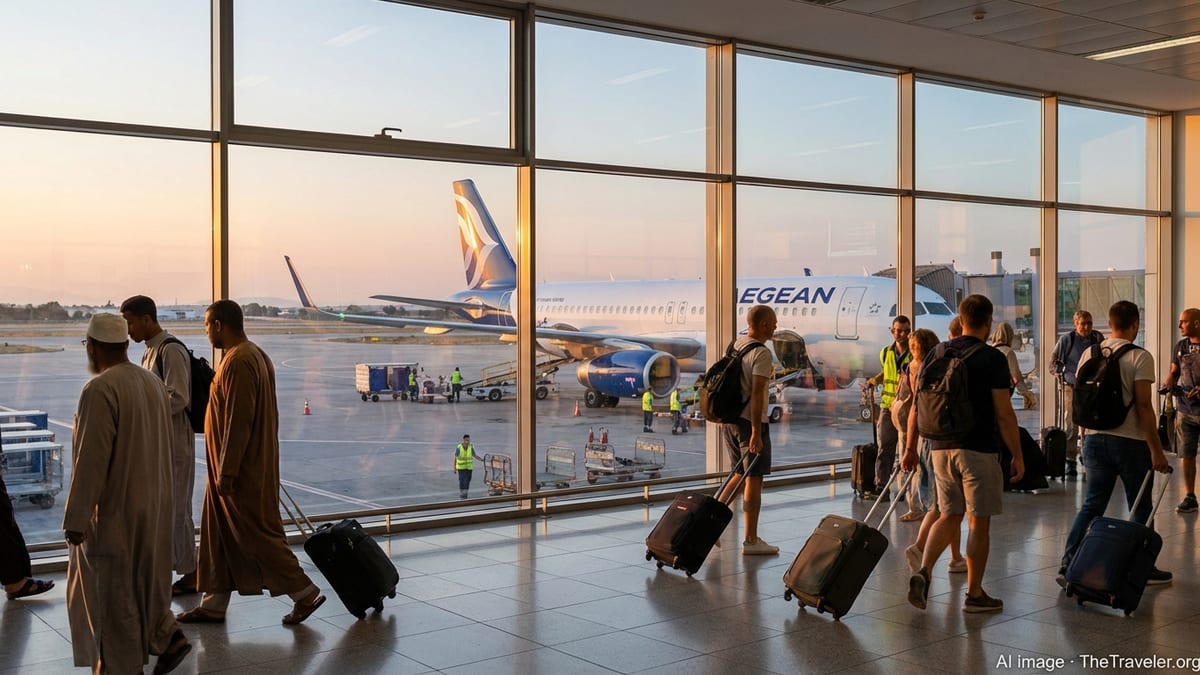
UK Retains Lead Role in Greece’s Air Tourism Market
Recent tourism statistics and traffic data indicate that the United Kingdom remains one of Greece’s top inbound markets by arrivals and travel spending. Analysis of 2025 figures released by Greek authorities shows that the UK and Germany continued to rank as the largest source countries for visitors, underlining the importance of British demand in filling seats on routes to Greek airports.
Sector reports for 2025 point to around 31 million international air arrivals to Greece, a rise of nearly 6 percent year on year, with markets such as the UK contributing significantly to that increase. The Bank of Greece has also highlighted that travel receipts reached record levels in 2025 and continued to rise sharply in early 2026, with Britain identified among the main drivers of higher spending per visitor.
Early 2026 booking and capacity data compiled by industry analysts suggest that this momentum is carrying over into the current season. Forward schedules indicate that UK airlines and tour operators are maintaining a broad network of Greek destinations, reflecting sustained demand from British travelers for both island and city breaks.
The United Kingdom’s position was further underlined in July 2026 with the signing of a tourism-focused memorandum of understanding between the two countries, which aims to deepen cooperation in areas such as innovation, skills and product development. Publicly available information on the agreement describes the UK as one of Greece’s leading tourism markets, reinforcing expectations that air links between the two countries will continue to expand.
Airlines Add Capacity and New UK–Greece Routes for Summer 2026
Scheduled capacity data for 2026 indicate that airlines are adding new links between the UK and Greek destinations, even as they refine networks in response to shifting demand across the islands. Aviation analytics cited by Greek industry media show that UK-origin seats to Greece for the first ten months of 2026 remain at high levels, with particular strength on routes to Athens and major holiday airports.
Low cost and leisure airlines have announced additional services that bolster connectivity. Information from airline timetables and company statements for 2026 shows new Greek routes from several UK airports, including services from bases such as Newcastle and Gatwick to popular island destinations. Carriers are also increasing frequencies on established routes where demand has remained resilient, ensuring more options for peak summer and shoulder-season travel.
At the same time, seat maps for some of the most mature island markets, including Rhodes and Corfu, show modest year-on-year reductions in scheduled capacity from the UK. Analysts interpret these changes as part of a wider recalibration, with airlines shifting some seats to emerging or less saturated destinations while keeping overall UK–Greece connectivity robust.
Flight-planning data also highlight the breadth of the UK gateway network feeding Greece in 2026. British travelers can reach Greek airports from large hubs such as London and Manchester as well as from a growing number of regional airports, a pattern that helps distribute arrivals more widely across Greece’s destinations.
Other Leading Markets Strengthen Greece’s Air Connectivity
While the UK remains a pillar market, Germany and the United States continue to play a central role in shaping Greece’s international air connectivity. Tourism performance summaries for 2025 describe Germany as a leading source of visitors by volume, while the United States has consolidated its position as Greece’s largest long haul market, supported by a growing number of nonstop transatlantic services.
European traffic forecasts and connectivity reports produced by industry bodies show that Greece ranks among the fastest-growing countries in terms of airport connectivity within the region. Additional capacity from markets such as France, Italy, Poland and the Netherlands is contributing to this trend, with both network carriers and low cost operators expanding their seasonal and year round offerings.
In southeastern Europe and the Eastern Mediterranean, publicly available analyses point to strong growth from markets such as Turkey and Israel, as well as from Balkan and Eastern European countries. Thessaloniki in particular is emerging as a regional hub, with more direct services that position northern Greece as a gateway for travelers from nearby markets.
This broadening mix of source markets reduces Greece’s reliance on any single country while supporting overall seat growth. The combined effect is a denser and more diversified route network for 2026, giving tourism authorities and local destinations more flexibility in targeting different segments and seasons.
Greek Airports See Rising Traffic and a Longer Season
Airport statistics for 2025 and early 2026 confirm that Greek gateways have benefited from the renewed appetite for Mediterranean travel. Reports from the national civil aviation authority and airport operators show that traffic at Athens International Airport reached new highs and that several island airports recorded strong year-on-year growth, particularly during the shoulder months.
European airport data for 2025 reveal that overall passenger traffic across the continent continued to climb, with Greece among the markets outpacing the regional average. Connectivity studies note that Greek airports have notably increased both direct and indirect connections compared with pre pandemic levels, consolidating the country’s position among Europe’s most accessible leisure destinations.
Sector research by Greek tourism institutions suggests that international arrivals are increasingly spread over a longer season. Growth in April, May, September and October is narrowing the gap with the core summer months, a trend that is especially visible at Athens, Thessaloniki and certain island airports that have invested in off peak product development and marketing.
This seasonal shift is closely tied to air connectivity. Additional spring and autumn frequencies from the UK, Germany and other leading markets, combined with more city-break traffic, are helping to smooth demand. For local tourism economies, this extended season supports year round employment and spreads visitor flows more evenly across destinations.
Policy Moves and Market Trends Shape 2026 Outlook
Policy initiatives and market trends are intersecting to shape Greece’s tourism and air connectivity outlook for 2026. The country’s national tourism strategy for the current planning period places emphasis on sustainability, diversification and digital transformation, and publicly available policy documents highlight the need to manage growth while improving visitor experience and resilience.
The new tourism cooperation memorandum between Greece and the UK is expected to facilitate closer collaboration in areas such as skills, product development and innovation. While the agreement does not directly allocate air traffic rights, observers note that stronger institutional ties can underpin future route development by encouraging joint promotion and easing business partnerships in the travel sector.
European traffic forecasts point to continued growth in passenger volumes for 2026, although at a more moderate pace than in the immediate post pandemic rebound years. In this environment, Greece’s strong brand, diversified source markets and expanding network of air links leave it well positioned to capture demand from travelers seeking sun, culture and island experiences.
For airlines and airports, the focus is gradually shifting from restoring capacity to optimizing networks and managing constraints such as slots, environmental requirements and infrastructure limits at certain hotspots. Within that context, the UK and other leading markets are expected to remain central to Greece’s air connectivity story, but with greater emphasis on balancing volumes, extending the season and spreading benefits across more regions of the country.