


More news on this day
A preliminary investigation into a major air traffic control outage over the United Kingdom has blamed a software defect that corrupted flight data in the space of a millisecond, prompting six hours of restrictions and more than 2,000 flight cancellations that disrupted journeys for hundreds of thousands of passengers.
Get the latest news straight to your inbox!
Glitch in core system froze UK skies within seconds
According to published coverage and a preliminary report released by UK air traffic service provider NATS, the disruption originated in part of the National Airspace System responsible for allocating identification codes to aircraft so controllers can track them on radar. The defect was triggered when one request for an aircraft code was immediately followed by a higher priority task, causing the first process to pause at a critical point.
In that instant, described in the report as occurring within “the space of a millisecond,” corrupted data entered the code-allocation system. Publicly available technical details indicate the software was designed to shut down if it encountered inconsistent data, to prevent controllers from receiving incorrect information about aircraft positions or identities.
That safety feature meant the affected system stopped functioning and had to be restarted. To allow a controlled reboot and reloading of flight data, NATS imposed strict limits on the number of aircraft allowed to use UK airspace. Although only traffic managed by the London Area Control centre was directly affected, capacity restrictions were applied nationwide to keep overall traffic volumes at a level that could be handled with reduced automation.
The report indicates that the system outage lasted for around six hours, during which flight plans that would normally be processed automatically had to be handled manually. This sharply reduced throughput led airlines to cancel large numbers of services in and out of the UK, while many other flights faced extended delays.
More than 2,000 flights cancelled and days of knock-on disruption
Data cited in multiple news reports show that over 2,000 flights were cancelled on the day of the outage and immediately afterward, affecting both arrivals and departures at major UK airports including London Heathrow, Gatwick, Stansted, Luton, Manchester, Edinburgh, and Glasgow. Additional services operated with long delays as airlines and airports worked through backlogs.
The shutdown occurred during a busy travel period, compounding the impact on passengers. Industry estimates referenced in public reporting indicate that hundreds of thousands of travellers experienced cancellations or severe delays, with many stranded abroad or unable to start their journeys as aircraft and crew ended up out of position.
Disruption continued for several days as airlines reassembled schedules, repositioned aircraft across Europe, and found replacement crews who remained within duty time limits. Some carriers warned that normal operations might not fully resume until later in the week, particularly on heavily used leisure routes and at airports already operating near capacity.
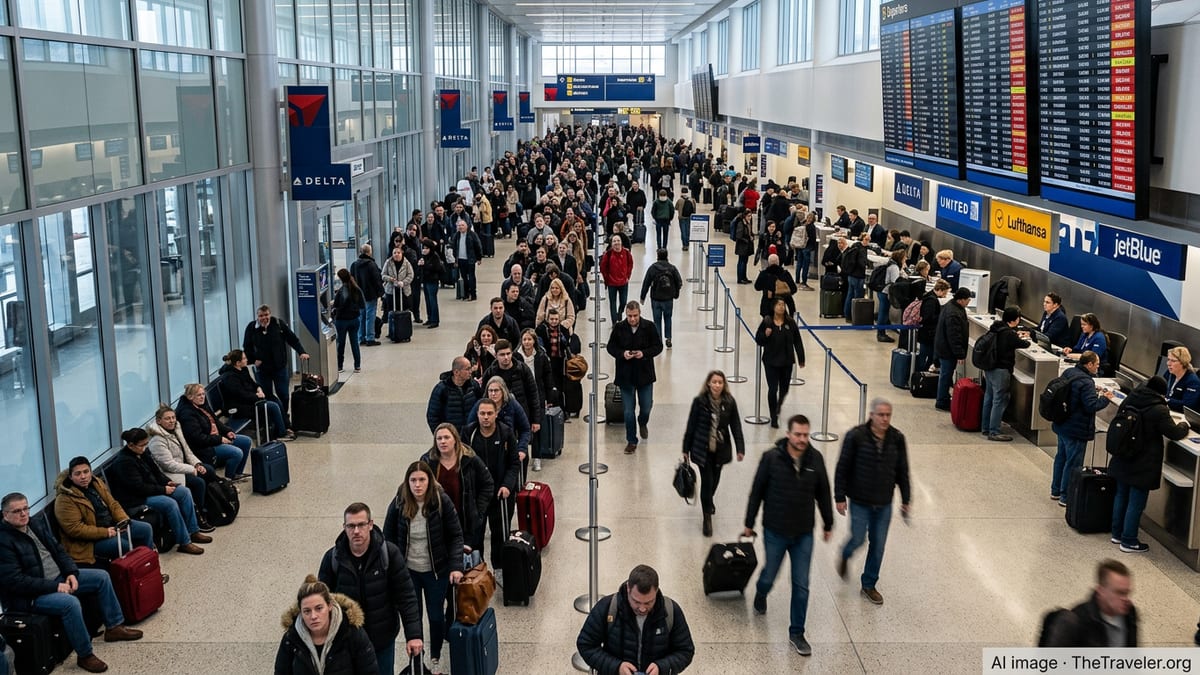
Travelers faced queues at check in, long waits to speak with airline representatives, and challenges rebooking during peak season, when many alternative flights were already heavily sold. Consumer groups and commentators highlighted the uneven experiences reported at different airports and among different airlines, as some passengers were quickly rebooked while others reported long delays in receiving clear information.
Investigations rule out cyberattack and link to earlier outage
Publicly released statements from NATS and summaries of the preliminary report indicate that investigators have ruled out a cyberattack, hostile interference, or deliberate sabotage. The focus has instead been on the rare sequence of software events and design assumptions inside the code-allocation module of the National Airspace System.
Reports indicate that the defect was triggered by an unusual combination of requests involving aircraft identification codes, rather than an external data feed or failure of communications links. Technical reviewers have described the conditions required for the problem to occur as exceptionally rare, but the incident has raised questions about how such edge cases are modelled and tested in safety-critical aviation software.
NATS has also publicly stated that the latest outage is not connected to the major failure of its flight planning system on 28 August 2023, which similarly led to widespread cancellations after a different software problem forced controllers to fall back on manual processing. Regulators have previously published an independent review into that 2023 incident, which concluded that an unusual flight plan structure exposed a previously unknown defect in another part of NATS’ systems.
In addition, NATS has said there is no link between the millisecond glitch and a separate radar issue reported in July of the previous year. The organisation has emphasised that, despite the scale of disruption to passengers and airlines, there was no compromise to the safety of aircraft in flight, because the systems are designed to shut down rather than risk presenting inaccurate data to controllers.
Regulatory scrutiny and calls for greater resilience
Following the new incident, the UK Civil Aviation Authority has signalled heightened interest in the resilience of the country’s air traffic management infrastructure. Previous documentation from the regulator on the 2023 outage already called for improvements in software assurance processes, scenario testing, and contingency planning.
Published government and regulatory material shows that NATS has been required to submit detailed preliminary and follow up reports on the recent millisecond glitch, outlining the root cause, immediate mitigation steps, and proposed long term fixes. These are being examined alongside the earlier independent review to identify any recurring themes around system complexity, legacy components, and change management.
Airlines and airport operators, which bear much of the direct financial cost when airspace capacity is sharply reduced, have publicly pressed for urgent action to ensure the reliability of the systems that underpin the UK’s aviation network. Some industry voices have argued that, as traffic levels grow back to or beyond pre pandemic volumes, the tolerance for unexpected outages becomes smaller, especially at major hubs where runway and airspace capacity are tightly balanced.
Consumer advocates have also renewed calls for clearer communication to passengers when technical incidents occur, and for consistent application of compensation and care obligations across carriers. While the European Union’s passenger rights regulation does not directly apply in the UK following Brexit, British rules still require airlines to support customers during large scale disruption, though whether software faults in air traffic control qualify as extraordinary circumstances can depend on specific legal interpretation.
What changes travellers can expect next
Publicly available statements from NATS indicate that immediate software fixes have been applied to the affected module of the National Airspace System to prevent the same sequence of events from recurring. Additional monitoring has reportedly been put in place to detect any similar anomalies in real time, allowing engineers and controllers to respond before a full shutdown is required.
In the medium term, the company has signalled that it is reviewing broader aspects of its software engineering, testing, and change control processes in light of both the latest defect and the 2023 failure. Documentation released by regulators in connection with earlier investigations has already recommended more extensive simulation of unusual flight plans and edge cases, along with strengthened oversight of third party code and system upgrades.
For passengers planning to travel to or from the UK, experts cited in recent media coverage suggest that the likelihood of this specific glitch repeating is now considered very low, given the narrow set of conditions involved and the targeted fixes applied. However, they also note that as air traffic systems become more complex and more interconnected, occasional technical incidents cannot be fully ruled out.
Travel industry observers point out that the most practical step for passengers remains the same: maintain up to date contact details with airlines, monitor flight status closely on the day of travel, and allow additional time for connections when travelling through major hubs. While the millisecond software error has prompted intense scrutiny from regulators and operators, the broader discussion now centres on how to maintain both safety and reliability in an increasingly digital air traffic environment.