


More news on this day
Flights have resumed at Philadelphia International Airport after an air traffic control equipment outage on Monday led to a federal ground stop, widespread delays and hundreds of cancellations across the busy Northeast corridor.
Get the latest news straight to your inbox!
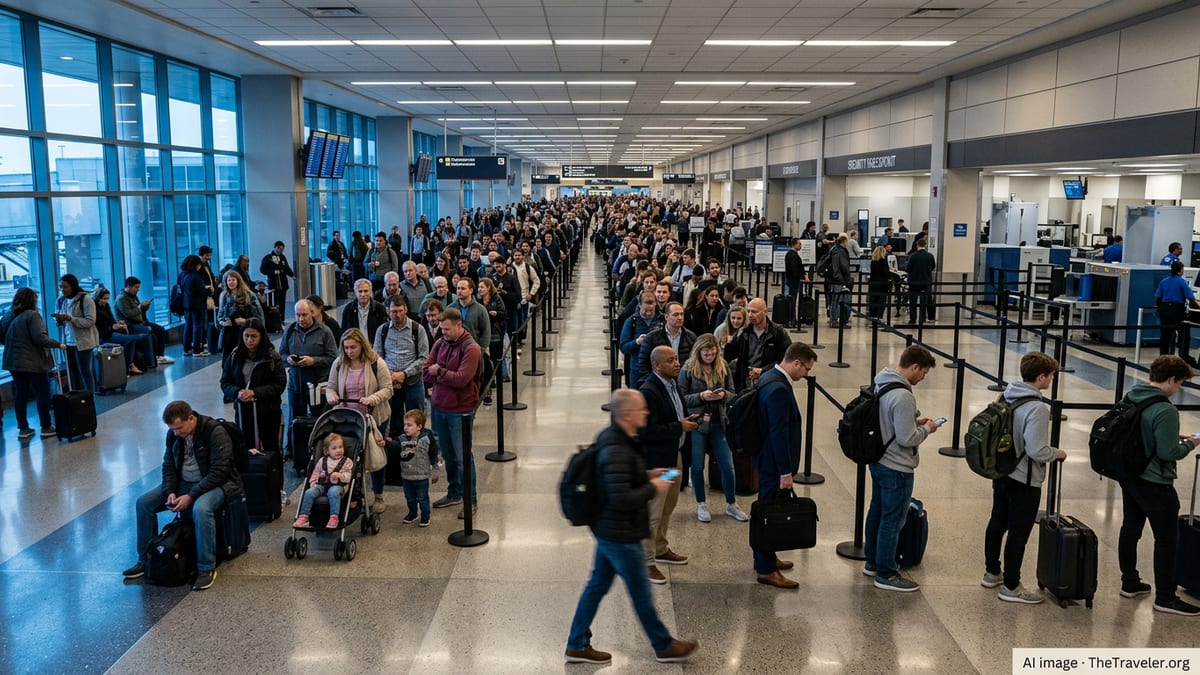
Ground stop lifted as operations slowly normalize
According to published FAA traffic management advisories, a ground stop affecting Philadelphia International Airport on Monday, September 21, was attributed to an equipment outage linked to the region’s air traffic control systems. Advisories listed a Collaborative Decision Making ground stop window from late morning into early afternoon, during which many inbound flights to Philadelphia were held at their departure airports rather than allowed to depart toward the city.
Local and national coverage indicates that the formal ground stop for Philadelphia expired around 5 p.m. local time on Monday, with the remaining ground delay program also wound down later in the evening as traffic flows stabilized. By early Tuesday, the FAA’s public airport status page for Philadelphia showed only minor gate hold and taxi delays of 15 minutes or less for both arrivals and departures, signaling a return to routine conditions even as individual flights continued to recover from earlier disruptions.
Reports from airport tracking services and regional media describe a sharp contrast between Monday’s gridlock and Tuesday’s more manageable schedule. On Monday, published figures from flight-tracking data cited more than 400 delays and over 200 cancellations at Philadelphia alone, while Tuesday morning totals were reported at a few dozen delays and cancellations out of more than 700 scheduled operations.
Publicly available information from national outlets also shows that operations resumed across other major Northeast airports on Monday evening after repairs were completed on the affected communications lines. As those facilities ramped back up, aircraft and crews shuffled back into position, setting up a day of catch-up flying on Tuesday for airlines serving Philadelphia and its regional partners.
Cause traced to damaged communications lines
Coverage from multiple news organizations links the disruption to a telecommunications failure centered on the Philadelphia Terminal Radar Approach Control facility, known as TRACON, which sequences arrivals and departures for Philadelphia International Airport and supports nearby airspace. Reports indicate that a key circuit at the facility failed around midday Monday, degrading radar and radio communications needed to safely manage high volumes of traffic.
Further reporting describes how investigators then identified damage to a backup fiber line at a construction site in New Jersey, affecting communications routes relied on by the Philadelphia-area air traffic system. Public statements referenced in national coverage attribute the broader outage to this damaged telecom infrastructure, which in turn forced the Federal Aviation Administration to impose conservative traffic management measures while technicians worked to restore service.
Technical bulletins and media summaries emphasize that the problem was confined to communications and automation equipment rather than to any physical damage at the airport itself. Once the fiber connection and circuits were repaired, traffic facilities began bringing systems back online, and airspace managers gradually increased the rate of arrivals and departures into Philadelphia and the New York region.
Industry analysts cited in aviation-focused coverage note that TRACON facilities play a critical role as a bridge between airport control towers and high-altitude en route centers. When communication links at one of these nodes falter, the safest option is often to halt or sharply reduce arrivals until controllers can be certain they have reliable visibility and voice contact with pilots, which is what unfolded in the Philadelphia case.
Impact on airlines and travelers across the Northeast
Publicly available flight-tracking data and regional reports show that the outage’s impact extended well beyond Philadelphia. Ground stops or heavy flow restrictions were reported at Newark Liberty International, New York John F. Kennedy, LaGuardia, Boston Logan and Teterboro at various points during the day, creating a web of delays that spread through airline schedules across the country.
For travelers at Philadelphia International Airport, that translated into long waits at gates, missed connections and, in many cases, outright cancellations as aircraft and crews could not reach the city. Local news coverage cited more than 200 cancellations into and out of Philadelphia on Monday, while airports in the New York area collectively recorded several hundred more affected flights as the outage rippled through the network.
Airlines responded by issuing travel waivers covering Philadelphia and other affected airports, allowing customers booked for September 21 and, in some cases, September 22 to rebook without change fees or fare differences within specified date ranges. These waivers, described in airline advisories and aviation trade reporting, were designed to encourage passengers with flexible plans to shift their trips, easing pressure on already crowded Tuesday and Wednesday operations.
On Tuesday, reports from Philadelphia and surrounding hubs described busy but generally orderly terminals as carriers worked through backlogs. Many passengers who were stranded overnight were re-accommodated on morning and midday departures, though some routings remained heavily booked as airlines balanced available aircraft, crew duty limits and ongoing weather considerations in other parts of the country.
Current conditions and what travelers should do now
As of early Tuesday, publicly available FAA airport status information for Philadelphia indicated that general arrival and departure delays had fallen to 15 minutes or less, with no broad ground stop or ground delay program in effect. That aligns with on-the-ground reports of largely normal activity at the terminals, even as a subset of flights continues to show knock-on delays from Monday’s outage.
Regional media accounts from Tuesday morning point to roughly 20 delays and about 30 cancellations at Philadelphia out of more than 700 scheduled flights, a level described as elevated but far below the disruption seen a day earlier. Airlines are continuing to adjust equipment and crew rotations, and schedules are expected to gradually align with planned timetables if no new operational constraints emerge.
Traveler advisories published by the airport and noted in local coverage strongly urge passengers to check directly with their airline before heading to the airport, given that residual disruption is concentrated on specific routes and departure times. Mobile apps and airline notifications remain the primary source of flight-specific updates, while the FAA’s status tools provide a broader sense of whether systemic programs, such as nationwide ground delays, are in effect.
Passenger advocates and travel experts quoted in aviation commentary suggest that travelers with flexible plans may wish to consider off-peak departures or midweek travel dates over the coming days, as carriers clear remaining backlogs and reposition aircraft. Those holding separate tickets for onward connections, or traveling through multiple Northeast hubs in a single day, may face a higher risk of missed connections while schedules stabilize.
Broader questions about infrastructure resilience
The Philadelphia outage has prompted renewed public discussion about the resilience of the United States air traffic control system, particularly around aging telecommunications infrastructure and single points of failure. Published commentary from transportation analysts underscores how a single severed fiber line and failed circuit can generate cascading disruption when redundant paths are not fully isolated from shared risks.
In the wake of Monday’s events, national coverage notes that senior transportation officials have pointed to the episode as evidence of the need for continued investment in modernizing critical communications and automation systems. While the specific failure in Philadelphia was repaired within hours, experts interviewed in industry forums argue that preventing similar outages will require broader upgrades across multiple facilities and regions.
For travelers, the incident serves as a reminder that not all flight disruptions stem from weather or airline staffing decisions. Infrastructure failures within the air traffic system, even when resolved the same day, can leave residual schedule impacts stretching into subsequent travel days, particularly in dense corridors such as the Northeast.
As operations at Philadelphia International Airport return to normal, attention is likely to focus on formal reviews of the outage, the timeline for repairs and any procedural changes recommended to reduce the likelihood that a future equipment fault or construction mishap could again bring a critical segment of the national airspace system close to a standstill.