


More news on this day
Thousands of passengers traveling to and from the United Kingdom have been caught in mounting disruption after an air traffic control glitch led to more than 1,300 flight cancellations and prompted Emirates to issue updated travel advice for UK routes.
Get the latest news straight to your inbox!
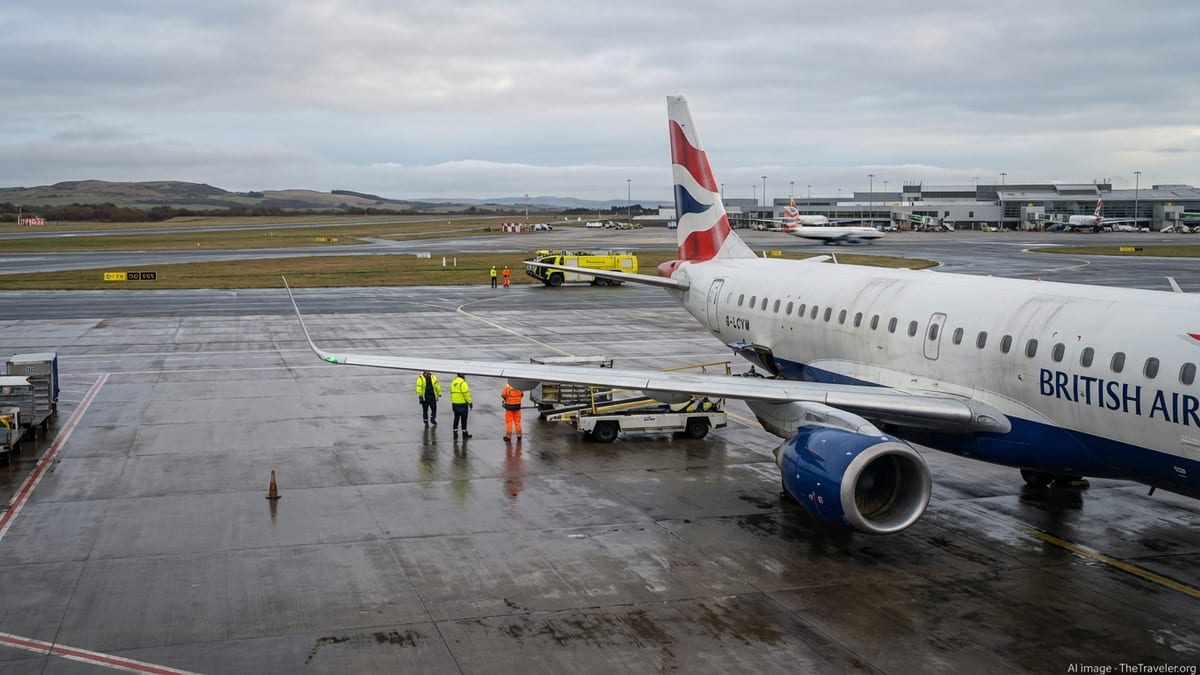
Glitch at UK air traffic control triggers mass cancellations
Travel disruption intensified across the UK aviation network after a technical issue affected National Air Traffic Services, which manages air traffic control for much of British airspace. Publicly available flight-tracking data shows around 1,300 flights to and from UK airports were canceled on Tuesday alone, as airlines struggled to operate safely within reduced capacity.
The impact has been felt at major hubs including London Heathrow, Gatwick, Manchester and Stansted, where images and reports from the terminals describe long queues, stranded passengers and aircraft parked out of position. Additional cancellations and delays have continued into Wednesday as airlines work through the backlog and reposition aircraft and crews.
Monitoring services indicate that at least 170 further flights were removed from schedules on Wednesday morning, underscoring the scale of the knock-on disruption. The pattern suggests that while the immediate technical fault has been addressed, the operational recovery for airlines and airports will take considerably longer.
Industry data cited in multiple outlets suggests tens of thousands of passengers have either been unable to travel or have arrived many hours later than planned. With aircraft and crews out of sync across the network, regular timetables remain under pressure.
Emirates issues updated advisory for UK-bound customers
The disruption prompted Emirates to publish a fresh advisory for services to and from the UK, highlighting the risk of delays and short-notice schedule changes. The carrier’s travel updates page notes that flights arriving and departing at British airports are subject to disruption due to the continuing effects of the technical problem at the UK air traffic control provider.
According to the advisory, Emirates customers are urged to check their flight status before leaving for the airport, monitor the latest operational information on the airline’s website and keep an eye on email notifications in case of rebooking or cancellation. The airline states that affected passengers may be moved to alternative departures where capacity and operational constraints allow.
The guidance is consistent across Emirates’ regional websites, which emphasize that customer itineraries may be adjusted at short notice while the UK system stabilizes. The carrier’s messages align with the wider industry trend of advising travelers not to assume that previously confirmed departure times will be maintained during the disruption window.
While Emirates has not published a full list of affected flights, its focus on proactive status checks reflects the dynamic nature of the situation. Routes linking Dubai with key UK gateways such as London, Manchester, Birmingham and Glasgow are particularly sensitive to changes in air traffic flow restrictions over the UK.
Major UK hubs struggle with knock-on effects
Airports across Britain are attempting to restore normal operations, but the scale of the initial cancellations has created complex challenges. At Heathrow and Gatwick, live airport dashboards and media reports indicate that hundreds of services have been canceled or heavily delayed across a two-day period, including a significant number of short-haul European flights.
As aircraft and crews ended up in the wrong locations after Tuesday’s widespread cancellations, airlines have been forced to trim schedules further to create room for recovery. Some carriers are prioritizing long-haul services while cutting high-frequency short-haul routes, while others are consolidating less busy departures to free up aircraft.
Publicly available coverage shows that British Airways canceled or diverted more than 100 flights on Tuesday, affecting tens of thousands of its customers. Low-cost and leisure carriers operating from Gatwick, Stansted and regional airports have also reported notable schedule reductions as they adjust to restricted takeoff and landing capacity at peak times.
Airport statements stress that terminals remain open and operational, but they caution travelers that waiting times, gate changes and last-minute cancellations are likely while the industry works to normalize operations. Passengers are repeatedly being urged to verify that their flight is confirmed before traveling to the airport.
What passengers flying to or from the UK should expect
For travelers due to fly in or out of the UK in the coming days, publicly available information suggests that conditions may remain unpredictable even as the underlying technical issue is resolved. Airlines are continuing to adjust timetables to manage crew duty limits, aircraft maintenance windows and slot availability at busy airports.
Advisories from Emirates and other major carriers consistently highlight the importance of checking flight status as close to departure as possible. Many airlines are offering flexible rebooking options for passengers whose journeys have been affected, although the availability of alternative flights can be limited on busy long-haul routes.
Travel experts quoted across news and consumer outlets recommend that passengers build in extra time for connections, especially if traveling on separate tickets, and be prepared for crowded terminals and longer queues at check-in and security. Packaged holiday travelers are being advised to stay in close contact with their tour operators for updated transfer and hotel arrangements.
Airports and airlines are also encouraging passengers to use digital tools, such as apps and online portals, both to track real-time departure information and to manage any rebooking or refund processes. With capacity still constrained, travelers who receive cancellation notices are being urged to act quickly if they wish to secure seats on the next available departures.
Outlook for UK aviation in the coming days
While the immediate air traffic control glitch has been described as resolved in official statements, the broader aviation system is likely to feel the effects for several days. Industry analysts quoted in recent coverage point out that when thousands of flights are disrupted in a short period, it can take much of the week for aircraft rotations and crew schedules to return to normal patterns.
In addition to the visible disruption at UK airports, airlines will need to work through a significant volume of passenger service issues, including rebookings, claims under applicable compensation rules and requests for refunds or vouchers. Some carriers may opt for minor schedule reductions later in the week to create operational breathing space and reduce the risk of further rolling delays.
For Emirates and other international long-haul airlines, the focus now appears to be on stabilizing their UK schedules while maintaining connectivity through global hubs such as Dubai. The latest advisories suggest that travelers who can be flexible with travel dates and times may have more options, while those on fixed itineraries may face fewer choices if disruption continues.
With the busy autumn travel period approaching, regulators and industry bodies are expected to review how the technical fault escalated into such extensive cancellations. Publicly available reports indicate that questions are already being raised about system resilience and contingency planning, although detailed assessments are likely to emerge only after the immediate disruption has subsided.
Euronews: Technical glitch leads to more than 1,000 flight cancellations across UK
Emirates: Travel updates and UK advisory
The Independent: Flight cancellations after UK air traffic control issue
RTÉ News: UK travellers face more disruption after technical issue