


More news on this day
Flights across parts of the UK faced renewed disruption on Monday after National Air Traffic Services (NATS) reported another technical issue, prompting air traffic restrictions and knock-on delays and cancellations at multiple airports.
Get the latest news straight to your inbox!
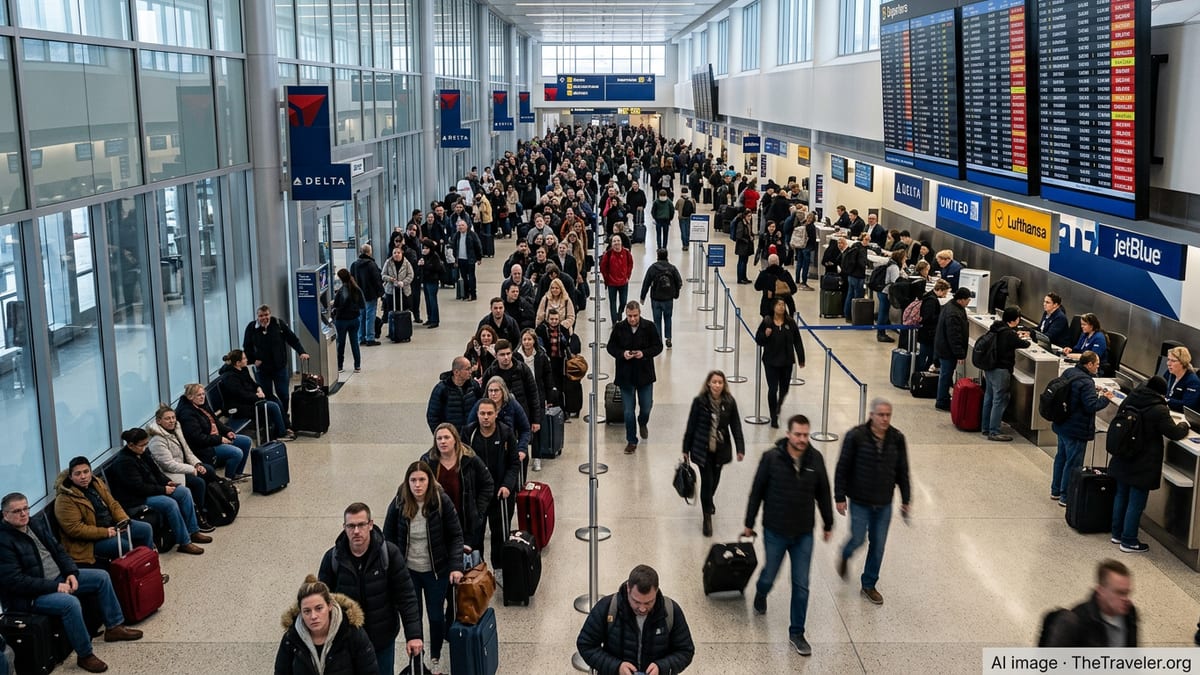
What happened and where delays were concentrated
Published coverage on September 21, 2026 indicates the latest disruption was linked to a problem at NATS’s Prestwick centre in Scotland, a key facility that handles large volumes of air traffic in northern UK airspace. NATS described the incident as a network or connectivity issue and said temporary traffic regulations were put in place to maintain safety while engineers worked on the fault.
Impacts were felt most strongly at airports in Scotland, Northern Ireland, and northern England, with reports pointing to delays at Manchester, Glasgow and Belfast, and disruption notices also issued by London Gatwick and London City as the day’s flying program adjusted to constraints in the network.
NATS later reported that the issue had been fixed and that operations were running at full capacity, while airports and airlines worked through residual delays caused by earlier restrictions.
Airlines cancel some flights as schedules reset
Even after the technical fix, airlines still faced a difficult operational puzzle: aircraft and crews out of position, disrupted turnaround plans, and constrained arrival and departure slots. Published reporting indicates some flights were cancelled while other services operated late as carriers tried to stabilize their networks.
Reuters coverage carried by MarketScreener indicated that easyJet cancelled some flights and British Airways warned customers to expect disruption. The same reporting said Ryanair estimated that about 25,000 of its passengers would face delays tied to the day’s restrictions.
For travelers, the practical effect is that disruption may not be limited to the hours of the incident itself. Once delays cascade, later flights can be affected even after airspace restrictions are lifted, especially on short-haul routes with tight aircraft rotations.
Why this incident draws extra scrutiny after early-September chaos
This latest event landed less than two weeks after a much larger NATS incident on September 8, 2026, when a fault in the flight planning system triggered widespread delays and cancellations across the UK. NATS subsequently published a preliminary report on that earlier incident, describing how restrictions were required while systems were restarted and data reloaded, with disruption taking days to fully unwind.
On September 21, NATS emphasized that the Prestwick problem was unrelated to the September 8 failure. Still, the timing has intensified scrutiny of resilience and contingency planning, as passengers and airlines are coping with repeated disruption during a short period.
In separate published coverage, the UK government’s ownership structure in NATS has also been highlighted, with the state holding the largest single stake, alongside airlines, airports, and other investors. That backdrop has amplified public debate about accountability and infrastructure investment following multiple incidents.
Passenger rights: what travelers can expect from airlines
When air traffic control problems trigger delays or cancellations, passenger entitlements can differ from situations where the airline itself is at fault. The UK Civil Aviation Authority (CAA) has previously stated in guidance following the September 8 NATS disruption that such events are likely to be treated as “extraordinary circumstances,” which generally means compensation may not be payable when a cancellation or long delay is directly caused by the air traffic control issue.
However, that does not remove the airline’s duty of care. CAA guidance indicates passengers should still be looked after, which typically includes appropriate assistance such as rebooking on a later flight where possible and providing meals, refreshments, and accommodation when an overnight stay becomes necessary due to disruption.
Travelers affected on September 21 should check their airline’s latest operational messages and flight status tools before heading to the airport, particularly for services routed through northern UK airspace or departing from Scottish airports. If a flight is cancelled, passengers should look for airline instructions on rebooking options and keep receipts for reasonable out-of-pocket expenses where the carrier’s policy requires claims afterward.
What to do next if you’re flying to, from, or within the UK
NATS advised passengers to continue checking directly with their airline for the latest information, as airports and carriers worked to clear residual delays after restrictions were lifted. Travelers with tight connections, especially involving short-haul feeders into longer international flights, may want to confirm connection protection rules with their carrier’s published policies and monitor gate changes closely.
If you have flexible travel plans, the most effective way to reduce risk is to avoid tight same-day itineraries and to allow extra time for airport arrival, bag drop, and security, as irregular operations can create sudden surges in passenger volumes when multiple delayed flights overlap.
For passengers whose travel is time-sensitive, it can help to consider earlier departures when available and to keep an eye on alternative routings, including rail options for domestic UK segments, if your airline permits voluntary changes. As networks reset after disruption, availability can tighten quickly, so acting early once you receive a delay or cancellation notice can improve rebooking outcomes.