

More news on this day
The UK Foreign, Commonwealth & Development Office has introduced a significant change to its Middle East travel advice, easing blanket warnings on the United Arab Emirates and key Gulf hubs such as Dubai and signalling a cautious reopening of one of the world’s busiest transit regions for UK holidaymakers and business travellers.
Get the latest news straight to your inbox!
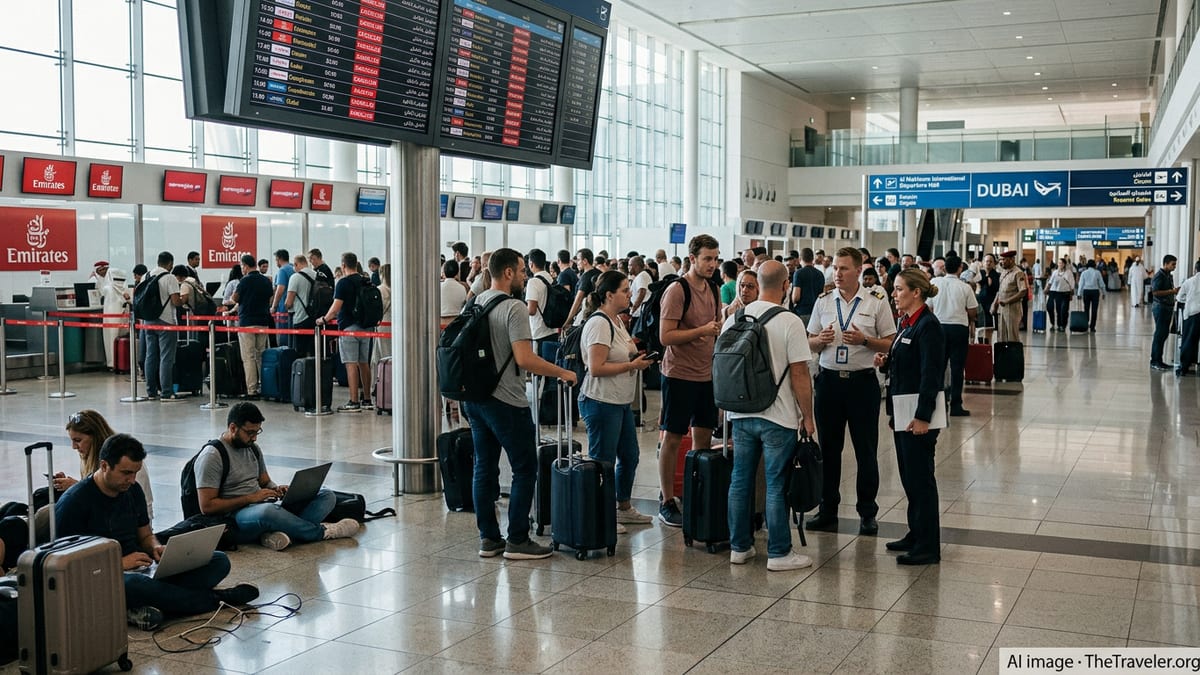
Shift in UK guidance after months of disruption
The updated travel advice follows several months in which the Middle East conflict and related airspace closures led to widespread cancellations, rerouted services and strict warnings against travel to or through multiple countries in the region. Publicly available travel advisories show that at the height of the disruption the UK government was advising against all or all but essential travel to a number of destinations, which triggered automatic trip cancellations for many UK tour operators and airlines.
Reports from industry-facing bulletins describe how some online travel agencies halted package holidays to countries on the Foreign Office “no travel” list and offered refunds or rebooking options for customers due to depart via hubs including Dubai, Doha, Amman and Bahrain. This reflected the close link between official government advice and the ability of companies to operate trips and maintain insurance cover.
Recent risk assessments and the gradual stabilisation of airspace patterns have prompted a reassessment. Commentaries tracking the advisories indicate that the UK’s position on the United Arab Emirates has now moved away from the most restrictive category, aligning more closely with partners such as Australia that have also downgraded some Middle East warnings while still urging travellers to exercise a high degree of caution.
The change does not remove all concerns about security or flight reliability in the wider region, but it does mark an important policy shift for one of the key transit gateways linking the UK with Asia, Africa and Australasia.
What has changed for Dubai and the wider UAE
The headline change for UK travellers relates to journeys to and through the United Arab Emirates, particularly Dubai International Airport, which serves as a major global hub. According to publicly available coverage of the latest update, the Foreign Office is no longer applying a blanket recommendation against all but essential travel to the UAE, effectively reopening the door for discretionary leisure trips and short breaks that had been on hold.
In practical terms, this adjustment means airlines and tour operators can once again sell a wider range of Dubai itineraries without automatically conflicting with official advice. Travel firms monitoring the situation are indicating that there is currently no broad requirement for passengers with existing bookings to change their plans solely on the basis of UK government guidance, although schedules remain subject to operational decisions by individual carriers.
The revised stance also aligns with broader international trends in the wake of recent diplomatic developments involving Iran and Western governments. Several nations have lowered their advisory levels for Gulf states such as the UAE, Qatar and Bahrain, acknowledging both the importance of these countries as aviation hubs and the need to distinguish between higher-risk conflict zones and relatively stable transit points.
However, travellers are still being urged by insurers and risk analysts to pay close attention to the fine print. While Dubai itself is again deemed broadly accessible, aviation experts note that airspace routings across parts of the Middle East can change quickly, which may affect the timing of flights or the viability of specific connections.
Mixed picture across the Middle East region
The easing of restrictions for Dubai and some Gulf neighbors does not mean that the entire Middle East has returned to business as usual. Foreign travel advisories from the UK and other governments continue to differentiate between comparatively low-risk transit hubs and areas affected by active conflict or heightened security concerns.
Australian government briefings, for example, now place the United Arab Emirates, Qatar, Bahrain, Kuwait and Israel in a category where travellers are asked to reconsider the need for travel rather than avoid it entirely, while still maintaining “do not travel” warnings for locations such as Iran, Iraq, Lebanon, Palestine, Syria and Yemen. Comparable gradations can be seen in UK and European advice, where certain cities and border regions remain subject to stricter guidance than international airports used primarily for onward connections.
Industry analysis from travel insurers and security consultancies highlights that many long-haul routes between Europe, Asia and Australia still rely on Middle Eastern airspace and stopover points. Even where a government has softened its position on travel to a particular country, flight patterns can be influenced by temporary closures, military activity or diplomatic tensions affecting neighbouring nations.
As a result, the picture across the region is mixed. For UK travellers, Dubai and other major Gulf airports are once again more accessible on paper, but itineraries touching countries closer to current flashpoints may remain subject to elevated advisory levels and, in some cases, outright warnings against travel.
Implications for airlines, tour operators and insurance
The Foreign Office shift is expected to have immediate implications for UK-based airlines, tour operators and insurance providers. When a destination is placed under advice against all or non-essential travel, package holiday providers typically cancel departures automatically and offer customers refunds or alternative arrangements, because standard travel insurance often ceases to be valid in such circumstances.
With Dubai and the UAE moved out of the strictest advisory bracket, companies that had paused sales or significantly cut capacity now have greater flexibility to restore flight frequencies and reinstate stopover-based products. Trade updates from major agencies suggest that, although some carriers had already maintained limited schedules through the disruption, the clearer government signal is likely to support a broader recovery in demand.
Insurance policies are also closely tied to official advice. Many UK travellers who were previously unable to secure cover for discretionary trips to the UAE may find that standard products once again include Dubai, provided there is no active warning against all or all but essential travel. Specialist brokers continue to emphasise, however, that cover for neighbouring countries under stricter advisories may still be excluded, and that policyholders should read conditions carefully before booking multi-stop itineraries.
Travel-management firms working with corporate clients are expected to review their own internal risk thresholds in light of the new guidance. For some businesses, the ability to route staff through Dubai and other Gulf hubs without breaching company travel policies will be a key factor in reconnecting disrupted supply chains and meeting schedules.
What UK travellers should do now
For individuals planning trips that include Dubai or connections through the Middle East, the message from travel experts remains one of cautious optimism. Public information from airlines and advisory services suggests that there is currently no universal requirement to cancel or reroute journeys simply because they pass through the region, particularly when the itinerary is limited to major hubs that have seen their risk level downgraded.
Even so, travellers are being encouraged to monitor updates from multiple sources, including official foreign travel advice pages, airline travel alerts and insurer notifications, because the security environment and aviation arrangements can change at short notice. Recent experience has shown that airspace restrictions, temporary airport closures or changes to overflight permissions can reshape schedules within hours.
Passengers with existing bookings are generally advised to keep in close contact with their airline or travel agent, which will be responsible for implementing any schedule changes and for explaining options if a flight is cancelled or rerouted. Some carriers continue to offer flexible rebooking policies linked to the Middle East situation, although the precise terms vary by company and route.
For new bookings, travel planners recommend allowing extra time for connections, checking that travel insurance explicitly covers the destinations on the itinerary, and keeping accommodation and land arrangements as flexible as possible. With the UK Foreign Office now taking a more nuanced approach to Dubai and parts of the Gulf, the opportunity to resume long-postponed trips is clearly improving, but the environment remains more fluid than on many other established routes.