

More news on this day
The UK Foreign, Commonwealth and Development Office has eased its stance on travel to the United Arab Emirates, removing “do not travel” style warnings but replacing them with a pointed reminder that British visitors face elevated security, legal and insurance risks in the Gulf state and the wider region.
Get the latest news straight to your inbox!
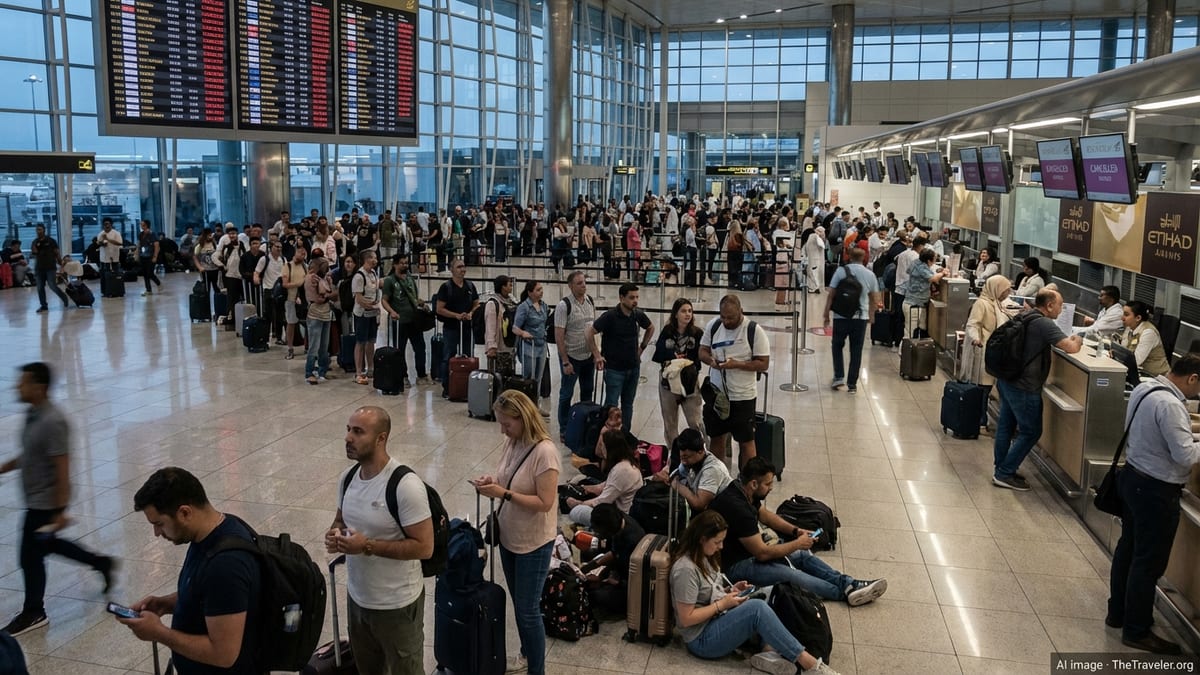
Advisory shift opens door for UK tourism to the Gulf
The latest update to the Foreign Office’s online travel advice reflects a broader recalibration of official guidance on the Middle East, after months in which large parts of the region were effectively off limits to British holidaymakers. Reports indicate that the United Arab Emirates is no longer categorised under the strictest level of warning, which had told travellers to avoid the country entirely except for essential reasons.
The change is significant for airlines, tour operators and travel agents that rely heavily on Dubai and Abu Dhabi as both stand alone destinations and major hubs for long haul connections. Industry watchers note that once the Foreign Office stops advising against all but essential travel, standard travel insurance policies are more likely to be valid again, making it easier for package holidays and city breaks to resume at scale.
However, the updated wording makes clear that the security picture is not back to pre crisis normality. The UAE now sits in a middle band of risk, comparable to advice recently issued for several other Gulf states, where travel is permitted but only on the understanding that conditions could deteriorate quickly and travellers may need to adapt plans at short notice.
For British travellers who have maintained bookings throughout months of uncertainty, the shift may provide reassurance that flights and hotels are less likely to be cancelled en masse. Yet travel specialists caution that an end to the de facto ban does not mean an all clear, and that the onus has shifted back to individuals to read the small print of government advice before departure.
Security climate: terrorism and regional tensions remain in focus
The new guidance underlines that the principal concern for British nationals in the UAE continues to be the possibility of terrorism and spillover from wider regional conflict. Publicly available information from several governments, including the United States and Australia, has highlighted a heightened risk environment across the Gulf, with specific reference to potential missile or drone activity and threats to aviation.
Recent briefings on Middle East security have cited incidents in and around Dubai that prompted temporary shelter in place alerts and precautionary measures for foreign missions. Analysts note that while the UAE itself maintains tight domestic security, it sits close to regional flashpoints, and its status as a major aviation and commercial hub could make it a symbolic target.
The Foreign Office language points to the possibility of attacks occurring with little or no warning, and encourages Britons to maintain awareness of local news, follow instructions from local authorities and be prepared for rapid changes to airport operations or airspace routing. Travellers are advised that even indirect consequences of regional escalation, such as diverted flights or temporary closures of airspace, could disrupt itineraries.
Security experts contacted in recent days also stress that crowded public areas, large events and locations popular with foreigners may be subject to enhanced screening and occasional closures. Visitors are urged to factor in extra time for security checks and to avoid unnecessary travel near sensitive sites if tensions rise.
Local laws, online activity and photography under renewed scrutiny
Alongside the security warning, the Foreign Office has sharpened its focus on the UAE’s strict legal framework, particularly around social media, photography and behaviour that might be considered critical of the state or its allies. Published coverage of recent cases has drawn attention to British visitors who faced serious charges after filming or sharing images of military activity and sensitive infrastructure.
The guidance reiterates that actions seen as trivial at home, such as posting videos of explosions, missile interceptions or security responses, can fall foul of UAE cybercrime and national security laws. Even forwarding material received from others may carry legal consequences. Travellers are urged to think carefully before recording or sharing any content related to incidents, protests or government facilities.
More broadly, the advice reminds Britons that behaviour tolerated in the UK, including public displays of affection, the consumption of alcohol outside licensed venues, and comments made on social media about religion or politics, can lead to arrest or fines in the UAE. Holidaymakers are encouraged to familiarise themselves with local customs and legal restrictions well before arrival.
Legal specialists point out that the tougher language on digital conduct reflects a pattern seen across several Gulf states, where cybercrime and defamation statutes are being used more frequently. British travellers are therefore being told to treat their phones and online profiles as extensions of their public behaviour, and to assume that anything posted from within the country may be monitored.
Insurance, airlines and tour operators adapt to the new risk level
The lifting of the most severe Foreign Office warning is expected to trigger a gradual rebuild of capacity on routes between the UK and the UAE. Major carriers had maintained skeleton schedules during the height of the restrictions, but travel industry reports suggest that airlines and tour operators are now assessing demand for winter sun and city break packages.
Travel insurers typically rely on the wording of official government advice when deciding whether to provide cover. With the advice no longer framed as a blanket call to avoid the UAE, more policies are likely to cover cancellation, medical treatment and repatriation, provided travellers follow official guidance and do not knowingly put themselves in high risk situations.
Despite this, insurance experts caution that many policies contain exclusions related to war, terrorism and civil unrest. Britons heading to Dubai, Abu Dhabi or other emirates are being encouraged to check policy documents closely, paying particular attention to clauses about travel to areas under heightened advisory levels and participation in risky activities such as desert excursions or water sports.
Package holiday firms, meanwhile, are updating their own terms and conditions to reflect the changed status of the UAE. Some operators are offering flexible booking policies for departures over the coming months, allowing customers to switch to alternative destinations if the regional outlook worsens or if airlines are forced to adjust flight schedules again.
What British travellers should do before booking the UAE
For would be visitors, the end of the de facto ban opens up the possibility of returning to one of the UK’s most popular long haul destinations, but it also demands more preparation. Travel agencies are advising clients to read the full Foreign Office advisory for the UAE, rather than relying on headline summaries, and to sign up for email alerts so they receive updates if the situation changes.
Prospective travellers are also being urged to register contact details with their tour operator or airline and to keep emergency numbers for their travel insurer and local consular services readily accessible. Given the possibility of sudden travel disruption, flexible tickets and accommodation that allow date changes or refunds may be worth the additional upfront cost.
On the ground, visitors are encouraged to keep passports and key documents secure but accessible, to carry a charged mobile phone, and to have a plan for communicating with family or friends in the UK if there are interruptions to internet or mobile services. Monitoring local media and official announcements can help travellers avoid high risk areas and respond quickly to any change in security posture.
Ultimately, the Foreign Office’s decision to lift its strongest warning on the UAE marks a pivotal moment for British travel to the Gulf. Yet the detailed language of the updated advice makes clear that the responsibility for managing risk now rests more heavily with individual travellers, who are expected to stay informed, follow local law and be prepared for a fluid security environment.