

More news on this day
The UK’s Foreign, Commonwealth and Development Office has removed its broad “do not travel” warning for the United Arab Emirates, reopening the way for British holidaymakers to visit Dubai and other emirates, but updated advisories underline significant security uncertainties in the wider region and the risk of severe penalties for breaking local laws.
Get the latest news straight to your inbox!
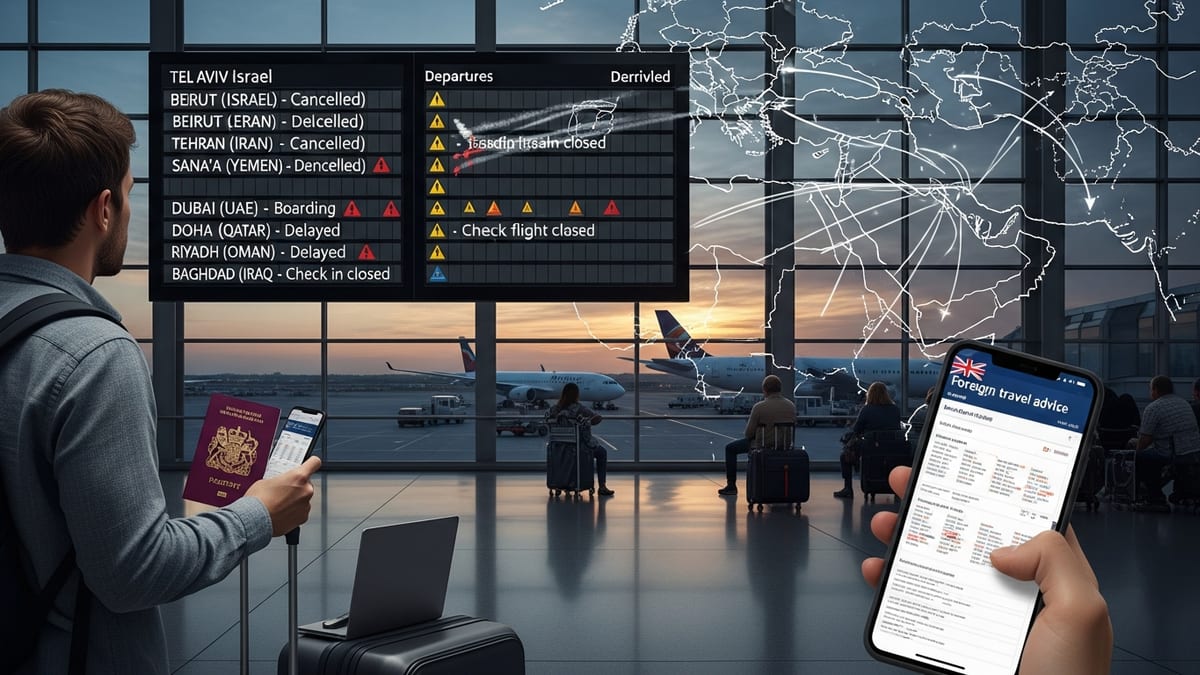
FCDO eases stance on trips to UAE and Dubai
According to publicly available government travel pages and recent coverage of advisory changes, the Foreign Office no longer advises against all but essential travel to the UAE. The adjustment follows several months of heightened concern linked to regional tensions and disruption to flights through major Gulf hubs.
The change means British travellers are once again broadly able to plan holidays and stopovers in Dubai, Abu Dhabi and other emirates without automatically going against official guidance. Airlines and tour operators are expected to see renewed demand for UAE breaks, particularly as Dubai remains a key connection point between the UK, Europe, Asia and Africa.
However, the updated FCDO text still urges visitors to monitor developments closely and sign up for travel advice alerts. The overall message signals that while a blanket ban is no longer considered necessary, the security backdrop around the Gulf has not fully normalised.
Regional tensions and aviation disruption still a concern
Recent reports on Middle East travel advisories describe a landscape of fluctuating risk levels, with several Western governments reviewing their assessments in response to changing security conditions and airspace restrictions. While the UAE itself is no longer subject to the UK’s most severe warning, the broader region continues to experience periodic spikes in tension that can affect flights, transit routes and perceived safety.
Analysts point out that hubs such as Dubai and Abu Dhabi are deeply embedded in regional air networks, so any new escalation in nearby conflict zones or threats to aviation can quickly ripple through schedules. Earlier in the year, travellers experienced cancellations and diversions after precautionary closures and rerouting in parts of Middle Eastern airspace.
British travellers are being encouraged to keep in close contact with their airlines, as operational updates from carriers can change at short notice. Industry advisories recommend allowing additional time for connections, checking refund and rebooking rules, and confirming that travel insurance covers disruption linked to security events or government advisories.
Stark warning on strict laws, social media and photography
Alongside the easing of the overall travel stance, new emphasis is being placed on the UAE’s strict legal framework. Public information distributed in recent months highlights that actions considered minor in the UK can lead to arrest, fines or imprisonment in the Emirates, particularly in relation to cybercrime, public morality and national security.
Advisory material circulating since a widely reported case involving a British visitor charged after filming missile activity near Dubai has drawn attention to prohibitions on photographing or sharing images of military sites, government buildings or security incidents. Travellers are being reminded that posting or forwarding sensitive content on social media platforms may fall under local cybercrime laws.
Britons are also advised to be cautious about comments made online about the UAE’s rulers, institutions and religion, as criticism that would be protected speech in the UK can be treated as a criminal offence locally. Guidance stresses that visitors are subject to UAE law from the moment they arrive, regardless of the platform or device used to publish material.
Insurance, consular limits and personal responsibility
Updated travel advice notes that insurance cover can be affected if people ignore official warnings or travel to areas where the FCDO still advises against all or all but essential travel. Insurers may limit payouts related to conflict, terrorism or civil unrest, leaving travellers potentially exposed to large costs if they are forced to change plans or require emergency assistance.
Information available from travel risk consultancies and consumer organisations indicates that some policies now include specific clauses for the Middle East, requiring policyholders to follow government advisories and register with alert services. Travellers heading to Dubai or connecting through UAE airports are urged to review the fine print of their policies before departure.
The Foreign Office also underlines that consular staff have limited ability to intervene when a British national is detained under local law. While assistance may include providing information on local lawyers and monitoring welfare, officials cannot secure release or special treatment. The latest messaging stresses that individuals bear primary responsibility for understanding and complying with UAE regulations.
Practical advice for Brits planning UAE trips
Travel experts recommend a cautious but informed approach for anyone now reconsidering or booking holidays to Dubai and other Emirati destinations. Prospective visitors are encouraged to register for government travel alerts, check airline and airport updates regularly and keep digital copies of key documents, including passports, visas and insurance certificates.
Behavioural guidance featured in publicly available briefings suggests dressing modestly in public areas, avoiding public displays of affection and refraining from drinking alcohol outside licensed venues. Visitors are advised not to photograph security installations, critical infrastructure or any incident scene, and to ask permission before taking close-up images of individuals.
As the Foreign Office moves away from blanket bans towards more nuanced guidance, the focus for British travellers to the UAE is shifting to preparation and situational awareness. The reopening of mainstream tourism to Dubai comes with an expectation that visitors will stay informed and adapt quickly if the regional picture changes again.