

More news on this day
The United Kingdom has eased its travel advice for the United Arab Emirates, signalling greater confidence in the Gulf state’s security environment and offering a welcome boost to tourism and aviation links at a critical point in the region’s recovery.
Get the latest news straight to your inbox!
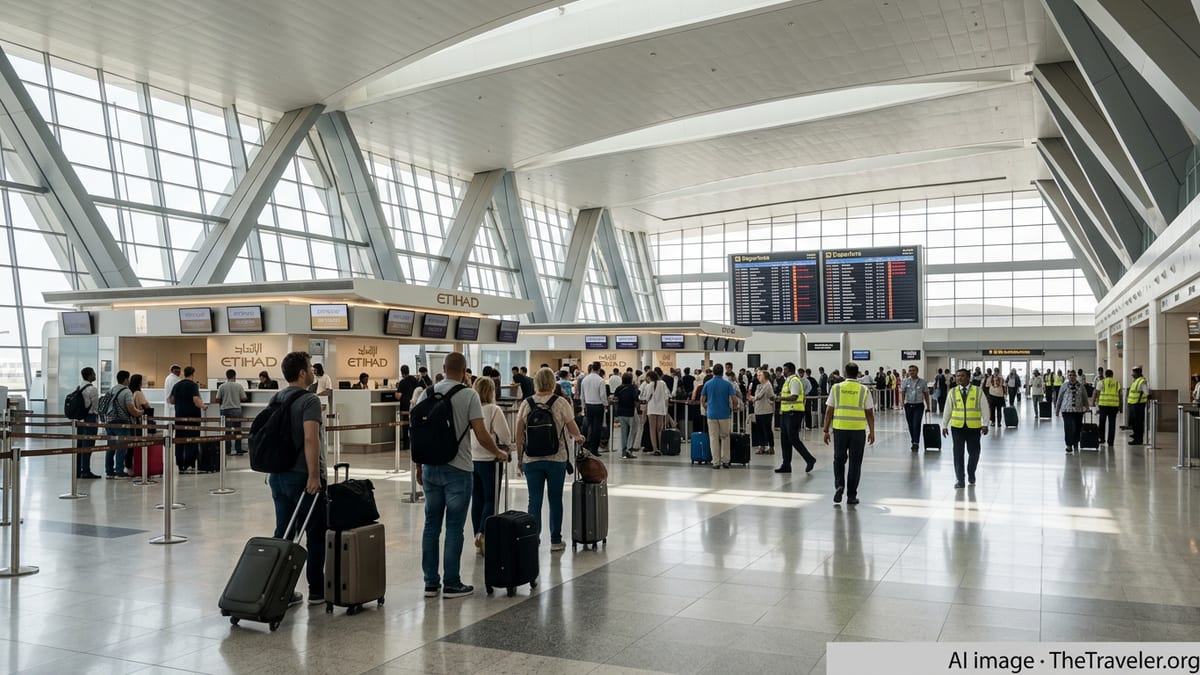
Shift in UK Guidance After Months of Tension
The update to the UK Foreign, Commonwealth and Development Office guidance follows months of heightened concern over missile and drone activity affecting Gulf airspace, including high-profile disruptions in and around Dubai and Abu Dhabi earlier in the year. Publicly available information shows that British travellers were previously urged to reconsider non-essential visits to the UAE amid fears of spillover from regional conflict.
The revised wording indicates that the overall terrorism and conflict-related risk to most visitor areas is now viewed as more contained than during the peak of tensions. While the UAE continues to be described as a location where attacks cannot be ruled out, the language no longer aligns it with the most restrictive categories applied elsewhere in the Middle East.
According to published coverage surveying recent advisory changes by several Western governments, the UK shift forms part of a broader recalibration of risk assessments for major Gulf hubs such as Dubai, Abu Dhabi and Doha. The adjustments reflect both a relative easing of immediate military threats and confidence in local security and civil protection measures around airports, tourist zones and business districts.
Industry analysts note that the move is particularly significant given the UK’s role as one of the UAE’s top European source markets. Tour operators and airlines rely heavily on the clarity of FCDO language when shaping capacity, pricing and insurance arrangements for peak travel periods.
Tourism Sector Sees Renewed Momentum
Tourism bodies in the Gulf have been watching foreign travel advisories closely since late winter, when a combination of regional conflict and aviation disruption prompted cancellations, rebookings and a noticeable slowdown in forward bookings from Europe. Reports from travel consultancies suggest that inbound demand to the wider Middle East has been under pressure, with some forecasts pointing to a double-digit decline in international arrivals for 2026.
The UK revision is expected to support a gradual return of confidence among leisure travellers who had postponed trips to Dubai and other UAE emirates. Package holiday providers and online travel agencies are already highlighting more flexible booking conditions, while destination marketing campaigns are refocusing on the UAE’s long-standing reputation for safety, infrastructure quality and family-friendly attractions.
Hotel groups operating across the UAE are likely to benefit from the improved signal in time for the late-summer and winter high seasons, when British visitors traditionally flock to the Gulf’s resorts. Industry briefings indicate that many properties had maintained operations throughout the recent turbulence, relying more on regional and domestic guests while waiting for long-haul markets to recover.
Travel risk specialists caution that some nervousness will linger, particularly among first-time visitors, but describe advisory improvements as a prerequisite for any meaningful recovery. In this context, the UK decision to soften its stance is being interpreted as an important psychological turning point as much as a technical change in government wording.
Airlines and Transit Hubs Readjust
The UAE’s status as a key global transit hub amplifies the impact of any shift in official advice. Dubai International Airport and Abu Dhabi International Airport sit on the crossroads of Europe-to-Asia and Europe-to-Australasia routes, and disruptions earlier this year forced carriers to reroute or suspend selected services through Gulf airspace.
According to airline updates and aviation intelligence briefings, many long-haul carriers have gradually restored frequencies or lifted temporary caps as risk assessments improved. The UK revision to its advisory for the UAE is expected to reinforce these trends by easing pressure on corporate travel policies that often reference FCDO guidance when approving staff itineraries.
Emirates, Etihad and other regional airlines have continued to underline their adherence to international safety protocols and dynamic risk monitoring, adjusting flight paths and schedules in response to changing security conditions. Public notices from carriers still encourage passengers to allow extra time for security checks and remain attentive to airline communications, reflecting the view that regional stability remains fragile even as immediate threats have receded.
Travel management companies state that the new UK stance could also help unlock demand for itineraries that include stopovers in Dubai or Abu Dhabi, a segment that had softened as travellers opted for routings that avoided the Gulf altogether. With the advisory language now more closely aligned to that applied to other major transit hubs, routing decisions are expected to return more squarely to considerations of price, convenience and service quality.
Regional Context and Cautious Optimism
The UK’s decision comes against a backdrop of wider adjustments to Middle East travel advisories by governments including the United States, Australia and several European states. Comparative analysis of these changes suggests a gradual shift away from blanket warnings toward more differentiated, country-specific assessments that recognise varying levels of risk between conflict zones and relatively stable Gulf economies.
Advisory maps and risk ratings produced by security consultancies continue to flag the Gulf as an area requiring heightened situational awareness, particularly given ongoing tensions involving Iran and critical energy infrastructure. However, these assessments also underline that frontline conflict remains geographically concentrated, with the UAE and neighbouring tourism-driven states working to insulate key economic centres from potential spillover.
For the UAE, the updated UK guidance arrives as authorities and industry stakeholders push to keep long-term diversification plans on track. Tourism is central to those strategies, with large-scale investments in leisure districts, cultural attractions and events designed to reduce reliance on hydrocarbons and cement the country’s position as a global visitor hub.
Market watchers describe the mood across the Gulf tourism sector as cautiously optimistic. While few expect an immediate return to pre-crisis growth trajectories, the recalibration of UK advice toward the UAE is being seen as an early indicator that the sharpest phase of disruption may be easing, allowing the region to focus once more on competition and innovation rather than crisis management.