


More news on this day
A sudden government decision to restrict travel involving 13 countries now classified as unsafe has triggered widespread disruption for airlines, tour operators and travelers caught mid‑itinerary or preparing for imminent departures.
Get the latest news straight to your inbox!
From advisory shifts to a near-blanket prohibition
According to publicly available notices and recent media coverage, the move follows weeks of steadily tightening travel advisories for a cluster of destinations facing escalating security threats, regional tensions and health concerns. Several governments had already raised their warning levels for these countries to their highest tiers, citing risks that range from terrorism and armed conflict to disease outbreaks and widespread civil unrest.
Published information indicates that what began as a series of incremental warning updates has now hardened into a de facto travel ban affecting most non-essential journeys to or from all 13 destinations. In practical terms, that means new entry visas are being withheld in many categories, commercial air links are being thinned out or temporarily halted, and consular assistance may be harder to access for those who choose to remain in or travel to affected areas.
Travel-advice portals in several major source markets had already been signaling a broader security reassessment, with more countries sliding into “do not travel” or “reconsider travel” territory in 2025 and 2026. The new ban formalizes that drift by grouping 13 states under a single umbrella policy and explicitly labeling them unsafe for leisure and most business trips.
While details vary between jurisdictions, publicly posted rules suggest that permanent residents and citizens generally retain the right to return home, even if they have been in one of the restricted countries. However, they may face additional health screening on arrival, mandatory quarantine in some cases, and fewer onward connection options as airlines trim capacity in response to reduced demand and regulatory uncertainty.
What the ban means for flights, refunds and existing bookings
The most immediate impact of the ruling is being felt at the operational level. Flight-tracking data and airline statements indicate that carriers are rapidly adjusting schedules, cutting frequencies or suspending certain routes altogether that touch the 13 affected countries. Some long-haul services are being rerouted to avoid overflying newly identified risk zones, which can add time and cost to itineraries even when origin and destination are not directly subject to the ban.
For travelers, the policy shift raises urgent questions about refunds, ticket changes and package-holiday rights. Industry practice and consumer-protection rules in many markets treat government bans or top-tier travel advisories as grounds for no-penalty changes or refunds, but the fine print differs between airlines and tour operators. Public-facing guidance from regulators generally encourages affected passengers to first contact their carrier or agent, document any written confirmation that a flight is canceled or a destination is off-limits, and then escalate to national consumer bodies if refunds are denied.
Travel-insurance implications are likely to be complex. Many policies explicitly exclude cover for trips booked after a formal travel warning or ban is announced, while still providing some protection for travelers who purchased insurance before the change. Publicly available policy wordings typically define government prohibition, war, terrorism and known events as exclusions, meaning travelers planning to rebook to nearby countries in the same region may also find their coverage restricted or subject to higher premiums.
Airports that act as regional hubs for the newly restricted countries can expect knock-on effects even on permitted routes. Published schedule changes in previous crises show that hub carriers often consolidate departures, move passengers onto fewer flights and redeploy aircraft to more stable markets, which can reduce choice and flexibility for travelers across an entire region rather than just on direct services to the 13 destinations.
Who can still travel and under what conditions
Despite headlines describing a blanket ban, the underlying regulations outlined in public orders and advisories generally preserve a limited set of exceptions. These usually include emergency medical transfers, strictly defined humanitarian missions, diplomatic travel and, in some cases, essential maintenance work on critical infrastructure such as energy facilities or undersea cables. Even in those categories, travelers may be required to obtain special authorization letters and comply with enhanced screening before departure and on arrival.
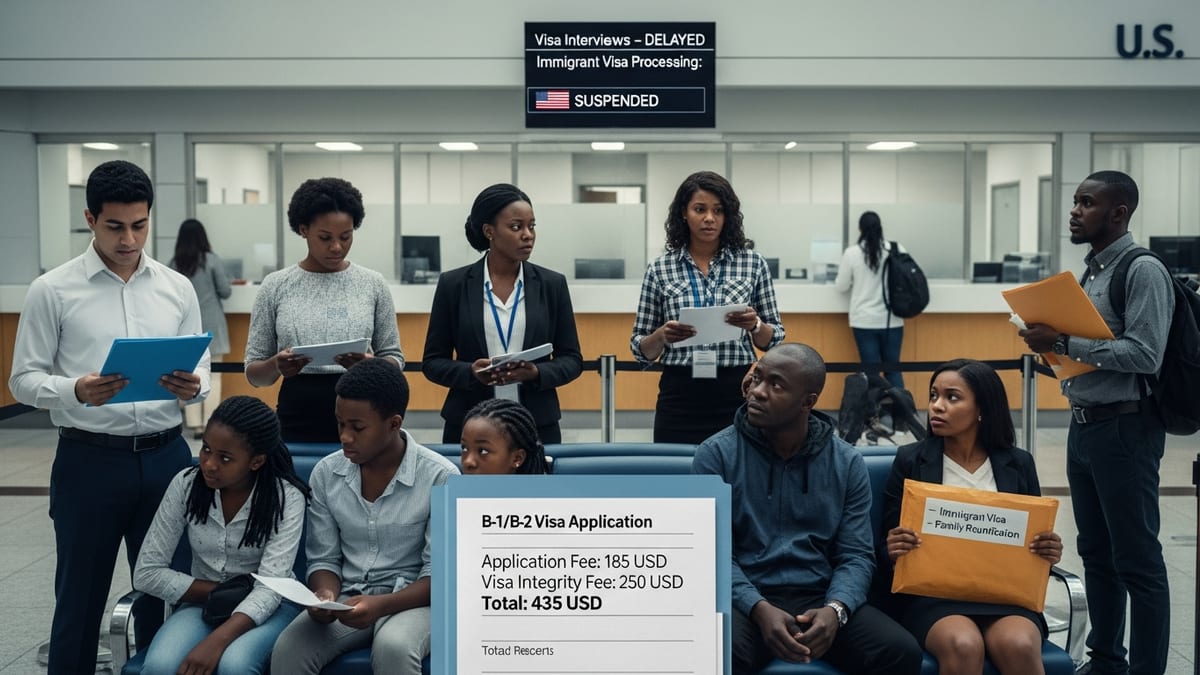
Residents of the affected countries face some of the toughest constraints, especially where visa issuance has been paused or entry is suspended for entire nationality groups. According to official notices in past rounds of country-specific restrictions, travelers who already hold valid long-term visas or residence permits in another state sometimes retain the right to enter, but they can face lengthy processing delays, extra security interviews and the possibility that air links may be withdrawn at short notice.
Transit rules sit in a grey area. In previous travel crackdowns, some governments have allowed passengers to connect through their airports as long as they did not cross the international border, while others extended bans to anyone who had recently been in a flagged country, even if only in airside transit. Current public health orders and security proclamations suggest that similar logic is being applied now, making it essential for travelers to check both their airline’s conditions of carriage and the transit-country’s official guidance before flying.
Travelers who have recently visited one of the 13 countries but reside elsewhere may also be subject to “last-country-visited” rules, under which entry is restricted for anyone who has spent time in certain states during the previous 14 to 21 days. That approach has been used repeatedly in health-driven restrictions, and published disease-control orders in 2026 show that it remains a favored tool of border authorities managing cross-border risk.
Impact on tourism-dependent economies and regional connectivity
The sudden classification of 13 countries as unsafe is likely to hit tourism revenues in those destinations sharply. Recent economic analysis of earlier regional travel bans points to immediate declines in hotel occupancy, guided-tour bookings and aviation-related employment when advisories are upgraded to “do not travel.” The effect can be particularly severe in countries that rely heavily on inbound visitors from a small number of wealthier markets that tend to follow their own governments’ guidance closely.
Beyond headline visitor numbers, the new ban has implications for regional connectivity. Airlines often use routes to politically or economically fragile destinations to feed traffic into larger networks. When those links are suspended, travelers in neighboring countries can lose convenient one-stop options to long-haul markets, and freight shipments ranging from fresh produce to critical spare parts may be rerouted through more distant hubs, raising costs.
Travel-trade bodies have previously warned that rapid, uncoordinated restrictions can leave local businesses struggling to understand which segments of their customer base are still allowed to travel. The grouping of 13 countries into a single unsafe category may simplify communication for outbound travelers, but it can also obscure important nuances such as relatively stable resort areas far from conflict zones or regions where health risks are localized rather than nationwide.
Development agencies and humanitarian organizations have historically expressed concern that prolonged travel bans can slow the delivery of aid, disrupt monitoring missions and hinder the work of international staff based in affected countries. Publicly available planning documents from earlier crises suggest that agencies may now revisit contingency plans, including relocating regional headquarters, increasing reliance on local staff, or shifting more work to remote and digital channels.
What travelers should do now
For travelers with imminent plans involving any of the 13 countries, publicly available guidance across multiple governments points to a few consistent steps. First, those already in an affected destination are generally advised to register with their embassy or consular service where possible, monitor official travel-advice pages for country-specific instructions, and keep in close contact with airlines or tour operators regarding exit options.
Those holding future bookings are encouraged by consumer-protection agencies to review the exact wording of their tickets, package contracts and insurance policies, paying particular attention to clauses on government bans and force majeure. Where flights are canceled or destinations become legally off-limits, documentation such as airline emails, app notifications and updated booking references can help support refund or credit claims.
Public information emphasizes that conditions in many of the 13 countries remain highly fluid. Security situations can deteriorate or improve rapidly, and health-related restrictions may loosen if outbreaks are contained. Travelers considering alternative destinations in the same region are urged to check the latest advisory levels, understand any residual overflight or transit limitations, and avoid assuming that nearby countries are unaffected simply because they are not yet on the banned list.
Above all, the new ban underscores the importance of monitoring official advisories up to the day of departure and building flexibility into international itineraries. With 13 countries now categorized as unsafe under the latest rules, industry analysts anticipate a continued shift toward destinations perceived as politically stable, well resourced in health care and transparent in their risk communication to visitors.