


More news on this day
Around 200 paying residents on a yearslong global cruise marketed as a chance to “live at sea” have been left scrambling for new plans after their U.S.-operated ship, the MV Odyssey, abruptly suspended its multiyear itinerary in Cambodia, citing surging fuel costs and financial pressures.
Get the latest news straight to your inbox!
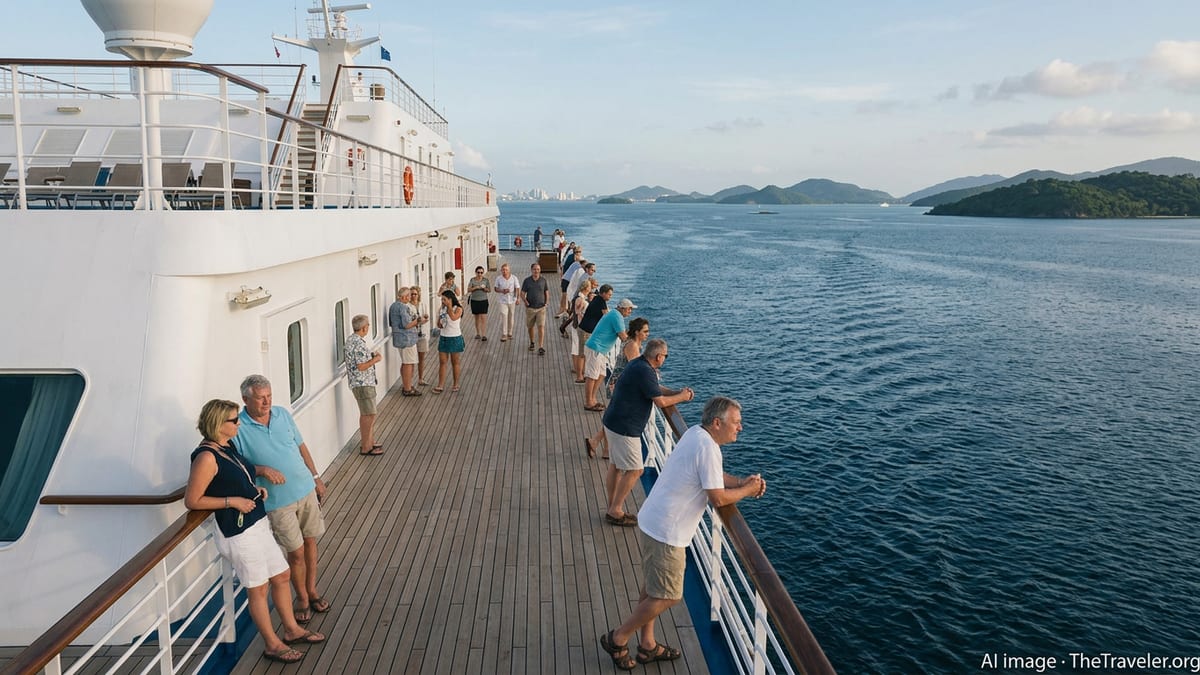
Voyage marketed as life at sea comes to an abrupt halt
According to widely circulated reports, the MV Odyssey had been sailing for roughly two years on what was advertised as a three-and-a-half-year itinerary to all seven continents, blending long-term residential living with slow global travel. The concept targeted retirees, remote workers, and frequent cruisers willing to commit to extended contracts for private cabins that functioned as semi-permanent homes.
Publicly available promotional material described the program as a way to downsize life on land and replace it with a floating community, with the ship offering restaurants, housekeeping, entertainment, and work-friendly spaces over an ultra-long itinerary. Passengers paid substantial upfront sums or long-term fees to secure cabins and services for the duration of the voyage.
This week, coverage from international and local outlets in Cambodia indicates that the operator informed guests their global route would be paused and that they would have to leave the ship in the port of Sihanoukville. The change marked a dramatic shift from the promise of a continuous around-the-world journey, leaving residents to rebook flights, find temporary housing, and reconsider plans many had made years in advance.
Reports indicate that the company has framed the decision as a suspension of the global voyage rather than a permanent cancellation, but as of late October there has been no clear, publicly detailed relaunch date for the extended itinerary.
Fuel prices and operating costs blamed for suspension
Published coverage of the incident links the sudden pause to soaring marine fuel costs and the broader economics of running a relatively small, long-duration cruise program. Operating a ship for years at a time without long breaks is expensive, particularly on routes that span multiple continents and require frequent long-distance repositioning.
In recent years, cruise lines of all sizes have cited fuel volatility, financing costs, and changing environmental requirements as key pressures on profitability. Industry financial filings and trade commentary show that long itineraries are especially vulnerable to spikes in fuel prices because there are fewer opportunities to adjust schedules, compress routes, or redeploy ships quickly to more profitable short cruises.
In the case of the MV Odyssey, reports indicate that the operator argued continuing the existing plan at current cost levels was not sustainable. The decision to suspend in Southeast Asia rather than continue onward suggests that the ship’s planned next legs, potentially involving longer ocean crossings and additional fuel-intensive segments, were considered financially untenable under present conditions.
The situation highlights a structural risk of multiyear cruise residences: passengers prepay or commit to long stays based on a detailed itinerary, but the operator still faces year-by-year market realities, including fuel, port fees, and financing, which can change much faster than a three-year plan can be revised.
Passengers disembark in Cambodia after uncertainty at sea
The ship’s diversion to Sihanoukville, on Cambodia’s southern coast, followed a period in which guests reported mounting uncertainty about the voyage’s future. Coverage by international outlets drawing on passenger accounts describes how travelers were informed of the suspension and told to prepare to leave the vessel rather than continue on to upcoming ports.
Once in Sihanoukville, approximately 200 passengers were required to disembark and arrange onward travel on relatively short notice. Cambodia is a growing cruise and resort destination, but it is not a standard turnaround port for most travelers from North America and Europe, making rebooking more complex and often more expensive than departing from established air hubs.
Local media and international reporting indicate that guests were given varying levels of assistance with logistics, including some coordination on hotel stays and discussions over partial compensation. However, many still faced last-minute itinerary changes, from securing visas or transit permissions to booking long-haul flights home or to alternative destinations.
The abrupt halt has revived memories of earlier episodes in the cruise industry in which ships have been left waiting offshore or rerouted due to health measures, political decisions, or technical problems, leaving passengers to navigate sudden itinerary changes. This time, the primary driver appears to be financial rather than regulatory or safety-related, underscoring how economic pressures can have very direct effects on travelers.
Residential cruising model faces renewed scrutiny
The MV Odyssey incident comes amid growing experimentation with residential and ultralong cruises, including multimonth “world voyages” and ships that sell long-term leases on cabins. These products promise stability and predictability, often marketed as an alternative to retirement communities or repeated short holidays on land.
Travel analysts and industry commentators note that such offerings depend heavily on traveler trust in the operator’s financial resilience and operational planning. When a multiyear voyage is paused midway for economic reasons, it raises questions about how risks and responsibilities are allocated between companies and guests.
Consumer advocates point to the importance of carefully reviewing contracts for extended cruises, including provisions on cancellations, suspensions, and refunds. Key details can include whether compensation is offered as cash or future cruise credit, what happens if a voyage is shortened or rerouted for commercial reasons, and how far in advance guests must be informed of significant changes.
Unlike conventional cruises of one or two weeks, where itinerary adjustments can sometimes be absorbed as minor inconveniences, a pause in a long residential voyage can disrupt years of planning. Many residents on the MV Odyssey reportedly sold or rented out homes, ended leases, or reorganized their work and family commitments to accommodate the journey’s advertised duration.
What prospective long-cruise travelers should consider now
The experience of passengers stranded by the MV Odyssey’s suspension is prompting closer attention to the fine print of long-duration cruise arrangements. Travel specialists who monitor the sector emphasize several practical considerations for would-be residents of ships.
First, potential guests may wish to examine an operator’s financial background and track record running complex itineraries, relying where possible on publicly available financial information, independent reviews, and past operating history rather than only marketing claims. While even established lines can face disruptions, companies with deep fleets and diversified itineraries may have more flexibility to adjust without halting a voyage entirely.
Second, travelers booking yearslong or full world cruises are increasingly looking for clear, written policies on suspensions related to fuel prices or operating costs. Understanding how compensation is calculated, how unused segments are valued, and whether alternative sailings are guaranteed can help travelers assess the real level of risk involved.
Finally, the MV Odyssey case illustrates the importance of maintaining contingency options on land, such as keeping some form of housing or storage arrangement and ensuring that health insurance and travel insurance will respond if a long cruise ends suddenly in a foreign port. For the roughly 200 passengers now reorienting their plans from Cambodia, the sudden end of a dream voyage is a reminder that even meticulously planned life-at-sea adventures remain tied to the shifting economics of global travel.