


Perfect packing is not about bringing everything you might need. It is about bringing exactly what you will actually use, in a way that keeps you comfortable, confident, and mobile. For female travelers in particular, packing well means balancing style with safety, cultural expectations, and the realities of cramped airplane cabins and unpredictable weather. This guide walks through an ultimate, real-world packing list that you can adapt to any trip, from a weekend city break to a month-long multi-country adventure.
Get the latest updates straight to your inbox!
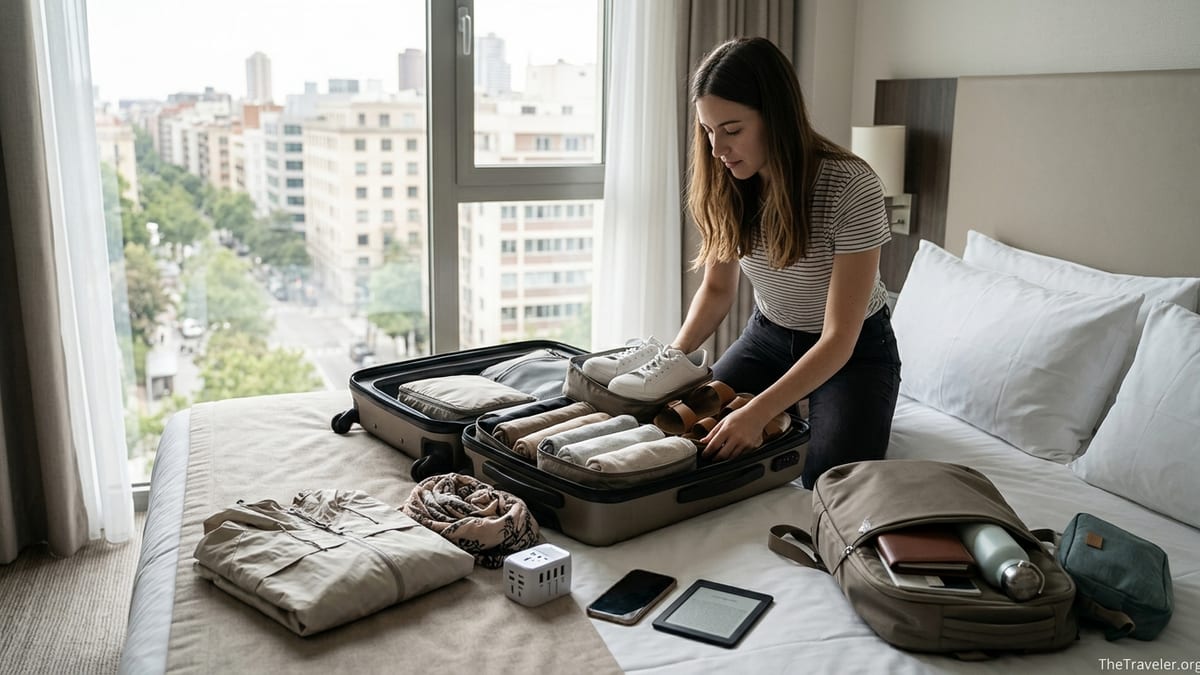
Start With the Right Luggage Strategy
Your packing list only works if it fits into the luggage you choose. Most women find a combination of a carry on suitcase and a personal item backpack to be the most versatile option. As a benchmark, many major airlines accept carry ons around 21 to 22 inches tall, roughly 14 inches wide, and 9 inches deep, which usually works out to about 40–45 liters. A hard sided spinner like the Away Bigger Carry On or a soft sided option such as the Travelpro Maxlite series both give you enough room for a week or more of clothing if you pack strategically.
For your personal item, look for a backpack in the 20–25 liter range with a laptop sleeve and a wide opening. Brands such as Osprey, Cotopaxi, and Herschel make daypacks that work as both in flight organizers and on the ground sightseeing bags. This is where you will store essentials like your passport, medication, tech, a scarf, and a small toiletries pouch you can pull out quickly during security screening.
If your trip involves trains, ferries, or lots of stairs, consider a travel backpack instead of a rolling suitcase. A 35–40 liter women’s fit pack from companies like Osprey or Deuter can replace a carry on case while leaving your hands free. In older European cities with cobblestones, or in Southeast Asia where sidewalks can be uneven or nonexistent, being able to carry everything on your back can make arrivals and departures far less stressful.
Whichever luggage style you choose, line the inside with two or three lightweight packing cubes. Use one for tops, one for bottoms and dresses, and one for underwear and sleepwear. This simple system saves time in small hotel rooms or hostel dorms and keeps you from rummaging through your entire bag to find a clean pair of socks before an early flight.
Core Clothing: Build a Mix and Match Travel Wardrobe
When planning outfits, start with the rule that every top should match every bottom, and most pieces should layer together. For a one week warm weather trip, many women do well with three or four breathable tops, two pairs of shorts or light trousers, one casual dress, one light sweater or cardigan, a packable rain jacket, and enough underwear for seven days. Neutral colors like black, navy, olive, and beige make outfit combinations easy, while a couple of colorful scarves or statement earrings keep things from feeling repetitive in photos.
In cooler climates, swap shorts for one pair of jeans and one pair of quick drying travel pants or leggings, then add a merino wool base layer, a fleece or light insulated jacket, and a waterproof shell. Merino wool is especially useful because it resists odor and dries faster than cotton, so a single merino T shirt can often be worn several times before washing. Many women also like a knee length wool or synthetic blend travel dress that can be dressed up with tights and ankle boots or dressed down with sneakers.
Consider local customs when choosing hemlines and necklines. For example, if you are visiting religious sites in Italy, Greece, or Turkey, you may be asked to cover shoulders and knees, so a midi skirt and a light shawl make it easy to adjust. In some parts of the Middle East or South Asia, looser trousers and tunic length tops help you stay both respectful and comfortable in the heat. Packing one or two versatile pieces that provide more coverage gives you options without weighing down your bag.
Finally, pack one set of comfortable loungewear or pajamas that you would not mind being seen wearing in a hostel corridor or when you need to step out to the hotel breakfast. A simple cotton T shirt and leggings or soft joggers work well. This outfit can also double as a long haul flight uniform so you can sleep more easily on overnight routes.
Shoes and Accessories: Comfort First, Style a Close Second
Footwear is where many travelers overpack. In reality, most female travelers can handle almost any trip with two, at most three, pairs of shoes. For city breaks and mixed itineraries, start with a pair of supportive walking sneakers from brands like New Balance, Nike, or Adidas. Look for options with cushioning and a neutral style that matches jeans, dresses, and trousers. Wear these on the plane to save space and keep your heaviest pair off the luggage scale.
Your second pair should be lighter and packable. In warm destinations, that might be a pair of leather sandals with a secure back strap, sturdy enough for a day of walking on cobblestones. In cooler or rainy places, low profile waterproof ankle boots from brands like Blundstone or Sorel are worth their space. They can handle unexpected rain showers, muddy paths to countryside guesthouses, or slushy winter streets in New York, London, or Berlin.
A third pair is optional and should be chosen only if it supports a specific activity. For example, pack trail running shoes if you are hiking in Patagonia, or simple foldable ballet flats if you have a work event or more formal dinners planned. To keep your bag organized, store spare shoes in lightweight drawstring bags so that dirty soles do not touch your clothes. Slip a couple of pairs of thin merino or synthetic socks in with each pair, especially if you will be walking more than 10,000 steps most days.
Accessories can transform a small set of clothing into a more varied wardrobe. A large, neutral scarf or pashmina works as a blanket on cold flights, a shoulder cover at temples, and a light layer during breezy evenings on the coast. A compact foldable hat, such as a crushable straw sunhat or a wool beanie, protects you from sun or cold without needing special packing. For jewelry, choose a small selection of pieces that you would not be devastated to lose. Many women bring one pair of small hoops or studs, a simple pendant, and perhaps a ring that does not attract too much attention in crowded markets or on public transport.
Toiletries, Skincare, and the TSA Liquids Rule
For carry on travel in or from the United States, the TSA liquids guideline commonly referred to as the 3-1-1 rule means you are allowed liquids, gels, and aerosols in containers of 3.4 ounces or 100 milliliters or less, all fitting into a single quart sized clear bag per person. That includes items such as foundation, liquid cleanser, contact lens solution, and even creamy makeup products like some concealers. Solid items like bar soap, solid shampoo, or stick deodorant do not count toward your liquids allowance, so switching to solid versions of products you use daily can save valuable space in your liquids bag.
A practical women’s travel toiletry kit often includes a gentle face cleanser, a moisturizer with SPF, a small bottle of micellar water or cleansing balm in a travel pot, travel sized toothpaste, a foldable toothbrush, a mini deodorant, and travel bottles filled with your preferred shampoo and conditioner. Empty silicone bottles in 1.7 or 3 ounce sizes can be purchased from many drugstores and online sellers, then filled from your regular bottles at home. To avoid spills, place this entire liquids bag in an outside pocket of your carry on so you can remove it quickly at airport security if asked.
Beyond the basics, think about the climate and activities on your trip. In tropical or high altitude destinations, pack a high SPF broad spectrum sunscreen, and reapply during the day. In dry or winter climates, add a travel sized hydrating serum, lip balm, and hand cream to protect your skin from airplane cabins and cold wind. Many female travelers also like to carry a small bottle of leave in conditioner or hair oil, which can help with frizz in humid places and static in dry ones. Choose multi use items where possible, such as a tinted moisturizer with SPF that replaces separate foundation and sunscreen.
For makeup, a compact, curated kit is enough for most trips. A light coverage base product, concealer, mascara, brow product, and one lip color that works day and night can take you from museum visits to dinner. If you know you will attend a more formal event, add a small eyeshadow quad and a second, bolder lip color. Store makeup in a separate small pouch so that you can pull it out for quick touchups in airport bathrooms or train station restrooms without digging through your entire bag.
Health, Hygiene, and Menstrual Care on the Road
Health and hygiene items are often more important for female travelers than an extra dress or pair of shoes. At minimum, carry a basic personal medical kit with any prescription medications in their original labeled containers, plus over the counter pain relievers, motion sickness tablets if you are prone to seasickness or bus nausea, a few adhesive bandages, and an antiseptic wipe or small tube of antibiotic cream. If you have allergies, pack your preferred antihistamine and any emergency medication you may need, such as an inhaler. Keep this kit in your personal item so it stays with you even if your checked bag is delayed.
Menstrual care requires some planning, especially when traveling to places where your usual products may not be available. Many women find menstrual cups or reusable period underwear helpful on longer trips because they reduce waste and the need to find specific brands in unfamiliar pharmacies. If you prefer tampons or pads, pack enough for at least one full cycle, plus a little extra in case your period is early or your return is delayed. Store these items in a discreet, waterproof pouch so you can easily grab it before a long bus ride or day trip.
Personal hygiene items like wet wipes, a small pack of tissues, and a tiny bottle of hand sanitizer can make a big difference on overnight trains, public restrooms without soap, or long border crossings. For camping trips or very basic guesthouses, consider a quick drying microfiber towel and a compact bar of soap in a ventilated travel case. Many female travelers also like to pack a lightweight cotton sleep sack or sleeping bag liner for extra comfort and cleanliness in hostels or budget hotels where linens may not feel as fresh as you would like.
Finally, if you take hormonal birth control, plan well ahead. Bring enough for your entire trip plus at least one extra month in case of delays. If you use a daily pill, set reminders on your phone that adjust to new time zones. For other methods, such as patches or rings, store them at appropriate temperatures and keep them in your carry on, not checked baggage, to avoid extreme heat or cold.
Travel Tech, Adapters, and Documents You Cannot Skip
Even light packers rarely travel without at least a smartphone, and many also bring a tablet, e reader, or laptop. To keep everything powered, pack a compact universal travel adapter that supports multiple plug types and has several USB C and USB A ports so you can charge more than one device at once. Recent models from brands like Tessan, Ceptics, and Epicka combine sliding plug mechanisms for US, UK, EU, and Australian outlets with multiple USB ports, often supporting fast charging for phones and smaller devices. Since voltage varies by country, make sure your electronics are dual voltage, which most modern phones and laptops are, and remember that most universal adapters are not voltage converters.
A small power bank is essential insurance during long travel days and city exploring. A unit in the 10,000 to 20,000 milliamp hour range is usually enough to recharge a smartphone two to four times. For long train journeys or full days of navigation and photography, this can keep you connected until you return to your hotel. Pack the charging cable for each device you bring, ideally with at least one spare cable, since replacements may be more expensive or harder to find away from big cities.
Digital and paper copies of your travel documents deserve as much attention as your wardrobe. Keep your passport in an RFID blocking cover or a simple slim wallet, and photograph the identification page so you have a copy stored securely in your phone and a cloud account. Print or download confirmations for flights, train tickets, hotel reservations, and any time specific experiences such as museum entries or guided tours. In some countries, hotels are required to scan your passport or visa, and having everything organized speeds up check in.
Many female travelers like the reassurance of a small crossbody bag or money belt for cash, a backup debit or credit card, and daily essentials. Choose a style with a zipper closure and a strap that can be worn across your body rather than over one shoulder, which is more secure in busy markets and on public transportation. If you carry a camera, consider a padded insert that sits inside a regular daypack so that you do not advertise expensive gear while walking around unfamiliar neighborhoods.
Safety, Comfort, and Cultural Considerations for Women
Packing for safety and comfort can be as simple as a few well chosen items. A compact doorstop alarm can add peace of mind in budget hotels or older guesthouses where locks feel flimsy. Many of these weigh only a few ounces and emit a loud sound if the door is pushed, which can give you extra time to react and may deter intruders. A small personal alarm or whistle is another low weight item that can help you feel more secure when walking alone at night or on poorly lit streets.
For extra comfort on long flights and overnight buses, a lightweight inflatable neck pillow, an eye mask, and a pair of soft foam earplugs are worth their packing space. They can transform a difficult overnight flight into at least a few hours of real rest, which in turn makes the first days of your trip more enjoyable. A pair of compression socks can also help reduce swelling on flights longer than four or five hours and are particularly useful if you are prone to leg discomfort or will be doing a lot of walking immediately after arrival.
Cultural sensitivity is partly about clothing choices, but small items can also help. A light scarf that covers your hair or shoulders allows you to blend in more easily in conservative regions or when entering mosques, churches, or temples. If you are traveling during Ramadan in predominantly Muslim countries or visiting rural villages in South Asia, looser, less revealing clothing may make interactions more relaxed and respectful. Many female travelers report that when they dress more like local women, they experience fewer unwanted comments and feel more comfortable in daily interactions.
Think, too, about how you will handle everyday safety tasks. Pack a small flashlight or use a phone-based one for dimly lit staircases, rural guesthouses, or power outages. Carry a reusable water bottle with a filter if traveling in regions where tap water is not always drinkable, so you can avoid dehydration without depending entirely on bottled water. Finally, trust your instincts and plan ahead for nighttime transport, especially in cities where public transit runs less frequently after dark.
Adapting This List to Trip Length and Destination
The beauty of a solid core packing list is that it scales up and down with only minor adjustments. For a weekend city break, you might bring two tops, one bottom, one dress, a light sweater, and your usual sneakers plus a pair of flats or sandals. For a two week trip across several countries, you could simply add one or two additional tops, a second dress, and extra socks and underwear, then plan to do laundry halfway through. Many travelers hand wash underwear and T shirts in a hotel sink using a small bag of powdered detergent and a universal sink stopper, then hang items to dry overnight.
Destination climate affects fabric choices more than quantity. In humid places like Southeast Asia or the Caribbean, quick drying, lightweight fabrics are essential because heavy cotton takes longer to dry and can feel sticky. In northern Europe or parts of Canada in winter, focus on layering, bringing base layers, mid layers like fleece, and an outer shell rather than a single bulky coat that is difficult to pack. In desert destinations such as Morocco or parts of the American Southwest, breathable long sleeves and wide brimmed hats protect you better from sun than tank tops alone.
Consider how often you will change locations. On a trip with many one or two night stops, packing light matters more because you will be constantly packing and unpacking. In that case, aim for one week’s worth of clothing or less, no matter how long the overall trip, and plan to do laundry every seven to ten days. If you are staying in a single apartment or hotel for a month, you can be a little more relaxed, perhaps adding a second pair of casual shoes or one extra warm layer, since you will not be moving your luggage as often.
Special activities require only a few targeted additions. For example, if your itinerary includes yoga retreats, pack one or two moisture wicking workout outfits and consider a foldable travel yoga mat or towel. For multi day hikes, add a compact headlamp, trekking socks, and a light packable rain jacket. If you plan to snorkel in tropical waters, packing your own well fitting swimsuit and perhaps a lightweight rash guard can make rented equipment more comfortable and reduce sun exposure on your shoulders and back.
The Takeaway
The ultimate packing list for female travelers is not a fixed checklist so much as a flexible framework. The key is to start with a lean set of versatile clothing, add a carefully chosen selection of health, hygiene, and comfort items, and keep tech and documents simple but complete. From there, you can customize for climate, culture, and activities without letting your luggage get out of control.
Focus on pieces that earn their space by serving multiple purposes. A scarf that is both blanket and shawl, a dress that works from day to dinner, a universal adapter that charges all your devices, and toiletries that are compact and multi use all reduce weight while increasing options. When in doubt, remember that almost anywhere you go, you can buy an extra T shirt or umbrella if you truly need one, but you cannot buy back the ease of moving freely with a light, well organized bag.
By using this packing approach as a starting point and adjusting it to your own style and needs, you can step onto your next flight, train, or ferry with confidence. Instead of worrying about what you forgot, you can focus on why you traveled in the first place: to experience new places, meet new people, and return home with stories rather than extra baggage.
FAQ
Q1. How many outfits should I pack for a one week trip?
For a typical one week trip, most women do well with three or four tops, two bottoms, one dress, and enough underwear for seven days, planning to rewear items and mix and match rather than packing a separate outfit for each day.
Q2. Can I travel carry on only with just one small suitcase?
Yes, many female travelers comfortably do trips of two weeks or longer with a single carry on around 40 liters plus a personal item backpack, as long as they choose versatile clothing and are willing to do a small laundry load partway through the trip.
Q3. What is the best way to pack toiletries under airline liquid rules?
The simplest method is to decant liquids into 3.4 ounce or smaller travel bottles, keep all liquids and gels in a clear quart sized bag, switch some products to solid versions, and store this bag in an outer pocket of your carry on for easy access at security.
Q4. How many pairs of shoes should I bring?
For most trips, two pairs are enough: a comfortable pair of walking sneakers and either sandals or ankle boots depending on the climate, with a third pair only if your itinerary includes a specific activity like hiking or formal events.
Q5. What should I pack for my period while traveling?
Bring enough of your preferred menstrual products for at least one full cycle plus some extra, store them in a discreet waterproof pouch, and consider adding reusable options like a menstrual cup or period underwear if you will be away for several weeks or in places where your usual brands are hard to find.
Q6. Do I really need a universal travel adapter?
If you are traveling internationally, a universal travel adapter with multiple plug types and USB ports is highly recommended so you can safely charge your phone, e reader, and other small devices regardless of local outlet shapes.
Q7. How can I keep my belongings safe in hostels or budget hotels?
Use a small combination lock on lockers where provided, keep valuables like your passport and cards in a secure crossbody or money belt, consider a portable doorstop alarm for private rooms, and avoid leaving electronics or cash unattended on beds or shared tables.
Q8. What is the best way to handle laundry on the road?
Many travelers wash underwear and light clothing in sinks using a small amount of detergent and a universal sink stopper, then hang items to dry overnight, or they plan to use laundromats or hotel laundry services once every week to ten days on longer trips.
Q9. How do I adapt this packing list for very hot climates?
Choose lightweight, breathable, quick drying fabrics, pack loose fitting tops and trousers or skirts that cover skin while allowing airflow, prioritize sun protection like hats and high SPF sunscreen, and keep footwear to supportive sandals and light sneakers.
Q10. What should I avoid packing because it rarely gets used?
Bulky items like hairdryers, multiple pairs of high heels, full sized bottles of toiletries, and more outfits than you can realistically wear in a week often stay in the suitcase and add unnecessary weight, so they are usually better left at home.