


More news on this day
United Airlines has completed the first phase of a major expansion of its Flight Training Center in Denver, underscoring the carrier’s reliance on the Colorado hub as it prepares for sustained pilot hiring and a growing mainline fleet through the next decade.
Get the latest news straight to your inbox!
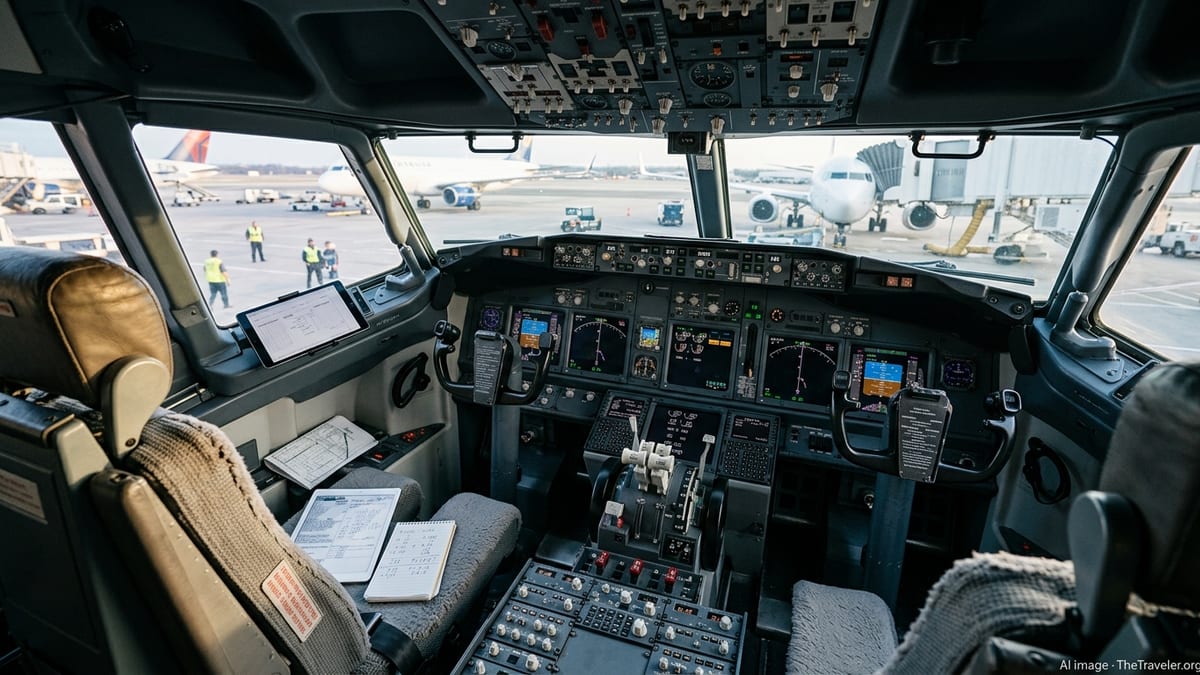
World’s Largest Pilot Training Campus Grows Again in Denver
Publicly available information indicates that United’s Flight Training Center on the former Stapleton International Airport grounds now spans nearly 700,000 square feet across eight buildings, making it one of the largest dedicated pilot training complexes in commercial aviation. The campus consolidates United’s simulator-based training for new and current pilots, including recurrent checks and type ratings on multiple aircraft families.
Recent corporate disclosures show that the facility currently houses more than 80 flight training devices, including over 50 full-motion simulators and several dozen fixed training devices designed for procedures and systems work. The scale allows United to run training operations virtually around the clock, reflecting the carrier’s rapid fleet growth and transition to new aircraft types.
Architecture and construction case studies describe a series of building phases on the site, including new simulator halls, briefing rooms, classrooms and technical support areas. Earlier additions, identified as Buildings G and H, focused on expanding simulator capacity and adding instructor space, while the most recent phase completes a more comprehensive build-out of the campus footprint.
City planning records note that nearly 1,500 employees are already based at the Denver training center, ranging from instructors and simulator technicians to curriculum designers and administrative staff. The workforce has grown alongside United’s increased flying from Denver International Airport, which the airline describes as its fastest-growing hub.
Rezoning Clears Path for New Training and Corporate Campus Near DIA
Separate from the Stapleton-area complex, United is also advancing plans for a new training-focused campus close to Denver International Airport. In late June 2026, Denver City Council approved a rezoning of about 114 acres near East 64th Avenue and Yampa Street to a planned-unit development tailored to United’s proposed uses.
City documents linked to the rezoning describe a long-range concept that could include additional flight training facilities and corporate offices. The material points to United’s expectation of continued pilot training demand and the need for more space as simulator and classroom capacity at the Stapleton campus approaches practical limits.
Planning submissions and supporting presentations emphasize that the new site is intended to serve future phases of United’s training expansion rather than replace the existing center. Early outlines reference potential ground-breaking later in the decade, with portions of the campus targeted to become operational around the turn of the 2030s, subject to detailed design, permitting and construction schedules.
Community outreach summaries compiled as part of the rezoning process highlight both the economic potential and infrastructure questions tied to the project. Local commentary has focused on anticipated job growth around the airport area, as well as transportation links, noise considerations and coordination with ongoing development in Denver’s rapidly evolving northeastern corridor.
Inside the Simulators Powering United’s Fleet Transition
Technical descriptions from engineering and construction partners shed light on the training technology housed at the Denver Flight Training Center. One of the newest buildings, cited as a five-story, roughly 155,000-square-foot addition, was designed specifically around 12 full-flight simulator bays and multiple fixed training devices, along with extensive briefing, debriefing and office areas.
These simulators are tailored to United’s key fleet types, including the Boeing 737 Max and the Airbus A321neo, both central to the airline’s current narrowbody renewal strategy. Each full-motion device replicates an entire flight deck with high-fidelity motion and visual systems, enabling pilots to complete type ratings, recurrent checks and scenario-based training without occupying actual aircraft.
The network of fixed training devices complements the full-motion simulators by allowing pilots to rehearse procedures, avionics configurations and abnormal scenarios at lower cost and with greater scheduling flexibility. This layered approach is designed to increase throughput while maintaining regulatory and company standards for safety-focused instruction.
Industry observers note that such large-scale simulator investments typically span many years and are closely tied to fleet orders and route planning. By anchoring much of this capacity in Denver, United has effectively turned the city into a central node for pilot qualification and standardization across its global operation.
Linking Denver With United’s Wider Pilot Pipeline
While Denver serves as the main simulator hub, United has built a broader training ecosystem that connects entry-level pilots to the advanced devices on the Stapleton campus. A key element is United Aviate Academy, the airline’s wholly owned ab initio flight school based at Phoenix Goodyear Airport in Goodyear, Arizona.
Academy catalogs and promotional materials describe the Arizona facility as a large-scale campus that introduces aspiring pilots to single-engine flying, instrument skills and commercial training, with the goal of progressing successful graduates into United’s broader Aviate pilot pathway. The program is positioned as a response to long-term pilot demand across United’s mainline and regional networks.
Recent coverage of the academy shows that its rapid growth has brought challenges, including lawsuits and regulatory scrutiny involving program marketing, financial structures and training timelines. Despite this, the school continues to recruit new classes and is publicly presented by United as a central pillar of its strategy to train thousands of pilots over the coming decade.
Graduates who move through Aviate-affiliated operators and eventually join United’s mainline operation will transition from smaller training aircraft and regional jets to the full-motion simulators in Denver. In that sense, the Colorado training center functions as the capstone of a multi-stage pilot development model that now extends from Arizona’s desert climate to Denver’s high plains.
Economic and Traveler Implications for Denver and Beyond
United’s investment in its Denver Flight Training Center and the newly rezoned airport-area campus carries implications well beyond the training of flight crews. Economic-development materials and hiring announcements indicate that the airline has added hundreds of jobs in the Denver region in recent years, with more projected as training operations scale up.
Local business groups have pointed to the training center as one factor reinforcing United’s commitment to Denver as a major hub. Increased simulator and classroom capacity is closely associated with higher aircraft utilization and route expansion, which can translate into more nonstop destinations and frequencies for travelers using Denver International Airport.
Urban planners and housing analysts have also begun to assess how a larger United presence near the airport may influence residential and commercial development patterns in surrounding neighborhoods. Additional high-skill aviation and corporate jobs, combined with ongoing airport projects, are expected to support continued growth in hotel, retail and service sectors in northeast Denver and adjacent communities.
For travelers and aviation enthusiasts, the expanded training campus has taken on a secondary role as a point of interest. Mileage program promotions and occasional public-facing events have offered limited opportunities to tour simulator facilities, reflecting growing curiosity about the training infrastructure behind major airlines. As United advances its next wave of construction around Denver, the city’s profile as a training capital for commercial pilots is likely to rise further.