


More news on this day
United Airlines is accelerating investment in its Flight Training Center in Denver, advancing a multi-year expansion that underscores how crucial simulator capacity and highly specialized facilities have become in meeting the airline’s record pilot hiring and fleet growth plans.
Get the latest news straight to your inbox!
Denver Site Grows Into a Global Pilot Training Hub
United’s Flight Training Center, located on the former Stapleton Airport grounds in Denver, has evolved into what the company describes as the world’s largest and most advanced airline pilot training complex. Publicly available information indicates the campus now consists of eight buildings and nearly 700,000 square feet of training space, roughly equivalent to a dozen football fields.
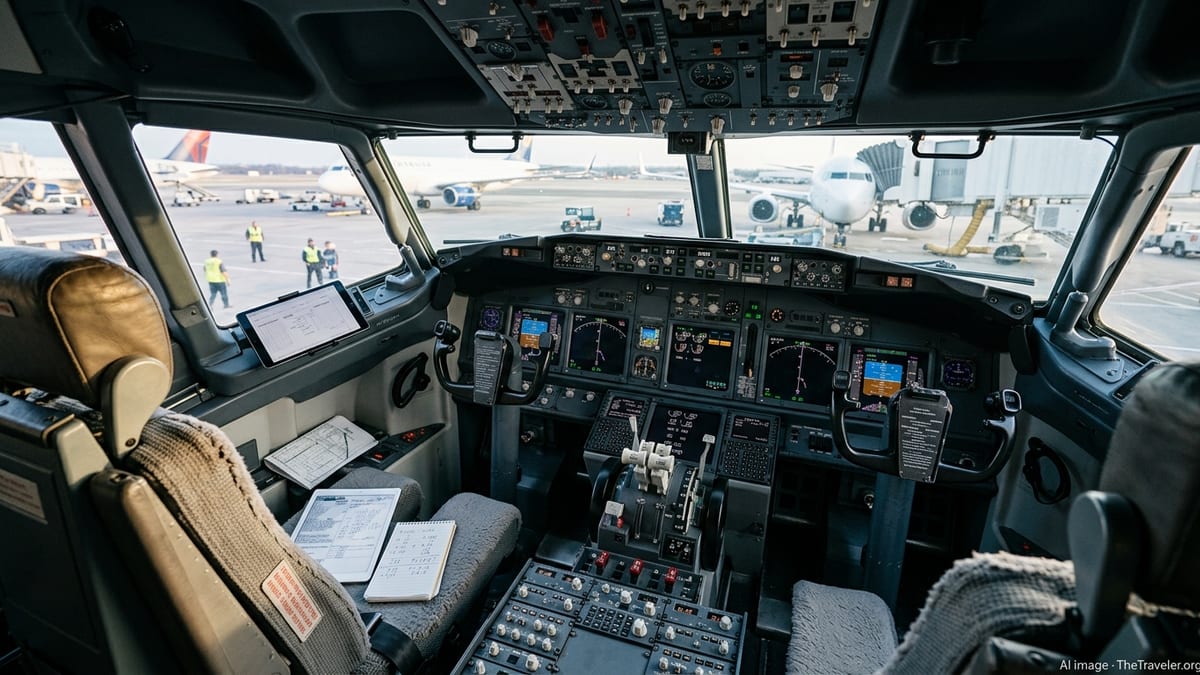
The facility houses dozens of full-motion flight simulators and fixed training devices that replicate United’s mainline fleet, including narrowbody and widebody aircraft from both Boeing and Airbus. Industry and company materials point to a current inventory of more than 80 simulator and fixed-base devices, allowing multiple aircraft types to be trained simultaneously around the clock.
Alongside simulator bays, the Denver campus incorporates classrooms, briefing rooms and dedicated spaces for emergency procedures training. These include mock-up cabins, door and slide trainers, and water-ditching equipment that allow crews to rehearse rare but critical scenarios in a controlled environment.
United’s latest expansion phase, completed this year, added another large training building and upgraded simulator infrastructure, further increasing throughput at a time when airlines across the industry are competing intensely for cockpit talent.
Supporting Aggressive Pilot Hiring and Fleet Growth
The Denver center sits at the heart of United’s broader pilot pipeline strategy, which combines in-house training with its Aviate pathway program and its wholly owned United Aviate Academy in Arizona. As United grows what is now one of the largest mainline fleets in the world, demand for new pilots, recurrent training and aircraft transition courses continues to climb.
According to recent company updates, United has been hiring hundreds of new pilots each month while also cycling its roughly 17,000 pilots through regular recurrent training and checks. The Denver facility is configured to handle training for well over a thousand pilots on a typical day, a scale that helps the airline manage fleet introductions and schedule changes without overloading regional simulators or partner facilities.
Reports on the expansion indicate that United is already planning a further build-out later in the decade, with site work anticipated to begin around 2027 and additional facilities expected to come online near 2030. These long-term plans align with major aircraft orders and reflect expectations that the demand for trained pilots will remain elevated for years.
United’s focus on in-house simulator capacity contrasts with earlier industry models that leaned more heavily on manufacturer or third-party training. By centralizing pilot training in Denver, the airline can standardize curricula, rapidly disseminate procedural changes and better coordinate training schedules with operational needs.
Beyond Pilots: A Network of Specialized Training Facilities
While Denver anchors United’s pilot training, the airline operates a broader network of training locations that together support flight operations, cabin crew and ground teams. Flight attendant initial training, for example, is conducted at a dedicated facility in Houston that incorporates mock cabins, water training pools and slide deployments tailored to the cabin safety role.
Career information published by United notes that aspiring flight attendants attend a multi-week residential course in Houston, where they complete safety, service and regulatory training before being assigned to a base. Occasional MileagePlus events have also offered small groups of customers a behind-the-scenes look at the Houston training center, highlighting public interest in how crews are prepared.
For pilots earlier in their careers, the United Aviate Academy in Goodyear, Arizona serves as a foundational flight school that feeds into the Aviate program and ultimately the Denver simulator center. The academy uses a fleet of modern training aircraft, including Piper models ordered in recent years to expand capacity, and focuses on structured progression from initial certificates to advanced ratings.
These interconnected facilities create a layered system in which students may begin at a flight school, progress into regional or partner flying and eventually arrive in Denver for full-motion simulator training on United’s mainline jets.
Economic Impact and Community Interface in Denver
Local planning documents and economic summaries describe the Flight Training Center as a significant employer and long-term presence in Denver’s Central Park area. Nearly 1,500 employees are based at the complex, spanning instructors, pilots on training cycles, technicians and support staff. The constant flow of visiting pilots who spend days or weeks in the city for training also supports nearby hotels, restaurants and transport providers.
City records from zoning and land-use applications show that United has acquired additional parcels near the current campus to accommodate future phases of growth. These filings outline expected building footprints, traffic patterns and community engagement efforts as the airline coordinates with local authorities on infrastructure and neighborhood impacts.
United’s rapid build-out of simulator bays and support buildings has unfolded alongside broader growth at Denver International Airport, which has become one of the airline’s fastest-growing hubs. The training center’s location, away from the airfield but within the metro area, leverages Denver’s central geography and existing aviation workforce while avoiding congestion at the main airport campus.
Community presentations associated with recent zoning requests emphasize that the training center’s long-term expansion is tied directly to United’s growth trajectory in Denver and across its network. As the airline continues to add routes and aircraft, the Denver site is expected to remain a cornerstone of its operational reliability and safety strategy.
Experiential and Enthusiast Access to a Typically Closed World
Although the Flight Training Center is primarily a working facility, recent years have seen limited efforts to open parts of it to the public in controlled ways. MileagePlus auctions and special events have occasionally offered frequent flyers the chance to tour simulator bays or observe training environments that are usually restricted to employees.
Enthusiast accounts describe high levels of interest in these experiences, with some participants bidding significant mileage balances for simulator time and guided tours. These programs remain niche compared with the center’s core mission, but they illustrate the fascination many travelers have with the technical side of airline operations.
For most visitors to Denver, the training center’s cluster of low-slung buildings near the former Stapleton airfield will remain out of sight. Yet behind those walls, the constant motion of simulators, classroom sessions and emergency drills reflects the unseen infrastructure required to keep an expanding global airline staffed with qualified, current crews.
As United continues to add buildings, simulators and partnerships across its training ecosystem, the Denver campus is positioned to play an even larger role in shaping the next generation of airline pilots who will eventually fly passengers across its worldwide network.