


More news on this day
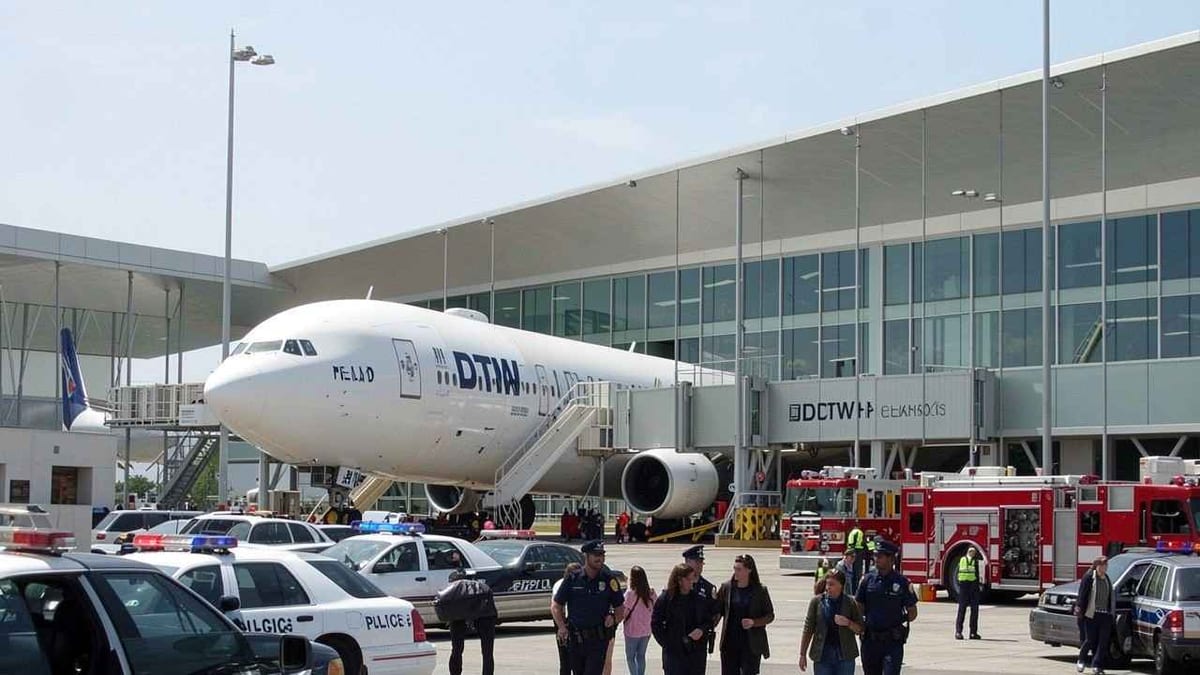
United Express flight UA6007, scheduled to operate from Midland International Air and Space Port to Denver International Airport, diverted to Lubbock Preston Smith International Airport late Wednesday, triggering cascading delays and missed connections for dozens of passengers across the United network.
Get the latest news straight to your inbox!
Weather and Air Traffic Constraints Behind Mid-Route Diversion
Publicly available tracking data and airline schedule information indicate that UA6007 departed Midland on time for its short evening hop to Denver before being rerouted en route. The aircraft ultimately landed at Lubbock Preston Smith International Airport, a regional facility that frequently serves as an alternate field for West Texas and Rocky Mountain routes.
Initial data reviewed by aviation observers suggest a combination of congestion and weather-related constraints around Denver contributed to the decision to divert. Federal air traffic advisories in recent weeks have highlighted intermittent flow control measures and ground delays affecting Denver, particularly during periods of convective storms and high winds, conditions that can quickly reduce arrival capacity and force inbound flights to hold or divert.
Operational patterns on similar days show that once traffic programs at Denver tighten, regional flights with limited fuel margins are often prioritized for diversion to nearby alternates rather than extended holding. In this case, Lubbock’s location between Midland and Denver and its capacity to accommodate United’s regional aircraft made it a logical diversion point.
While the specific trigger for UA6007’s diversion has not been formally detailed, the circumstances mirror recent episodes in which short-haul regional services have been redirected away from Denver when weather and airport flow constraints converged.
Lubbock Preston Smith Airport Acts as Alternate Hub
Lubbock Preston Smith International Airport, located roughly 105 nautical miles north of Midland and nearly 400 nautical miles southeast of Denver, is designated in contingency planning documents as a viable diversion airport for carriers serving the central United States. It maintains sufficient runway length, ramp space, and support services to handle unscheduled regional arrivals.
Airport planning materials describe Lubbock as strategically positioned within a network of alternate fields that support major hubs such as Denver. The airport already supports scheduled service to Denver on multiple carriers, which simplifies ground handling and dispatch coordination for diverted flights attempting to rejoin the hub’s schedule once conditions improve.
By diverting to Lubbock, UA6007 was able to refuel and await a new departure window rather than entering extended holding near Denver or returning to Midland. However, even when aircraft and crew can continue, the extra ground time and the need to refile flight plans typically push the aircraft well outside its planned arrival slot at the hub, creating a ripple effect for onward connections.
Regional airlines that operate United Express flights rely heavily on tight aircraft utilization. An unexpected diversion can remove a single aircraft from multiple downstream rotations, which multiplies disruption far beyond the original flight.
Passengers Face Missed Connections and Overnight Disruptions
The diversion of UA6007 caused significant disruption for passengers bound for onward evening connections in Denver. Based on typical scheduling patterns between Midland and Denver, many travelers on this route are connecting to late-night departures across the Mountain West, West Coast, and Midwest, including flights that often have limited daily frequency.
Once the aircraft diverted to Lubbock, the scheduled arrival window into Denver narrowed, increasing the likelihood that passengers would miss their onward flights even if the aircraft later continued to the hub. A portion of those connections involve the last departure of the day to smaller regional destinations, meaning affected travelers may have faced overnight stays in Denver or alternative routings through other hubs.
Published industry guidance on diversion events notes that when disruptions are tied to weather or air traffic constraints, rebooking and accommodation policies can vary. Passengers may receive rebooked itineraries, meal vouchers, or hotel arrangements depending on the length of delay, seat availability, and carrier-specific rules for irregular operations.
In similar diversion scenarios affecting Denver and other large hubs, travelers have reported long wait times at customer service desks and difficulty securing seats on the next available flights, particularly during peak travel periods or when multiple diversions occur simultaneously.
Broader Strain on Midland and Denver Regional Connectivity
The disruption to UA6007 underscores the sensitivity of regional connectivity in and out of Midland. Recent municipal reports show that nearly 340,000 passengers have flown out of Midland in the current fiscal year, with traffic shared among United, Southwest, and American. Even single-flight interruptions on key trunk routes can disproportionately affect travelers who depend on limited daily frequencies.
On the Denver side, increased traffic and periodic convective weather have periodically strained the hub’s operations, resulting in ground delay programs, diversions, and extended taxi times. When short-haul regional flights like UA6007 are impacted, the consequences are often more immediate because travelers have less flexibility to switch to alternate same-day services from nearby airports.
Industry data describes Denver as a critical connecting point for traffic moving between West Texas, the Rockies, and the West Coast. Diverted regional arrivals not only strand passengers but also contribute to connection banks arriving out of sequence, complicating baggage transfers and crew scheduling across multiple airlines.
For Midland and surrounding communities, reliable access to Denver is an important economic and mobility lifeline. Disruptions such as the UA6007 diversion highlight how weather and congestion at a distant hub can quickly translate into significant local travel delays and uncertainty for passengers starting their journeys at smaller regional airports.
Focus on Contingency Planning and Passenger Communication
The UA6007 diversion places renewed attention on contingency planning among regional carriers and the airports that support them. Lubbock Preston Smith International Airport publishes an irregular-operations contingency framework that outlines how airlines and local partners coordinate when unscheduled arrivals occur, including provisions for deplaning, passenger care, and rapid turnaround of diverted aircraft.
Aviation analysts note that as traffic volumes rebound and weather patterns grow more volatile, diversions are likely to remain a recurring feature of operations around busy hub airports. The emphasis has increasingly shifted toward minimizing total disruption time and improving communication with travelers who may be far from their ultimate destinations when plans abruptly change.
For passengers on routes such as Midland to Denver, industry best practices suggest monitoring airline apps and flight-tracking services closely, particularly during storm-prone periods. Early alerts about potential delays, gate changes, or reroutes can provide more time to adjust connection plans, secure alternative itineraries, or make necessary arrangements for overnight stays.
While UA6007’s diversion to Lubbock illustrates the operational complexities behind what may appear to passengers as a simple change of destination, it also reinforces the importance of resilient schedules, robust alternate airport planning, and clear, timely updates when weather and air traffic constraints temporarily overwhelm a major hub like Denver.