


More news on this day
Severe thunderstorms sweeping across Texas and a series of Federal Aviation Administration ground stops have rippled through the national air network, delaying more than three thousand flights and leading to roughly eighty cancellations across the United States, according to real-time tracking data and published reports.
Get the latest news straight to your inbox!
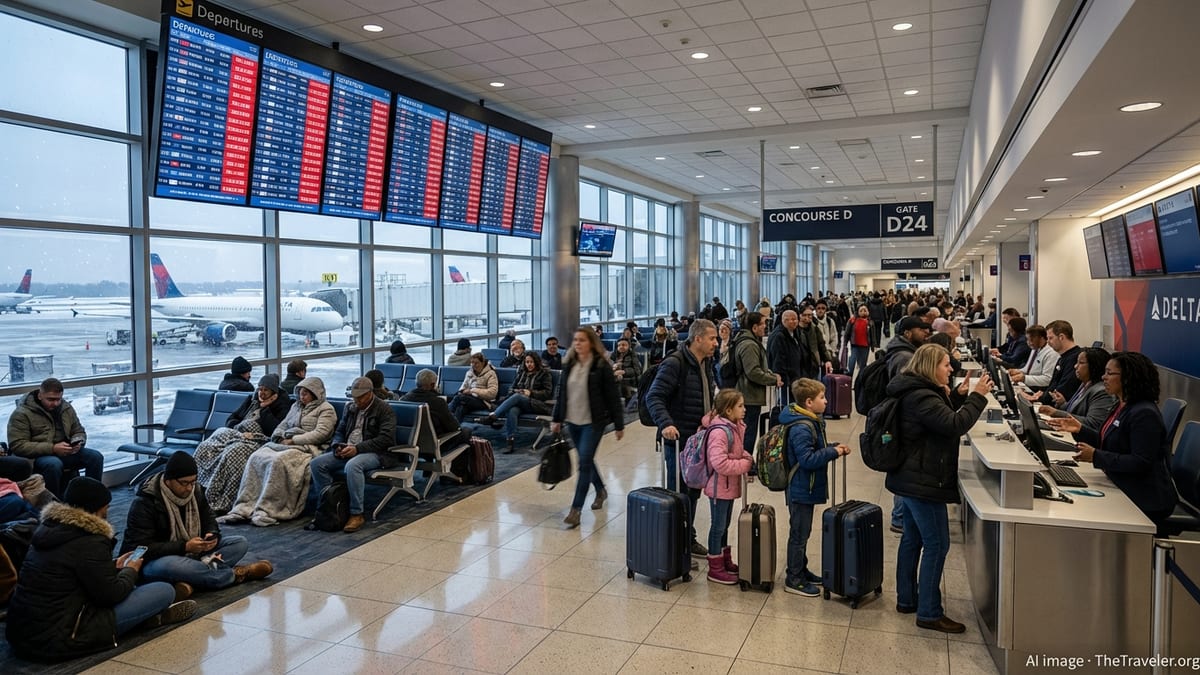
Storms Over Texas Disrupt Key Airline Hubs
The latest wave of travel disruption began as lines of strong thunderstorms moved across North and Southeast Texas, disrupting operations at some of the country’s most important airline hubs. Publicly available radar and forecast information show storms bringing heavy rain, frequent lightning and gusty winds through the Dallas–Fort Worth and Houston regions, which together handle hundreds of thousands of passengers on a typical summer day.
According to tracking data cited in multiple news reports, Dallas–Fort Worth International Airport and Dallas Love Field have faced repeated interruptions this week, including several periods when departing and arriving traffic had to be significantly reduced or halted. At the same time, George Bush Intercontinental Airport in Houston experienced its own ground stop tied to thunderstorms, further constraining flight options into and out of Texas.
These facilities serve as major connecting points for American, Southwest and United, among other carriers. When weather stalls operations in Texas, the impact rarely remains local, because aircraft and crews scheduled to continue to other regions of the country are left out of position, creating a cascade of late departures and missed connections.
Ground Stops Amplify Nationwide Ripple Effects
Ground stops, which temporarily prevent flights bound for a specific airport from taking off, have played a central role in the latest disruption. FAA advisories reviewed on Thursday indicate that multiple ground stops were issued for Dallas–Fort Worth, Dallas Love Field and Houston’s Bush Intercontinental at various points as storms intensified, radar coverage was affected or staffing constraints emerged in busy control facilities.
Even when such restrictions last less than an hour, they can create large backlogs of aircraft waiting to depart. Once the ground stop is lifted, airports must manage a sudden surge of arrivals and departures using the same number of runways and gates, pushing delays well into the evening and occasionally into the following day. That pattern has been evident across Texas this week, with evening departure banks in particular showing heavy congestion.
Because many flights into Texas hubs originate on the East and West Coasts or in the Midwest, delays in the state quickly spread to airports far from the actual storms. Travelers in cities such as Chicago, Los Angeles, New York and Miami have reported late departures and missed connections on itineraries that route through Texas, even where local skies remained clear.
More Than 3,000 Delays and 80 Cancellations Recorded
Aggregated data from popular flight-tracking platforms show that, over the course of the latest storm cycle, more than three thousand flights touching U.S. airports have been delayed and roughly eighty have been cancelled. The majority of disruptions are concentrated at Texas hubs and their feeder routes, but dozens of other airports nationwide have recorded knock-on delays as aircraft and crew rotations fell behind schedule.
Most of the affected flights have experienced delays of 30 to 90 minutes, though some evening departures from Dallas and Houston have run significantly later as airlines worked through congested departure queues. A smaller number of flights were cancelled outright when aircraft could not reach the gate in time to meet crew duty limits, or when schedules became too compressed to operate safely within the existing plan.
Airlines have attempted to absorb some of the impact by swapping aircraft, rerouting connecting passengers and, in some cases, consolidating lightly booked flights. However, with storms flaring repeatedly over several days and affecting multiple major hubs, recovery has been gradual rather than immediate.
Travelers Face Long Lines, Missed Connections and Rebooking Challenges
For travelers, the operational statistics translate into crowded terminals, long customer service lines and uncertainty over when journeys will resume. Social media posts and local news coverage from Dallas and Houston show passengers clustered around departure boards, waiting for updated departure times and gate assignments as airlines adjust schedules in real time.
Missed connections have been a particular issue for those traveling through Dallas–Fort Worth and Houston on tight itineraries. When an inbound flight arrives late, even by less than an hour, passengers may find that their onward aircraft has already boarded, prompting rebooking on later departures or, in some cases, overnight stays. Seats on alternative flights can be limited when disruptions affect whole banks of departures.
Travel advisories published by airlines and search engines consistently urge passengers crossing Texas to monitor their flight status frequently, use carrier apps for same-day rebooking where available and allow extra time for security and boarding. Those with flexible plans are encouraged to consider earlier departures or routing that avoids the most heavily affected hubs until thunderstorms subside.
What Passengers Should Know About Rights and Future Outlook
Publicly available guidance from the U.S. Department of Transportation explains that, when flights are cancelled or significantly changed and the traveler chooses not to fly, passengers are generally entitled to a refund of the unused portion of their ticket, even on nonrefundable fares. For weather-related delays where the flight eventually operates, compensation policies vary by airline and are typically detailed in each carrier’s customer service plan.
Consumer tools such as the DOT’s airline cancellation and delay dashboard can help travelers compare what different airlines commit to providing in the event of lengthy disruptions, including meal vouchers, hotel accommodations and ground transportation when an overnight stay becomes unavoidable. These commitments typically apply when disruptions are within an airline’s control, but some carriers choose to offer limited assistance even during severe weather events.
Forecasts for Texas indicate the potential for additional storms in the near term, suggesting that sporadic delays may continue, particularly during afternoon and evening travel peaks. Travelers scheduled to pass through Dallas, Houston or other regional hubs over the next several days are advised, in widely shared planning guidance, to build extra time into connections, keep a close eye on forecast updates and have contingency plans in mind should ground stops return and further strain an already stressed summer air travel system.