


More news on this day
Australian travellers are being urged not to travel to Riyadh’s King Khalid International Airport after a deadly missile strike on the Saudi capital’s main aviation hub killed at least 12 people and injured more than 300, triggering widespread flight cancellations and fresh security warnings from multiple governments.
Get the latest news straight to your inbox!
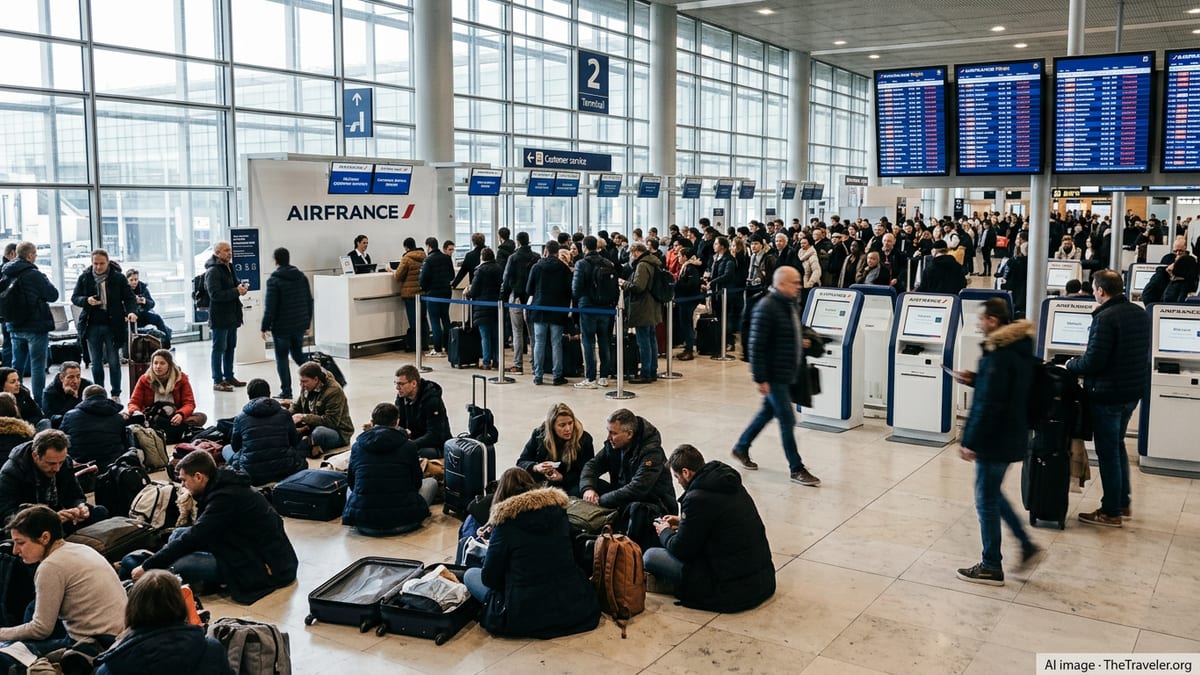
Missile strike turns Riyadh hub into active conflict zone
Publicly available information from aviation and news outlets indicates that a ballistic missile hit a passenger terminal complex at King Khalid International Airport on Saturday 10 October 2026, striking the area serving domestic Terminals 3 and 4 at around mid-afternoon local time. Reports from civil aviation authorities cited in international media state that 12 people were killed and more than 300 wounded, making it the deadliest attack on Saudi civilian infrastructure in more than a decade.
Images and video verified by major news organisations show shattered glass facades, blast damage to the terminal building and emergency crews treating casualties on the tarmac. Follow up reporting on Sunday notes that a second projectile or debris again impacted the airport precinct, compounding concern that the facility remains within an active strike envelope and that further incidents cannot be ruled out in the short term.
Yemen’s Houthi movement has claimed responsibility for a series of recent drone and missile attacks on Saudi targets and has previously said Saudi airports were legitimate military objectives. While responsibility for Saturday’s specific strike is still being clarified in some reports, separate coverage of a statement attributed to the group describes fresh threats against Saudi airspace and explicit warnings to airlines to avoid airports other than those serving the holy cities of Mecca and Medina.
Riyadh’s main airport has been targeted several times in recent years, but risk assessments from travel security firms and conflict monitoring organisations had generally described earlier attacks as limited in impact. The severity of the latest strike and the high casualty count have led analysts quoted in open sources to characterise the event as a significant escalation in the threat to civil aviation in central Saudi Arabia.
Australian travel advice hardens after Riyadh attack
Australia’s official Smartraveller service updated its advice on Sunday 11 October, raising its specific warning for Riyadh’s King Khalid International Airport to “do not travel,” while keeping the broader country-level advice for Saudi Arabia at “reconsider your need to travel.” Australian media reports summarising the revised advisory state that the government now explicitly urges citizens to avoid the airport due to the risk of further missile and drone attacks.
According to those reports, Smartraveller notes that the security situation in Saudi Arabia can deteriorate with little or no warning, and that airports and aviation infrastructure have become central to the current phase of the regional conflict. The advice highlights the potential for additional strikes, airspace closures and sudden changes to flight operations affecting both inbound and outbound services.
The updated language goes beyond previous, more general cautions about travel in the Middle East. In practical terms, the “do not travel” warning for the airport signals that the Australian government considers the risk to personal safety at King Khalid International Airport to be extreme. Travellers who proceed against this guidance may also find that consular assistance and evacuation options are constrained during an unfolding security incident.
Australian coverage also points out that such advisories can have flow-on effects for insurance and tour arrangements. Policy documents examined by travel industry commentators show that many insurers treat an official “do not travel” or equivalent warning as a trigger that can limit or exclude cover for new bookings to the affected destination.
Airlines suspend services and reroute Middle East connections
Flight tracking data and airline statements cited by international broadcasters and wire services indicate that commercial operations at King Khalid International Airport were heavily disrupted in the wake of the strike. On Saturday evening and into Sunday, dozens of flights were cancelled, diverted or returned to origin, with no clear timeline publicised for a full resumption of normal schedules.
Some regional carriers have temporarily suspended services to Riyadh or consolidated flights through alternative Saudi gateways such as Jeddah and Dammam, while others have opted to route passengers through hubs outside the kingdom. Aviation safety bulletins referenced in European regulatory notices highlight heightened risk in portions of Saudi airspace, particularly around Riyadh, and urge operators to conduct detailed risk assessments before planning routings through the area.
For Australian travellers, the immediate impact centres on disrupted connections via Riyadh to Europe, North Africa and other parts of the Middle East. Publicly available booking information on major online travel agencies shows that many multi-leg itineraries that previously used Riyadh as a transit point are currently being rebooked via Doha, Abu Dhabi, Dubai or other hubs. Travellers already en route are being advised in media reports to stay in close contact with their airline or travel provider and to monitor airport departure boards and carrier alerts.
Industry analysts quoted in open-source coverage note that even if physical repairs at the airport progress quickly, airlines may take longer to restore full capacity through Riyadh if the threat of repeat attacks persists. The prospect of additional missile or drone launches, as well as insurance considerations for aircraft operating in elevated-risk airspace, are likely to influence network decisions in the coming weeks.
What the warning means for Australians with existing bookings
For Australians who have already booked trips involving Riyadh, the new “do not travel” directive for King Khalid International Airport creates a complex set of practical and financial questions. Consumer advice columns and insurance disclosures reviewed by local media emphasise that travellers should first confirm whether their ticketed flights are operating, rerouted or cancelled before making any further decisions.
Some airlines have introduced flexible rebooking policies specifically referencing the missile strike, allowing passengers with tickets to or through Riyadh to change dates or reroute via other hubs without standard change fees. The exact terms vary by carrier and fare type, and travellers are being encouraged to review the latest conditions on airline and agency platforms rather than relying on earlier booking confirmations.
Travel insurance implications are more nuanced. Analysts drawing on product disclosure statements note that policies generally distinguish between cover purchased before and after a known event or official warning. Those who bought comprehensive cover before the missile strike and the subsequent advisory may be able to claim for trip rearrangement costs if their flights are cancelled or if they choose to avoid Riyadh in light of the new risk assessment. Travellers who buy policies after the incident or ignore updated government guidance may find that war, terrorism and civil unrest exclusions limit their entitlements.
Australian government information services and comparison platforms also underline that travellers retain responsibility for checking the latest official advice right up to departure. Because the overall level for Saudi Arabia already sat at “reconsider your need to travel” before the attack, some insurers had already adjusted their stance on new policies involving the country, particularly for non-essential leisure trips.
Regional security outlook and alternatives for Middle East travel
The Riyadh airport strike forms part of a wider escalation in the conflict involving Yemen’s Houthi movement and regional powers. Public conflict tracking and risk assessment reports note that missiles and drones launched from Yemen have previously targeted airports and energy infrastructure in Saudi Arabia’s south and, at intervals, Riyadh itself. However, the concentration of recent attacks on aviation facilities has renewed concern about the safety of both direct and connecting flights across the region.
Travel advisories from several Western governments now warn against travel to parts of Saudi Arabia and urge particular caution around airports other than those serving religious pilgrimage in Mecca and Medina. The European Union Aviation Safety Agency has expanded its guidance on Saudi airspace, referencing the demonstrated ability of missiles and drones to reach deeper into the kingdom and to strike aviation infrastructure around the capital.
For Australians still intent on travelling to the broader Middle East, publicly available routing data suggests that many itineraries can be restructured to avoid Saudi airspace altogether by using alternative hubs in the Gulf and beyond. Major long-haul carriers based in Qatar, the United Arab Emirates and Turkey continue to offer extensive connections, although travellers are being reminded through government and media advisories that conditions can change rapidly and that other airports have also experienced security incidents in recent months.
Security analysts cited in open reporting caution that the situation around Riyadh and other Saudi airports remains fluid, with the possibility of further missile launches or retaliatory strikes. Against this backdrop, Australian authorities and international partners are expected to continue reviewing their travel advice and aviation safety assessments, leaving would-be visitors and transit passengers facing an evolving risk landscape in the weeks ahead.