


Urho Kekkonen National Park in Finnish Lapland is the kind of place that quietly redefines what you think a national park is. There are no drive-in viewpoints or souvenir villages inside the park itself, just vast fells, mires, rivers and a sparse network of huts stretching east almost to the Russian border. That purity is exactly what draws people here, but it also means first-time visitors often misjudge the distances, conditions and level of self-reliance required. Before you set off from Saariselkä, Kiilopää or Tankavaara with a backpack full of dreams, it is worth understanding the most common mistakes travelers make in this wild corner of Europe.
Get the latest updates straight to your inbox!
Underestimating the Scale and Remoteness of the Park
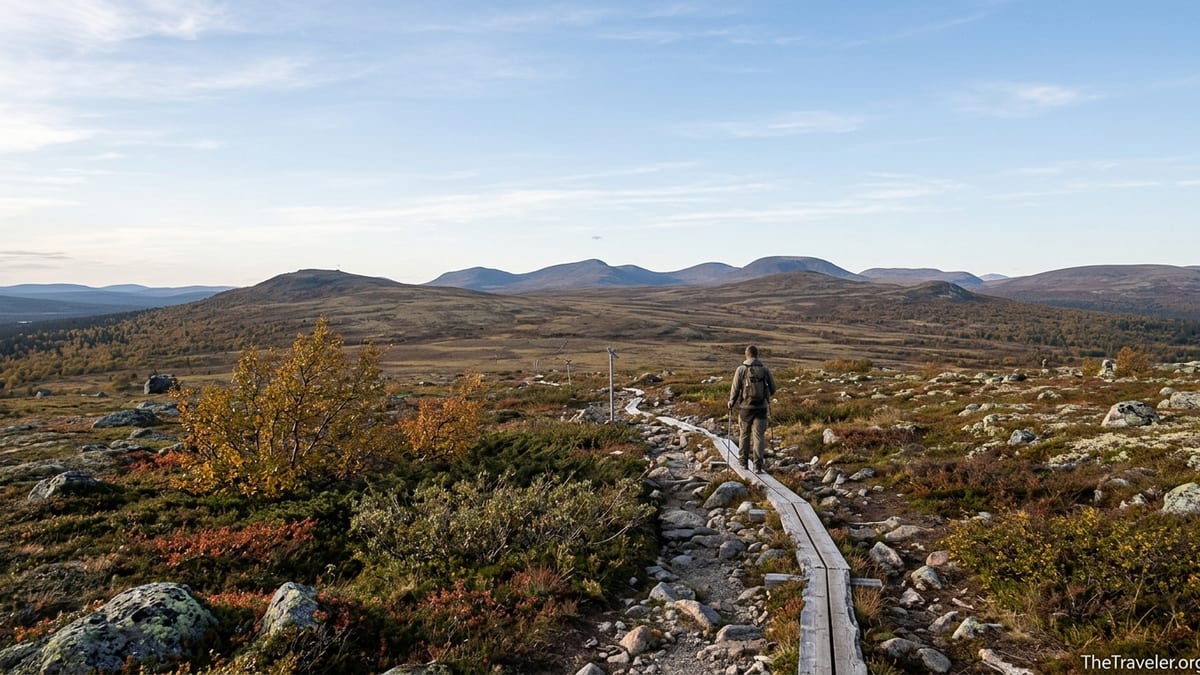
Many first-time visitors arrive in Saariselkä or Kiilopää imagining Urho Kekkonen National Park as an extension of the ski resort: a few well-marked trails and quick viewpoints. In reality, the park covers nearly 2,600 square kilometers of largely roadless wilderness. Once you leave the day-hiking loops near Saariselkä or the short nature trails at Tankavaara, you enter an area where marked routes thin out, mobile reception drops and help may be many hours away. Hikers who think they are planning “a little three-hour loop” sometimes discover they are actually committing to a full-day fell crossing with no easy shortcuts back.
A frequent miscalculation involves using the map scale as if you were in a central European mountain park with dense infrastructure. For example, the classic wilderness outing from Saariselkä to Luirojärvi, the lake with the famous wilderness sauna, is around 40 kilometers one way depending on route. On paper, it can look like an achievable overnight trip, but in practice most parties need three days in and out because of boggy ground, stream crossings and variable weather. Visitors who do not allow for that extra time can find themselves racing the clock back to a departing bus or flight.
Remoteness also means that evacuation is complicated. Rangers do patrol and there is a hut network, but you cannot assume that a snowmobile or helicopter will appear quickly if something goes wrong. This is not a place to test brand-new boots on a multi-day trek or to attempt your very first winter adventure. For many travelers, the best introduction is to stay in Saariselkä or Ivalo and explore marked day routes such as those to Paratiisikuru or the fells around Kiilopää, then build up to longer expeditions once you understand the terrain.
Planning With City Comfort Assumptions
Another mistake is assuming that services inside or immediately around the park work like those in a central European resort town. In practice, you will not find cafés sprinkled along the trails, and the open wilderness huts maintained near routes such as Suomunruoktu or Tuiskukuru are simple shelters, not staffed lodges. They usually have bunks, a wood stove and an outdoor toilet, but no running water, electricity or food. New visitors sometimes arrive at a hut in the evening expecting to buy a hot meal, only to discover that everyone is cooking freeze-dried dinners on small camp stoves they brought themselves.
Even before you enter the park, it is easy to misjudge how limited store hours can be in Lapland. In winter, many travelers arrive on an evening flight into Ivalo, take a transfer to Saariselkä and wake up intending to shop for food and gas canisters just before setting off. If that day happens to be a Sunday or a public holiday, supermarket hours in small communities may be shorter than expected, and the small outdoor shops can sell out of popular stove fuels during busy weeks in March and April. Building a spare half-day into your plan to gather supplies, check gear and visit the nature information exhibitions in Saariselkä or Tankavaara is usually time well spent.
Accommodation works differently too. Close to the road, there are cabins, glass igloos and hotels at places such as Kakslauttanen or in the center of Saariselkä, but once you ski or hike into the national park you are on your own. Park regulations allow camping freely in most areas, but you are responsible for your comfort and safety. If you have only ever hiked in places with staffed huts where you can reserve half-board meals, it is worth recalibrating expectations before choosing a multi-day route in Urho Kekkonen.
Ignoring Seasonal Realities and Weather Extremes
Because Lapland photographs beautifully in every season, many visitors underestimate how dramatically conditions change through the year. The most popular times in Urho Kekkonen are late winter, roughly March and early April, when there is deep snow, long daylight and a well-established network of ski tracks, and then late summer to early autumn, when trails are generally clear and the fells glow with autumn colors. Planning a trip outside these windows can be rewarding, but only if you understand what you are signing up for.
One of the most common surprises hits hikers who come in May or early June. On booking sites, these weeks are often labeled “spring,” but on the ground it can be a messy transition period, with soft, rotting snow on higher fells, overflowing rivers and trails that alternate between ice and deep mud. Some footbridges may be damaged by ice, and crossing streams like Luttojoki or Suomujoki can be hazardous. If you imagine dry summer walking conditions and pack trail runners, you may quickly find yourself wading in icy water. In this shoulder season it is usually safer to stick to lower, well-marked routes near Saariselkä and to carry trekking poles and waterproof boots.
Winter has its own set of underestimated challenges. In January and early February temperatures can drop far below -20 degrees Celsius, and daylight is extremely short. Visitors lured by the idea of skiing hut to hut without prior winter trekking experience often discover that even a short distance can feel endless while breaking trail in fresh snow with a heavy pack. Frostbite is a real risk if you stop moving or if your gloves get soaked. For most first-time visitors, guided day trips on skis, snowshoes or fatbikes from Saariselkä or Kiilopää are a smarter way to experience the park in midwinter than launching directly into a multi-day expedition.
Summer brings its own discomforts, mainly mosquitoes in July and early August and the possibility of warm days that make long exposed fell walks feel surprisingly taxing. Travelers who forget insect repellent, head nets or light long-sleeved clothing sometimes cut their plans short after a single evening in a low valley. Checking recent conditions with local guides, the national park visitor pages or staff at your accommodation a day or two before you enter the park can help you avoid walking into seasonal extremes unprepared.
Misunderstanding Huts, Camping Rules and Infrastructure Changes
Finland’s open wilderness hut tradition is one of the great joys of hiking in Urho Kekkonen, but it also creates misunderstandings. Many visitors think of these huts as guaranteed overnight stops, similar to booked mountain refuges. In reality, open huts like Suomunruoktu, Luirojärvi or Tuiskukuru operate on a first-come, first-served principle and are intended mainly for short overnight stays by human-powered travelers. If a hut is full when you arrive, you are expected to camp nearby and use the facilities without occupying indoor sleeping space. Visitors who arrive late in the evening without a tent, assuming they “have a reservation,” sometimes face uncomfortable nights.
Another issue is keeping up with changes to infrastructure. In recent years, the park authority has announced that maintenance of some structures, such as certain bridges, fireplaces and older huts in less used areas, will gradually be discontinued. From January 2026 onward, some facilities that appear on older printed maps or blog posts may no longer be maintained and could be in poor condition or removed entirely. Travelers who base their route planning on a years-old online trip report and do not cross-check with the latest national park information risk relying on a hut that is now only minimally serviced or on a bridge that no longer exists.
Camping rules also trip up newcomers. In Urho Kekkonen, you can generally pitch a tent almost anywhere in the park, but there are zones with different regulations around sensitive areas, and separate rules apply in neighboring nature reserves. Fire-making is tightly controlled: you can usually use existing fireplaces and lean-to shelters with dead wood provided, but lighting fires outside designated spots or during forest fire warnings is prohibited. Travelers who arrive expecting to build a campfire anywhere they like may be disappointed on windy summer days when fire warnings are in place, so it is essential to carry a reliable stove and enough fuel for your trip.
Lastly, there is hut etiquette. First-timers sometimes spread gear across bunks, dry wet socks over every hook and leave little space for others. In reality, you are expected to make room for late arrivals, keep noise down, carry out your trash and leave firewood ready for the next party. Learning this culture before you go, either at home or by chatting with Finnish hikers in the first hut you visit, will make your experience smoother and more welcome.
Overestimating Navigation Skills in a Featureless Landscape
On a sunny day, the broad, rounded fells and open mires of Urho Kekkonen can seem easy to navigate. There are far-reaching views and often a clear sense of direction. This leads some visitors, especially those used to heavily signposted central European parks, to underestimate how disorienting the terrain becomes in low visibility. When fog rolls in, when snow erases the path or when a whiteout hits in winter, the differences between one fell slope and another vanish, and it is easy to drift off course by several kilometers.
A common real-world scenario occurs between popular areas like Saariselkä and Kiilopää. A group sets out following a marked summer trail across the fells. In late September, an early snowfall covers the markers, but the hikers continue without adjusting. After a few hours, they notice that the terrain no longer matches their expectations, and a stream they counted on for water is missing. Without a paper map or the skills to use their compass, they are forced to backtrack in deep snow as daylight fades. What could have been a pleasant day hike turns into a stressful retreat simply because they relied solely on a mobile app with a battery that was draining quickly in the cold.
Remote parts of the park raise the stakes even higher. In areas like Sokosti and the distant eastern border zones, there may be long stretches with only sporadic trail markers, and snowmobile tracks in winter can be misleading. During the polar night season, it can be fully dark by midafternoon, and the glow from villages is so distant that you cannot navigate by lights. Competent use of map and compass, as well as carrying a spare battery pack for GPS devices, is essential if you plan to leave the main day-hiking areas. For a first visit, sticking to clearly marked circular routes starting from Saariselkä, Kiilopää or Tankavaara and turning back early if weather deteriorates is often the wisest choice.
Navigation mistakes also occur at a very basic planning level. Some travelers underestimate how long it takes to reach trailheads such as Aittajärvi or Raja-Jooseppi from their accommodation. A taxi or own car is usually needed, and in winter or during autumn storms those forest roads can be slow. Starting off late in the day with an ambitious distance planned and only a vague idea of your exact route is one of the most preventable errors in Urho Kekkonen’s backcountry.
Neglecting Safety, Wildlife and Cultural Respect
In such a quiet park, it can be easy to forget that Urho Kekkonen is both a fragile ecosystem and a working landscape. Reindeer herding is still an important livelihood in the area, and many of the fences, corrals and snowmobile tracks you see relate to that work. First-time visitors sometimes treat reindeer as purely touristic photo subjects, walking too close during calving season or letting drones buzz over herds. This is deeply stressful for the animals and inconsiderate toward local herders. The best practice is to keep a respectful distance, move calmly and never chase or surround reindeer for photographs.
Wildlife risk is generally low, but it is not nonexistent. The park hosts large mammals such as brown bears, wolverines and lynx, though they avoid humans. More relevant for most travelers are smaller hazards: sudden changes in river levels during snowmelt, slippery boardwalks across mires and steep, loose slopes near gorges like Paratiisikuru. Simple precautions such as using trekking poles, avoiding shortcuts down unstable scree and crossing rivers at established fords make a big difference to safety. Late in the season, icy patches can linger on shaded trails even when everything looks snow-free from a distance.
Respecting the cultural and historical context matters as well. Sámi culture has deep roots in Lapland, and some traditional sites, sieidi rocks and old camp locations are still important to local communities. While most are not marked for visitors, if you are taken to one by a Sámi guide or encounter one that is signposted, photography or climbing on structures may be restricted. Listening carefully to the guidance of local tour operators and rangers, and treating the broader landscape as a living homeland rather than an empty playground, is part of responsible travel here.
Basic emergency preparedness is another area where first-timers slip. In addition to normal hiking gear, you should carry a small emergency kit suitable for cold conditions, including foil blankets, extra layers, headlamps with fresh batteries, a power bank, high-energy snacks and a written note of emergency numbers and your planned route. Before heading into the park, share your itinerary and return date with your accommodation in Saariselkä, Kiilopää or Ivalo. If something delays you, that simple step can speed up any necessary search effort.
The Takeaway
Urho Kekkonen National Park rewards those who arrive with realistic expectations and a willingness to slow down. It is not a theme park attached to a ski resort or a string of easy photo stops along a road. It is one of Europe’s largest protected wilderness areas, with a hut culture that assumes you can look after yourself and seasons that still follow the rhythms of deep winter, muddy thaw, brief summer and glowing autumn. Travelers who underestimate distances, infrastructure changes, weather or their own navigation skills tend to come away with stories of frustration. Those who take time to study the latest park information, to start with modest day hikes and to respect the land and its people usually leave talking about when they will return.
Before your first trip, take a careful look at the calendar, your gear and your comfort level with self-reliant travel. Book your accommodation and transport with generous buffers, pick realistic routes from established entry points like Saariselkä, Kiilopää or Tankavaara, and treat the wilderness huts as welcome bonuses rather than entitlements. With that mindset, your first journey into Urho Kekkonen can be less about avoiding mistakes and more about experiencing the quiet, expansive freedom that keeps people coming back to this remote corner of Finnish Lapland.
FAQ
Q1. Do I need a car to visit Urho Kekkonen National Park for the first time?
It is possible to visit without a car by basing yourself in Saariselkä or Kiilopää and using buses and airport transfers, since the park boundary is close to these villages. However, having a car or using taxis gives you much more flexibility to reach trailheads like Aittajärvi or Raja-Jooseppi, especially outside the busiest winter and autumn seasons.
Q2. How many days should a first-time visitor plan for Urho Kekkonen?
For a first visit focused on day hikes, three to five days in the area works well, giving you time for one or two fell outings, a rest or weather day and some flexibility for travel. If you want to include an overnight trip using huts or camping, plan at least a full week so you are not rushing in and out of the wilderness.
Q3. Is Urho Kekkonen suitable for beginners who have never hiked before?
The marked day trails near Saariselkä, Kiilopää and Tankavaara can be suitable for beginners, especially in late summer and early autumn when conditions are most forgiving. Multi-day backpacking or winter tours in the interior of the park are best reserved for travelers with previous experience in remote areas and good navigation skills.
Q4. When is the best time of year for a first visit?
For most first-timers, the most comfortable periods are late August to late September, when trails are clear and the risk of mosquitoes is lower, or March to early April, when there are long days and established ski tracks. Early winter, deep winter and the spring thaw require more experience with cold-weather travel and variable footing.
Q5. Do I need to reserve wilderness huts in advance?
Most open wilderness huts in Urho Kekkonen cannot be reserved and are shared on a first-come, first-served basis, so you should always carry a tent or other shelter. There are a few reservable huts and turf huts, which must be booked in advance through the park authority or local booking systems if you want a guaranteed indoor sleeping place.
Q6. What kind of clothing and gear should I bring?
Layered clothing suitable for rapid weather changes is essential, including a windproof and waterproof shell, insulating mid-layers and a warm hat and gloves even in summer. Solid hiking boots or winter boots, trekking poles, a reliable stove, a paper map, compass, headlamp and insect protection in summer are strongly recommended for anyone going beyond the shortest nature trails.
Q7. Are there shops and restaurants inside the park?
There are no shops or restaurants inside the wilderness areas of the park. You will find supermarkets, outdoor gear stores, cafés and restaurants in nearby villages such as Saariselkä, Ivalo and Tankavaara, and some resorts like Kakslauttanen offer meals and activities just outside the park boundary.
Q8. Is it safe to travel alone in Urho Kekkonen?
Solo travel is common, but safety depends heavily on your experience and how conservatively you plan your routes. Solo visitors should stay on well-marked tracks, leave a detailed itinerary with their accommodation, avoid risky river crossings or remote zones on a first trip and carry extra food, warm layers and emergency communication options if possible.
Q9. Can I see the northern lights in Urho Kekkonen?
Yes, the park lies well within the auroral zone, and many visitors staying in Saariselkä or nearby resorts in autumn, winter or early spring have a good chance of seeing the northern lights on clear nights. Remember that aurora activity and cloud cover vary, so plan several nights in the area rather than counting on a single evening.
Q10. How do I check the latest rules and conditions before my trip?
The most reliable information comes from the official national park pages managed by the Finnish park authority and from visitor centers or nature information points in Saariselkä, Tankavaara and Kiilopää. Check these shortly before your trip for current trail conditions, hut maintenance changes, fire warnings and any temporary restrictions on routes or facilities.