


The mistake did not hit me until the return boat slid past yet another pine-clad island and the city skyline reappeared. I had tried to squeeze the Stockholm Archipelago into a single sunny day, ticking off ferries and islands as if they were museum stops. By the time I stepped back onto the quay at Strömkajen, I knew I should have planned at least one night among the 30,000 islands instead of racing the last departure back to Stockholm.
Get the latest updates straight to your inbox!
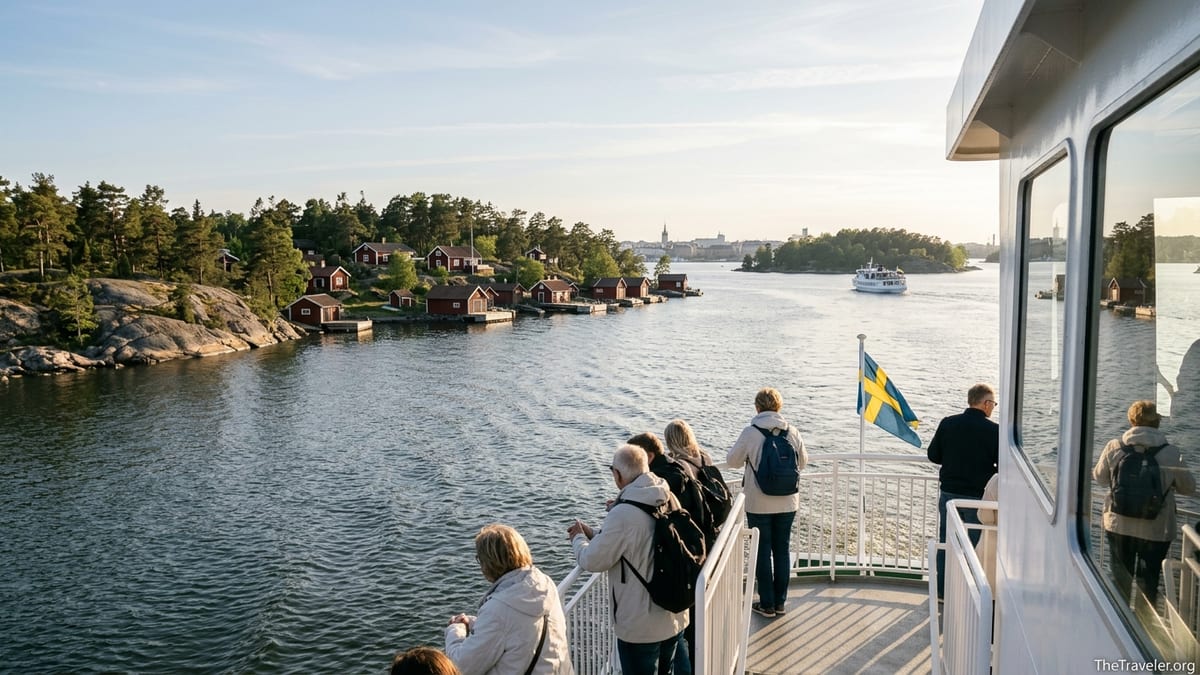
First Glimpse of a 30,000‑Island Maze
From the edge of central Stockholm, the archipelago looks deceptively close. At Strömkajen, a ten-minute walk from T-Centralen, ferries nose up to the quay every half hour in summer, their decks filling with day trippers hauling backpacks, locals with grocery bags and couples in sailing gear. It feels like boarding a suburban train, except that the “stations” are rocky islets and red boathouses.
On a clear June morning, I joined the queue for a Waxholmsbolaget ferry bound toward Vaxholm and Grinda, a classic first-timer route. The ticket office had a handwritten sign reminding passengers that regular SL travel cards are valid on several Waxholmsbolaget boats, including the commuter-style runs to Vaxholm, which can cut the cost for those already using public transport. A one-way adult ticket out to Vaxholm without an SL pass typically comes in at a moderate price, noticeably cheaper than the more packaged sightseeing cruises run by private operators.
The moment the boat pulled away from Strömkajen, Stockholm began to dissolve. The Royal Palace and Gamla Stan gave way to green Djurgården, then to villas with private jetties. Within 30 minutes the city had become a memory and we were threading through channels lined with low granite slabs and forest. This was still the inner archipelago, but the air already smelled of salt and resin.
Even on a commuter-oriented ferry, the journey felt like a slow-motion nature documentary. Locals claimed spots at the stern with coffee thermoses while visitors crowded the railings. Every few minutes we passed kayakers hugging the shore, small wooden fishing huts and children leaping from smooth rocks into the Baltic. It was precisely the sort of scene that makes a day trip feel generous enough, until you realize how much you are leaving unexplored.
Vaxholm: The Gateway I Rushed Through
Roughly an hour after leaving central Stockholm, the ferry rounded a point and Vaxholm appeared, its harbor dotted with classic white boats and framed by pastel wooden houses. Vaxholm is often described as the “capital” of the archipelago, and it lives up to that title as a transport hub and an easy first stop. Boats fan out from here to outer islands like Sandhamn, Svartsö and Möja, while smaller shuttles and the little cable ferry serve nearby islets and the fort.
Many travelers treat Vaxholm as their entire archipelago experience, coming out for half a day to stroll the waterfront, explore the 19th-century Vaxholm Fortress across the narrow channel, and linger at a terrace restaurant. On my compressed schedule, I only had time for a brisk walk along Hamngatan, a quick look at the fishing harbor and a takeaway cinnamon bun from a bakery before the next boat to Grinda.
If I had planned better, I would have allowed a full afternoon here. With more time, it makes sense to sit for a longer lunch at a harbor restaurant such as Hamnkrogen or to book a table at Waxholms Hotell’s waterfront dining room, where locals settle in for long shellfish platters on bright evenings. The Kastellet fortress island just across the water is reached by a tiny cable ferry, and even a short visit adds a sense of history that vanishes if you only stay long enough to change boats.
Vaxholm also works well as a base. Several guesthouses and small hotels sit within walking distance of the quay, and staying here at least one night would have made it easier to explore both inner and outer islands without constantly checking the last-boat timetables back to Stockholm.
A Few Hours on Grinda: The Island That Changed My Plan
From Vaxholm, the ferry pressed deeper into the archipelago, stopping at smaller jetties where a handful of people would hop off with crates of groceries and disappear up forest paths. About 40 minutes later we reached Grinda, a classic summer island that captures much of what makes this part of Sweden special: no cars, shady walking trails, a family-friendly bathing bay and a rustic inn on a hill. During peak season, boats typically call at Grinda several times a day, although departures thin out noticeably once you get into September.
Arriving at midday, I followed the short gravel road from the pier up past a simple campground and small farm with grazing sheep. Within ten minutes, the main north-facing bay opened up: a curved strip of rock and sand where locals had already spread towels on the warm granite. Children were splashing in the shallow water while a group of teenagers queued for the diving platform. It was the sort of place you imagine you will just “see quickly” before catching your next ferry, but it gently dismantled that plan.
Lunch options on Grinda are straightforward but atmospheric. There is a casual waterfront bistro near the pier serving fish soup, shrimp sandwiches and plates of grilled vegetables, and up the hill the old inn offers a more formal terrace with views across the water. Prices are what you would expect from a popular Swedish summer escape: a main course might cost the equivalent of a mid-range Stockholm restaurant, but the setting makes it feel like good value. Many Swedes pack their own picnic to keep costs down, using the public grills and tables scattered near the bathing cliffs.
As the afternoon warmed, I walked one of the short forest trails that lead across the island, passing small red cottages, stretches of wildflowers and occasional viewpoints where the sea opens up in every direction. It was here that the scale of the archipelago really sank in. The islands seem to go on forever, each one with its own bathing rocks, guest harbor or farmstead. The idea of returning to Stockholm that same evening suddenly felt like leaving a novel after only the first chapter.
The Logistics of a One-Day Archipelago Escape
Practicalities are what make or break a day in the archipelago, especially if you are trying to combine multiple islands. From central Stockholm, most visitors board ferries either at Strömkajen, directly in front of the Grand Hotel, or a short walk away at Nybrokajen. In summer, both public boats and private operators run frequent services, but they differ in price, flexibility and atmosphere.
Waxholmsbolaget is the backbone of regular sea transport. Its boats feel like a cross between a bus and a heritage cruise, with indoor salons, open decks and simple cafés on board. Tickets can be bought at small kiosks on the quay or sometimes directly on the boat. The cost to reach inner islands such as Vaxholm is typically modest for a round trip, while continuing further out to Grinda or Sandhamn progressively adds to the fare. For travelers with SL public transport cards, selected Waxholmsbolaget routes recognize the card, particularly on the commuter-style services to Vaxholm, which can make a big difference if you are watching your budget.
Private operators, including boats branded as Cinderella services and various archipelago sightseeing cruises, run more targeted excursions. These are often slightly more expensive than doing the same route with standard ferries but can include on-board commentary, reserved seating and guaranteed return times. For example, a summer day cruise to Sandhamn or a seal safari from Nybrokajen will usually be priced similarly to other European capital city day tours, which some travelers appreciate for their predictability and narration.
What caught me out was not the price but the timetable. Each quay posts seasonal schedules, and many routes are more frequent in July and early August than in shoulder months like May or September. On my visit, the last comfortable connection from Grinda back through Vaxholm to Stockholm left earlier than expected, which cut my planned swim short. If you are combining islands, it is wise to check both outbound and inbound times before you even board your first boat, and to screenshot the timetable in case mobile coverage drops among the outer islands.
Food and payment logistics are simple. Most cafés and restaurants on the popular islands accept card payments and mobile wallets, and Sweden’s general preference for cashless transactions holds on the water too. Nevertheless, packing snacks and a refillable bottle keeps you flexible if a restaurant is full or closed, which can happen in early or late season when hours are shorter than the high-summer peak.
Why an Overnight Stay Changes Everything
By late afternoon on Grinda, the day trippers began to gather their towels and drift back toward the pier. The mood on the quay shifted from lazy to slightly anxious as people checked their phones and peered down the channel for the white hull of the next boat. I joined them, not wanting to risk missing the last realistic connection back to Stockholm, but the feeling that I was leaving the island just as it was exhaling into evening stayed with me.
Staying overnight in the archipelago turns the experience inside out. Instead of racing to catch a return ferry, you can choose one island as a base and let the rhythm of the boats dictate your days more gently. On Grinda, for example, the hilltop inn offers simple but comfortable rooms and cabins that fill quickly for midsummer weekends, while basic camping allows budget travelers to sleep a few meters from the sea. Vaxholm has traditional hotels and smaller bed-and-breakfasts within a short walk of the harbor, and outer islands like Sandhamn combine guesthouses with lively marinas.
Even a single night unlocks moments a day trip cannot reach. Once the last big boat has left, the cliffs around the main bays grow quiet. Residents walk their dogs along forest paths, guest harbors settle into soft chatter and the late Scandinavian light lingers on the water until close to midnight in June and early July. It is during this slow evening stretch that you can wander without a timetable in your head, watch the sky change color and take an unhurried sauna followed by a cold plunge without counting minutes until departure.
Logistically, an overnight stay can also allow for a two- or three-island itinerary without stress. A traveler might, for instance, take an afternoon boat from Stockholm to Vaxholm, stay the night, then continue out to Grinda or Sandhamn the next morning, returning to the city the following evening. This type of routing makes good use of the archipelago’s hub-and-spoke ferry system and matches the pace locals use when they move between summer houses, guest harbors and favorite bathing rocks.
Seasonal Moods: Choosing When to Go
My own visit fell on a bright late-spring day, with air temperatures warm enough for T-shirts on deck but water still cool for extended swimming. It was easy to imagine how different the same trip would feel in high summer, autumn and winter. The Stockholm Archipelago is technically accessible year-round, but the nature of a day trip shifts dramatically with the seasons.
From late June through early August, the classic picture of Swedish summer plays out. Ferries are frequent, island cafés and guesthouses are fully open, and the inner islands like Fjäderholmarna, Vaxholm and Grinda can feel busy with city residents escaping for the day. This is when water temperatures are at their most swim-friendly, and it makes sense to pack swimwear, a light jacket for the wind and perhaps a picnic to avoid queues at the most popular restaurants during peak lunch hours.
In May and September, boats still operate to many islands but less frequently, and some services run only once or twice a day. On the upside, prices for accommodation can be more forgiving than at midsummer, and trails and bathing cliffs are quieter. You will want a warmer layer for sitting on deck and to check carefully which cafés or hostels are open. The mood is more contemplative, ideal for those who prefer hiking, photography and long walks over swimming and social buzz.
Winter day trips are a different proposition. Certain routes remain active, with ice-strengthened ferries pushing through frozen channels and offering a stark, monochrome version of the landscape. However, many island services shut or operate on very limited hours, and a winter visit can mean spending much of your time on the boat itself rather than exploring on foot. For most first-time visitors hoping to combine boats, swimming and easy dining, late spring to early autumn is the sweet spot.
How to Plan a Smarter Archipelago Itinerary Than Mine
Looking back, my compressed day through Vaxholm and Grinda was beautiful but ultimately too hurried. If I were planning the same trip again from Stockholm, I would start by deciding between depth and distance. Depth means picking a single island within comfortable reach of Strömkajen or Nybrokajen and spending the entire day there, with a generous buffer around the first and last boats. Distance means chaining two islands, or going further out to places like Sandhamn or Utö, but accepting that most of the day will be shaped by fixed boat times.
For travelers with only one free day, choosing one island is often the most rewarding approach. A family might take the short crossing to Fjäderholmarna, which lies only about 30 minutes from the city and has glassblowing studios, restaurants and easy shoreline walks. Couples looking for a mix of nature and dining could follow a similar path to mine but stay longer on Grinda, allowing for both a long lunch and several hours on the rocks without clock-watching. Those curious about archipelago villages, shops and fortress history might stay entirely in Vaxholm.
With two or more days, more ambitious combinations become realistic. You could, for example, spend your first night in Vaxholm, then ride a morning boat onward to an outer island known for hiking or beaches, returning to Stockholm the next day. Another option is to build part of your trip around the newer Stockholm Archipelago Trail, a network of waymarked hiking routes that link multiple islands. Even if you only walk a short section, it gives structure to your time beyond simply “going for a stroll.”
Regardless of schedule, a few habits make the experience smoother. Download offline maps of the islands you plan to visit, as signal can be patchy in certain coves. Arrive at the quay early on sunny weekends when popular departures can be crowded. Bring layers for the boat, since wind on the upper deck can make even warm days feel cool. Most of all, build in more time than you think you will need. The archipelago rewards lingering far more than racing for the next departure board.
The Takeaway
By the time my evening ferry nosed back into Strömkajen, the city lights had come on and the day trippers had scattered toward the metro. I walked past them with a small bag of damp swimwear and the persistent sense that the real archipelago was still out there, stretching beyond the horizon into islands I had only glimpsed from the rail.
A single day in the Stockholm Archipelago is enough to understand why so many residents keep summer places on these islands or commute by boat whenever they can. You will taste the salt in the air, feel the warmth of sun-baked granite under your feet and see the way boats knit together rocky shores into a quiet, waterborne suburb of the capital. But one day is also just a beginning.
If your itinerary allows, consider doing what I did not: claim at least one night out on the islands. Trade the dash back to Stockholm for a slow evening walk past boathouses, a late swim in water still rippling from passing ferries and a sleep broken only by the distant sound of rigging against masts. The ferry back to the city will still be there in the morning, and you will return not just with photos but with the feel of the archipelago settled more deeply under your skin.
FAQ
Q1. Can I really visit the Stockholm Archipelago as a day trip from the city?
Yes. Regular ferries from central Stockholm reach inner islands like Fjäderholmarna in about 30 minutes and Vaxholm or Grinda in roughly 1 to 2 hours, making day trips practical if you choose one or two destinations.
Q2. Which island is best for a first-time visitor with only one day?
For a straightforward day, Vaxholm is ideal if you want a village atmosphere and fortress views, while Grinda works well if you prefer forest walks, swimming and a more nature-focused experience.
Q3. Do I need to book ferry tickets in advance?
On public ferries, tickets are often bought the same day at kiosks or on board, especially outside peak dates. For popular weekend departures in high summer or for private sightseeing cruises, advance booking is recommended to secure a spot and a convenient return time.
Q4. Are the boats included in Stockholm’s public transport system?
Some commuter-style routes to inner islands, particularly to Vaxholm, accept SL travel cards, while others require separate tickets. It is important to check current rules in the SL app or at an SL information center before you travel.
Q5. How expensive is a day in the archipelago?
Costs vary with distance and comfort. A return trip to an inner island on a standard ferry is typically comparable to a city sightseeing tour, while adding meals at island restaurants and longer routes to outer islands will increase your budget.
Q6. What should I pack for a summer day trip?
Pack layers for wind on deck, swimwear, a towel, sunscreen, a hat, comfortable walking shoes and a light rain jacket. Bringing snacks and a water bottle gives you flexibility if island cafés are crowded or on limited hours.
Q7. Is it worth staying overnight instead of returning to Stockholm?
Yes, if your schedule and budget allow. Staying overnight lets you enjoy quiet evenings after the last day boat leaves, slower mornings and the chance to explore more islands without constantly watching the clock.
Q8. Can I visit multiple islands in one day?
It is possible to combine, for example, Vaxholm and Grinda in a single day, but your time on each island will be short and tightly tied to timetables. Most visitors find that focusing on one island makes the day feel more relaxed and rewarding.
Q9. What is the best time of year to go?
Late June through early August offers the warmest weather, most frequent boats and fully open services. May and September are quieter and cooler, with fewer departures but a calm atmosphere that suits hiking and photography.
Q10. Is the Stockholm Archipelago suitable for families with children?
Yes. Many islands such as Grinda and Fjäderholmarna have gentle bathing areas, short walking paths and casual eateries, and ferries are used by local families, making them a child-friendly way to experience the landscape.