


More news on this day
The United States has renewed broad travel warnings for Americans in the Middle East as tensions rise between Saudi Arabia and Yemen’s Iran-aligned Houthi movement, a flare-up that has already been linked to missile and drone incidents and fresh concerns about rapid, unpredictable escalation across the region.
Get the latest news straight to your inbox!
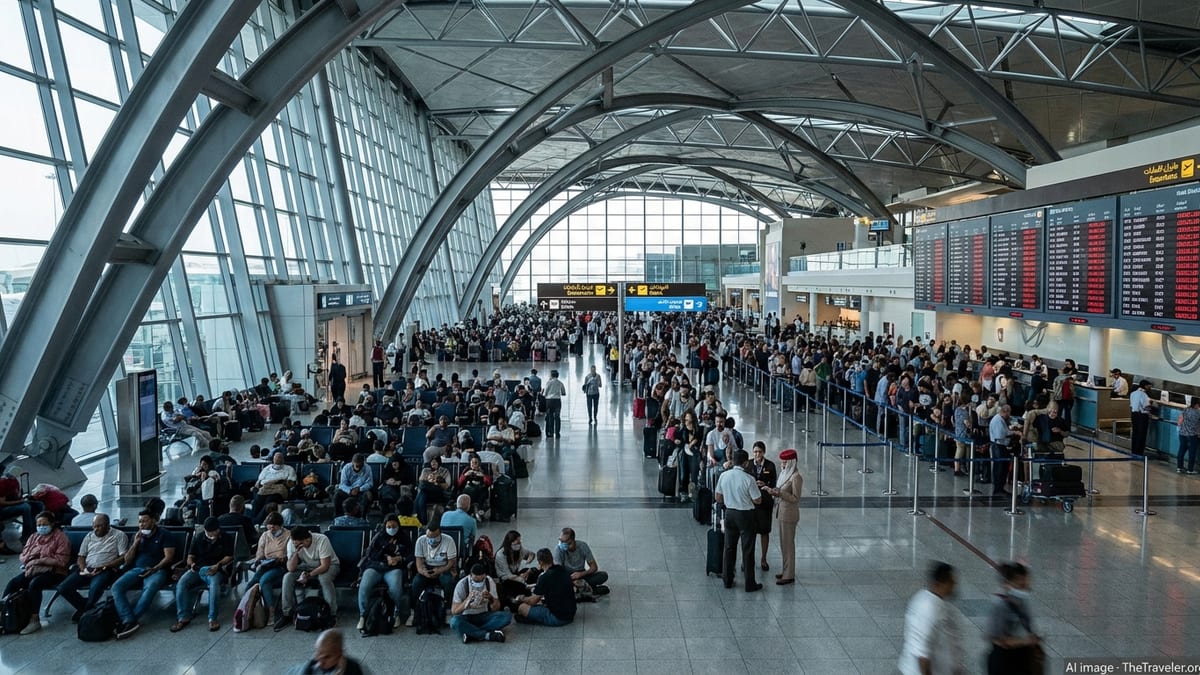
What the new US warning means for travelers
Recent coverage across multiple outlets indicates US diplomatic missions and the State Department have issued updated security messaging aimed at Americans already in the Middle East and those considering travel through major Gulf and Levant hubs. The guidance emphasizes heightened vigilance, close monitoring of local developments, and practical planning for disruptions that can occur with little notice.
Publicly available State Department materials have repeatedly highlighted risks that go beyond one country, including the possibility of flight cancellations, periodic airspace closures, and knock-on travel disruption in surrounding states. For travelers, that often translates to last-minute schedule changes, extended layovers, reroutes that avoid particular air corridors, and reduced flight frequencies on certain routes.
The alert posture also intersects with country-specific advisories. Saudi Arabia, for example, is currently listed by the State Department at Level 3, advising travelers to reconsider travel, with additional warnings tied to armed conflict and the risk of missile and drone activity, and a specific do-not-travel warning near the Yemen border.
Why Saudi-Houthi tensions are driving renewed concern
The travel warning lands amid a sharper phase of Saudi-Houthi confrontation. Recent reporting has described attempted strikes toward Saudi territory and air-defense interceptions, developments that raise the risk profile for aviation and major population centers even when incidents do not directly target airports.
Associated Press coverage in mid-to-late September described Saudi statements about attempted attacks involving ballistic missiles and drones, alongside reports of casualties from debris after interceptions. These episodes are part of a wider pattern of cross-border pressure that can affect not only border regions but also transport networks and public gatherings in more central locations.
Separate coverage has described an intensifying regional backdrop in which the Red Sea and nearby chokepoints remain sensitive. Even when commercial shipping continues to move, a deteriorating security environment can lead airlines and insurers to adjust risk assessments, sometimes abruptly, influencing flight paths, schedules, and ticket rules.
Countries and transit routes most likely to feel immediate disruption
While the travel messaging is region-wide in tone, the operational impact for many Americans is likely to be most noticeable in places that function as major transit nodes. In practice, that includes airports and air corridors serving the Gulf, the eastern Mediterranean, and connections that route passengers between North America, Europe, South Asia, and East Africa.
Published reporting around September 19 and September 20 referenced heightened caution messaging tied to Israel travel, including warnings to expect quick-changing aviation conditions. That kind of advisory language is typically aimed at travelers who may assume normal operations based on schedules shown days earlier, even though airports and airlines can rapidly adjust during periods of heightened tension.
Travelers transiting the Gulf may also encounter disruptions that are not confined to their final destination. Region-wide caution language has recently focused on spillover risks, including the possibility that incidents in one area can cascade into temporary restrictions elsewhere, affecting connections and increasing the chance of missed onward flights.
How existing US travel advisories shape on-the-ground choices
For Americans trying to interpret what a security alert means in practical terms, the State Department’s advisory levels remain the baseline reference. Saudi Arabia is currently at Level 3, advising reconsideration of travel, with warnings that include missile and drone risks, armed conflict, terrorism concerns, and constraints that can affect movement and legal exposure. Yemen remains at Level 4, advising Americans not to travel.
Those advisory levels matter because they often influence personal travel insurance decisions, employer travel approvals, university travel policies, and the willingness of some carriers to maintain certain schedules during heightened tension. They also set expectations around the limitations of consular assistance in specific environments, particularly in places where US diplomatic operations are limited or suspended.
Travelers who proceed despite advisories are typically encouraged to plan for degraded services, including slower administrative processes during heightened security periods, and to avoid assumptions that assistance will be immediate, especially if movements involve restricted areas near borders or conflict-affected zones.
Practical implications for bookings, flights, and traveler planning
In an environment where airspace can change quickly, the most immediate traveler concern is often itinerary resilience. That means building in longer connection times, avoiding tight same-day transfers across multiple countries, and preparing for the possibility that an airline may reroute around certain air corridors, shifting arrival times or changing aircraft rotations.
US travel messaging has also emphasized that travelers should closely monitor airline communications and official airport updates, rather than relying on schedules created before new restrictions. In practice, that can mean checking flight status multiple times in the 24 hours before departure, and again on the day of travel, especially for overnight long-haul segments.
For Americans already in the region, the advisories often function as an early nudge to keep documents current, maintain access to funds, and be prepared for changes in local security posture that can affect transport to airports. For travelers outside the region, the more cautious framing underscores that a trip routing through the Middle East may carry heightened disruption risk even if the destination itself is not directly involved in the Saudi-Houthi confrontation.