


More news on this day
A serious new worldwide alert is urging Americans traveling or living abroad to exercise increased caution, as the United States highlights a complex global security environment linked to escalating tensions with Iran and a growing list of high-risk destinations.
Get the latest news straight to your inbox!
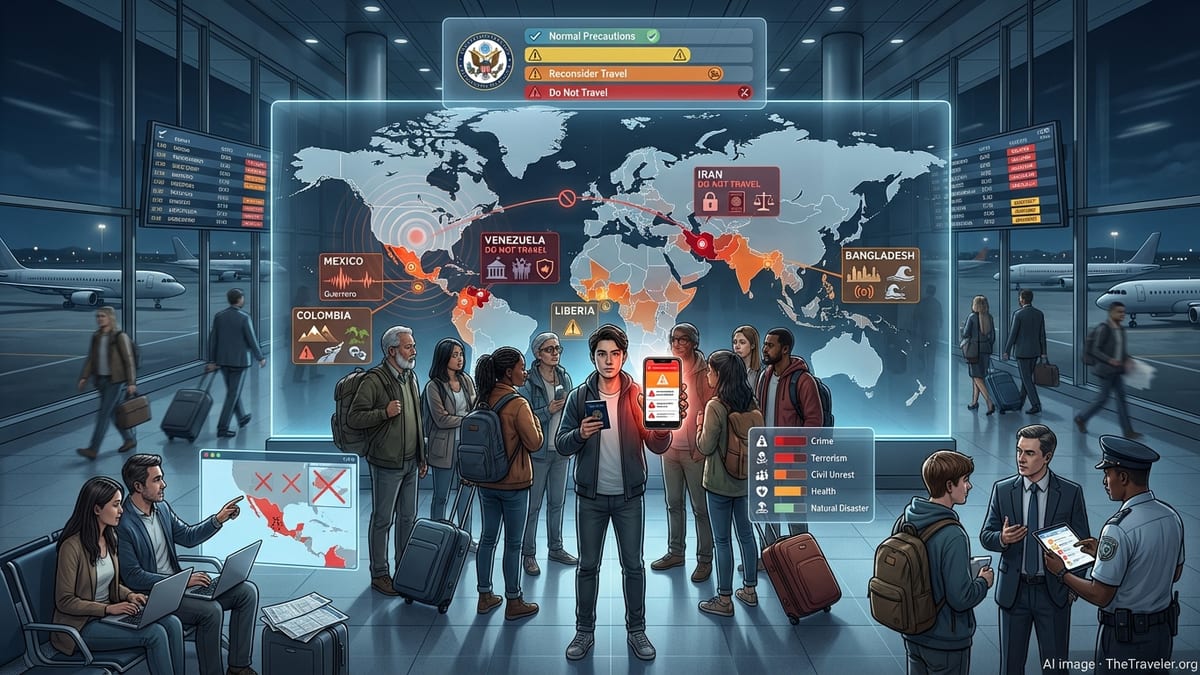
Fresh worldwide caution highlights evolving security risks
The latest Worldwide Caution, updated in mid-July, reinforces guidance first circulated earlier this year that calls on U.S. citizens overseas to maintain a higher level of situational awareness wherever they travel. Publicly available information describes a security environment that remains fluid, with officials warning that conditions in some regions can change rapidly and with little notice.
Recent coverage from multiple outlets indicates that the renewed alert is closely tied to ongoing conflict involving Iran and its regional allies. Reports point to concerns that groups sympathetic to Tehran could seek to target U.S. interests or locations associated with Americans far beyond the immediate conflict zone, including diplomatic facilities, hotels, transportation hubs, and popular tourist areas.
While the Worldwide Caution does not prohibit international travel, it effectively raises the baseline level of concern for Americans abroad. Travel advisories emphasize that individuals should be prepared for sudden disruptions, such as heightened security checks, localized unrest, or short-notice restrictions around sensitive sites.
Analysts note that these global alerts are relatively uncommon and typically coincide with periods of significant geopolitical strain, underscoring the gravity of the current security picture as seen from Washington.
Middle East tensions at the center of the warning
Coverage from U.S. and international media links the latest alert directly to surging tensions in the Middle East, particularly around the Strait of Hormuz and neighboring states. Recent reporting describes an escalation of military actions between U.S. forces and Iranian-linked groups, as well as fatal attacks on American personnel in Jordan that have heightened fears of wider spillover.
In addition to the global notice, the State Department maintains separate regional alerts and country-specific advisories that already urge Americans to reconsider or avoid travel to parts of the Middle East. Several destinations in the region remain at higher advisory levels due to persistent risks of terrorism, missile and drone attacks, civil unrest, and restrictions on the ability of U.S. missions to assist citizens on the ground.
Travel industry observers say the combination of an active regional conflict and a worldwide caution puts particular pressure on travelers heading to Gulf hubs, Israel, Jordan, and surrounding areas. Airlines and tour operators are monitoring airspace closures and reroutings that could affect connections across Europe, Africa, and Asia.
Experts in risk management point out that even travelers who are not visiting the Middle East directly may feel indirect effects, including disrupted itineraries, elevated security screening, and occasional protests or demonstrations in major global cities.
Country advisories tighten as more destinations reach ‘Do Not Travel’
The broad worldwide notice arrives as the United States continues to recalibrate its country-by-country travel advisories. In parallel with the global alert, recent updates place more than twenty countries at Level 4, the highest “Do Not Travel” designation, citing threats such as armed conflict, terrorism, kidnapping, and severe limits on consular assistance.
Publicly available advisory data shows that countries including Haiti and Iraq remain among the most restrictive listings, with guidance stressing that U.S. government personnel face heavy movement constraints and, in some areas, are ordered to depart. For Iraq in particular, previous notices have highlighted repeated attacks, armed clashes, and restrictions that even affect the use of major international airports.
Several destinations popular with American tourists sit just below the highest threshold at Level 3, where travelers are urged to reconsider nonessential trips. In Latin America, parts of Mexico and Colombia exemplify locations where security concerns, organized crime, and sporadic violence have led to heightened caution without a full travel ban.
Travel analysts say the combination of a global security alert and a growing list of Level 3 and Level 4 destinations underscores a clear message: U.S. citizens can still travel, but the margin for error is narrowing in certain parts of the world.
What the alert means for American travelers right now
For Americans preparing to go abroad in the coming weeks, the worldwide caution effectively raises the threshold for pre-trip planning. Government guidance urges travelers to closely review the advisory level of each country on their itinerary, understand local laws and customs, and pay attention to any recent security alerts issued by nearby embassies or consulates.
Risk specialists advise that travelers build additional flexibility into plans, including longer connection times, refundable or changeable bookings where possible, and updated contact information with airlines and tour providers. Many also suggest having contingency plans for alternative routes if airspace closures or regional disruptions affect major hubs.
Published travel guidance continues to promote the use of government-run enrollment systems that allow Americans to receive security updates while overseas. These services can deliver alerts about demonstrations, sudden curfews, natural disasters, and changes in health or safety conditions, often tailored to specific regions or cities.
Insurance providers, meanwhile, report growing interest in policies that address security-related disruptions, such as trip cancellation tied to government advisories, evacuation coverage, and assistance services in the event of an emergency. However, consumer advocates caution that travelers need to read policy language carefully, since standard travel insurance may not automatically cover war or terrorism-related events.
Airlines, tourism operators and destinations weigh the impact
Initial reaction from financial and travel industry reporting suggests that markets have not yet seen a dramatic downturn in global tourism demand in response to the new alert. Coverage of airline stocks, for example, indicates that carriers have largely taken the warning in stride, with investors focusing instead on earnings, fuel prices, and capacity trends.
Nevertheless, tourism boards and travel companies in affected regions are watching developments closely. Destinations already managing reputational challenges due to conflict, crime, or political instability could see further hesitation from American visitors, particularly among first-time travelers and families.
On the operational side, airlines and cruise lines continue to adjust routes, port calls, and overnight stays based on evolving risk assessments. Some carriers have opted to avoid certain air corridors or to modify schedules during periods of heightened tension, balancing safety considerations with the need to sustain key international links.
Travel advisors say that for now, most Americans are not cancelling trips wholesale, but many are asking more pointed questions about security, evacuation options, and what would happen if conditions deteriorate suddenly in a transit hub or final destination. The worldwide caution, they note, is likely to keep those conversations at the forefront of trip planning for the foreseeable future.