


More news on this day
The United States has issued a rare worldwide travel advisory in response to the escalating war with Iran, urging Americans abroad to exercise heightened caution as security risks rise and airlines begin cutting routes across the Middle East and beyond.
Get the latest news straight to your inbox!
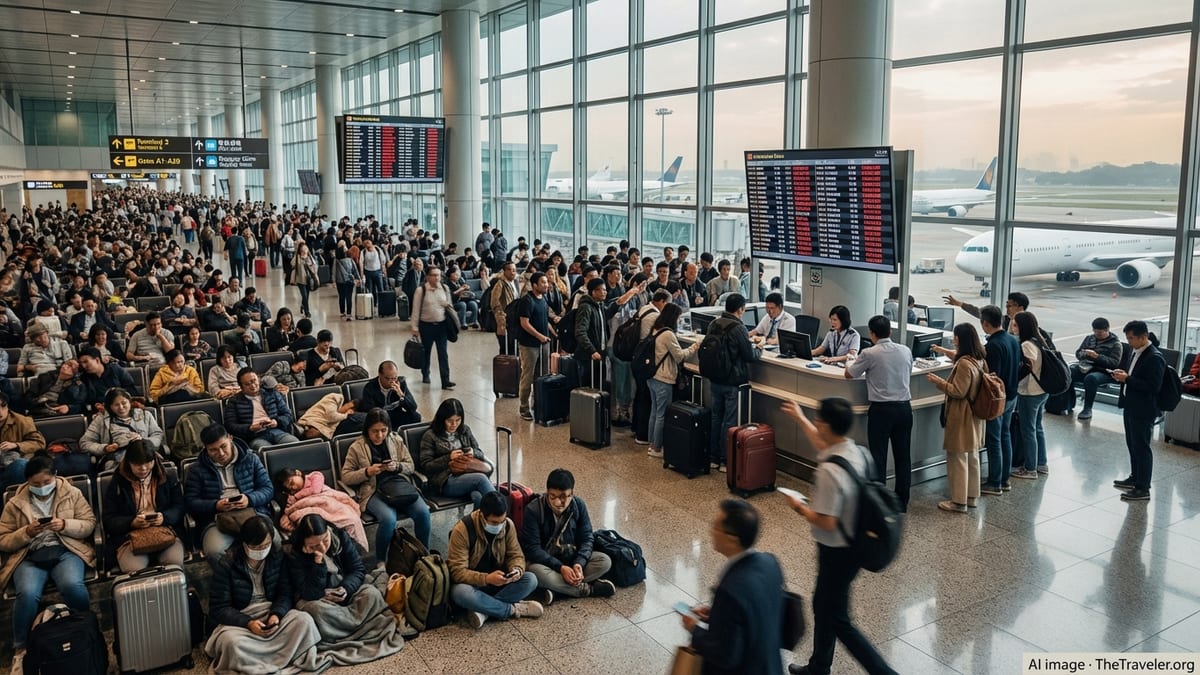
Global alert reflects expanding security risks
The updated worldwide caution notice advises U.S. citizens to be more vigilant in all destinations, citing the potential for attacks or reprisals linked to the conflict with Iran and its regional partners. Published guidance notes that groups aligned with Tehran may seek to target U.S. interests or locations associated with Americans, not only in the Middle East but in other regions where tensions are running high.
The advisory follows months of intensifying hostilities, including large-scale U.S. and Israeli strikes on Iranian military and government sites and repeated exchanges of fire involving Iran-backed groups. Publicly available information on the conflict shows that the fighting has broadened into a complex regional confrontation touching key transport and energy corridors.
In its explanation of the worldwide caution framework, the State Department describes this category as a tool used when security concerns, terrorism threats or regional wars create elevated risks for U.S. citizens across multiple countries at once. The new alert places particular emphasis on the possibility of sudden security incidents around diplomatic facilities, crowded public places and symbolic Western venues.
Travel and security analysts note that such notices have historically been reserved for moments of significant geopolitical strain, and interpret the latest warning as a sign that Washington expects further fallout from the Iran war in the weeks ahead.
Middle East airspace disruptions trigger cancellations
Air travel has already emerged as one of the most immediate pressure points for international travelers. Reports from aviation trackers and regional media describe waves of cancellations and diversions after missile and drone attacks, temporary airspace closures and military activity near major flight corridors.
Travel advisories for countries such as Iraq, Kuwait and the United Arab Emirates now reference both the threat of armed conflict and "significant disruptions" to commercial flights. Official notices for Cyprus highlight that a drone strike on a British military facility earlier this year prompted further interruptions to air traffic, underscoring how quickly the conflict can spill over into neighboring states.
Global carriers have been trimming or suspending services on some routes that cross Iranian or adjacent airspace, sometimes rerouting long-haul flights over Central Asia or Africa. These detours increase flight times and operating costs, with knock-on effects for schedules, aircraft rotations and crew availability. In some cases, airlines have opted to cancel entire rotations rather than attempt complex workarounds through congested corridors.
Travel-industry briefings indicate that passengers bound for hubs such as Dubai, Doha and Istanbul should expect more frequent last-minute changes, including aircraft swaps, schedule adjustments and rebookings onto alternative routings that avoid the most volatile areas.
Heightened warnings across Iran and surrounding region
Iran itself remains subject to a Level 4 "Do Not Travel" advisory that predates the current phase of the war but has been reinforced by the latest fighting. Public advisories emphasize risks that include unrest, terrorism, kidnapping and the possibility of wrongful detention of U.S. nationals, while noting that consular assistance inside Iran is extremely limited.
Neighboring countries have seen their own advisories tightened since large-scale hostilities erupted earlier this year. Updated notices for Iraq and Kuwait report the ordered departure of non-emergency U.S. government personnel because of security concerns tied to the conflict. Similar language appears in the latest guidance for the United Arab Emirates, which points to the risk of drone and missile attacks and warns of further air travel disruption.
Separate reporting on the conflict recounts that the U.S. government has urged its citizens to leave more than a dozen countries across the wider Middle East, including major air hubs and tourism markets. The aim is to reduce the number of Americans in areas where the battlefield and potential retaliatory strikes remain fluid.
Security bulletins for the region repeatedly stress that conditions can deteriorate with little notice. Demonstrations, cross-border attacks or incidents at sea can trigger rapid changes in the local threat picture, sometimes leading to curfews, road closures, communications outages or new restrictions on movement.
What travelers can expect in the coming weeks
For travelers, the worldwide advisory and regional updates translate into a more unpredictable operating environment. Even destinations far from the front lines may experience secondary effects, such as tighter security screening, extended connection times and higher fares as airlines adjust to longer routings and capacity constraints.
Industry specialists expect ongoing volatility in schedules for flights that normally pass through the Gulf, eastern Mediterranean or northern Indian Ocean. In previous conflict cycles, airlines have alternated between reopening and reclosing routes as risk assessments changed, creating challenges for passengers trying to plan trips months in advance.
International travel insurers are also reassessing coverage conditions related to war and civil unrest. Policy documents often contain exclusions or special clauses for events defined as acts of war, which can affect compensation for cancellations or delays when government advisories shift. Travelers are being urged by consumer advocates and travel-law experts to check the fine print of their policies before departure.
Travel trade groups note that corporate travel managers are increasingly looking at contingency planning, from alternative meeting locations to remote participation options, particularly for staff who would otherwise transit through higher-risk hubs.
Guidance for Americans abroad and those planning trips
Publicly available guidance encourages U.S. citizens to remain alert to their surroundings, avoid large gatherings and follow local news and security updates in any destination. Travelers are advised to keep family members informed of their itineraries and to prepare back-up plans in case of sudden route changes or airport closures.
The State Department’s traveler information materials recommend that Americans review both the country-specific advisory and the worldwide caution before finalizing trips. Enrollment in official notification programs can provide direct alerts about security incidents, transportation disruptions or new evacuation options should conditions worsen.
Airlines and travel agents are meanwhile urging customers to verify bookings frequently, enable notifications from carriers and allow additional buffer time for connections that traverse sensitive regions. Flexible ticket options, including reduced-change-fee or fully refundable fares, are being promoted as a way to mitigate uncertainty.
While many destinations remain open and continue to welcome visitors, the combination of a global advisory and an escalating regional war means that travelers, particularly those from the United States, may need to weigh their risk tolerance more carefully and stay prepared for rapid changes to both safety conditions and flight operations.