


More news on this day
The United States has updated its travel advisory for China, underscoring that travelers should assume their electronic communications can be monitored, stored and potentially used against them under broad national security and counterespionage laws.
Get the latest news straight to your inbox!
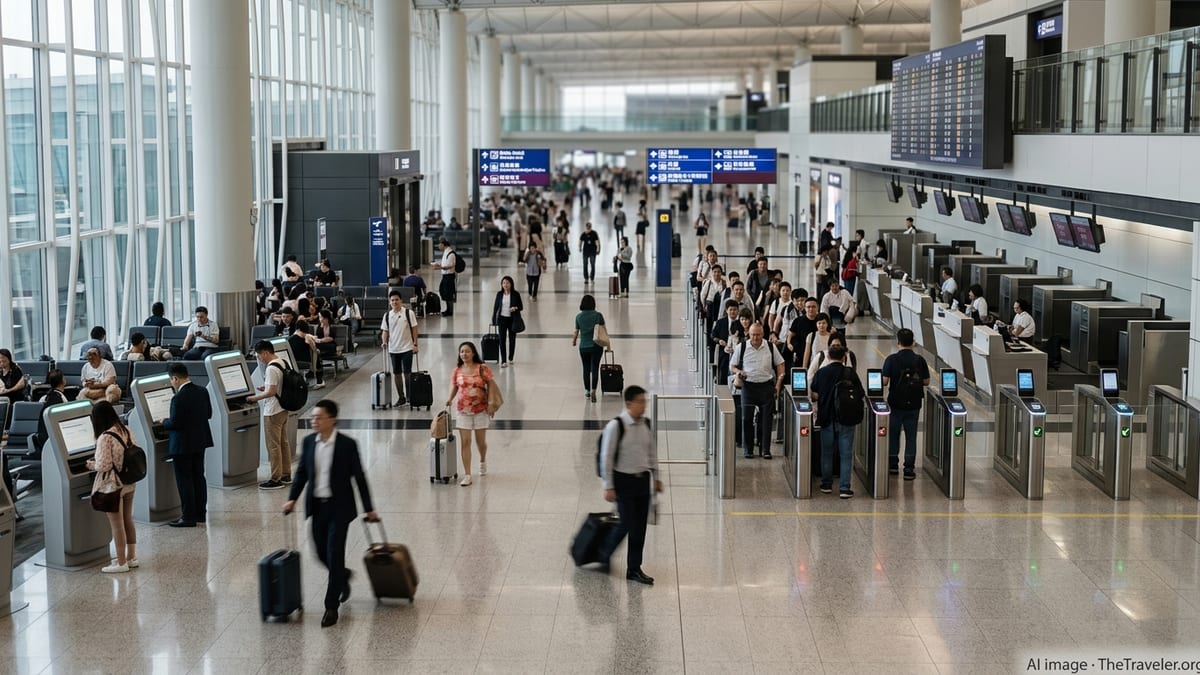
Advisory Raises Concerns Over Monitoring of Everyday Digital Activity
The China travel advisory on the State Department’s website, updated in early September 2026, continues to rate mainland China at Level 2, urging travelers to exercise increased caution. Publicly available information highlights the “arbitrary enforcement of local laws,” growing use of exit bans, and the risk of unjust arrest or detention. Within that framework, electronic surveillance and control of digital expression now feature prominently in the guidance for US citizens considering trips to China.
The advisory’s communication section cautions that travelers should assume Chinese security services can read emails, text messages and social media posts sent to or from China, as well as content shared via Chinese apps, even when users are physically outside the country. The document notes that hotel rooms, offices, vehicles, telephones, internet use and even digital payments may be monitored on site or remotely, and that personal electronics can be searched without consent. These warnings reflect a technology environment in which data flows through systems subject to extensive state access.
According to the advisory text, security personnel have detained or deported US citizens for private electronic messages critical of the governments of China, Hong Kong or Macau, or of the Chinese Communist Party. Reports also indicate that in some cases individuals have faced consequences for content sent while outside Chinese territory if the messages were later accessed once they were inside China. The State Department frames this as part of a broader pattern in which vague concepts such as “endangering state security” and “state secrets” can be interpreted expansively by different authorities.
Counterespionage Law and Broad Definitions of Sensitive Data
The travel advisory references China’s updated Counterespionage Law, which took effect in 2024 and expanded the definition of espionage to cover a wider range of information and activities. Publicly available legal analyses and human rights reporting note that authorities can treat many categories of data, statistics and documents as state secrets, even if they appear benign or publicly accessible. This creates uncertainty for visitors engaged in research, journalism, market analysis or cross-border business who may handle information that Chinese security services later deem sensitive.
In its advisory language, the State Department warns that security personnel can detain and prosecute foreign nationals, including US citizens, for actions that elsewhere would be considered routine professional work. That may include conducting due diligence, collecting market information or accessing certain online databases while inside China. The advisory points to increased scrutiny of foreign and third-country firms, especially consultancies and professional services providers, and suggests that their staff may face legal exposure because of how authorities interpret data gathering and sharing.
Recent US government reports on China’s information controls describe an ecosystem in which surveillance, data localization and expansive security legislation reinforce one another. Open-source documentation from State Department human rights and information-environment reports describes widespread monitoring of phone and internet traffic, the use of facial recognition and other advanced analytics, and a legal framework that allows security agencies to curtail or cut communications networks in the name of public order. These findings provide the broader context for the travel advisory’s emphasis on the risks tied to digital communications.
Implications for Tourists, Students and Business Travelers
Although the advisory does not prohibit travel, it signals that ordinary visitors should treat phones, laptops and online accounts differently when planning trips to mainland China. Public guidance notes that US citizens in China may be subject to monitoring in hotels and public spaces and that devices could be searched or temporarily seized. Travelers who rely heavily on cloud services, social media or messaging apps that contain political commentary, work material or sensitive personal information may face particular challenges.
The advisory highlights education as a specific area of concern. It notes that all universities and schools in China are controlled by the ruling party and that foreign teachers or students who express ideas deemed contrary to official positions risk deportation or detention. For visiting scholars and exchange students, the combination of campus oversight and wider digital monitoring may limit academic discussion and online engagement, especially on topics relating to politics, religion, human rights or ethnic minorities.
Business travelers and corporate security teams are also reassessing practices in light of the updated language. Insurance industry briefings that summarize State Department advisories stress that companies sending staff to China should plan for the possibility that work devices, communication platforms and even routine emails could be scrutinized. Some risk-management recommendations drawn from publicly available guidance include using travel-only electronics with minimal stored data, limiting access to corporate networks, and reviewing whether any planned meetings, research or data collection might intersect with sensitive sectors or locations.
Exit Bans, Wrongful Detention Risk and Digital Trails
Beyond real-time surveillance, the travel advisory describes how exit bans and criminal proceedings can intersect with a traveler’s digital footprint. The State Department notes that Chinese authorities have used exit bans to compel participation in investigations, pressure relatives living abroad, resolve civil disputes and exert leverage in disputes involving foreign governments. US citizens often discover such restrictions only when they attempt to depart China, and there may be no transparent legal process to challenge them.
Publicly available Congressional and human-rights reporting indicates that online activity, messaging history and contact with foreign organizations can be cited in cases where individuals are accused of endangering state security or spreading state secrets. This means that posts, messages or documents that seem innocuous in a US or European legal setting could carry different implications once filtered through China’s security laws. For dual nationals or US citizens of Chinese heritage, open-source testimony describes instances of heightened scrutiny and difficulties leaving the country after coming under investigation.
US law enforcement and security agencies have separately warned about the risk of wrongful detention in China, particularly for individuals targeted in disputes, political cases or transnational repression campaigns. Airport awareness campaigns and public notices reference the State Department advisory and urge travelers to understand that Chinese authorities can restrict movement, bar departure or initiate legal actions on the basis of digital evidence and alleged ties to foreign organizations, opposition groups or sensitive research.
What Travelers Can Do Before and During a Trip
The updated advisory and related risk analyses suggest that travelers who still choose to visit China should incorporate digital security into their planning. Public guidance from travel insurers and risk consultancies points to practical measures such as limiting the amount of personal and professional data carried on devices, using strong authentication on essential accounts, and avoiding storage of politically sensitive materials or communications on phones or laptops taken into the country.
Analysts commonly advise visitors to assume that any information accessed or transmitted via Chinese networks or apps could be stored or reviewed by authorities. That may influence decisions about whether to log into work email, access cloud drives or use popular local platforms tied to payment, messaging and social networking. Some organizations recommend adopting separate, temporary device setups for travel to high-surveillance environments, and then securely wiping those devices upon return.
Open-source travel guidance also underscores the importance of monitoring advisory updates. The State Department maintains a subscription service for changes to country advisories, and related pages for Hong Kong and Macau now echo many of the digital surveillance concerns that appear in the mainland China notice. For US citizens, reviewing those official notices shortly before departure, registering travel when appropriate, and considering specialized legal or security advice for high-risk itineraries have become increasingly common steps when planning trips involving China.
U.S. Department of State China Travel Advisory
U.S. Department of State Travel Advisories Index
U.S. State Department report on China and the global information environment