


More news on this day
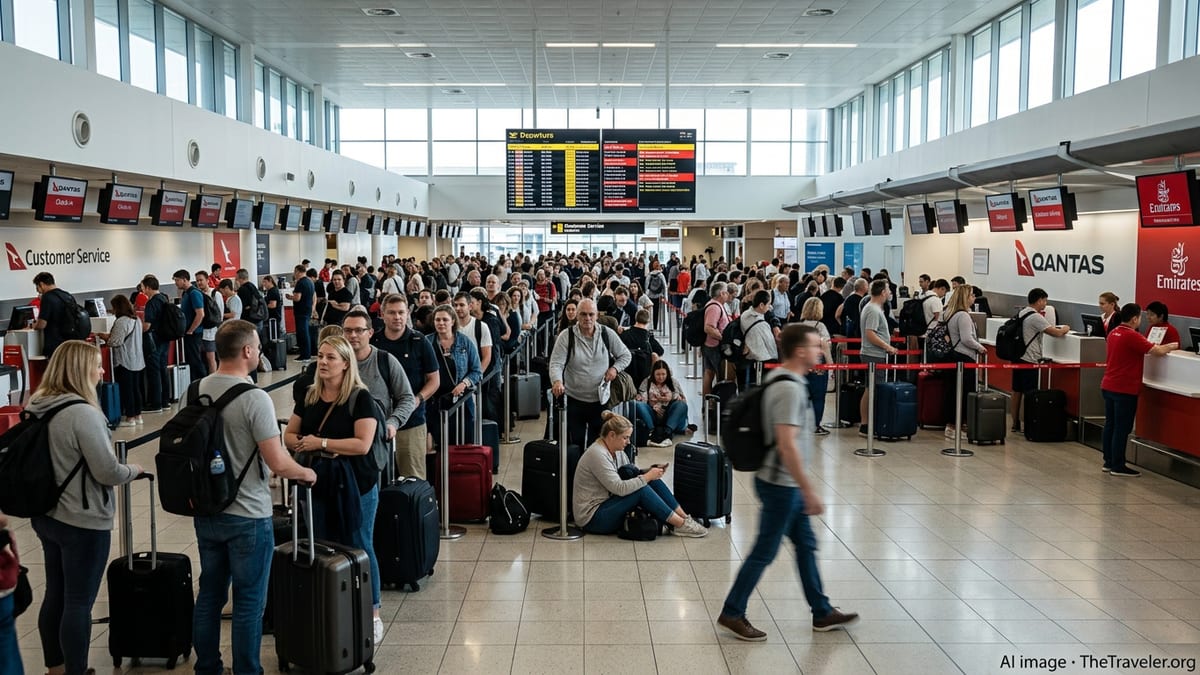
Passengers using Sydney Airport in recent days have faced a fresh round of cancellations and delays, with traffic caps, staffing pressures and patchy weather combining to slow operations at Australia’s busiest air gateway.
Get the latest news straight to your inbox!
Operational Constraints Push Flight Schedules Off Course
Recent data from aviation performance trackers shows a noticeable spike in disrupted flights at Sydney Airport, including dozens of cancelled departures over the past week. While the majority of services have still operated close to schedule, the number of flights removed from the timetable has exceeded longer term averages, creating bottlenecks at peak times and leaving some passengers scrambling to rebook.
Published performance figures indicate that, over the seven days to 9 September 2026, more than 60 departures from Sydney were cancelled, with several days recording double digit cancellations. These disruptions sit on top of the routine churn of minor delays that are common at a high volume hub, tightening spare capacity and making it harder for airlines to recover when problems arise.
Industry submissions to government highlight that Sydney’s longstanding curfew, hourly movement cap and runway configuration all amplify the impact of any operational issue. When traffic flow is restricted for even a short period, the airport has limited flexibility to push through additional movements later in the day, so services are more likely to be delayed or cancelled outright rather than absorbed into the schedule.
Government documents outlining recent amendments to Sydney Airport’s demand management rules describe new provisions for a temporary recovery period in the event of “significant disruption,” allowing slightly higher hourly movements for a limited time. However, that mechanism is designed for major events and does not remove the structural constraints that continue to limit how quickly airlines and air traffic managers can bounce back from everyday disruptions.
Staffing and Air Traffic Management Under Pressure
Recent disruptions have coincided with continuing pressure on the air traffic control system and airport staffing. A series of operational briefings and performance reports from Airservices Australia note that, although overall network resilience has improved through 2026, volatility remains a defining feature of the system, particularly during adverse weather or congestion in the Sydney and Melbourne basins.
In early August, published coverage detailed a day of reduced air traffic movement rates over Sydney that led to more than 150 delays across domestic and international services. The restrictions were linked to roster constraints in the control tower, highlighting how staffing shortfalls can quickly cascade into widespread schedule changes even in otherwise benign conditions.
Industry bodies have repeatedly cited air traffic control shortages, crew availability and lingering post pandemic staffing gaps as key drivers of irregular operations. Public documents from major airlines indicate that cancellation rates on busy routes through Sydney remain above pre 2020 levels, with carriers pointing to a mix of air traffic constraints, weather events and crew resourcing challenges as underlying causes.
Network wide reviews released this year have called for deeper data sharing and closer collaborative decision making between airlines, airports and Airservices to better anticipate pinch points. Reports emphasize that while day to day on time performance has trended upward, managing peaks and recovering after a disruption continue to test the system, particularly at capped and curfewed airports such as Sydney.
Weather and Safety Considerations Add to Disruption Risk
Weather remains a persistent wild card for Sydney operations. Briefings from the Bureau of Meteorology for Sydney Airport show shifting wind patterns and the potential for wind shear and low cloud at different times, conditions that can require additional spacing between aircraft or changes in runway configuration. Even when storms or showers do not directly hit the airfield, precautionary measures can slow arrivals and departures.
Historical coverage has documented multiple occasions where strong winds around Sydney have forced airlines to consolidate schedules or operate on a single runway, leading to dozens of cancellations in a single day and long queues across terminals. Such events underline how quickly relatively minor meteorological changes can translate into large scale disruption in a tightly regulated operating environment.
Safety related constraints have also remained in the spotlight following a series of reported near miss incidents around the airport. While investigations are handled separately from day to day traffic management, heightened attention to separation standards and procedural compliance can reinforce a conservative approach to managing traffic flows during busy periods or marginal weather, further limiting the scope to “catch up” on delayed movements.
Recent emergency exercises at Sydney Airport, involving hundreds of personnel from aviation and emergency services, demonstrate the emphasis being placed on response readiness. Although these drills are planned and do not themselves drive cancellations or delays, they are a reminder that any real world incident on or near the airfield could trigger immediate ground stops and longer lasting knock on effects for the schedule.
Impact on Travellers and Tips for Managing Disruptions
For travellers passing through Sydney, the immediate impact of the latest wave of cancellations and delays has been longer waits at gates, tight connections and the need for last minute rebookings. On busy domestic routes such as Sydney to Melbourne and Sydney to Brisbane, even a small number of cancelled services can quickly fill the remaining flights, reducing flexibility for passengers seeking alternatives.
Publicly available guidance from the airport and airlines consistently urges passengers to monitor their flight status closely on the day of travel and to build extra time into their plans. Official flight boards and mobile apps are updated throughout the day as schedules change, but information is not always synchronized across all platforms, so travellers are encouraged to check more than once, particularly before leaving for the airport.
Consumer advice from regulators and advocacy groups notes that rights and remedies for disrupted flights vary depending on the airline and fare type. Some carriers offer automatic rebooking and meal or accommodation vouchers during significant delays, while others provide credit or later travel options. Passengers are encouraged to review the conditions of carriage for their chosen airline and to keep records of any additional expenses incurred as a result of cancellations or long delays.
Travel planners suggest that those with time sensitive commitments at their destination consider booking earlier flights in the day, when there is more opportunity to be moved to a later service if problems arise. On days of forecast poor weather or known operational exercises, flexible tickets and travel insurance that specifically covers schedule disruption may offer additional protection.
Outlook for Sydney’s Busy Spring Travel Period
The current disruption comes as Sydney heads into the busier spring travel period, with domestic leisure traffic gradually ramping up and international networks expanding. Aviation data services list Sydney as handling more than 400 flights per day across close to 100 destinations, leaving limited slack in the system when multiple factors coincide.
Network overview reports issued in recent months highlight that industry stakeholders are focusing on strengthening disruption preparation and recovery protocols ahead of peak seasons. Initiatives include improved sharing of operational data between airlines and air traffic managers, refinement of contingency plans for weather and staffing events, and continued work on demand management settings to balance efficiency and community impacts.
At the same time, new infrastructure in the wider Sydney basin, such as the forthcoming Western Sydney International Airport, is expected to gradually add capacity to the region’s aviation network over the coming years. Engagement material from Airservices Australia indicates that freight operations at the new airport are scheduled to begin in 2026, with broader traffic to ramp up over time, potentially easing some pressure on the existing Sydney Airport.
For now, however, the primary advice for anyone flying through Sydney is to treat schedules as subject to change. With curfew rules, movement caps, weather variability and resourcing pressures all intersecting at one of the region’s most constrained hubs, occasional waves of cancellations and delays remain an ongoing feature of travel into and out of Australia’s largest city.