


More news on this day
Americans planning trips to the Middle East are being urged to rethink their itineraries as Washington’s latest security alerts and country advisories highlight rising regional tensions, expanded conflict zones, and mounting disruption to commercial air travel.
Get the latest news straight to your inbox!
Regionwide alerts put focus on elevated risk
Recent security alerts and country advisories indicate that United States officials now view much of the Middle East as presenting significantly higher risks for civilian travel than earlier this year. Publicly available information shows that guidance for Americans ranges from “reconsider travel” for a number of destinations to “do not travel” for others, reflecting concerns about armed conflict, terrorism, kidnapping, and civil unrest.
According to summaries of official travel-advisory pages, Bahrain, Israel and the West Bank, Jordan, Kuwait, Oman, Qatar, Saudi Arabia, and the United Arab Emirates are currently categorized at a level that urges Americans to reconsider travel. Separate advisories classify Iran, Iraq, Lebanon, Syria, Yemen and Gaza under stricter “do not travel” warnings, citing active hostilities, recurrent missile and drone activity, and limited capacity to provide emergency assistance.
In parallel, a global caution notice circulated earlier in the year advised Americans worldwide, and particularly those in the broader Middle East, to exercise increased vigilance. The communication highlighted the potential for rapid changes in the security situation, as well as periodic airspace closures that could complicate evacuation or onward travel.
Analysts note that while detailed language varies by country, the overall picture is one of elevated and unpredictable risk. For travelers, that translates into a higher likelihood of disrupted flights, sudden route changes, and localized security incidents occurring with little warning.
Country advisories tighten as hostilities expand
Individual travel advisories for countries in and around the Gulf have been updated in recent months in response to intensifying clashes linked to the ongoing confrontation involving Iran, the United States, Israel, and allied groups. Reports from the official advisory pages for Iraq, Kuwait, Bahrain and the United Arab Emirates point to concerns over potential Iranian drone and missile attacks and broader armed conflict in the region.
In Iraq, publicly available notices advise Americans not to travel at all, referencing terrorism, kidnapping and civil unrest, as well as a limited ability to provide emergency services. Separate communications state that non-emergency U.S. government personnel have been ordered to depart, underscoring the severity of perceived threats.
Neighboring Gulf countries are not exempt. Advisory text for Kuwait, Bahrain and the United Arab Emirates emphasizes the risk of armed conflict, including the possibility of cross-border strikes, and alerts travelers to the presence of landmines or unexploded ordnance in some areas. Information for Saudi Arabia cites the risk of Iranian missile or drone targeting of American interests and notes that Iran-aligned groups have threatened further attacks.
Elsewhere, guidance on Lebanon stresses that Americans should avoid travel due to crime, terrorism, unrest and armed clashes along the country’s borders. Advisories for Israel and the West Bank reference ongoing security incidents and terrorist threats, while warning against any travel to Gaza and certain northern and border areas that have seen repeated exchanges of fire.
Airspace closures and flight disruptions reshape travel plans
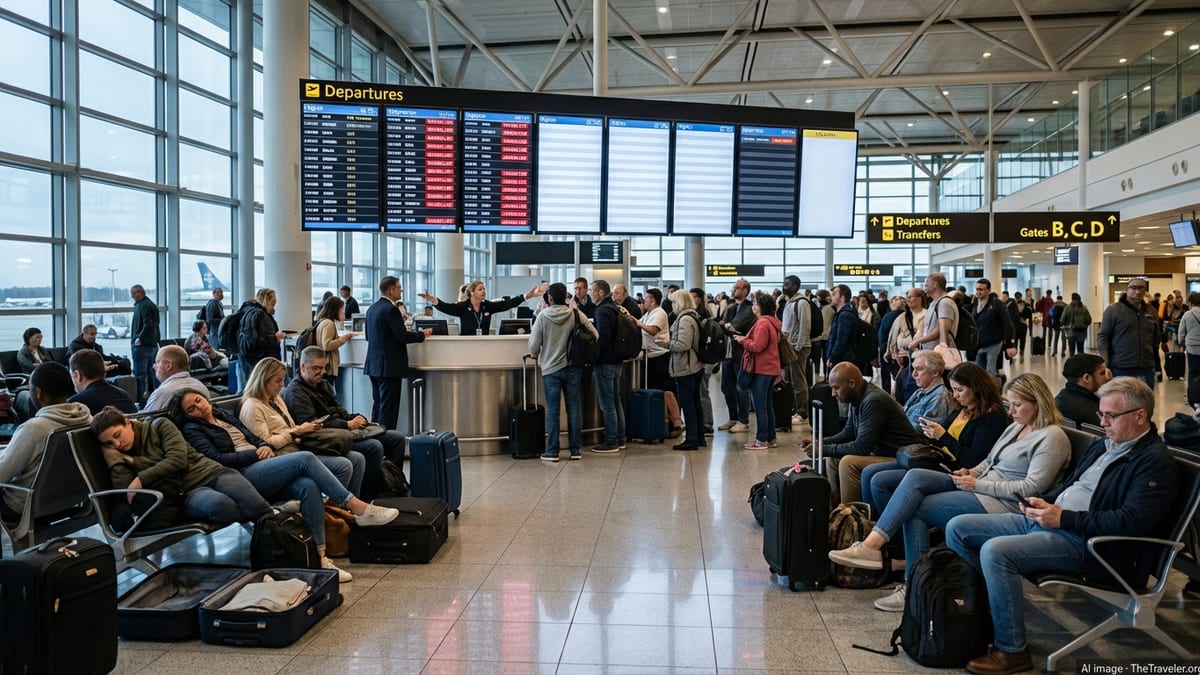
The impact of rising tensions is being felt heavily in the skies. Notices summarized in public reporting point to advisory messages from aviation regulators encouraging U.S. carriers and commercial operators to exercise extreme caution when operating in or over parts of the Middle East, particularly airspace that could be at risk from long-range missiles or drones.
Travel-industry assessments circulated in recent months describe a pattern of rolling schedule changes, diversions and cancellations as airlines respond to changing risk calculations and temporary airspace closures. Some carriers have rerouted long-haul flights to avoid conflict-affected corridors, which can lengthen journey times or require additional fuel stops.
Corporate travel managers and tour operators are also revisiting contingency plans. According to sector briefings, companies with staff based in or transiting through the region are updating evacuation protocols, monitoring airport operational status more closely and assessing whether previously routine business trips remain justifiable.
For leisure travelers, the net result is a landscape where itineraries can no longer be taken for granted. Even destinations that remain open to tourism may experience sudden changes in flight availability, tighter security screening, or localized curfews and movement restrictions that limit what visitors can do on the ground.
What the new warnings mean for American travelers
The shift toward more restrictive advisories does not amount to a blanket ban on all trips, but it does signal that Americans should weigh risks far more carefully than during previous periods of relative calm. Government guidance encourages travelers who nonetheless decide to go ahead with essential journeys to have flexible tickets, maintain contingency funds, and be prepared for extended stays if routes home are disrupted.
Public-facing information also highlights the importance of closely following local news, airline updates and official security alerts for specific countries and cities. Travelers are urged to keep family or contacts in the United States informed of their plans, share copies of travel documents, and ensure their mobile devices can receive emergency notifications.
Safety recommendations commonly include avoiding large gatherings, demonstrations and locations with a visible military or political profile, as well as maintaining a low public profile and varying routes and routines. In some places, Americans are advised to identify nearby shelters or safe areas in advance and to maintain an emergency bag with essentials in case of sudden movement restrictions or evacuations.
Insurance considerations are also becoming more complex. Industry commentary indicates that some standard travel-insurance policies may exclude coverage for losses linked to war or terrorism, leaving travelers potentially exposed if they do not secure specialized coverage that explicitly includes conflict-related disruption.
Travel industry weighs risk against persistent demand
Despite the heightened warnings, demand for travel to parts of the Middle East has not disappeared. Tourism boards in relatively more stable markets continue to promote winter sun, cultural attractions and major events, while airlines tread a fine line between maintaining crucial connectivity and protecting passengers and crews.
Hospitality-sector assessments suggest that business travel, energy-related projects and diaspora visits are sustaining occupancy in several Gulf hubs, even as purely discretionary leisure trips soften. Some hotels and destination-management companies are focusing on travelers who are already resident in the region rather than on new arrivals from further afield.
Industry observers note that the situation could change quickly if hostilities escalate or spread. For now, Americans considering trips to the Middle East are being advised, through a combination of official advisories and industry guidance, to treat the region as a complex and high-risk environment. Thorough preparation, constant monitoring of developments, and a willingness to postpone or reroute travel remain central to navigating the months ahead.