


Buying travel insurance for the first time can feel like trying to read a foreign language, especially when you are comparing exclusions, excesses and add ons. If you are considering 1Cover for an overseas trip from Australia or New Zealand, understanding how its policies actually work in real life can make the difference between a smooth claim and an expensive shock. This guide walks through what first time users of 1Cover need to know, using concrete scenarios that mirror the way people really travel today.
Get the latest updates straight to your inbox!
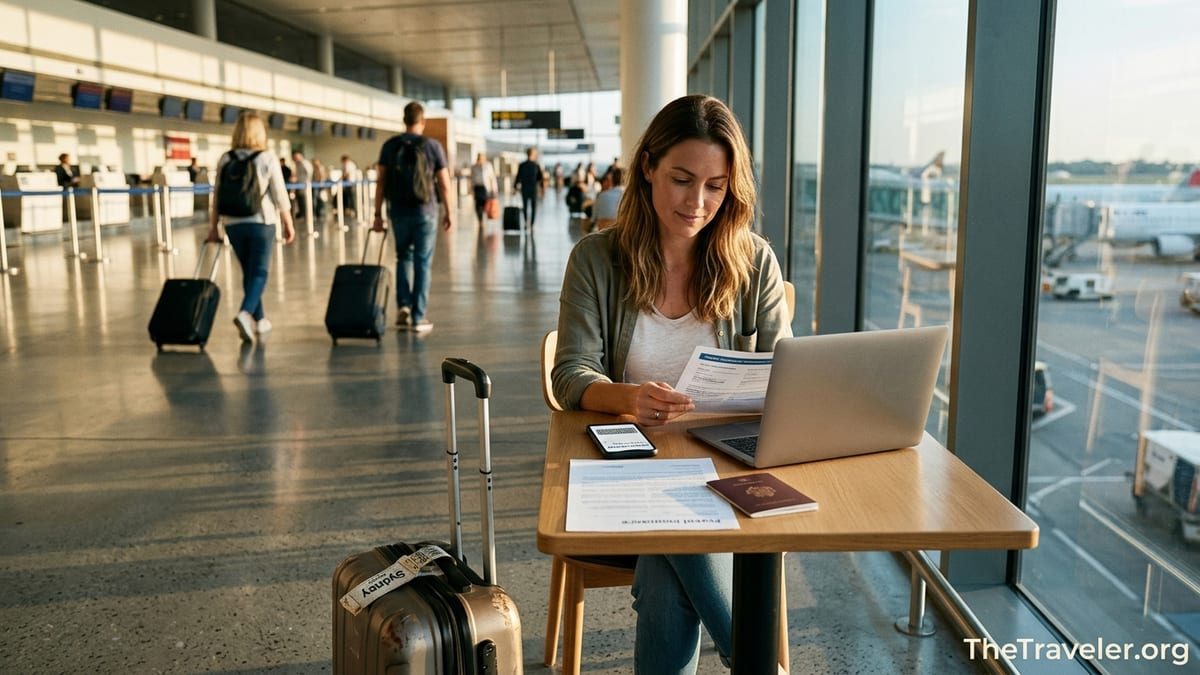
Who 1Cover Is For and When Their Policies Make Sense
1Cover is a specialist travel insurer that primarily targets residents of Australia and New Zealand who are heading overseas or taking certain domestic trips. It sells policies directly online rather than through travel agents, which is one way it keeps premiums competitive. In practice, that means you will often encounter 1Cover when you are searching online for travel insurance rather than having it bundled by an airline or tour company.
As a first time buyer, the main question is whether 1Cover fits the kind of travel you actually do. For example, a 28 year old Sydney traveller heading to Bali for 10 days might look at a single trip Comprehensive policy, while a Wellington based consultant flying to Singapore and Europe several times a year may find better value in a Frequent Traveller (annual multi trip) policy. Someone already in Thailand whose existing cover expired might look at 1Cover’s “Already Overseas” style product, which is designed for residents who forgot to buy insurance before leaving.
1Cover is best suited to standard leisure and business trips that start and end in Australia or New Zealand, with clear departure and return dates. It is generally not designed for people who are permanently abroad, on working holiday visas for long periods without return tickets, or travelling primarily to receive medical treatment. If your itinerary is complicated, such as an open ended backpacking trip through Southeast Asia with no confirmed return flight, you may need to read the Product Disclosure Statement very carefully or talk to 1Cover before buying.
It is also worth recognising that 1Cover does not usually cover travel within your own country in the same way it covers overseas travel. In many cases, purely domestic trips have different benefit limits and sometimes no medical cover because residents are expected to rely on their national health system. If you plan to use 1Cover for a domestic flight, say from Melbourne to Perth for a wedding, check whether you are buying a domestic focused policy and what that does and does not include.
Understanding 1Cover’s Main Plans and Add Ons
For first timers, the menu of options can appear confusing, but most 1Cover choices boil down to a few core products and optional extras. On the Australian site you will typically see at least a Comprehensive level, a more budget friendly Essentials level, and sometimes Medical Only policies. Comprehensive usually has higher limits for cancellation, luggage and travel disruptions, while Essentials trims those limits to reduce the premium. Medical Only is generally focused on emergency overseas medical costs and evacuations without broader trip cancellation benefits.
Consider a real example. A couple from Brisbane planning a three week trip to Italy and France in September might have prepaid around 9,000 Australian dollars in flights, accommodation and tours. If they choose a Comprehensive policy, they can often select a cancellation limit that roughly matches their non refundable costs, such as 10,000 dollars per policy. If they instead select Essentials, that cancellation limit might be lower, which could be fine for a shorter, cheaper trip to Fiji but less suitable for a long European holiday.
1Cover also sells add ons for specific types of travel. A Cruise Pack can extend cover to time spent at sea, such as a South Pacific cruise departing Sydney, including extra benefits like cover for missed ports or cabin confinement. A Winter Sports Pack is aimed at people skiing or snowboarding at places like Queenstown, Hakuba or Whistler, adding protection for ski equipment, piste closure and certain on slope incidents that may be excluded under a standard policy. Rental Vehicle Excess cover is another popular extra, used for travellers hiring a car in New Zealand or a campervan in Iceland, to help cover the often high excess charged by rental companies after an accident.
These add ons matter because many first time users assume their base policy automatically covers cruise itineraries, snow activities or large campervans. In reality, you often need to tick the relevant add on during purchase. For instance, a family from Auckland booking a week on a cruise ship around the Pacific Islands could find that general medical and luggage cover still applies, but certain cruise specific events, like missed shore excursions, are only insured if the Cruise Pack is added and the extra premium paid.
What 1Cover Typically Covers (and Where People Get Caught Out)
While the exact wording is in the Product Disclosure Statement, the broad idea of 1Cover’s overseas policies is relatively consistent. For eligible customers, Comprehensive style policies usually offer unlimited or very high cover for emergency overseas medical treatment and hospitalisation, medical evacuation if you need to be flown to a better equipped facility, some level of cancellation and lost deposits for prepaid travel, cover for lost, stolen or damaged luggage, and benefits for travel delays, missed connections and personal liability.
To see how this works in practice, imagine a New Zealand couple flying to Tokyo and Seoul. On their third day, one partner slips on icy pavement and fractures an ankle, requiring hospital X rays, surgery and a week in a Japanese clinic. Without insurance, these costs could quickly reach tens of thousands of dollars in local currency. With a suitable 1Cover policy, the couple can contact the 24 hour emergency assistance line, get guidance on approved hospitals, and have eligible medical bills settled directly with the hospital in many cases, rather than paying everything upfront.
Another common scenario involves flight disruptions. Suppose a Melbourne student is flying to London via Singapore and a severe storm leads to a missed connection, forcing an overnight stay. Airlines sometimes provide accommodation and meals, but not always. If the airline assistance is limited, a 1Cover policy with travel delay or additional expenses cover may reimburse reasonable hotel and meal costs, up to specified limits, when you provide receipts and proof that the delay was outside your control.
Where first time users often get caught is on exclusions and sub limits. High value tech items like laptops, cameras and smartphones usually have individual item limits unless you specify them and pay an extra premium. A traveller who packs a 3,000 dollar camera body, multiple lenses and a laptop into one bag and then checks it into the hold may find that only part of that value is payable if the bag disappears. Items left unattended, such as a phone on a café table in Barcelona while the owner orders at the counter, are typically not covered either, because they were not under the traveller’s direct supervision.
How 1Cover Handles Covid 19, Pre Existing Conditions and Risky Activities
Covid 19 coverage has evolved significantly since 2020 and 1Cover’s recent information suggests that many plans now include some Covid related benefits, particularly for travellers who are diagnosed during their trip and need to extend accommodation or change flights on medical advice. However, not all Covid related situations are covered and governments changing border rules or cancelling flights on a large scale can fall into general exclusions or limited benefits. First time users should treat Covid 19 cover as a partial safety net, not a guarantee that every pandemic related problem will be paid out.
Pre existing medical conditions are another major area for confusion. 1Cover tends to define pre existing conditions as any illness, injury or disease that you are aware of before buying the policy, even if it seems minor. Some conditions may be automatically covered if stable under certain time frames, others may require assessment, and some may be completely excluded. For example, a traveller with well controlled asthma might be covered without extra paperwork, while someone who recently had heart surgery could need to declare this and receive written confirmation of coverage or accept that related claims may be declined.
Risky activities and adventure sports are handled with a mix of inclusions and optional packs. Standard sightseeing such as guided city tours, moderate hiking or snorkeling on a supervised tour is often covered, while higher risk activities like off piste skiing, multi day mountaineering or certain motorbike riding might require add ons or may be excluded entirely. A backpacker renting a scooter in Bali without an appropriate motorcycle licence in their home country, or not wearing a helmet, might find that any resulting injuries are not covered, even if they hold a valid 1Cover policy.
The key practical step is to match your actual plans with what the policy allows. If you know you will be doing a week of skiing in Queenstown, book the Winter Sports add on at the same time as the main policy rather than assuming it can be added later or will be included automatically. If you have a complex medical history, call or email 1Cover before purchase, obtain any required medical assessments, and keep copies of approvals in your files.
Buying a 1Cover Policy for the First Time: Step by Step
Purchasing 1Cover for the first time is mainly done online. You select your country of residence, choose your destination region, pick your start and end travel dates, and input the ages of all travellers. The system then shows you available policy levels and indicative prices. For example, a 35 year old Australian travelling alone to Thailand for two weeks might see a Comprehensive option, an Essentials option and possibly a Medical Only option, each with a different premium and cancellation limit. Families can often cover dependent children travelling with them at no additional premium, but the benefits are shared across the group.
During the quote process, you will usually be asked if you want to add extras like the Cruise Pack, Winter Sports Pack or additional Rental Vehicle Excess cover. This is the moment to think concretely about your itinerary. If you know you are hiring a small car for a New Zealand road trip, adding rental vehicle excess cover at this stage can be cheaper and simpler than buying the rental company’s own excess reduction at pick up, which often costs a daily fee. If you are visiting only cities and using trains and taxis, you might reasonably skip that extra.
First time buyers should resist the urge to rush through and click the cheapest option. Before paying, download or open the Product Disclosure Statement and at least scan the sections on what is covered, what is excluded, pre existing conditions, and claim documentation requirements. If you see terms you do not understand, such as “sub limit” or “reasonable additional expenses,” it is worth reading the explanations on 1Cover’s site or contacting their customer support for clarification.
Once purchased, you receive a confirmation email with your policy number, coverage summary and emergency assistance contacts. Save this email somewhere easy to access, such as a travel documents folder in your email account and a copy in your phone’s offline storage. Some travellers also print a one page summary to keep with their passport, which can be invaluable if you are admitted to hospital and need to show proof of insurance quickly.
Real World Claim Scenarios and How to Avoid Problems
Claims are where travel insurance delivers its value, and also where misunderstandings surface. Looking at real world patterns from customer reviews and travel forums, successful 1Cover claims usually have a few things in common: the event is clearly covered under the policy wording, the traveller can provide detailed documentation, and they notify 1Cover or the emergency assistance team as soon as reasonably possible.
Take a flight cancellation example. A New Zealand family headed to Canada for a ski holiday has their long haul flight cancelled due to mechanical issues. The airline rebooks them on a flight two days later, but the family loses two prepaid nights in a Vancouver hotel and a day of ski passes. If their 1Cover policy includes suitable cancellation and travel delay benefits, they can claim for the lost hotel nights and ski passes, as well as meals and incidentals during the delay, within the policy limits. To maximise their chances of a smooth payout, they should keep airline cancellation emails, boarding passes, receipts for food and accommodation and any written confirmations from tour operators about non refundable bookings.
Now consider a more complicated situation. An Australian traveller in Spain notices that their suitcase is missing from the baggage carousel. They report it to airport baggage services and receive a written Property Irregularity Report. The bag turns up three days later, but in the meantime they had to buy clothes and toiletries. 1Cover may cover reasonable emergency purchases up to a specified amount, provided the traveller supplies receipts and the airline report. If the traveller had not reported the loss at the airport or had no documentation besides a verbal conversation, the claim could be delayed or reduced.
Where first time users often run into trouble is when they assume “common sense” will override the fine print. For example, if a traveller leaves a laptop on a bus seat in London while stepping off to take a photo and the bus drives away, 1Cover is unlikely to cover the loss because the item was left unattended in a public place. Similarly, claims related to alcohol or drug use can be denied if the insurer concludes that intoxication materially contributed to the incident, such as a late night fall after heavy drinking.
Another lesson from real world cases is the importance of persistence and organisation. Some customers report that claims take time and involve back and forth requests for additional documents. Keeping a folder of travel paperwork, including booking confirmations, medical certificates, police reports where relevant, and receipts, can make this process far less stressful. Being polite but firm in follow up communication, and responding promptly to requests, tends to yield better results than sporadic, frustrated messages.
Practical Tips for First Time 1Cover Users
A few practical habits can significantly improve your experience with 1Cover or any travel insurer. First, buy as early as practical after you start booking major parts of your trip. Cancellation cover only applies to events that happen after the policy is purchased. If you wait until the day before departure to insure a ten thousand dollar holiday, you remain exposed to anything that might force you to cancel in the weeks beforehand, such as a sudden illness or a close family member’s emergency.
Second, align your policy dates with your full journey, including time spent in transit. If you are flying from Christchurch to Singapore on 1 August and landing back home on 20 August, set those exact dates rather than approximating. Do not forget to include overnight stopovers; if a long layover in Dubai is outside your policy period, problems that arise there might not be covered. If your plans change mid trip and you decide to stay longer, contact 1Cover before your policy expires to see if it can be extended, rather than assuming you can fix it afterwards.
Third, be realistic about your valuables. If you travel with high end electronics or jewellery, check whether you need to list specified items or whether your existing home contents insurance offers better cover for portable items. For many travellers, it is safer to leave expensive watches or large camera kits at home, especially when visiting destinations known for petty theft.
Finally, make sure everyone named on the policy understands the basics. Before leaving, share the policy number, emergency contacts and a short summary of what to do in an emergency with your travel companions. In a stressful situation overseas, such as a road accident in Canada or a sudden illness in Vietnam, having a partner or friend who knows to call the insurer early can prevent costly mistakes, like being transferred to an out of network facility that the insurer will not approve.
The Takeaway
Using 1Cover travel insurance for the first time is less about memorising every clause and more about aligning realistic expectations with what the policy is actually designed to do. For residents of Australia and New Zealand taking typical overseas trips, 1Cover can provide solid protection for medical emergencies, cancellations and disruptions, so long as you choose the right level of cover, add relevant extras and pay attention to exclusions.
Real world stories show that travellers who read the Product Disclosure Statement, declare pre existing conditions honestly, and keep thorough documentation are far more likely to have positive claim outcomes. Those who rely on assumptions, buy cover at the last minute, or overlook fine print around valuables and risky activities are the ones most at risk of disappointment.
If you treat 1Cover as a contract that you actively manage rather than a simple box to tick at the end of a booking, it can be a powerful safety net. By taking a little extra time before departure to match your policy to your actual trip, you give yourself the freedom to enjoy the journey, knowing that if something goes wrong you have a clear, documented path to getting help and potentially recovering your costs.
FAQ
Q1. Is 1Cover travel insurance only for Australians and New Zealanders?
1Cover is primarily designed for residents of Australia and New Zealand who are starting and ending their trips in those countries. If you live elsewhere or are already permanently overseas, you may need to look at other providers or very specific 1Cover products aimed at residents who are temporarily abroad.
Q2. When should I buy my 1Cover policy?
In most cases it is wise to buy as soon as you start paying significant non refundable costs, such as flights or tour deposits. Cancellation cover only applies to unforeseen events that occur after the policy start date, so waiting until the day before departure reduces the period in which you are protected.
Q3. Does 1Cover cover Covid 19 related problems?
Recent 1Cover information suggests that many policies include limited Covid 19 benefits, particularly if you are diagnosed during your trip and need to delay travel or seek medical care. However, broad disruptions such as changes in government border rules or general fear of travel are often not covered, so you should read the latest Product Disclosure Statement for the specific Covid 19 sections.
Q4. How does 1Cover treat pre existing medical conditions?
1Cover generally defines pre existing conditions as health issues you already know about before buying the policy. Some stable conditions may be automatically covered, others may require medical assessment, and some may be excluded. It is important to answer all medical questions honestly and obtain written confirmation of any approvals, otherwise related claims could be declined.
Q5. Do I need to add the Cruise Pack or Winter Sports Pack separately?
Yes. Cruise and winter sports benefits usually sit on top of the base policy as optional extras. If you are going on an ocean cruise or planning to ski or snowboard, you normally need to select the appropriate add on and pay the extra premium at purchase for those activities to be fully insured.
Q6. Are my phone and laptop fully covered if they are stolen?
Phones, laptops and cameras are typically covered only up to certain per item and total limits, and conditions around supervision apply. If devices are left unattended in public places or checked in with luggage, cover may be reduced or not available. Travellers with expensive electronics should review sub limits and consider whether to specify items or adjust what they carry.
Q7. How do I make an emergency claim while overseas?
If you have a medical emergency or serious incident overseas, contact 1Cover’s 24 hour emergency assistance line as soon as it is safe to do so. Provide your policy number, location and a brief description of the problem. The assistance team can help direct you to suitable medical facilities, approve certain treatments and explain what documentation you will need to support a later claim.
Q8. What documents will I need for a standard claim?
Documentation requirements vary by claim type, but you should expect to provide proof of travel bookings, receipts for costs you want reimbursed, medical reports or certificates for illnesses or injuries, police reports for thefts, and written confirmations from airlines or suppliers for cancellations and delays. Keeping these items organised during your trip makes claiming much easier.
Q9. Can I extend my 1Cover policy if I decide to stay longer?
Policy extensions may be possible in some circumstances, but usually need to be arranged before your existing policy expires and while you are still fit to travel. You should contact 1Cover directly, via email, phone or online chat, explain your new return date, and ask whether an extension or a new policy is appropriate.
Q10. Is 1Cover always the cheapest option?
Not necessarily. 1Cover aims to be competitively priced, partly by selling directly to customers rather than via agents, but the cheapest policy on the market may have lower limits or more exclusions. When comparing prices, look beyond the headline premium and check medical limits, cancellation cover, sub limits for valuables and any add ons you require, then decide which balance of price and protection suits your trip.