


Few city skylines are as instantly recognizable as Istanbul’s, and nowhere does it feel more cinematic than on the Üsküdar waterfront at sunset. As the sun sinks behind the domes and minarets of the European shore, the Bosphorus turns copper, ferries crisscross the water, and the Maiden’s Tower stands in silhouette between two continents. This guide focuses on Üsküdar’s Salacak coastline and nearby viewpoints, giving you concrete, on-the-ground advice for timing, photo spots, cafés and crowd strategies so you can make the most of this classic Istanbul sunset.
Get the latest updates straight to your inbox!
Why Üsküdar Is Istanbul’s Classic Sunset Side
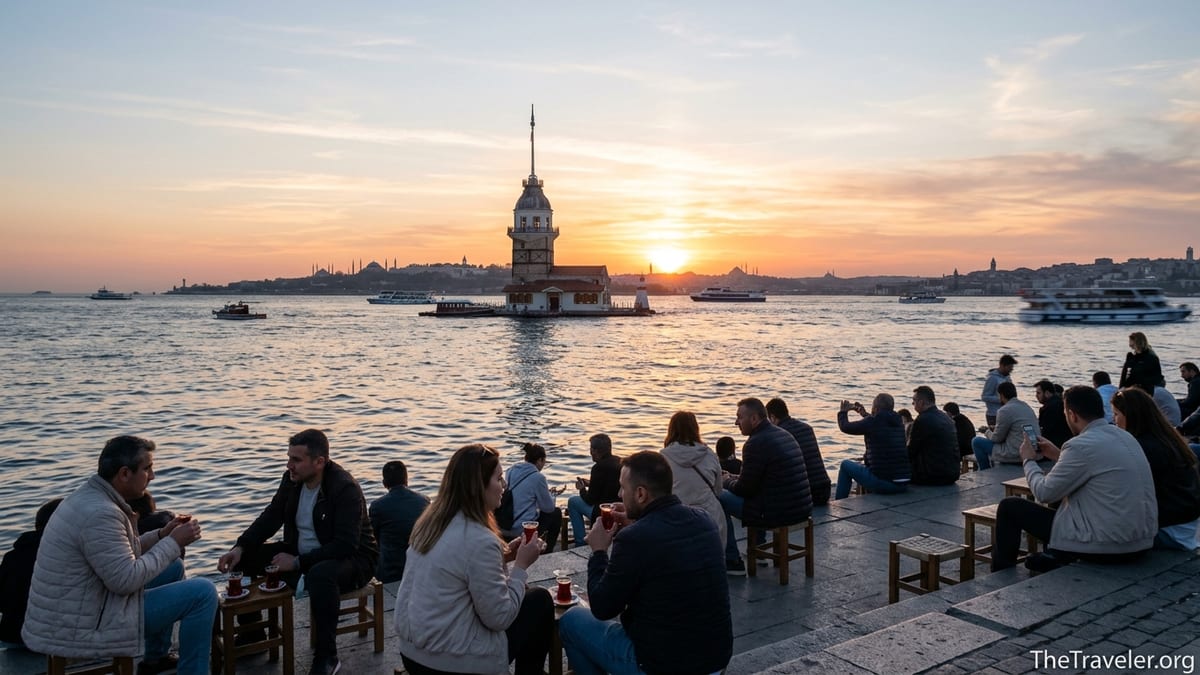
Üsküdar sits on the Asian shore of the Bosphorus directly opposite the historic peninsula, which means you are looking west as the sun sets over the European skyline. From the Salacak waterfront you see, in one frame, the Maiden’s Tower in the foreground and behind it the silhouettes of Topkapı Palace, Hagia Sophia and the Blue Mosque. At peak golden hour, this view explains why local photographers repeatedly rank Salacak among the best sunset spots in the city.
Unlike many European-side viewpoints that look either north or south along the Bosphorus, Üsküdar faces directly toward the setting sun for much of the year. That gives you warm, low light pouring across the water rather than harsh backlighting. This is one reason couples, wedding photographers and Instagram shooters line the seawall steps between late afternoon and dusk, especially from April to October.
Üsküdar also has a lived-in, neighborhood feel. Around the main square you will find commuters pouring out of Marmaray trains and ferries, street simit sellers doing brisk business, and families walking strollers along the waterfront. The vibe is less manicured than some European-side terraces and more about simple pleasures: a tulip-shaped glass of tea, shared sunflower seeds and a front-row seat to one of the world’s great natural shows.
Crucially, Üsküdar’s central transport connections make timing sunset straightforward. Frequent ferries link it to Eminönü, Karaköy and Beşiktaş, and the Marmaray rail line surfaces here after passing under the Bosphorus. Even if you are staying in Beyoğlu or Sultanahmet, you can often reach Üsküdar in under 30 minutes, which matters when you are trying to hit that short peak of evening light.
Understanding the Light: Best Time of Year and Day
Sunset timing in Istanbul changes a lot over the year, roughly from around 4:30 pm in midwinter to after 8:30 pm in midsummer. For planning, many travelers aim for May to June and September to mid-October, when temperatures are usually comfortable, days are long and humidity is lower than in peak summer. In those shoulder seasons you can often expect clear or lightly hazy skies, with enough clouds to catch color but not so many that the horizon disappears.
On the day itself, plan to be on the Salacak waterfront at least 45 to 60 minutes before official sunset time. The light starts to turn soft and flattering during the last hour, when skin tones shoot beautifully and details on the European shore are still visible. As the sun touches the horizon, you will get stronger silhouettes and reflections off the Bosphorus. Many photographers say their favorite images actually come 10 to 20 minutes after official sunset, during blue hour, when the sky deepens and city lights flick on around the mosques and along the bridges.
Weather can be unpredictable, especially from November to March. A forecast of “partly cloudy” is often ideal; the clouds pick up pinks and oranges over the water. Fully overcast skies can still be atmospheric if you lean into moodier compositions and closer shots of the Maiden’s Tower and ferries instead of wide skyline vistas. In winter, wrap up in layers and bring a windproof jacket: the Bosphorus breeze can feel several degrees colder than inland streets, particularly once the sun has gone.
Ramadan, whose dates shift each year, adds another layer. At that time, sunset coincides with iftar, the evening meal that breaks the daily fast. On pleasant evenings locals spread picnic cloths along the Üsküdar and Salacak waterfronts, sharing home-cooked food, börek from nearby bakeries and steaming flasks of tea. It is an evocative moment to witness, but it also means crowds are denser right around sunset. If you want to photograph the atmosphere, arrive early and be sensitive not to intrude on people’s meals.
Salacak Waterfront: The Iconic Maiden’s Tower Viewpoint
When people talk about “the Maiden’s Tower sunset,” they are usually referring to the stretch of seawall path that runs south from Üsküdar’s main square toward the Salacak neighborhood. It is an easy 15 to 20 minute walk at a leisurely pace. As you leave the ferry terminal behind, the view opens up, and after about 10 minutes the tower aligns perfectly with the historic peninsula in the background. You will know you are in the right place when the path widens into a series of low stone steps facing the water and you see rows of small tea tables and cushions set out by casual waterfront cafés.
This area is free, public and open all day, but the atmosphere changes as sunset approaches. On a typical clear evening in May or September you will see local couples sharing paper cones of roasted chestnuts or corn, groups of students with plastic bags of snacks from the nearby Migros supermarket, and solo photographers switching lenses as ferries pass through their frame. If you want one of the front-row step spots, arrive at least an hour before sunset on weekends, a bit less on weekdays.
For photography, lenses in the 35 to 70 millimeter range work well to capture both the tower and the background skyline. Many travelers use smartphones, which are more than capable here. To avoid silhouetting your subjects completely, wait until the sun has dipped just below the horizon so the sky softens and the dynamic range eases. If you are shooting people, position them slightly to the side with the tower offset rather than centered, so you avoid a postcard-symmetry look and make the scene feel more candid.
There are no formal barriers along much of the seawall, just low railings and steps, so watch small children carefully and be mindful when backing up for wide shots. The promenade has street lighting but can feel a little dim after dark; if you plan to stay into the evening, make sure your phone is charged so you can navigate back to the ferry, or simply follow the steady stream of locals returning toward Üsküdar square.
Cafés, Snacks and Waterfront Comfort
One of the pleasures of a Salacak sunset is that you do not need a reserved terrace table to enjoy a prime view. Informal tea stands set up low tables and wooden stools right on the stone steps. A typical setup: you sit facing the water, the vendor brings a glass of strong Turkish tea or a bottle of mineral water, and you pay in cash before leaving. Prices change regularly with inflation, but you can generally expect a basic tea here to cost the equivalent of only a few US dollars or less, while fresh orange juice, Turkish coffee or soft drinks are slightly more.
If you prefer a more structured café environment with restrooms and indoor seating, look for places clustered just behind the promenade. Nevada Coffee in Salacak, for example, offers a smart interior, work-friendly tables and a veranda with angled views toward the tower. It is popular with local students and remote workers in the late afternoon, then with couples around sunset. For something more traditional, several long-running Turkish cafés and simple seafood spots near Salacak İskelesi serve tea, grilled fish and meze with waterfront tables. Dress is casual, and it is fine to linger over a single drink while you photograph the changing light.
Closer to Üsküdar square, large, modern venues such as Nevmekân Sahil combine cultural center, library and café functions, with big windows framing the Bosphorus. On cool or windy evenings this is a comfortable base: you can order a coffee and pastry, sit inside with a direct view of the water, and then step out to the promenade for the critical 15 minutes of peak color. Families appreciate these venues for the clean bathrooms and stroller-friendly access.
For a fuller meal before or after sunset, consider seafood restaurants around Salacak that are known for views of the tower and the historic peninsula. You will find menus built around grilled sea bass, sea bream and local mezes such as eggplant salads and stuffed vine leaves. Expect to pay a moderate price for a main course plus shared starters, more if you order wine or rakı. To keep costs down, some travelers opt for a simple fish sandwich from a kiosk near Üsküdar square, then head to the steps at Salacak with takeaway tea for the main event.
Inside the Maiden’s Tower and Bosphorus Skyline Angles
After a substantial restoration, the Maiden’s Tower has reopened to visitors as a monument and small museum. Boats to the tower usually depart from both the European and Asian sides, including from Salacak or nearby Üsküdar piers. Crossing only takes several minutes, and the short ride itself provides unusual angles on the tower and surrounding water traffic. Most visitors treat a tower visit as a daytime activity, then return to the Salacak promenade later for sunset views looking back toward the city.
Inside, the tower’s restored stone walls and wooden detailing emphasize its layered history as a Byzantine outpost, Ottoman watchtower and more recent lighthouse. A small exhibition gives background on legends associated with the tower and shows archival images of earlier restorations. From the upper levels you have 360-degree views of Istanbul: to one side the full sweep of the historic peninsula, to another the modern skyscrapers of Levent and Maslak, and to another the Asian hills behind Üsküdar. On clear winter days, visibility can be especially sharp.
For photographers focused on skyline compositions, consider how different angles change your shot. From the tower itself, you will emphasize the distance to the city and the scale of the Bosphorus, with ferries passing below like toy boats. From the Salacak waterfront, you compress the space so that the tower, the water and the domes on the European shore line up in a tighter frame. Move a little further south toward the residential streets of Salacak and you can bring the Galata Tower or Bosphorus Bridge edges into your composition, depending on your focal length and exact position.
If you want an alternative vantage point without taking the tower boat, you can walk or taxi north along the Üsküdar coastline toward neighborhoods like Kuzguncuk and the lower slopes of the Çamlıca hills. Here the Bosphorus curves, giving you more diagonal views of the waterway and the bridges. These are especially attractive earlier in the afternoon when the sun is higher, while you may still choose to return to main Salacak steps for that iconic straight-on sunset.
Crowds, Safety and Practical Tips
Salacak and the Üsküdar waterfront are busy but generally feel relaxed and local, even in high season. As in any major city, moderate crowds mean you should use basic common sense: keep your camera strap around your neck or wrist, avoid leaving bags unattended on the steps, and be aware of pickpockets in tight clusters near the ferry terminals. Violent crime against tourists here is rare; the main annoyances tend to be stray footballs, scooter riders weaving through the promenade and the occasional persistent street vendor.
Families with children will find the steps manageable but should keep a close eye on kids, since the drop to the water is only a short railing in some sections. Strollers handle most of the paved path well, though the stone steps themselves are uneven in places. If mobility is a concern, aim for the flatter stretches closer to Üsküdar square, where you can still see the tower clearly and sit on benches instead of ground-level steps.
To minimize crowds in peak months, prioritize weekdays and avoid public holidays and Friday evenings, when locals often gather with friends. Arriving 60 to 90 minutes before sunset gives you time to scout different sections of the promenade, check foreground options such as bollards, railings or other people’s silhouettes, and then settle into a spot. If you arrive late and the steps are full, walk a few minutes further south or north; even minor shifts can open up gaps.
Transport-wise, many visitors choose a European-side base such as Karaköy, Galata or Sultanahmet and commute to Üsküdar for just one or two evenings. Frequent municipal ferries link these hubs to Üsküdar, and the voyage itself is part of the experience, especially on the way back when the city lights reflect in the dark water. The Marmaray train is fast and efficient if you are coming from neighborhoods along its line, but you will miss the on-the-water views that ferries provide.
Rainy-Day and Winter Alternatives
Not every evening on the Bosphorus delivers a fiery orange sky. Rain showers, mist and low clouds are common in Istanbul from late autumn through early spring. The good news is that Üsküdar still works in these conditions if you adjust expectations. Instead of wide golden panoramas, you focus on details: raindrops on café windows framing blurred lights, reflections of the Maiden’s Tower in puddles on the promenade, or the glow of ferry interiors as they slide through grey water.
When the weather looks unsettled, base yourself in a café or cultural venue with large windows and quick access to the water. Spots such as Nevmekân Sahil or modern coffee bars in Salacak allow you to sit indoors with a hot drink while keeping an eye on the sky. If a break in the clouds appears 30 minutes before sunset, you can step outside, grab a few minutes of dramatic light and then retreat again when the next rain band rolls through.
On truly stormy days, consider inland viewpoints instead. The Çamlıca hills, which rise behind Üsküdar, have parks and cafés that overlook the Bosphorus from above. Visibility may be reduced, but you often get a moody, layered look at the city that suits black-and-white or high-contrast images. In winter, light snow occasionally dusts the rooftops on both shores, turning the Maiden’s Tower scene into something quieter and more monochrome. If roads up the hills are slick, you can stay lower near Üsküdar square and look for compositions that use umbrellas, steam from chestnut stalls and wet cobblestones.
If sunset is completely washed out, use the time to explore Üsküdar’s other sights. The waterfront mosques, such as Mihrimah Sultan and Şemsi Paşa, are worth visiting for their courtyards and views. The backstreets hide old wooden houses, small dessert shops selling profiteroles or traditional milk puddings, and neighborhood tea gardens where you can sit under awnings listening to the rain. Photography shifts from big vistas to intimate street scenes, but you are still telling the story of Üsküdar at day’s end.
The Takeaway
Üsküdar’s Salacak waterfront offers one of Istanbul’s most satisfying and accessible sunset experiences, combining postcard views of the Maiden’s Tower and the Bosphorus with an everyday neighborhood atmosphere. The essentials are simple: arrive early enough to watch the light change, bring a layer for the Bosphorus breeze, and settle in with a glass of tea or simple street snack as ferries trace paths between continents.
Whether you choose to cross to the tower itself, photograph from the seawall steps, or watch from a warm café on a rainy evening, the key is to slow down. Resist the urge to rush off to another viewpoint across town. Üsküdar rewards those who stay put and notice the small changes: seagulls catching the last light, the first call to evening prayer drifting from the mosques, and the moment when the tower’s own lights come on against the deepening sky.
Plan for one dedicated sunset here during your Istanbul stay, and you may find yourself rearranging your itinerary to return. For many travelers, that quiet hour facing west across the Bosphorus becomes the memory that lingers longest.
FAQ
Q1. What is the best time of day to see sunset from Üsküdar?
The most rewarding window is usually from about 45 minutes before official sunset until 20 to 30 minutes after, when the sky shifts from gold to deep blue and city lights appear.
Q2. Which exact area in Üsküdar should I go to for the classic Maiden’s Tower view?
Walk from Üsküdar’s main square south along the waterfront toward Salacak for 15 to 20 minutes until you reach the stone steps facing the tower and the historic peninsula.
Q3. Do I need to book a restaurant to enjoy the sunset view?
No. The classic experience is free: sit on the public steps or low stools along the Salacak promenade and order tea or snacks from simple waterfront vendors.
Q4. Is it worth visiting the inside of the Maiden’s Tower, or is the view better from shore?
Both have value. The tower offers 360-degree views and historical context, while the Salacak shoreline gives you the iconic silhouette of the tower with the European skyline behind it.
Q5. How crowded does Üsküdar get at sunset, and is it safe?
Expect moderate to heavy crowds on clear evenings, especially in spring and autumn, but the area generally feels safe. Use normal big-city precautions for your belongings.
Q6. What should I wear for a Bosphorus sunset in Üsküdar?
Even in summer, bring a light jacket or shawl because the Bosphorus breeze can be cool. In cooler months, wear layers and closed shoes, as the stone steps hold the chill.
Q7. Can I reach Üsküdar easily from European-side neighborhoods like Sultanahmet or Galata?
Yes. Frequent ferries connect Eminönü, Karaköy and Beşiktaş to Üsküdar, and the Marmaray train links many districts via an undersea tunnel beneath the Bosphorus.
Q8. Are there good cafés with indoor seating but still a view of Maiden’s Tower?
Yes. You will find modern cafés in Salacak and larger venues near Üsküdar square with big windows facing the Bosphorus, allowing you to watch the sunset in comfort.
Q9. What can I do if it rains at sunset?
Use a café or cultural center overlooking the water as a base, photograph reflections and ferry lights, or head inland to Üsküdar’s mosques and backstreets for moodier street scenes.
Q10. Is sunset from Üsküdar suitable for tripods and serious photography?
Yes. The wide promenade and steps provide stable ground and varied compositions, though at busy times you should set up considerately to avoid blocking other visitors.