


More news on this day
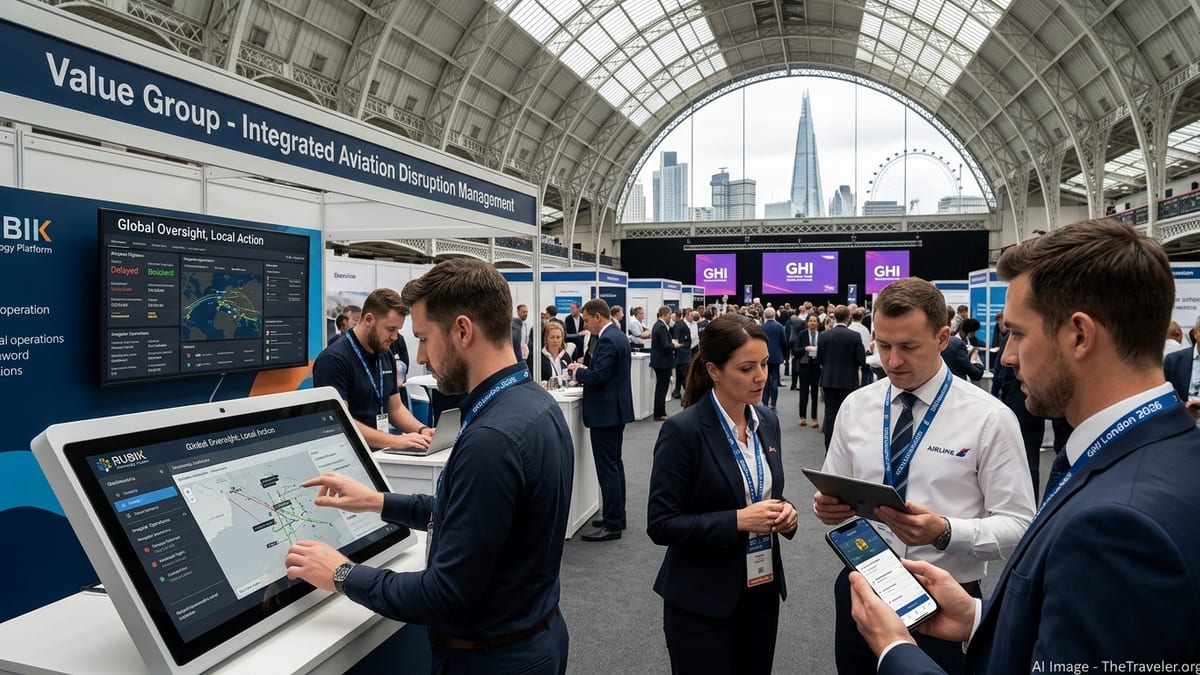
Value Group plans to use the 27th Annual Ground Handling International (GHI) Conference at Olympia London from 1 to 3 December 2026 to demonstrate a "Global Oversight, Local Action" model for handling airline irregular operations, built around its RUBIK digital ecosystem, a 24/7 operations centre and a global supplier network connecting airlines, ground handlers and local service providers.
Get the latest news straight to your inbox!
Confirmed plans for GHI London 2026
The 27th Annual GHI Conference is scheduled to take place at Olympia London from 1 to 3 December 2026, organised by Ground Handling International as its flagship annual gathering for the aviation services sector. Event information from the organiser and independent trade fair listings confirm the dates, the Olympia venue and a programme focused on ground handling, with conference sessions, an exhibition and pre-arranged one-to-one meetings between airlines, ground handlers, airports and suppliers.
Organiser materials indicate that the London edition is expected to attract more than 1,000 decision makers, including representatives from over 115 airlines and around 120 ground handling companies, alongside ground support equipment and IT providers. Recent promotional articles aimed at airports and suppliers underline that disruption management, resource planning and operational resilience are among the topics on the agenda in 2026, against a backdrop of ongoing capacity constraints and weather-related disruption across global networks.
Within this context, Value Group, an Italy-based provider of integrated disruption management solutions, has confirmed in an external communication that it will exhibit at GHI London for the second consecutive year. According to the company, its stand will centre on demonstrating how a coordinated framework can link a central view of irregular operations with practical delivery at airports, using its RUBIK technology platform, a continuous Operations Control Center and an established supplier network. For delegates, the presence of providers such as Value Group is positioned as part of a wider opportunity to compare how different systems can support irregular operations management across large and fragmented airline networks.
How RUBIK underpins the “Global Oversight, Local Action” model
In recent statements, Value Group has described its disruption management approach as an integrated model that combines technology, central operations and local execution. The RUBIK platform forms the digital layer of this model, providing functions for passenger reallocation, accommodation and ground transport booking, voucher issuance and passenger communication, all within a single environment that can be configured to reflect individual airline policies and regulatory requirements.
Company materials and public descriptions indicate that RUBIK is designed to automate key recovery processes, including identifying passengers who are eligible for care under airline rules, allocating hotel rooms and ground transport from contracted inventories, and coordinating with suppliers while keeping a record of actions taken. The platform is intended to connect with an airline’s existing systems, such as passenger service and departure control tools, rather than replace them, with RUBIK focused on the disruption and passenger care layer rather than core flight planning or crew scheduling.
Alongside the software, Value Group operates a 24/7 Operations Control Center that monitors irregular operations across airline networks and supports ground teams when disruption affects multiple stations or becomes prolonged. According to a recent press release, this centre works together with RUBIK to provide airlines and handlers with greater visibility and traceability through the disruption lifecycle, from early signs of schedule instability through to completion of passenger recovery. A global supplier network in accommodation, transport and associated services then translates digital decisions into actual services delivered at destinations and transit points.
Role of ground handlers and airport-level delivery
Ground handling companies are central to Value Group’s messaging ahead of GHI London 2026. Public comments by the company’s co-CEOs, Thomas Sergnese and Daniele Bocchieri, in a recent communication emphasise that handlers are often the first physical point of contact for passengers during disruption, responsible for explaining options, issuing vouchers and organising onward travel or overnight stays. The company frames handlers not merely as execution partners, but as key actors who require tools and clearly defined parameters to support consistent decision making during irregular operations.
Within the RUBIK-based workflow, airline-configured rules can be applied at station level to guide ground agents through recovery steps. In principle, this allows a handler working for multiple airline customers at the same airport to switch between carrier-specific policies within a single interface, rather than relying on separate processes or manual cross-checking of contract terms. Routine actions, such as assigning standard hotel stays for eligible passengers or arranging transport within contracted options, can be standardised and, where appropriate, automated.
Value Group has also developed companion tools, including RUBIK GO, which are intended for use by ground staff and operational teams dealing with more complex cases or passengers who require extra support. External descriptions of the model suggest that this combination of automation and human oversight aims to reduce the time handlers spend on repetitive calls to hotel and transport providers, freeing them to focus on passengers who need in-person assistance. For handlers attending GHI London, one area of scrutiny is likely to be how these workflows integrate with their existing station processes and how responsibilities are shared between airline control centres and outsourced handling partners when decisions affect cost and liability.
Balancing automation, self-service and personal assistance
A recurring theme in Value Group’s recent communications is the balance between technology-driven self-service and human support during disruption. RUBIK is positioned as a platform that can support digital self-handling for passengers who are able and willing to manage their own recovery within airline rules, for example by choosing between proposed alternative flights, selecting a hotel room from an allocated inventory or confirming ground transport. The intent, as described in company statements, is to resolve straightforward cases at scale when disruption affects large numbers of travellers.
For passengers who need additional help, such as those with reduced mobility, unaccompanied minors, families with young children or travellers on complex itineraries, Value Group highlights the role of dedicated operational teams, ground handlers and the RUBIK GO interface. These actors can intervene directly, override automated choices where permitted by airline policy, handle special service requests and liaise with suppliers when standard capacity is exhausted. The company’s co-CEOs have publicly argued that technology should enable staff to focus more time on such cases rather than on process-heavy but routine tasks.
From a traveller perspective, how this balance plays out in practice depends on implementation choices made by each airline. Value Group’s tools provide capabilities, but carriers ultimately define which disruption scenarios trigger automation, what options are offered digitally and what level of compensation or care applies under contract and regulatory frameworks. For travellers using affected airlines in the future, a key point to verify will be whether mobile and web channels have been configured to interface with RUBIK or similar systems, and whether offline support at airports remains accessible for those less comfortable with digital self-service.
Preparing for foreseeable disruptions and capacity constraints
Beyond sudden irregular operations such as technical issues or unexpected airspace closures, Value Group has signalled that it intends to discuss at GHI London how airlines and handlers can better prepare for anticipated disruption. In its recent external communication, the company notes that its Operations Control Center can monitor local capacity for hotels and transport through its supplier network and, where patterns such as seasonal weather or major events are known in advance, can pre-alert suppliers and help airlines position resources accordingly.
In operational terms, this preparation may involve reserving blocks of hotel rooms in cities prone to winter weather events, arranging standby transport capacity between airports and key urban centres, or increasing staffing at stations that historically see spikes in disruption during specific periods. When combined with live inventory information fed into RUBIK, the intention is that passenger-facing teams can see remaining recovery options in real time rather than relying on ad hoc phone calls at the height of an event.
The effectiveness of such forward planning depends on several factors that remain outside any single provider’s control, including the accuracy of an airline’s forecasting, its contractual arrangements with hotels and transport companies, and coordination with airport operators. Discussions at the GHI conference on resilience and contingency planning are expected to provide a forum for airlines, handlers and technology providers to compare approaches. For travel managers and corporate buyers following developments, the key question is how far carriers choose to formalise pre-season disruption plans and whether these are clearly communicated to customers and intermediaries once in place.
What industry delegates and travellers should watch for next
For delegates attending the 27th Annual GHI Conference, the presence of Value Group sits within a broader line-up of disruption management and ground operations technology providers exhibiting at Olympia London from 1 to 3 December 2026. Conference information from the organiser confirms structured one-to-one meeting slots, private meeting rooms and an exhibition floor plan, enabling airlines and handlers to schedule time with suppliers in advance. Attendees interested in disruption management are likely to compare platforms on criteria such as integration with existing airline systems, the granularity of policy configuration, reporting capabilities and the level of operational support provided.
Airlines and ground handlers considering changes to their irregular operations processes may use meetings with Value Group to examine in detail how RUBIK interacts with passenger service systems and departure control, how the 24/7 Operations Control Center supports station staff during high-demand events and what commercial models apply for access to the supplier network. As of late November 2026, there have been no widely publicised announcements of new airline partnerships linked specifically to the GHI London 2026 event, so any subsequent agreements are likely to emerge in the months following the conference rather than during the show itself.
For travellers and corporate travel managers, the short-term impact of Value Group’s activity at GHI London will be indirect. The conference serves as a setting for airlines, ground handlers and suppliers to assess tools and potentially agree pilots or implementations; any concrete changes to disruption handling will only affect travellers once individual airlines deploy new systems or update policies. Those planning trips in late 2026 and 2027 who wish to understand how their carriers manage irregular operations should look for future airline communications that reference the adoption of integrated disruption management platforms, and confirm at booking stage what care and rebooking options apply if their journey is disrupted.