


More news on this day
SpiceJet, once India’s second‑largest low‑cost airline, remains in deep financial trouble after years of losses, grounded aircraft and courtroom battles with lessors and suppliers, yet continues to operate a reduced schedule that keeps the carrier in India’s domestic market while raising persistent questions over its long‑term future.
Get the latest news straight to your inbox!
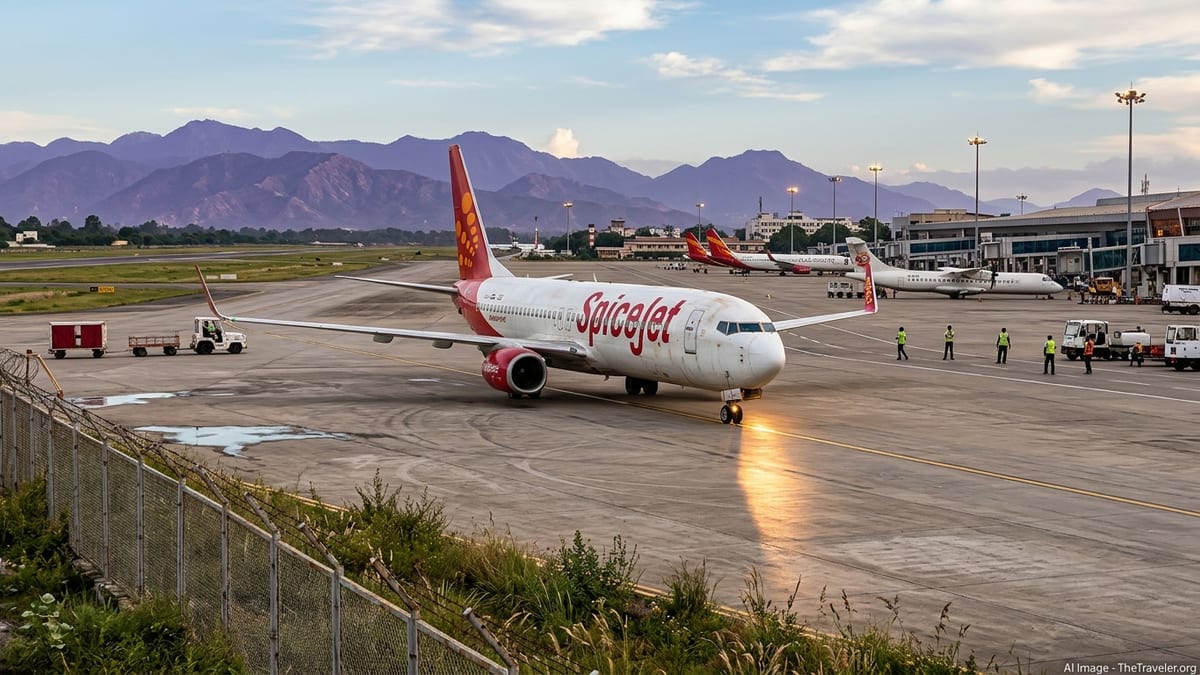
From rapid growth to a shrunken but still flying network
SpiceJet began life in 2005 as one of India’s early low‑cost carriers and quickly grew into a major domestic player. As recently as the late 2010s it vied with IndiGo and the now‑defunct Go First on key routes, and for a period it held the position of India’s second‑largest budget airline by market share. That picture has changed sharply over the past five years, as mounting losses, debt and disputes with aircraft and engine lessors have forced the airline to shrink its fleet and route map.
Publicly available traffic data show how far the airline has fallen. By May 2025 SpiceJet’s domestic market share had slipped to about 4 percent, placing it fourth among Indian carriers by passengers carried, far behind leader IndiGo and behind Tata‑group airlines such as Air India and Vistara. Its schedule has steadily contracted, particularly on thinner regional routes, although the airline continues to serve a mix of trunk domestic sectors such as Delhi–Mumbai and select international destinations in the Middle East and South Asia.
The carrier’s current operations are built around a smaller fleet than in its peak years, combining Boeing 737s for busier domestic and regional international routes with De Havilland Canada Dash 8‑Q400 turboprops on shorter sectors. SpiceJet has repeatedly said in regulatory filings and investor presentations that it aims to reactivate grounded aircraft to rebuild capacity, and has also used damp‑lease arrangements to bring in additional Boeing 737s with crews during busy seasons. However, that growth remains constrained by funding, and the airline’s overall footprint is still a fraction of what it was before the crisis deepened.
Financial strain, grounded aircraft and complex funding plans
The roots of SpiceJet’s crisis lie in a combination of persistent operating losses, high fuel costs, intense fare competition and the burden of lease and vendor liabilities that built up through the late 2010s and early 2020s. The disruption to Indian aviation during the COVID‑19 pandemic further weakened its balance sheet. As demand returned, SpiceJet struggled to restore capacity at the same pace as better‑capitalised rivals, in part because a large portion of its fleet remained grounded either for maintenance, lack of spare parts or disputes with lessors.
Company disclosures provide a snapshot of the scale of the grounding. In a filing in September 2024, SpiceJet indicated that 36 aircraft from its fleet were then out of service, and that it intended to return about 24 Boeing 737 and Q400 aircraft to operations subject to the availability of parts and funding for repair work. The same filing referenced an evaluation by aviation asset manager Vman Aero Services LLP of the costs involved in recovering those aircraft, underlining that putting them back into service required significant fresh capital.
To address its liquidity crunch, SpiceJet has turned repeatedly to equity markets. In 2024 shareholders approved a plan to raise up to 3,000 crore rupees through a qualified institutional placement of new shares to help pay overdue dues and support working capital. Subsequent ratings reports and company communications indicate that by the financial years 2024 and 2025 the airline had raised more than 4,000 crore rupees through a mix of preferential share issues, share warrants and a QIP, although much of this was offset by accumulated losses and ongoing debt. Ratings agency CareEdge noted in an April 2026 update that despite these fund‑raises, SpiceJet’s net worth remained weak compared with its overall debt load, most of which relates to aircraft lease liabilities.
Legal battles with lessors and creditors: insolvency threats and settlements
A prominent feature of SpiceJet’s crisis has been the cascade of legal disputes with aircraft and engine lessors and other operational creditors. Over the past three years, multiple counterparties have sought to use India’s Insolvency and Bankruptcy Code to pressure the carrier into settling alleged unpaid dues. Court filings and tribunal orders show a pattern in which lessors or vendors file insolvency petitions at the National Company Law Tribunal, the airline contests their maintainability or size, and many cases end in negotiated settlements or withdrawals.
One high‑profile example involved US‑based Willis Lease Finance Corporation, which initially sought insolvency proceedings in 2023 over claimed unpaid rent for leased engines. The NCLT rejected that petition on procedural grounds in December 2023, and Willis later appealed to the National Company Law Appellate Tribunal. By early 2025 the lessor and airline had reached a settlement, and Willis withdrew its appeal. Similar trajectories have been reported in cases involving other lessors, including Alterna Aircraft and Aircastle, where insolvency bids were either dismissed by the NCLT or withdrawn after settlements that allowed the parties to continue their disputes in other courts or through negotiated payment plans.
Not every case has been resolved quickly. By late 2024 media and legal analyses tallied at least a dozen insolvency‑related claims filed against SpiceJet, many of them by overseas lessors alleging defaults on lease rentals or maintenance reserves. In one case, Dublin‑based lessor Aircastle pursued two separate petitions covering alleged unpaid amounts linked to different aircraft. Another matter saw engine lessor Engine Lease Finance BV file a claim for more than 12 million dollars, following an earlier interim settlement. In several of these proceedings, the NCLT has sought detailed replies from SpiceJet and adjourned hearings to give the parties time to explore further settlements.
The most recent high‑stakes episode came in mid‑2026. The NCLT’s Delhi bench had reserved orders in a cluster of eight insolvency petitions involving SpiceJet, including a case brought by aircraft lessor Aviator ML 29641 Limited over unpaid dues of around 58 crore rupees. Shortly before those orders were to be pronounced in August 2026, the airline and Aviator informed the tribunal that they had reached a settlement. The NCLT subsequently allowed Aviator to withdraw its petition but criticised both parties for settling so late in the process and ordered them to jointly pay costs. While this averted an immediate insolvency order, the episode highlighted how close SpiceJet has come at times to a formal bankruptcy process.
Operational safety, regulatory oversight and what passengers see
For travelers, the most visible effects of SpiceJet’s problems have been reduced frequencies, route withdrawals and occasional disruptions when aircraft go out of service. Indian aviation regulators have also kept the airline under scrutiny. The Directorate General of Civil Aviation has previously issued show‑cause notices and, at times, imposed restrictions on the airline’s ability to deploy additional capacity following a series of technical incidents. More recently, oversight has focused on ensuring that SpiceJet maintains required safety and maintenance standards despite its financial strain.
An April 2026 ground incident at Delhi’s Indira Gandhi International Airport illustrated both the risks and the safeguards in place. A SpiceJet Boeing 737 arriving from Leh came into contact with an Akasa Air Boeing 737 near an apron bay at Terminal 1. Both aircraft were damaged and taken out of service for inspection and repairs. The Ministry of Civil Aviation reported that there were no injuries, but the event prompted an investigation and temporarily reduced available capacity for both carriers. For SpiceJet, with its already limited active fleet, the grounding of another aircraft following such an incident can have an outsized impact on schedules until a replacement is arranged.
Despite its difficulties, SpiceJet continues to sell tickets normally through its website and travel agents, and Indian authorities have not ordered any suspension of operations as of late 2026. The airline is required, like all carriers, to adhere to DGCA safety regulations and to maintain adequate maintenance standards across its operating fleet. Ratings commentary and regulatory statements emphasise that while the company’s financial health remains fragile, safety oversight is handled separately from commercial considerations, and any aircraft that does not meet airworthiness norms is not permitted to fly. For passengers, that means that an operating SpiceJet flight should meet the same regulatory baseline as any other scheduled Indian carrier, even if the airline’s finances are significantly weaker than those of its main rivals.
Implications for Indian travelers and what happens next
For travelers within India, SpiceJet’s fate matters because it still carries millions of passengers a year and provides competition on several busy routes. Its fares can be competitive, particularly on shorter domestic sectors or on international routes to destinations such as Dubai, where it faces both Indian full‑service carriers and foreign airlines. If the airline were to shrink further or exit certain markets altogether, the loss of that capacity could tighten seat availability and put upward pressure on prices on some routes, at least in the short term, until other carriers add flights.
At the same time, the market context has shifted since earlier airline failures in India. IndiGo and the Tata‑group airlines have more financial strength and have been adding capacity, while newer budget operators such as Akasa Air have entered the market and expanded rapidly. The grounding and ongoing insolvency process of rival budget carrier Go First in 2023 showed how quickly other airlines can absorb some of the capacity of a failed carrier, though not always on the same routes or at the same price levels. In SpiceJet’s case, even if a worst‑case scenario of formal insolvency eventually materialised, India’s overall domestic capacity might recover relatively quickly, though specific city pairs could see reduced choice for a period.
Looking ahead from a traveler’s perspective, the key unresolved questions are whether SpiceJet can stabilise its finances sufficiently to sustain operations and whether it can restore enough aircraft to offer a reliable network. The airline’s management has outlined plans to grow its active fleet, settle remaining disputes and complete its fundraising programmes, but these remain plans rather than assured outcomes. Ratings agencies and financial disclosures stress that successful execution of settlements with lessors, timely receipt of outstanding equity funds and a return to consistent operating profitability are all critical and uncertain factors.
Passengers considering booking with SpiceJet in late 2026 should keep a few practical points in mind. First, check the current schedule close to the date of travel, as frequencies on some routes remain subject to change when aircraft are grounded for maintenance or when leased capacity is returned. Second, allow extra time for connections involving separate tickets, particularly if connecting from a SpiceJet domestic flight to an international service on another carrier, to reduce the risk that a delay could jeopardise onward travel. Third, monitor any news about significant legal or regulatory developments involving the airline, especially insolvency petitions or enforcement actions that might affect its ability to operate. For now, SpiceJet remains in the sky, but its future path will depend on a fragile combination of funding, creditor negotiations and the ability to compete in one of the world’s fastest‑growing and most demanding aviation markets.