


More news on this day
As regional tensions linked to the US–Israel–Iran conflict continue to unsettle the Gulf, the United Arab Emirates is entering 25 November with suspended Iranian airline services, patchy Saudi schedules and heightened security advisories, even as a limited set of European and Israeli air links are cleared to resume.
Get the latest news straight to your inbox!
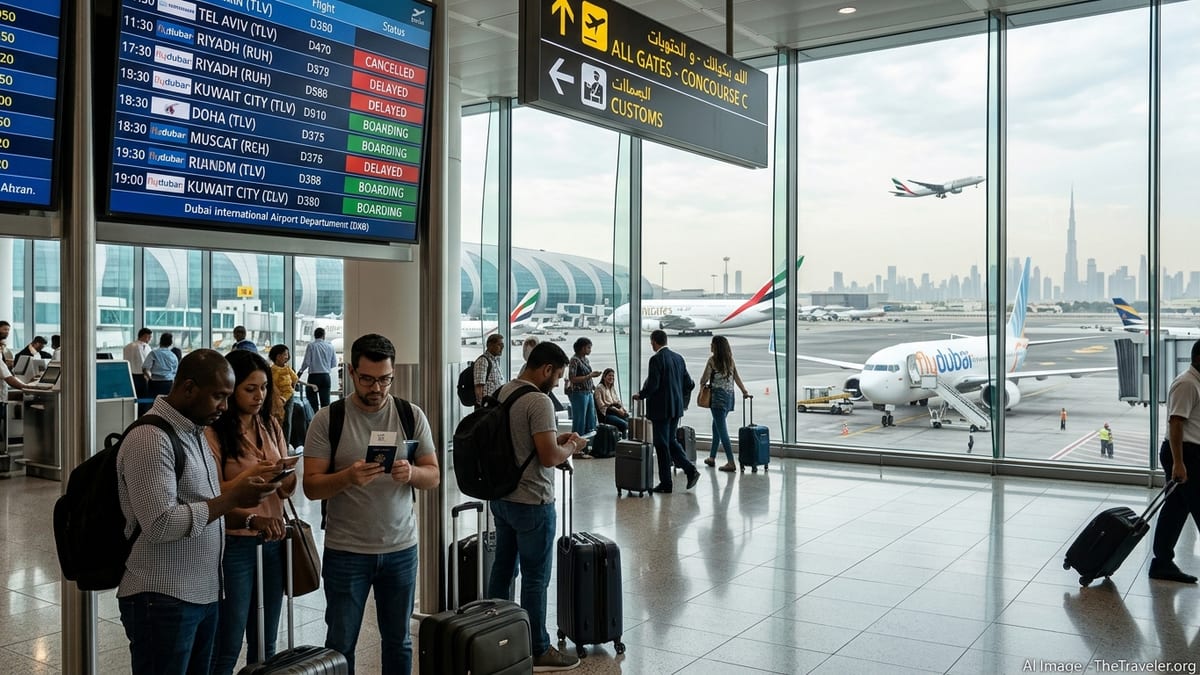
Regional security backdrop and official travel warnings
Fighting involving the United States, Israel and Iran, together with renewed attacks by Iran-aligned Houthi forces in Yemen and strikes inside Saudi Arabia and Bahrain, has kept the wider Gulf region on alert through November 2026. While the UAE itself has not been directly hit in recent weeks, incidents against neighbouring states and shipping in the Gulf and Gulf of Oman continue to shape aviation risk assessments and airspace planning.
On 20 November, a situation report from a UAE-focused risk consultancy noted recent Iranian drone and missile attacks on Bahrain and Kuwait, and warned that the regional security picture remained fluid, with further incidents possible at short notice. These developments follow a broader deterioration in relations since early 2026, when the US and Israel began coordinated military operations against Iranian targets, drawing retaliatory strikes across the region.
In response, foreign governments continue to advise caution for travellers using Gulf aviation hubs, even if they have not imposed outright bans. The US Mission to the UAE has retained previous guidance urging American citizens in the Middle East to maintain a high level of vigilance, keep travel plans flexible and be prepared for potential flight cancellations or diversions linked to Iranian or proxy activity. The tone is mirrored by several other Western governments, which now flag the possibility of sudden airspace restrictions in the wider Gulf rather than in the UAE alone.
Suspension of Iranian airline flights and conflict-zone advisories
The most concrete, ongoing aviation restriction for the UAE on 25 November remains the national suspension of flights operated by Iranian airlines to and from Emirati airports. The General Civil Aviation Authority first announced this measure on 24 September 2026, stating that all services by Iranian carriers would be halted until further notice. The move was framed as a safety and security step against the backdrop of the conflict and has not been publicly lifted as of 25 November, according to the latest official communications and airline schedules.
The decision affects Iranian airlines that had been serving the UAE, including, but not limited to, Iran Airtour, Caspian Airlines and Karun Airlines. Schedules and booking systems checked on 25 November show no active commercial operations by Iranian carriers into Dubai, Abu Dhabi or Sharjah. At the same time, Dubai-based flydubai lists all of its destinations in Iran, such as Tehran, Shiraz, Mashhad and several secondary cities, as suspended, underscoring how two-way scheduled traffic between the UAE and Iran remains effectively frozen for now.
Alongside the national suspension, European regulators are maintaining a separate layer of airspace caution. On 16 November 2026, the European Union Aviation Safety Agency extended its Conflict Zone Information Bulletin for the Persian Gulf and Gulf of Oman region until 31 January 2027. The bulletin advises EU air operators against flying at any altitude in the airspace over the waters of the UAE, Bahrain, Kuwait, Qatar and parts of the Gulf of Oman, except where necessary for approaches to or departures from local airports. It is not a legal closure of UAE airspace, but it continues to influence airline routing decisions and can result in longer flight times or altered routings for services into Dubai and Abu Dhabi.
Saudi routes and regional schedules from UAE hubs
Saudi Arabia remains one of the more complex regional markets for UAE-based travellers, with schedules reflecting both security assessments and commercial decisions. Public timetables for 25 November indicate that flights between the UAE and major Saudi cities such as Jeddah and Madinah are generally operating, including services by Emirates, Etihad, flydubai and Air Arabia. However, links to Riyadh and Dammam have seen more frequent timetable changes in recent weeks, and travellers may find fewer departure options than pre-crisis levels on particular days or with certain carriers.
Flydubai’s network map still lists a wide range of Saudi destinations from Dubai, including Dammam, Riyadh, Jeddah, Madinah, Gassim, Tabuk, Abha, AlUla, Neom Bay, Qaisumah and several smaller airports. Schedule data around 25 November shows that many of these routes continue to see at least some operation, although frequencies may be below historic norms and the pattern can vary across the week. Separate low-cost operator Air Arabia, based in Sharjah, is also maintaining a skeleton schedule to key Saudi cities such as Dammam, Gassim, Jeddah, Madinah and Taif, after earlier ad hoc cancellations on some days in November.
Travel agents in Dubai report that the most common disruption pattern for Saudi routes in November has been short-notice cancellations or aircraft changes rather than wholesale suspension of entire city pairs. This reflects the dynamic nature of demand and security approvals, particularly for cities in the Eastern Province and for flights that transit or overfly more sensitive airspace. For passengers, it means that even if a route appears on an airline’s network map, they should verify the exact operating day and flight number shortly before departure.
flydubai’s Tel Aviv route after the September cockpit incident
One of the most high-profile individual route suspensions affecting the UAE this autumn has been flydubai’s Dubai–Tel Aviv service. On 30 September 2026, a flydubai Boeing 737 operating Flight 1073 from Dubai to Tel Aviv was forced to divert after the Omani first officer attacked the captain in the cockpit, reportedly attempting to crash the aircraft. The captain survived with serious injuries, but the incident prompted an immediate halt to flydubai’s Israel flights while both Emirati and Israeli authorities reviewed cockpit access and security procedures.
In late November, the Israeli transport ministry announced that it had approved, in principle, the resumption of flydubai flights between Dubai and Tel Aviv, subject to final clearance by Israeli security agencies. Local media reports on 23 November quoted officials confirming that the carrier could return once new safeguards were fully in place. Flydubai, for its part, has said it continues to work closely with all relevant authorities and that it looks forward to reinstating the route, which had previously been an important tourism and business link for both countries.
As of the morning of 25 November, however, neither the airline nor Ben Gurion Airport had published a confirmed restart date for regular flydubai passenger services to Israel. Timetables and booking engines remain in a transitional state, with some systems listing Dubai–Tel Aviv among flydubai destinations but not showing seats for near-term departures. Travellers planning to use this corridor should treat any mention of a restart as a plan rather than a firm schedule until specific flight numbers and dates appear as bookable and ticketed in the carrier’s own channels.
European services: limited Dubai restoration from 25 November
Despite the ongoing security concerns, Dubai is regaining a portion of its European connectivity from 25 November, albeit on a smaller scale than originally expected. After earlier postponements, the Lufthansa Group has confirmed that it will restore some Dubai flights from this date, but only from selected hubs. The latest group communication and timetable data show that Lufthansa will concentrate on a Munich–Dubai service, while low-cost arm Eurowings will operate Berlin–Dubai. Previous plans for Frankfurt, Zurich and Vienna links this winter remain suspended.
Industry summaries and booking checks indicate that from 25 November Lufthansa intends to run up to five weekly flights between Munich and Dubai, providing a direct full-service connection into southern Germany. Eurowings is scheduled to offer a daily Dubai service from Berlin, returning a lower-cost option for travellers in northern and eastern Germany. Separate information from Zurich Airport and Swiss International Air Lines suggests that SWISS also plans to resume its Zurich–Dubai service on or around 25 November, adding another European gateway back into the Dubai network, although individual flight days and frequencies may differ from pre-crisis seasons.
The partial restoration still leaves noticeable gaps in Dubai’s traditional winter schedule. Lufthansa Group has stated that its Frankfurt, Zurich and Vienna routes to Dubai will remain off-line until at least late March 2027, forcing passengers from those cities to route via Munich, Berlin or alternative carriers. Other major European airlines that had previously paused their Dubai flights following the escalation of the Iran conflict, including some Asian and North American long-haul carriers, are yet to set firm restart dates, which limits one-stop options to and from certain European and transatlantic destinations.
Practical guidance for travellers using UAE airports on 25 November
With the UAE’s National Day holidays and the year-end peak approaching, Dubai and Abu Dhabi airports are expected to be busy on and around 25 November even as parts of their regional networks remain disrupted. Travellers should plan for a normal high-season crowding scenario layered with the possibility of last-minute operational changes tied to security developments, airspace restrictions or airline schedule adjustments.
Airlines and airports consistently advise passengers to monitor their booking on the operating carrier’s website or app rather than relying solely on third-party travel agents or old itinerary PDFs. This is particularly important for itineraries that involve Iran, Iraq, the Red Sea, the Gulf or connections via Saudi Arabia, where routings or timings may shift as carriers replan around conflict-zone advisories. Where online check-in is available, completing it as early as possible can provide earlier notice of a disruption and simplify rebooking if required.
At the airport, passengers should allow extra time for check-in, baggage drop, immigration and security screening. Emirates, Etihad and most foreign carriers generally recommend arriving at least three hours before departure, while flydubai continues to advise four hours for many flights out of Dubai International. Those with tight same-day connections, especially involving Saudi Arabia, Israel or onward travel to Europe on partially restored routes, may wish to leave a larger buffer or consider planning an overnight stop in Dubai to reduce the risk of misconnecting.
Anyone whose flight is cancelled or significantly rescheduled on 25 November should check their airline’s specific disruption policy. Most carriers serving the UAE are offering options such as free date changes, rerouting via an alternative hub where capacity allows, or refunds in line with fare rules. However, entitlements can differ depending on where the ticket was purchased and which jurisdiction’s consumer protections apply. Travellers who booked through agents or online travel platforms should contact those companies promptly, as they often control the reservation and must initiate any change or refund request.
Looking ahead through the rest of the winter season, the key variables for UAE-bound aviation remain the trajectory of the US–Israel–Iran conflict, the stability of neighbouring Gulf states and any changes to conflict-zone advisories like EASA’s bulletin. Airlines are likely to continue adjusting schedules with relatively short lead times in response to these factors. For now, passengers flying to, from or via the UAE are best served by checking route-specific status directly with carriers, keeping contact details updated in their bookings and building flexibility into any multi-stop or long-haul itineraries.