


More news on this day
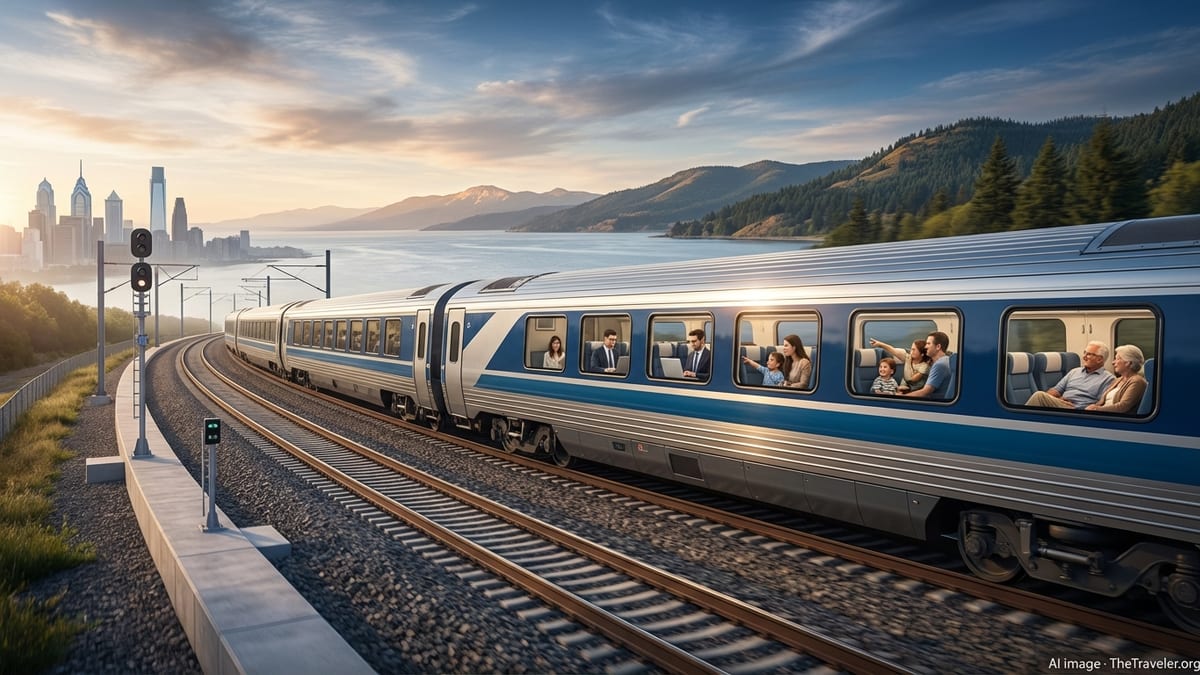
Canada’s passenger rail network is set for a major transformation as VIA Rail moves ahead with a multibillion-dollar order for 313 new Adessia passenger cars from Alstom, a move that will renew aging long-distance, regional and remote fleets and significantly upgrade the onboard experience for travelers across the country.
Get the latest news straight to your inbox!
Record Investment Brings Railcar Manufacturing Back to Canada
Publicly available information from the Government of Canada indicates that Ottawa has committed more than 4.7 billion Canadian dollars for VIA Rail to acquire and maintain 313 next-generation passenger cars from Alstom Canada. The deal is described in government materials as the largest investment in VIA Rail’s history, marking a decisive step in modernizing passenger rail outside the busy Quebec City–Windsor corridor.
According to published coverage of the announcement, the new cars will be manufactured and assembled in Canada, reversing decades of reliance on foreign-built rolling stock and aiming to support domestic rail expertise. Federal background documents highlight expectations for thousands of direct and indirect jobs over the multi-year build and maintenance program, positioning rail manufacturing as a strategic industrial sector.
The investment follows a separate 1.95 billion dollar federal commitment in July 2026 to renew VIA Rail’s long-distance, regional and remote locomotive fleet. Together, the locomotive and passenger car programs form a comprehensive renewal of VIA Rail’s non-corridor fleet, which currently depends heavily on equipment dating back to the mid-20th century.
Reports indicate that the first new passenger cars are scheduled to enter service by 2031, with full deployment targeted for the mid-2030s. The long lead time reflects the scale and technical complexity of designing, testing and certifying a bespoke fleet that must withstand Canada’s extreme climate and diverse operating conditions.
Adessia Platform Promises Modern Comfort and Accessibility
Alstom’s press material describes the VIA Rail order as part of its Adessia family of single-level and multilevel commuter and regional rail solutions. The Adessia platform is marketed as focusing on energy efficiency, modular interiors and improved passenger comfort, and is already being deployed for commuter fleets in North America, Europe and Australia.
For Canada, the 313 Adessia cars will be built in nine configurations, tailored to VIA Rail’s mix of long-haul and remote services. Publicly available documents outline car types including standard coach, sleeper, accessible sleeper, berth, prestige-class accommodations, baggage, dining, dome and panorama cars. This diversity is intended to preserve the distinctive cross-country rail experience while replacing some of the oldest stainless-steel cars still in regular service.
VIA Rail’s corporate planning materials emphasize major improvements in accessibility compared with the legacy fleet. The new cars are expected to incorporate features such as fully accessible sleeping cabins, modern boarding solutions, and interior layouts designed to meet or exceed evolving Canadian accessibility standards. This aligns with the approach taken on VIA’s newer corridor fleet, where wide aisles, accessible washrooms and level boarding at many stations have become standard.
Alstom’s broader Adessia portfolio showcases elements that are likely to influence the Canadian design, including quieter interiors, upgraded seating, enhanced passenger information systems and contemporary HVAC systems designed for more stable onboard temperatures. These changes are expected to bring the comfort level on remote and transcontinental services closer to that already experienced on newer fleets in Europe and parts of the United States.
Replacing a Vintage Fleet While Supporting Remote Communities
VIA Rail’s long-distance trains such as The Canadian and The Ocean currently rely on a mix of stainless-steel cars originally built for Canadian National and Canadian Pacific in the 1950s, complemented by later additions and rebuilds. VIA Rail planning documents underscore that these iconic cars are approaching the practical limits of their service lives, despite extensive overhauls over the decades.
Government briefing material describes the new Adessia-based fleet as essential for sustaining passenger rail links to communities that depend on trains for basic connectivity. This includes remote regions where rail is often the only year-round surface transportation option and where travel demand is driven as much by access to services and family connections as by tourism.
The order is designed not only as a one-for-one replacement but also as an upgrade to capacity and functionality. Public sources discussing the procurement indicate that the number of cars and the mix of configurations will allow more flexible train lengths, seasonal adjustments and the potential for service expansion as demand and funding allow.
At the same time, federal documentation highlights the need to balance heritage and modernization. While stainless-steel streamliners have become emblematic of Canadian rail travel, policymakers and VIA Rail planners frame the new fleet as an opportunity to preserve the spirit of cross-country journeys while offering higher safety standards, better reliability and a more consistent customer experience.
Economic, Environmental and Operational Impacts
Federal and corporate planning documents frame the Adessia order as both an economic stimulus and an environmental initiative. Building and maintaining the fleet domestically is expected to support high-skilled manufacturing and engineering jobs, as well as supply-chain opportunities for Canadian firms providing components, materials and services.
From an environmental perspective, the new cars are expected to be lighter and more energy-efficient than the equipment they replace, supporting national climate goals by reducing energy consumption per passenger-kilometer. Combined with the planned introduction of a new generation of locomotives, the fleet renewal is positioned as a way to make long-distance passenger rail a more competitive alternative to driving and short-haul flying.
Operationally, modern fleet standardization is anticipated to simplify maintenance and improve reliability. VIA Rail’s existing long-distance and regional cars include multiple legacy designs, which public documents identify as a challenge for parts sourcing and technician training. A unified Adessia-based fleet, supported by a long-term technical support and spare parts agreement with Alstom, is intended to reduce outages and make it easier to adjust consists across routes.
The procurement also complements VIA Rail’s separate corridor fleet program, which has already introduced new Siemens-built trainsets in eastern Canada. Together, the corridor and Adessia fleets will give the operator a fully renewed national rolling-stock base for the first time in its history, pending completion of both programs over the next decade.
Timeline and What Travelers Can Expect Next
Alstom’s announcement notes that the VIA Rail Adessia contract will be booked in the 2026–27 financial year, with design and engineering work beginning immediately afterward. Government timelines indicate that prototype and test cars will precede full production, allowing for extensive trials in Canada’s diverse climates, from coastal humidity to prairie winters and northern cold.
Travelers are not expected to see the new cars in regular service until around 2031, when the first completed vehicles are projected to enter operation on selected long-distance or regional routes. The transition period will likely involve mixed consists as older cars are progressively retired and replaced, a pattern observed in other fleet renewal programs documented by international rail operators.
In the interim, VIA Rail’s planning documents point to continued investments in maintaining the legacy fleet, station upgrades and incremental service improvements. The long lead time for the Adessia rollout is framed as necessary to avoid service disruptions on routes where trains are often the only public transportation option.
Once fully in service, the 313 new cars are expected to reshape the onboard experience on cross-country and remote trains, with more modern interiors, improved accessibility and better reliability. For passengers planning epic coast-to-coast journeys in the 2030s, the VIA Rail network is projected to offer a mix of classic scenery and contemporary rolling stock that reflects the renewed importance of passenger rail in Canada’s transportation strategy.
Sources: Alstom press release on VIA Rail Adessia contract; Government of Canada backgrounder on VIA Rail fleet investment; Transport Canada announcement on locomotive renewal; VIA Rail 2024–2028 Corporate Plan summary