


More news on this day
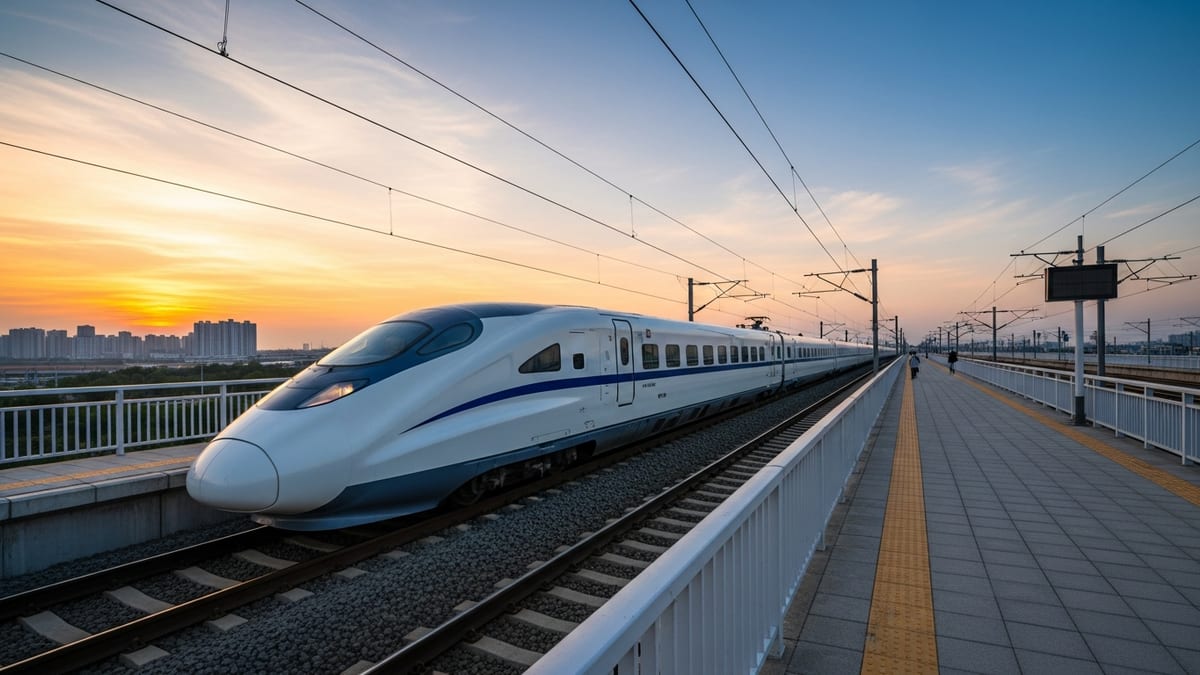
Vietnam is accelerating a far-reaching restructuring of its national railway system as the country shifts focus to a 1,541 km North–South high-speed line and a wider network of intercity and urban rail connections that could significantly change how travelers move across Southeast Asia.
Get the latest news straight to your inbox!
From Legacy Operator to Integrated Railway Group
Vietnam’s railway sector has historically revolved around Vietnam Railways, the state-owned operator of the century‑old North–South line and a patchwork of regional routes. Publicly available information shows that recent transport strategies now envisage a more integrated “national railway group” model, in which infrastructure, passenger services, freight and station real estate are organized under a clearer corporate framework aligned with long-term planning targets.
According to sector analyses and official planning documents, this restructuring aims to separate infrastructure management from train operations, while still keeping them coordinated through state ownership and regulated partnerships. This approach is intended to open space for private participation in rolling stock, station development and service operations, without fragmenting national control of the mainline network.
Reports on Vietnam’s railway master plan indicate that the future group structure is being designed around the flagship North–South high-speed railway, complemented by upgraded conventional lines and new urban and regional links. The legacy 1,726 km single-track line between Hanoi and Ho Chi Minh City is expected to remain crucial for freight and slower passenger services, while the new high-speed corridor would take over most long-distance passenger demand.
Analysts note that these organizational changes are also meant to improve the sector’s financial profile. Rail’s share of passenger traffic in Vietnam remains low compared with road and air travel, and planners see a restructured national railway group partnered with domestic and foreign investors as central to reversing this trend through higher-capacity, higher-speed services.
North–South High-Speed Rail Becomes the Spine
The centerpiece of Vietnam’s new rail strategy is the North–South high-speed railway, approved in late 2024 as a 1,541 km double‑track standard‑gauge line between Hanoi and Ho Chi Minh City. Public coverage of the project indicates a design speed of 350 km/h, 23 passenger stations, five freight stations and an axle load of 22.5 tonnes, with total investment estimated around 67.3 billion USD spread over more than a decade.
Government briefings and independent market reports suggest construction could begin from 2027 and be phased through 2035, with early sections on the Hanoi–Vinh and Ho Chi Minh City–Nha Trang stretches prioritized to serve dense travel corridors. The line is intended primarily for passengers, with provisions to carry freight when required, and is planned to use international standards for track, electrification and signaling comparable to newer networks in China and Europe.
Travel times are expected to fall sharply once services begin. Pre‑feasibility studies cited in the local press describe end‑to‑end journeys between Hanoi and Ho Chi Minh City taking roughly 5 to 6 hours, compared with more than 30 hours on today’s conventional trains. Analysts also point to planned fare levels at around three‑quarters of typical domestic air ticket prices as a key factor in attracting passengers from short‑haul flights.
The scale of the investment is significant in the context of Vietnam’s economy, but financial assessments circulated in recent years note that annual spending on the project would amount to roughly 1 percent of projected GDP during the core construction period. By 2050, demand forecasts suggest that even with ongoing investments in highways and airports, the North–South corridor could still experience unmet passenger demand without a high‑capacity rail option.
Restructuring to Unlock Investment and Partnerships
Planned restructuring of the national railway group is closely linked to the financing strategy for high-speed rail. Investment research and project documents describe a model that combines central government funding, state‑backed loans and targeted private involvement in trains, depots, stations and related services. This is in line with broader infrastructure policy that emphasizes public‑private partnerships and diversified capital sources.
Consultancy reports focused on the North–South high-speed line highlight potential roles for domestic conglomerates and international suppliers in areas such as rolling stock manufacturing, signaling, telecommunications and power systems. Trial collaborations already announced for other high-speed or higher‑speed projects are seen as testbeds for future partnerships on the national corridor, with technology transfer and localization of production framed as important goals.
The anticipated reorganization of the railway sector is also expected to clarify revenue streams from track access charges, passenger operations and station‑area development. Market observers argue that this clarity is essential for banks and institutional investors assessing long‑term commitments to Vietnam’s rail projects, especially where multi‑decade concessions or long‑term service contracts are involved.
At the same time, transport planners are emphasizing that high-speed rail is not a stand‑alone project but part of a comprehensive network vision. Plans for conventional rail upgrades, logistics hubs and multimodal terminals are being shaped so that the restructured national operator can integrate high-speed passenger flows with freight and regional services rather than compete with them.
Future Connectivity Across Cities and Borders
Beyond the flagship North–South line, Vietnam’s railway vision includes a series of east–west and cross‑border routes that could substantially change travel patterns. Publicly available planning documents identify connections from Hanoi toward Lao Cai and China, as well as links from northern and central seaports into the hinterland, as priorities for both tourism and trade.
Urban rail projects in Hanoi and Ho Chi Minh City are another pillar of this connectivity strategy. Metro lines are being designed to interface with future high-speed rail termini, particularly at Ngoc Hoi in Hanoi and Thu Thiem and Long Thanh in the south. This is intended to allow travelers arriving by high-speed train to transfer directly to citywide rail networks, reducing reliance on private cars and easing pressure on urban roads.
Travel industry analysts suggest that this integrated approach could reposition Vietnam as a rail‑connected tourism and business hub within mainland Southeast Asia. A restructured railway group capable of coordinating long‑distance, regional and urban services would give visitors the option to combine high-speed intercity trips with short regional journeys to coastal or highland destinations now reached mainly by bus or car.
Over time, improved rail service along the North–South axis is expected to support secondary cities that currently lie off major air routes. Faster and more frequent trains could make destinations such as Hue, Da Nang, Quy Nhon and Nha Trang more accessible for both domestic and international travelers, with knock‑on effects for hotels, attractions and local transport providers.
Implications for Travelers and the Wider Region
For travelers, the most visible outcome of Vietnam’s rail restructuring and high-speed investment will be the emergence of a new long‑distance option between Hanoi and Ho Chi Minh City and along the coast. If timelines hold, the first segments brought into service later in the next decade would give passengers a fast, weather‑resilient alternative to short‑haul flights and overnight buses on some of the country’s busiest routes.
Tourism operators are already tracking how fare policies, service frequency and connectivity to airports and city centers might influence itineraries. Pricing scenarios published in the press indicate that keeping fares below typical air ticket levels is a central objective, while maintaining operating subsidies at a manageable level during the initial years of service.
Regionally, the project is being watched as part of a broader trend of high-speed rail expansion in Asia. Analysts note that an operational Vietnamese high-speed spine could eventually connect with lines from China’s Yunnan and Guangxi regions, as well as with proposed corridors into Laos and Cambodia, forming new overland routes for both tourism and business travel.
For now, the restructuring of Vietnam’s national railway framework is still unfolding, but its direction is clear. By reshaping the role of the state operator, opening defined spaces for private and international partners, and centering planning on the North–South high-speed line, the country is positioning rail as a core mode for future mobility and a key part of its long‑term connectivity strategy.
Vietnam approves $67 billion high-speed railway from Hanoi to HCM City – Vietnamnet
National Assembly approves North–South high-speed railway project – Government Portal (EN)
Vietnam high-speed rail: opportunity overview – Viettonkin Consulting