


More news on this day
Virgin Australia is trimming its domestic flight schedule even as profits climb sharply, highlighting how Australia’s resurgent travel demand is colliding with higher fuel costs and tight airline capacity.
Get the latest news straight to your inbox!
Capacity Cut Targets High-Frequency Domestic Routes
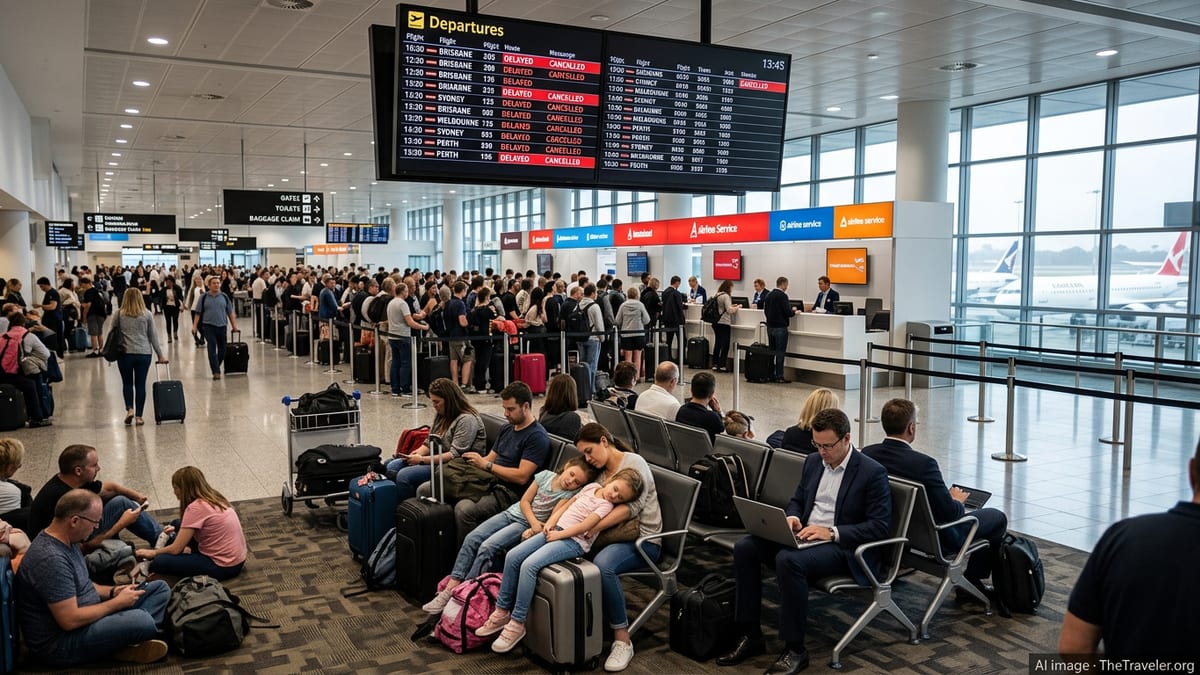
Virgin Australia is reducing domestic flight capacity by about 3 per cent over coming months, focusing on high-frequency trunk routes and selected regional services. Public reports indicate that this adjustment follows an earlier move to trim flying by about 1 per cent in the June quarter of 2026, as the carrier responds to a sharp rise in jet fuel costs and a volatile global oil market.
The latest reduction represents a relatively small share of Virgin Australia’s roughly 3,000 weekly domestic and international services, but it will be most noticeable on busy corridors where the airline operates multiple daily frequencies. Market coverage suggests that the airline has concentrated the cuts on routes where alternative time slots remain available, aiming to protect connectivity while marginally easing capacity and supporting yields.
Industry analysis links the decision to a broader pattern across Australian aviation, in which both major airline groups have been tightening domestic capacity while raising fares. Similar capacity trims at Qantas have been framed as a way to redeploy aircraft to higher-yielding international markets and to offset a steep increase in projected fuel expenditure.
Virgin Australia has indicated through published financial commentary that it is also relying on hedging strategies to soften the immediate shock of higher oil prices. Nonetheless, trimming domestic flights and maintaining pricing power is emerging as a key part of its response to the fuel cost spike.
Profits Climb as Demand Remains Strong
The capacity pullback comes against the backdrop of a sustained profit rebound at Virgin Australia. Company financial reports for the 2024 and 2025 financial years show back-to-back underlying earnings before interest and tax in the hundreds of millions of dollars, marking a decisive turnaround from the pandemic-era collapse and voluntary administration.
According to published financial filings for the first half of the 2026 financial year, the airline group recorded strong underlying earnings growth, with the core airlines segment delivering a double-digit increase in underlying EBIT compared with the prior year. Revenue per available seat kilometre rose solidly, supported by high leisure demand, event-driven travel and disciplined capacity growth.
Regulatory monitoring by the Australian Competition and Consumer Commission indicates that domestic aviation has enjoyed robust profitability as demand has recovered. ACCC reporting for 2024 and 2025 notes that limited competition following the withdrawal or downsizing of smaller rivals, combined with strong demand, has helped underpin elevated fares and strong earnings at both Virgin Australia and Qantas.
Publicly available data also shows that Virgin Australia has fully utilised its historic tax losses and returned to a tax-paying position, reinforcing the scale and durability of its recent profit surge. Analysts view this as a significant milestone for a carrier that only a few years ago was being restructured under new ownership.
Domestic Travel Boom Reshapes Australia’s Aviation Market
The airline’s move to pare back some services is occurring while Australian domestic travel is at or near record levels. ACCC and government transport statistics show that by late 2024 and into 2025, domestic passenger numbers had returned to, and in some cases surpassed, pre-pandemic volumes on major routes such as Sydney to Melbourne.
Destination and tourism agency data highlights that December 2024 was one of the busiest months on record for Virgin Australia, with passenger numbers across its domestic and international network at an all-time high. Subsequent months in 2025 continued to see strong leisure and business demand, driven by pent-up travel, major events and the ongoing recovery of corporate and small-business travel.
ACCC commentary published in 2025 points out that overall seat capacity has lagged the surge in passenger demand, with the withdrawal of budget competitor Tigerair and the later financial troubles of regional and low-cost challengers reducing competitive pressure on the main carriers. This has allowed airlines to keep load factors high and maintain relatively elevated fares, even as jet fuel prices fluctuate.
In this environment, small capacity reductions such as Virgin Australia’s 3 per cent trim can have an outsized impact on pricing and availability, especially on popular leisure routes during peak holiday periods. Travel industry observers note that this contributes to a perception of a “new normal” of higher airfares despite the strong rebound in traffic.
Fuel Costs, Fares and What Passengers Can Expect
The immediate trigger for the latest round of capacity adjustments is a sharp increase in fuel costs linked to conflict in the Middle East and associated disruptions in global oil markets. Coverage of recent trading updates indicates that Virgin Australia expects its fuel bill to rise by tens of millions of dollars in the current financial year, even after accounting for an extensive hedging program.
To protect margins, the airline has paired the 3 per cent domestic capacity reduction with fare increases across a range of economy and business fares. Industry reporting suggests that average fares at major Australian airlines have edged higher in 2026 compared with a year earlier, even after a moderation in global jet fuel prices during 2025. Travel agents and comparison platforms have observed notable price rises on key domestic city pairs over the past two years.
For passengers, the combination of reduced capacity and higher fares is likely to mean fewer last-minute bargains and more pressure on peak-time services, particularly around school holidays and long weekends. However, Virgin Australia’s on-time performance and completion rates, which improved through the 2024 and 2025 financial years according to company data and government statistics, may benefit from a slightly less stretched schedule.
Analysts also note that some of the aircraft and crew freed up by domestic cuts can be deployed into international or leisure-focused routes where demand and yields remain strong. This could see more capacity directed towards short-haul holiday destinations and partner-linked routes, even as domestic frequency on certain business corridors ticks down.
Signals of a Longer-Term Travel Boom
Despite the near-term capacity trims, Virgin Australia’s forward guidance and recent filings point to continued growth in the medium term. The airline expects domestic capacity to increase again in the second half of the 2026 financial year and into early 2027, albeit at a measured pace of only a few percentage points, suggesting confidence in sustained demand but a cautious approach to avoiding oversupply.
Broader industry data supports the view that Australia is in the midst of a durable travel boom. Domestic passenger numbers across the country’s major airports have been steadily climbing, while tourism agencies report strong hotel occupancy and visitor spending in key destinations. Partnerships such as Virgin Australia’s expanded cooperation with Qatar Airways are also funnelling more international traffic into domestic networks, reinforcing demand for connecting flights.
Regulators have remarked that the combination of solid demand, limited competition and disciplined capacity has produced a highly profitable period for the country’s main airlines. For Virgin Australia, the 3 per cent domestic capacity cut appears to be a tactical move within this broader upswing, allowing the carrier to navigate short-term fuel and cost pressures while preserving its trajectory of profitable growth.
For travelers, the message embedded in Virgin Australia’s strategy is that flying within Australia will remain busy and relatively expensive compared with pre-pandemic norms, even as more routes and international connections open up. The airline’s profit surge and cautious capacity stance suggest that Australia’s new travel boom is far from over, but it will be defined as much by constrained supply and pricing power as by sheer passenger numbers.
Virgin Australia investor results centre
ACCC Domestic Airline Competition reporting