


The Eiffel Tower is still the symbol most visitors picture when they imagine Paris, and in 2026 it remains one of the city’s busiest and most carefully managed attractions. For first time visitors, deciding when to go, which floors to visit and how to combine the Tower with the rest of a Paris itinerary can feel overwhelming. This guide brings together the latest information from official sources to help you plan a realistic, stress reduced visit that fits your time, budget and travel style.
Get the latest updates straight to your inbox!
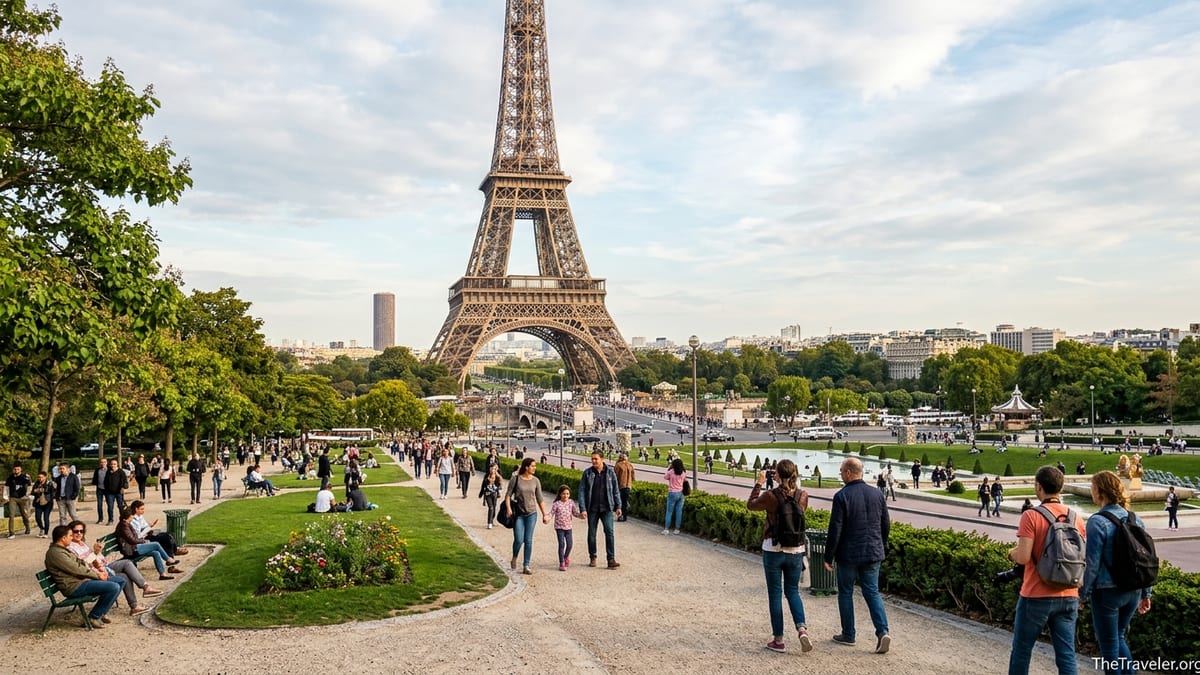
Where the Eiffel Tower Is and Why It Still Matters
The Eiffel Tower stands on the Left Bank of the Seine in the 7th arrondissement, at the western end of the Champ de Mars park. The closest metro stop is Bir Hakeim on line 6, about a 10 minute walk across residential streets and the pedestrian Passerelle Debilly or Pont de Bir Hakeim, while Trocadéro on line 9 across the river offers the classic postcard view from the terraces of Palais de Chaillot. Many Seine sightseeing cruises, including large operators such as Bateaux Parisiens, depart from quays directly below or beside the Tower, which makes it easy to pair a visit with a cruise.
Completed in 1889 for the Exposition Universelle, the Tower was once meant to be temporary. Today it is both an instantly recognizable engineering landmark and a working structure that requires constant maintenance, repainting and occasional partial closures. Visiting now offers a look at a living monument rather than a static museum piece: elevators are modernized, exhibitions change, and security and crowd management are updated regularly in response to real world events.
The Tower is worth including in a Paris trip for more than its fame. From the second floor and summit you get a three dimensional map of central Paris, from Les Invalides and the Louvre to Notre Dame and La Défense, that helps orient a first visit. For families, the glass floor on the first level and the chance to count steps on the stairs give children a concrete way to engage with the monument. Couples often time their visit to sunset and stay as the Tower lights up hourly at night, then continue with a Seine cruise or walk along the river.
Different types of travelers enjoy the Tower in different ways. Budget travelers may choose a stairs only second floor ticket and bring snacks to enjoy on the esplanade afterwards. Visitors with limited time might decide to skip going up and instead photograph the Tower from Trocadéro and the Champ de Mars, then invest money and time in a Seine cruise or a museum. Travelers with limited mobility can comfortably reach the first and second floors by lift, while understanding that the summit is currently not wheelchair accessible.
Understanding the Floors: From Gardens to the Summit
Your visit starts at ground level in the gardens and esplanade beneath the Tower. Entry here is free once you pass through the outer security check, so even travelers who decide not to go up can experience the scale of the structure, look up through the iron lattice and take photos from directly underneath. The esplanade also houses ticket offices for same day purchases, security lanes, some snack counters and access points to the four pillars, two of which are used for visitor elevators and stairs.
The first floor is a wide, partially open level with indoor and outdoor spaces, exhibitions and services. The most famous feature is the large glass floor sections that let you look straight down to the esplanade, a highlight for many children and photographers. Recent information from the official site notes that some parts of the outer walkway can be affected by renovation work at times, but the core circuit, exhibitions and glass floor remain accessible. The first floor is also where you find Madame Brasserie, a sit down restaurant, informal buffets and some of the Tower’s shops.
The second floor is the main viewing platform for most visitors. It is high enough to give a broad panorama over Paris while still allowing you to pick out details such as boats on the Seine or people crossing the bridges. The balustrades have viewing panels and windows adapted so that wheelchair users can see over the railings. This level also has snack counters, souvenir shops and indoor viewing areas that offer shelter in bad weather. Many visitors spend most of their time here, even with summit tickets, simply because the views are more detailed.
The summit, sometimes called the top, is a narrower level accessed only by a dedicated elevator from the second floor. It includes an open air gallery and an enclosed viewing space, as well as a small historical reconstruction of Gustave Eiffel’s office. From here you can see well beyond the city limits on clear days. However, the summit is the most sensitive to weather, technical issues and operational constraints and is therefore the level most likely to close temporarily during high winds, storms, heatwaves or labor actions. It is essential to check on the day of your visit whether summit access is open, even if you hold a summit ticket.
Opening Hours, Tickets and What It Really Costs
According to the official Eiffel Tower information, the monument generally opens every day of the year, with extended hours in high season. In recent years, summer opening hours have typically run from around 9:00 in the morning until close to midnight, with slightly shorter hours in winter. Exact times can vary on specific dates due to maintenance or events, so visitors in 2026 should check the official site for precise schedules a few weeks and again a few days before their planned visit.
Ticket prices are revised periodically and are clearly published by the operator. From mid June 2024, a standard adult ticket by lift to the second floor has been set a little above 22 euros, with reduced prices for young people aged 12 to 24 and for children and disabled visitors. Official tables released for 2025 and 2026 show small increases: for example, an adult summit ticket by lift from January 2025 is listed at just over 36 euros, while an adult lift ticket to the second floor is just over 23 euros. Stairs tickets to the second floor are cheaper, with 2025 adult prices around 14 to 15 euros. Combined stairs plus lift to the summit sits in between the two. Children under four enter free but proof of age can be requested.
These official tariffs underline two important planning points. First, booking directly with the Eiffel Tower’s online ticketing secures the best price compared with resellers and includes a timed entry slot, which greatly reduces waiting at the ticket office. Second, some packages sold by third party operators bundle Tower access with guided tours or cruises at a noticeable markup, which may be worthwhile for travelers who value a guide but is not necessary for simple entry to the monument. If your budget is tight, buying directly from the Tower and then choosing a basic Seine cruise separately for 15 to 21 euros per adult with large operators such as Bateaux Mouches or Bateaux Parisiens can keep costs under control.
Timed tickets are released on a rolling basis and summit slots in particular can sell out quickly for popular dates such as summer evenings and weekends. If online tickets appear sold out, the official advice is that a same day ticket may still be available at on site ticket offices, especially for stairs access to the second floor. This can be a practical solution for flexible travelers, though it brings more uncertainty about exact visit times.
Security Rules, Accessibility and Common Disruptions
The Eiffel Tower operates under strict security rules similar to those at airports and major stadiums. All visitors must pass through a first security check at the perimeter before reaching the gardens and esplanade, then a second check at the entrance to the elevators or stairs. Bags are scanned or searched, and large luggage, scooters, glass bottles and dangerous items are not allowed. It is a good idea to bring only a small daypack or handbag with essentials to speed up checks and avoid being turned away at the gate.
Accessibility has improved significantly over the past decade. Lift access and adapted toilets are available from the gardens up to the first and second floors, and the Tower’s own accessibility register confirms that these two levels are considered accessible to all visitors. Windows and viewing areas have been modified so wheelchair users can enjoy the views without obstruction. However, the summit remains off limits to visitors using wheelchairs because of the design and safety standards of the upper elevator and platform. Disabled visitors and one accompanying person benefit from reduced ticket prices and facilitated access at the entrances; staff on the esplanade can direct you to the most suitable queues.
Temporary closures or partial disruptions are not rare at such a complex monument. Official and news reports over the last two years note closures due to staff strikes about pay and working conditions, as well as shorter disruptions linked to the visit of official delegations. The summit is also sometimes closed independently of the rest of the Tower because of high winds, icy conditions, technical maintenance or heatwaves, even while the second floor remains open. When this happens, the operator may propose an exchange or partial refund according to current policies, but visitors should read the conditions at the time of purchase and confirm the situation on the day of their visit.
Weather and air quality affect the experience even when the Tower is fully open. On days with low clouds, heavy rain or pollution haze, visibility from the summit can be significantly reduced and wind chill at the upper levels can be strong even in spring or autumn. In summer, metal surfaces and glass areas can become very hot during heatwaves, though the Tower publishes advice such as wearing hats, using sunscreen and bringing water bottles that can pass security. If your schedule allows, it can be worth watching the forecast and moving a summit visit to the clearest day of your stay.
Crowd Patterns, Queues and How to Minimize Waiting
The Eiffel Tower operator publishes detailed attendance information, and it confirms what many travelers experience: the monument is busiest in July and August, during Easter and Christmas school holidays, and on many weekends from spring through autumn. On these days, mid morning to late afternoon brings the longest queues at both ticket counters and elevators. In peak periods, visiting without a timed ticket can mean waiting over an hour just to buy entry, followed by additional waits to board elevators from the esplanade, second floor and later for the descent.
The same official guidance emphasizes that buying timed tickets in advance directly from the Tower is the simplest way to avoid at least one queue. With an online ticket you still pass through security and must wait to board the lifts, but you skip the ticket office line. Staff suggestions repeatedly highlight two time windows with lighter crowds: the first hour after opening in the morning, and later in the evening after about 8:30 or 9:00 pm, even in high season. Many Parisians suggest arriving 20 to 30 minutes before opening to be near the front of the line for security and ticket checks.
Choosing the stairs instead of the elevator can also reduce waiting, particularly on days when online elevator tickets have sold out. The Tower specifically recommends last minute online stairs tickets as an option when lift tickets are unavailable. The ascent to the second floor on foot is significant, with hundreds of steps and sections that can feel steep, so it suits reasonably fit visitors prepared with comfortable shoes and water. Families with active older children often enjoy counting stair flights as a challenge, while those with strollers or very young children are usually better served by the lifts.
Even with good planning, expect some crowding inside the monument. Viewing spots along the railing fill quickly when the weather is clear, and you may need to wait a few minutes for prime angles over landmarks like the Trocadéro or Notre Dame. At the summit, space is more limited, so visits tend to be shorter and more focused on taking in the 360 degree view. Keeping expectations realistic helps: instead of trying to take hundreds of photos from every angle, plan to pause at two or three key viewpoints, then step back into the indoor areas to rest.
How Long to Spend and Typical Visit Strategies
For a first visit with advance tickets and moderate crowds, a realistic time inside the Tower is around two to three hours from arrival at security to exit. This allows time to pass both security checks, ride the elevator up, explore one or two floors, take photos and perhaps stop for a snack or coffee. In the busiest summer weeks or on holiday weekends, total time can easily stretch to three or four hours, especially if you rely on same day ticket purchase or queue for the elevators at peak times.
One common decision is whether to visit the summit or stop at the second floor. The summit costs more, is more prone to weather and technical closures and adds extra queuing for the dedicated lift. In exchange, you gain the prestige of reaching the top and a more expansive horizon. Travelers who particularly enjoy high viewpoints or who are visiting Paris once in a lifetime often consider the surcharge worthwhile, while those who dislike heights, are short on time or are traveling with impatient young children may be happier focusing on the more comfortable second floor platform.
Time of day shapes your experience at least as much as floor choice. Daytime visits, especially around midday, offer clearer visibility for long distance views and better light for recognizing monuments. Evening visits around sunset and into the night trade some clarity for atmosphere: the city lights up, the Tower’s own lighting comes on and the hourly sparkle display begins after dark. Some visitors aim for a ticket about an hour before sunset so they can experience both daylight and night from the upper levels, then watch the Tower shimmer from the Champ de Mars after descending.
Not every itinerary needs a long in depth visit. Travelers with only one full day in Paris, a tight budget or limited mobility sometimes choose a quick photo stop strategy: enjoy the free views from Trocadéro, walk down across the bridge to the esplanade and Champ de Mars, perhaps ride a one hour Seine cruise from the nearby quays, and save the ticket cost and time commitment for another trip. This still provides memorable perspectives on the Tower without adding stress to a packed schedule.
Sample Half Day Plan With Nearby Sights and a Seine Cruise
For many first time visitors, a half day around the Eiffel Tower provides a balanced mix of monument time and city atmosphere. One practical plan for a couple or family could start around 2:00 pm at the Trocadéro esplanade, reached by metro line 9. Spend 30 minutes taking photos from the terraces and watching street performers with the Tower rising across the river. Then walk down the grand staircases, cross Pont d’Iéna and pass through the security perimeter to reach the Tower gardens and esplanade.
If you hold a timed ticket for around 3:00 pm to the second floor by lift, you can expect to clear security and be in line at the pillar 20 to 30 minutes earlier. Allow roughly 90 minutes inside the Tower itself: after the direct elevator ride to the second floor, circle the viewing platform, stop for coffee or an ice cream at one of the buffets and, if your ticket includes it, ride the second elevator up to the summit for a short visit before returning to the second floor and then back down to the esplanade. With an adult summit ticket by lift priced in the mid 30 euro range according to official tariffs, a couple will spend around 70 euros for this part of the afternoon, less if they choose the second floor only option.
After exiting around 4:30 or 5:00 pm, stroll through the lower Champ de Mars lawns for more relaxed photos and a chance to sit on a bench away from the densest crowds. From here it is a short walk back to the quays near the Tower where several Seine cruise operators board passengers. A basic one hour sightseeing cruise with commentary currently runs roughly 15 to 21 euros per adult depending on the company and whether you buy tickets online or at the window, while children’s tickets are usually cheaper. Boarding one of the frequent departures between 6:00 and 7:00 pm lets you see central Paris from the water and, in summer, may coincide with golden hour light.
Budget wise, a half day following this pattern might cost, for two adults, the equivalent of two summit tickets plus a simple two person cruise, typically under 120 euros in total before any food or drink. If you choose stairs to the second floor instead, ticket costs drop noticeably and can bring the combined total closer to 80 euros. Families will benefit from reduced youth and child tariffs both at the Tower and with several cruise companies. Whatever combination you choose, booking the Tower first and then picking a cruise on the day based on the weather and energy levels gives useful flexibility.
Final Checks and Why Official Information Matters
Because the Eiffel Tower is an active, heavily visited site, details change frequently. Ticket prices are periodically updated, summit access can be suspended at short notice, and opening hours may adjust for events, maintenance or public holidays. In recent years, labor disputes have also led to full day closures announced only a short time in advance. For these reasons, no planning guide, however current when written, can replace checking the official Eiffel Tower channels a few days and again a few hours before you visit.
In practice, this means confirming your ticket type and time, rechecking the day’s opening status and possible summit closures, and reviewing any special advice such as extreme heat or storm warnings. If you are visiting during peak holiday periods, it is also prudent to build some flexibility into your schedule in case your chosen time needs to shift. Keeping transport simple, such as using the metro and allowing extra time to walk from the station, reduces the risk of missing your slot.
Despite the logistics, most visitors still find the Eiffel Tower a highlight of their Paris trip, particularly when they approach it with realistic expectations about queues, crowds and costs. Whether you climb part way on foot, ride to the summit or simply enjoy the structure from the riverside, planning ahead allows you to focus on the experience itself: the changing light on the city, the hum of languages on the platforms and the surprising sense of space when you step out above the Seine.
With thoughtful timing and a clear idea of what each floor offers, the Tower can fit into almost any Paris itinerary. Decide whether your priority is height, atmosphere, budget or simplicity, then shape your visit accordingly, using official information as your final reference. The result is not just a famous landmark checked off a list, but a set of views and memories that will help frame the rest of your time in the French capital.