


More news on this day
Volcanic ash over Indonesia has triggered a fresh wave of disruption for UAE air travellers, with Emirates and Etihad cancelling and delaying multiple Jakarta flights as Jakarta’s main airport faces temporary closure.
Get the latest news straight to your inbox!
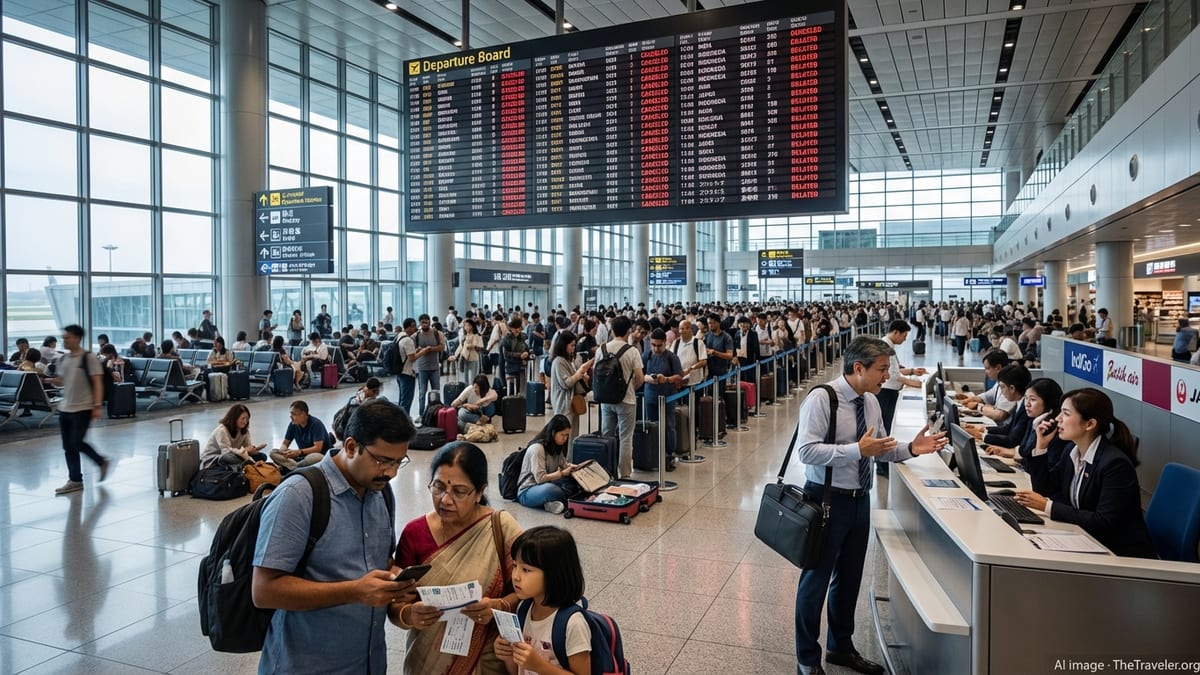
Emirates and Etihad adjust Jakarta schedules after ash cloud
Publicly available airline advisories show that services between the UAE and Jakarta have been among the worst affected by the latest bout of volcanic activity in Indonesia. The temporary closure of Soekarno Hatta International Airport (CGK) because of volcanic ash has led to cancellations, delays and last minute schedule changes for passengers travelling via Dubai and Abu Dhabi.
Emirates’ travel updates page lists a series of cancellations on its busy Dubai Jakarta corridor for 6 and 7 September 2026, including EK356 and EK358 from Dubai to Jakarta and return services EK357 and EK359 between Jakarta and Dubai on both days. The carrier indicates that customers booked on these flights are being re accommodated and is urging passengers to review the latest flight status before heading to the airport.
Reports from Abu Dhabi point to similar disruption on Etihad Airways services to the Indonesian capital. Coverage from UAE based media and broadcast news indicates that Etihad’s EY472 from Abu Dhabi to Jakarta, initially affected on 6 September, has seen delays, with further adjustments possible as conditions around Jakarta’s airspace continue to be assessed.
Regional news outlets describe a complex operating environment in which airlines are having to balance safety considerations around volcanic ash with the need to keep long haul networks moving. The result for travellers is a patchwork of cancellations, rolling delays and potential reroutings on some services touching Indonesia.
Jakarta airport closure sends ripples through UAE hubs
The closure of Jakarta’s main international airport has had knock on effects across airline networks that rely on tightly timed connections in Dubai and Abu Dhabi. Emirates identifies several affected rotations over 5, 6 and 7 September, noting that its Dubai Jakarta flights on 6 and 7 September are either cancelled outright or subject to significant schedule changes as ash conditions evolve.
Radio and online news bulletins in the UAE report that both Emirates and Etihad have been forced to cancel or delay Jakarta bound flights on Monday 7 September as the airport remains partially shut, extending the disruption into a third consecutive day. International carriers transiting through the region have also been adjusting their Jakarta operations, reducing onward options for passengers who normally rely on the UAE as a major connection point to Southeast Asia.
While the current disruption is centred on Indonesia, broader travel updates for UAE airports this month already point to a challenging backdrop. Separate advisories relating to regional geopolitical tensions had earlier highlighted a mix of cancelled and delayed services on some Middle East and North Africa routes for both Emirates and Etihad, leaving airline operations teams contending with simultaneous pressures on different parts of their networks.
For UAE residents and transit passengers, the combined impact is visible in longer connection times, tighter seat availability on alternative services, and occasional last minute rerouting via other Asian hubs when direct Jakarta flights are not operating to plan.
What affected passengers are being advised to do
Emirates directs customers to its online travel updates and flight status tools, stressing that schedules can change at short notice when volcanic ash is present in or near an aircraft’s planned flight path. The airline’s disruption guidance explains that passengers whose flights are cancelled or significantly delayed are typically rebooked on the next available services, with notifications sent to the contact details listed in their bookings.
Those who booked through travel agencies are being advised, according to airline FAQs and local reports, to stay in close contact with their agents to ensure they receive rebooking updates promptly. Travellers who purchased tickets directly from the airlines are encouraged to use online “Manage booking” tools or contact customer support channels if proposed alternatives no longer suit their plans.
Etihad has issued similar messages through its public channels, indicating that passengers on affected Jakarta flights should check the latest information before leaving for Abu Dhabi’s Zayed International Airport. Travel coverage from UAE media notes that both carriers are urging customers to allow extra time at airports in case queuing is heavier than usual at check in and customer service desks handling disrupted itineraries.
Consumer advice shared by regional outlets also highlights the importance of keeping email and mobile contact details up to date in airline profiles, as rebooking confirmations, boarding pass reissues and gate changes are often delivered digitally in real time when schedules are unstable.
Broader travel impact and outlook for the coming days
Volcanic ash is a recurrent challenge for airlines operating in and around Indonesia, with safety regulators taking a conservative approach whenever ash clouds are detected near busy air corridors. The latest closures at Jakarta follow earlier episodes this year that affected other Indonesian airports, and aviation experts quoted in regional coverage have underlined that suspending or diverting flights remains the standard response to protect aircraft engines and navigation systems.
For UAE hubs in Dubai and Abu Dhabi, the timing of the Jakarta disruption comes as carriers were already managing heightened operational complexity linked to regional security concerns. Recent Gulf focused aviation reports describe a mixed operating picture, with most long haul services running but pockets of cancellations and rerouting on routes overflying sensitive areas, adding additional strain on scheduling teams.
In the near term, travel industry reporting suggests that flights between the UAE and Indonesia may see continued adjustments until Jakarta’s airport is fully reopened and airspace assessments confirm that ash concentrations have subsided. Passengers with imminent journeys are therefore being encouraged by public travel advisories to monitor airline channels closely, consider flexible travel dates where possible, and factor in the potential for extended connection times through UAE hubs.
Once the immediate volcanic episode passes, airlines are expected to progressively restore normal schedules, although some knock on effects such as aircraft and crew imbalances can linger for several days. Observers note that the speed of recovery will depend on how quickly Jakarta’s airport can resume full operations and whether any further ash emissions require additional protective closures.
Key resources for real time flight information
With conditions evolving rapidly, aviation and travel media in the UAE are consistently pointing passengers to official airline channels as the most reliable source of up to date information. Emirates, Etihad and other carriers publish rolling travel updates and real time flight status tools on their websites, which reflect cancellations, delays and gate changes as they occur.
Dubai and Abu Dhabi airport websites, along with airport mobile applications, also provide live arrival and departure boards that can help passengers and those meeting flights to track disruptions linked to volcanic ash or other factors. These digital tools are seen as particularly important at times when contact centres and airport desks may be dealing with higher call and footfall volumes than normal.
Travel planners and corporate travel managers are being reminded in industry coverage to review company policies around disruption, including how rapidly employees can be rebooked, which alternative routings are allowed, and whether additional overnight stays in transit hubs such as Dubai and Abu Dhabi are permitted if same day connections are no longer feasible.
For leisure travellers, publicly accessible guidance recommends allowing additional flexibility in itineraries when travelling during periods of known environmental or geopolitical volatility, including considering travel insurance products that explicitly cover weather and natural hazard related disruption on long haul trips.
Khaleej Times: Emirates cancels, delays Dubai Jakarta flights
ARN News Centre: Flights from UAE to Jakarta cancelled, delayed