


The first morning I woke up at Fairmont Chateau Lake Louise, it took a few long seconds to understand what I was seeing. Pale pink light washed over a perfectly still turquoise lake, the serrated peaks of the Canadian Rockies silhouetted beyond the Victoria Glacier. The view filled the entire window of my lakeview room, so close and cinematic that it hardly seemed real. But the quiet clink of canoes being unlocked at the boathouse, the faint scent of coffee drifting up from the lobby, and the bite of Alberta mountain air when I cracked open the window all confirmed it: this was no dream. This was waking up inside one of the most spectacular hotel settings on Earth.
Get the latest updates straight to your inbox!
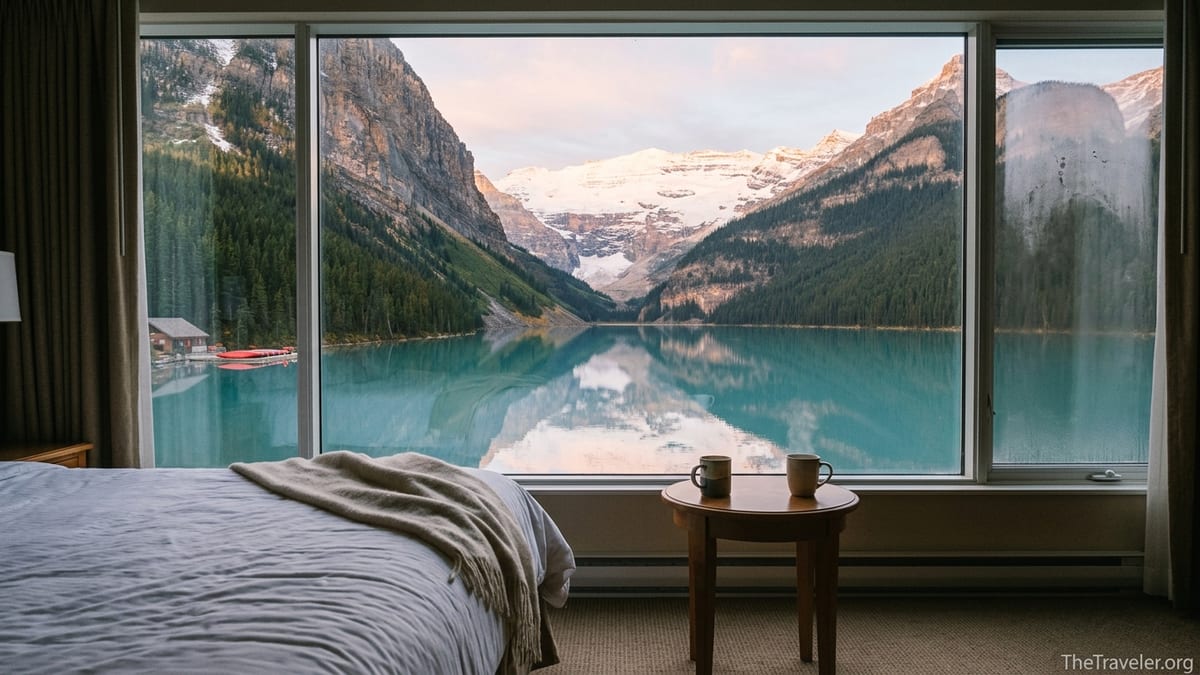
That First Surreal Morning View
If you splurge on a lakeview room at Fairmont Chateau Lake Louise, the real check-in moment happens the next morning when you draw the curtains. Rooms on the higher floors in the main wing and on Fairmont Gold level stack directly above the lakeshore, so the window frames a vertical slice of turquoise water, evergreen forest, and the glacier capped wall of Mount Victoria. In peak summer, sunrise can be as early as 5:30 a.m., which means your first sight of the lake might be in those pastel minutes when the sky turns apricot and the water looks like frosted glass.
Lake Louise is popular enough that its parking fills quickly later in the day, but at dawn, staying at the Chateau changes the rhythm completely. Instead of racing for a shuttle, you pad across heated bathroom tiles, pull on a sweater, and walk straight out the front doors to the lakeshore in under two minutes. Local tourism guides consistently recommend early morning as the calmest, quietest time at the lake, and that plays out in real life: the water is typically at its glassiest, the walking path nearly empty, and the soundtrack is more loon calls than selfie sticks.
In winter, that same window feels like a frame around a snow globe. The lake freezes into a broad white expanse, the hotel maintains a skating rink with an ice castle and lanterns, and the peaks glow in shades of peach as the sun creeps over the ridge. Guests in lakeview rooms often sit right in the window seat, wrapped in one of the heavy wool throws, watching tiny skaters carve loops below and horse drawn sleighs push through the snow. It is the kind of view that makes you forget to reach for your phone at all.
What makes it so surreal is not just the beauty, but the proximity. There are other legendary mountain hotels in the Rockies, but few where the star attraction begins less than a hundred steps from the lobby, and where the light changes on the water become your de facto alarm clock.
Inside the Chateau: Historic Grandeur With Modern Comforts
From the outside, Fairmont Chateau Lake Louise looks like a storybook alpine castle, all green copper roofs and turrets set flush against the shoreline. Inside, it balances that grand, historic identity with the quiet efficiencies travelers expect today, from fast elevators to well insulated windows that actually open a crack to let in fresh air. The hotel’s origins date back to the early 20th century, when the Canadian Pacific Railway built a series of mountain resorts along its line. Lake Louise’s Chateau has been expanded and reconstructed over the decades, but it still feels more like a mountain lodge than a corporate resort.
Standard Fairmont rooms are cozy but functional, with cotton duvets, Nespresso machines in many categories, and bathrooms updated with stone countertops and walk in showers or shower tub combos, depending on the room. Mountain View rooms are usually the entry category, looking back at the forested slope and the Bow Valley Parkway; they are quieter and a bit more affordable than lakeview rooms, which often price several hundred Canadian dollars higher per night. For travelers who want the full stage set experience, Lakeview and Fairmont Gold Lakeview rooms are the ones that deliver that famous wake up moment, often with larger windows and, in Gold rooms, access to the private lounge for breakfast and evening snacks.
It is worth knowing that you do pay for the setting. In peak summer, a basic room can easily land in the 700 to 1,000 Canadian dollar range per night, with lakeview and suite categories going higher. The trade off is direct lake access, priority at on site restaurants, and small touches that can matter in a remote mountain village: a well stocked convenience shop for forgotten gloves and sunscreen, concierge desks who can troubleshoot last minute shuttle bookings to Moraine Lake, and rental gear available in the building from the on site sports shop.
Even the corridors contribute to the sense of place. Historical photographs line the walls, showing early climbers roped together on glaciers and grainy early images of the lake when the hotel was just a single wooden lodge. After a day outside, walking past those sepia prints on your way back to a hot shower feels like stepping through the curated memory of the Rockies.
Breakfast With a Front Row Seat to the Lake
Breakfast at Fairmont Chateau Lake Louise offers one of the most memorable practical perks of staying on site: you can sip your coffee while watching day visitors just arriving after long shuttle rides. Louiza, the hotel’s main breakfast restaurant, leans into a modern, Mediterranean influenced menu. You might find shakshuka alongside more classic Canadian staples like buttermilk pancakes and eggs Benedict. The buffet, when offered, typically includes local cheeses, smoked salmon, pastries, and hearty options like breakfast potatoes and grilled tomatoes.
On busy summer mornings, guests who prefer a quieter start often skip the main dining room and head to Lakeview Lounge as soon as it opens. Set a few steps from the hotel lobby with soaring windows framing the lake, it feels more like a grand living room. You can order a simple yogurt parfait and espresso while staring straight at the turquoise water and slowly moving line at the nearby public canoe rental dock. Prices reflect the view. Expect to pay resort hotel rates for breakfast items, with main dishes commonly in the 25 to 35 Canadian dollar range and coffee drinks priced similarly to a North American urban cafe.
There is a more casual workaround for those trying to keep costs down or get outside faster. The Guide’s Pantry, a slim cafe tucked just off the lobby, sells sandwiches, pastries, and barista made coffee to go. A couple can split a toasted breakfast sandwich, grab drip coffees, and be walking the lakeshore trail by 7 a.m. without ever sitting down at a white tablecloth. On clear mornings, many guests take their paper cups and croissants straight out to the benches facing the water, effectively turning the entire front terrace into an al fresco breakfast room.
However you choose to fuel up, the real indulgence is time. Because you are already at the lake, there is no need to chase early park shuttles or drive mountain roads before dawn. You can linger over a second cappuccino while the first wave of hikers heads out, then start your own day outside once the sun clears the surrounding peaks and the air begins to warm.
Stepping Out the Door: Canoes, Trails, and Glacial Air
One of the most unreal aspects of waking up at the Chateau is how quickly you can transpose room key to wilderness. Walk out the back of the lobby and in less than a minute you are on the packed gravel trail that hugs the north shore of Lake Louise. Veer left and you reach the boathouse, where guests can rent the iconic red canoes that have appeared in countless travel magazine spreads. While specific prices fluctuate year by year, canoe rentals for non guests regularly run into the triple digits per hour, with hotel guests typically paying a reduced rate or enjoying priority lines during busy hours.
The simple act of paddling a few minutes offshore transforms the experience. On calm mornings, the lake mirrors every ridge of the surrounding peaks. You can look back and see the Chateau reflected upside down, its tan walls and green roof looking both impossibly grand and slightly modest compared to the cliffs that tower behind it. Because the water is glacial and extremely cold, swimming is not recommended for anything more than a quick, numbing dip at the shoreline. Instead, the canoe becomes your way to touch the middle of that improbable color without taking off your fleece.
For hikers, the classic move after breakfast is to follow the flat shoreline trail to the back of the lake, then choose from one of the steeper paths that climb toward the Lake Agnes Tea House or the Plain of Six Glaciers. The Lake Agnes trailhead sits just past the canoe dock, and within minutes you are switchbacking up through dense spruce forest, leaving most of the lakeshore crowds behind. Many guests aim to reach the Lake Agnes Tea House by late morning, reward themselves with a pot of hot tea and a slice of date square at one of the rustic wooden tables, then loop back down before afternoon storms roll in.
In winter, the outdoor rhythm shifts from hiking boots to skates and snowshoes. The resort experience fee, a daily charge added to many room rates, typically covers or discounts a rotating list of activities that can include guided snowshoe walks, family snow sculpture sessions by the lake, and access to the cleared skating rink. There is something particularly strange and wonderful about lacing up rental skates just steps from where canoes launch in July, then gliding past the same mountain ridges under a pale winter sun.
Evenings by the Fire: Dining and Drinks With Mountain Drama
If mornings at the Chateau are defined by pastel light and quiet trails, evenings are about fireside warmth and indulgent food. As day visitors trickle back to Banff or Calgary, the hotel begins to feel more intimate. Lights glow in guestroom windows, a pianist might be playing in the lobby, and the lake gradually darkens to ink as the last photographers pack up their tripods.
Dinner choices span from casual to celebratory. Louiza reopens in the evening with Mediterranean inspired plates that might feature grilled Alberta lamb with rosemary, roasted local vegetables, or seafood dishes with bright citrus and herb accents. Fairview Bar & Restaurant, one floor up from the lobby with a wall of windows facing the lake, leans more formal, often with multi course menus and an emphasis on seasonal Canadian ingredients. Think bison short rib with root vegetables, beet cured trout, and desserts built around berries and dark chocolate. For many guests celebrating anniversaries or milestone trips, a sunset dinner here is the dining highlight of their stay.
Those craving a low key atmosphere gravitate toward Alpine Social, a lively space on the lower level inspired by the mountaineering history of the region. The menu runs to comfort food: burgers piled high with cheddar and bacon, cast iron mac and cheese, fried chicken sandwiches, and local craft beers on tap. Skiers finishing a day at Lake Louise Ski Resort often head straight here still in their base layers, turning the space into a warm, slightly rowdy après hub.
After dinner, Lakeview Lounge shifts from daytime chill to nightcap glamour. Tall, overstuffed chairs cluster around low tables, and bartenders shake icy cocktails with a view of the now black lake beyond. Signature drinks might include gin cocktails built around local botanicals or twists on classics like an old fashioned with Canadian rye. With no city lights to compete, clear nights sometimes reveal a star washed sky. On those evenings, guests wander out to the lakeside terrace with their drinks, looking up at the Milky Way while their breath curls into the cold air.
Prices at all venues are firmly in resort territory, so many travelers plan a mix of splurge dinners and more budget friendly meals, perhaps stocking up on snacks in nearby Lake Louise Village for casual lunches and focusing restaurant dollars on one or two standout evenings at the Chateau itself.
When to Go: Seasons That Transform the Experience
Lake Louise is open year round, but the experience of waking up at the Chateau shifts dramatically with the seasons. In peak summer, typically late June through early September, the lake shows off its signature turquoise color thanks to glacial silt suspended in the water. This is also when crowds and prices are at their highest. Room rates climb, parking lots for day visitors fill early, and the shoreline can feel almost festive by midday. For travelers who dream of canoeing in a T shirt and hiking a network of dry, snow free trails, this is the time to go.
Shoulder seasons, particularly late May and late September into early October, can be both magical and unpredictable. In late spring, parts of the lake may still be thawing and higher elevation trails often hold snow, but you gain quieter paths and a softer, more subdued color palette. Fall brings larch season in the nearby valleys and cool, crisp mornings. Prices often dip compared to high summer, and it becomes easier to secure lakeview rooms on shorter notice, though it is wise to book as early as possible for weekends when autumn foliage peaks.
Winter transforms the Chateau into a full blown snow retreat. From roughly December through March, depending on conditions, the lake usually freezes solid enough for ice skating, and the hotel constructs its whimsical ice castle as a centerpoint. Guests waking up in winter find a very different kind of unreal outside their windows: snow drifts piled against stone balustrades, icicles growing long under the terrace, and cross country ski tracks crisscrossing the lake’s surface. For downhill skiers, the proximity to Lake Louise Ski Resort, about a 15 minute drive or shuttle ride away, adds another layer of appeal. After a day on the slopes, returning to a hot chocolate at Lakeview Lounge or an evening soak in the hotel’s hot tub feels richly earned.
Whenever you come, the rule of thumb is to build in flexibility. Mountain weather shifts fast, shuttles and certain dining outlets adjust hours seasonally, and wildfire smoke can sometimes affect visibility in late summer. Allowing at least two nights, and ideally three, increases your chances of experiencing at least one clear, calm sunrise that justifies the entire trip.
Practical Tips for Making a Dream Stay Feel Worth It
Staying at Fairmont Chateau Lake Louise is rarely a casual decision. For most travelers, it is a splurge, a bucket list line item, or the centerpiece of a Canadian Rockies honeymoon. A bit of planning goes a long way toward making the investment feel proportional to the memories you take home.
First, consider room type strategically. If your budget allows only one serious stretch, many guests choose to book a single night in a lakeview room or Fairmont Gold Lakeview room and spend the rest of their trip in more modest lodgings in Banff or Canmore. That one night still delivers two of the most important moments: sunset and sunrise over the lake. If you plan to spend more time exploring the wider region by car, a Mountain View room can trim costs while still giving you full access to the hotel’s amenities and lakefront.
Next, think about food and extras. The hotel’s resort experience fee typically bundles perks like access to select guided activities, discounts on canoe rentals, and other rotating inclusions, so read the current list carefully and plan to use what is offered. Bringing a refillable water bottle saves on buying bottled water in a destination where tap water is both safe and excellent. Packing snacks from a supermarket in Calgary or Banff can help offset the cost of every meal being at resort prices, so you can focus spending on one standout dinner at Fairview Bar & Restaurant or a leisurely afternoon tea overlooking the lake.
Finally, build in time to simply be. It is tempting to treat a stay here as a launching pad for checking off every nearby viewpoint, from Moraine Lake to the Icefields Parkway. But some of the most powerful memories guests describe are the quietest: sitting on a bench with a coffee watching the light slide across the glacier, reading a novel in a lobby armchair while snow falls outside, or catching your own reflection in the window at dawn and briefly mistaking yourself for part of a postcard. The gift of waking up here is not only what you see, but the rare invitation to slow down enough to really see it.
The Takeaway
The first time you wake up at Fairmont Chateau Lake Louise and open your curtains to that impossibly blue lake, it can feel less like checking into a hotel and more like stepping into a carefully rendered dream. The combination of a historic grand railway hotel, a glacial lake at its doorstep, and the shifting drama of light and weather in the Canadian Rockies creates a setting that lives up to decades of glossy magazine covers and social media posts.
It is not a perfect fit for every traveler. The resort pricing, crowds in peak season, and relatively remote location require intention and planning. Yet for those willing to embrace the early mornings, changing conditions, and occasional logistical puzzle of mountain travel, a night or two here can anchor an entire Canadian Rockies journey. Long after you check out, it is often that first unreal sunrise, framed by the window of your room, that stays most vividly in your mind.
FAQ
Q1: Is a lakeview room at Fairmont Chateau Lake Louise really worth the extra cost?
For many guests, yes. The higher rate buys you that iconic wake up view of Lake Louise and Victoria Glacier directly from your bed or window seat, plus easy visual checks on weather and light before heading out. If you are only staying one night, upgrading to a lakeview room is often the single most impactful splurge.
Q2: When is the best time of year to stay at the Chateau for that classic turquoise lake view?
The lake typically shows its brightest turquoise color from late June through early September, once the ice has melted and glacial silt is suspended in the water. Shoulder seasons offer quieter stays and lower prices but may bring partial ice cover or muted colors.
Q3: How far is the walk from the hotel to the lakeshore and canoe dock?
From the lobby, it is generally less than a two minute walk to reach the lakeshore path. The public canoe dock and boathouse sit just a short stroll along the north side of the lake, close enough that many guests head out in slippers just to watch sunrise.
Q4: Do I need a car if I am staying at Fairmont Chateau Lake Louise?
A car offers flexibility for exploring places like Moraine Lake and the Icefields Parkway, but it is not strictly necessary. Many guests arrive by shuttle from Banff or Calgary, then join guided tours or use local shuttles for day trips. The lake itself and several trailheads are right outside the hotel.
Q5: What should I budget for meals at the hotel?
Expect resort level pricing. Breakfast mains often land in the 25 to 35 Canadian dollar range, casual dinner dishes like burgers and pastas can run from the mid 30s upward, and multi course dinners at the more formal restaurants are priced accordingly. Using the lobby cafe, sharing plates, and mixing in meals in nearby Lake Louise Village can help manage costs.
Q6: Are there activities included in the resort experience fee?
Yes, the resort experience fee usually bundles a rotating list of inclusions or discounts, which may include guided walks, access to certain winter activities, or reduced rates on canoe rentals and gear. The exact offerings change seasonally, so it is important to review the current list when you book and plan your stay around what is available.
Q7: How early should I wake up to catch sunrise over Lake Louise?
In midsummer, sunrise can be around 5:30 a.m., while in winter it is considerably later. Checking the local sunrise time for your dates and planning to be awake at least 20 to 30 minutes beforehand gives you a better chance to see the full change of colors on the peaks and water.
Q8: Is the hotel suitable for families with children?
Yes. Many room types can accommodate families, and the resort experience fee often covers family friendly activities such as scavenger hunts, movie nights, and seasonal craft sessions. In winter, the lakeside skating rink and snow play areas are especially popular with children.
Q9: How many nights should I plan at Fairmont Chateau Lake Louise?
Two to three nights is a comfortable range for most travelers. It allows enough time to experience at least one clear sunrise, try a couple of dining venues, and fit in a signature activity such as canoeing, hiking to a teahouse, or skiing, without feeling rushed.
Q10: Can non guests visit the hotel restaurants and lakeshore?
Yes. Day visitors often come to walk the lakeshore path and book meals or afternoon tea at the hotel’s restaurants. However, staying overnight provides vastly easier access during quieter early morning and evening hours, when the lake feels more tranquil and less crowded.