


The Fairmont Chateau Lake Louise is one of those rare hotels that travelers recognize instantly, even if they have never set foot in Canada. Perched on the emerald shore of Lake Louise, with the Victoria Glacier rising behind it, this resort in Banff National Park has come to define luxury in the Canadian Rockies. Its layered history, spectacular location, evolving wellness and culinary offerings, and signature Canadian sense of adventure have all helped transform a once-simple railway chalet into a global icon.
Get the latest updates straight to your inbox!
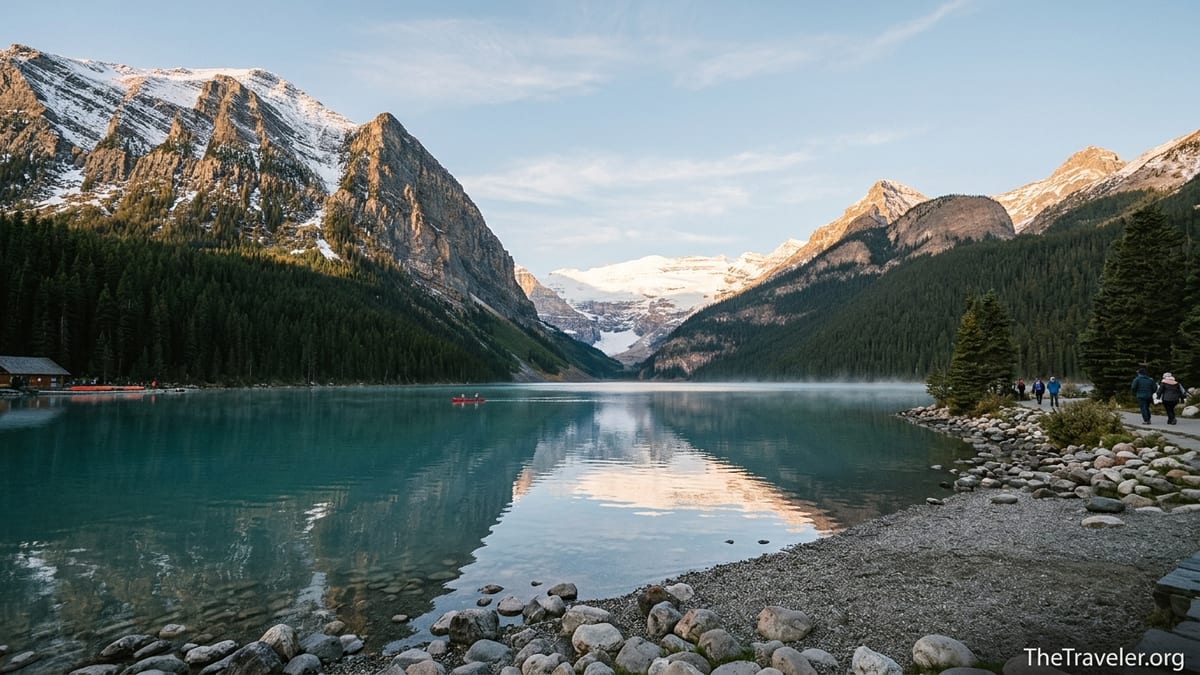
From Simple Railway Chalet to Grand Mountain Resort
The story of Fairmont Chateau Lake Louise begins in the late 19th century, when the Canadian Pacific Railway was driving tracks across Western Canada and needed memorable destinations to entice travelers to ride its trains. In 1890, the company built a modest wooden chalet on the lakeshore, a simple structure meant for day visitors coming up from Banff Springs Hotel. That original cabin had just a handful of rooms and basic services, but the setting was extraordinary enough that guests began to demand a proper hotel.
Over the next decades, the property steadily expanded. A larger wooden wing opened in the early 1900s, followed by the Painter Wing in 1913, which still forms the oldest standing part of the hotel today. After a devastating fire in 1924 destroyed one of the primary wings, the rebuilding that followed reflected more permanent ambitions: a steel-and-concrete Barott Wing, slate roofs, and the grand, castle-like profile many visitors recognize in photographs. By mid-century, the Chateau had evolved from a rustic retreat into a fully fledged mountain resort.
Its railway heritage still shapes the experience in subtle ways. Travelers can trace the original route by taking the train to nearby Lake Louise station and then driving the short distance up to the lake. It is easy to imagine those early guests stepping off a steam locomotive in tweed and long skirts and making the same journey up the forested hill that modern visitors complete in rental SUVs and shuttle buses.
Today, the hotel counts more than 500 guest rooms and suites, with the Mount Temple Wing, opened in the early 2000s, adding modern meeting spaces and additional accommodations. Yet despite all the expansion, the core promise remains the same as in 1890: no matter how polished the interiors become, the real draw is walking out the back door and straight onto one of the most dramatic alpine landscapes in North America.
An Address in the Heart of a UNESCO World Heritage Site
Location is where many luxury properties live or die, and Fairmont Chateau Lake Louise holds one of the strongest addresses on the continent. The hotel sits directly on the eastern shore of Lake Louise, within Banff National Park, a protected area recognized as part of the Canadian Rocky Mountain Parks UNESCO World Heritage Site. That means guests effectively sleep inside a national park, with strict protections on development and a landscape that is guarded against overbuilding.
On a practical level, this translates into experiences that feel both exclusive and surprisingly effortless. In summer, guests can stroll from the lobby to the lakeside promenade in seconds, rent a red canoe from the boathouse, and be paddling beneath glaciers five minutes later. In winter, the frozen lake becomes a massive skating rink maintained by the hotel, with ice castles and gentle floodlighting creating an atmosphere that feels more alpine village than big resort. For many visitors, simply waking up to the sight of alpenglow on the Victoria Glacier from a lake-view room becomes the defining memory of their Canadian Rockies trip.
Being inside a national park also shapes how visitors move. During peak summer months, access roads to Lake Louise often require shuttles or timed parking reservations for day visitors. Guests at the Chateau, however, bypass much of this complexity. They park in the hotel’s underground or valet parking and walk straight onto the lakeshore, a convenience that many travelers consider a key part of the hotel’s value, especially during crowded July and August weekends.
That prized location has also turned the property into a global photographic star. Sunrise photographers line the shore to capture the lake’s signature turquoise color, while wedding parties pose on the terrace with snow-capped peaks in the background. The hotel itself, with its long cream-colored façade and green roofline, has become almost as recognizable as the landscape it occupies, appearing in travel magazines, luxury tour brochures, and social media feeds around the world.
Design, Heritage and the Look of Canadian Grandeur
Part of what makes Chateau Lake Louise iconic is its architecture, which is closely tied to Canada’s historic “railway hotel” tradition. While some sister properties lean heavily into the storybook chateau style, this hotel presents more as a grand, terraced mountain resort, gradually stepped along the lakeshore. Multiple construction phases over 130 years give it a layered look: the older Painter Wing with its more traditional proportions, the interwar Barott Wing, and modern additions that discreetly extend the footprint without overwhelming the historic core.
Inside, the interiors aim for classic alpine luxury rather than cutting-edge design. Public spaces feature high ceilings, tall windows framing the lake, and a palette of warm woods, stone, and neutral fabrics punctuated by deep blues and greens echoing the water outside. Chandeliers in the main lobby and the Mount Temple Ballroom reinforce the sense of old-world grandeur, while guest corridors and rooms feel more contemporary but still grounded in a traditional hotel aesthetic.
Recent renovations have focused on softening and updating guest rooms, adding modern conveniences like larger flat-screen televisions, improved lighting, and refreshed bathrooms, while keeping the traditional moldings and neutral color schemes. Travelers who book Fairmont Gold rooms on the upper floors encounter a “hotel within a hotel” concept, with a dedicated check-in area, lounge, and private breakfast service. These upper levels offer some of the most coveted lake views and oversized windows, which are frequently mentioned by past guests as worth the premium.
The design also consciously showcases the landscape. Many of the restaurants are oriented toward the lake, floor-to-ceiling windows line the ground-floor corridors, and even indoor event spaces try to keep sightlines clear to the mountains. The building is not simply near the view; it has been arranged so that the view feels woven into almost every public experience, from morning coffee in the lobby to late-afternoon cocktails in the Fairview bar and restaurant.
Luxury in the Middle of Wilderness: Rooms, Rates and Realities
One reason the Chateau has become such a benchmark of luxury in the Canadian Rockies is that it delivers full-service resort amenities in a place that still feels remote. Lake Louise village itself is tiny, with just a few lodges, a small shopping plaza, and limited dining. For travelers used to urban luxury, the contrast can be striking: they drive up a narrow mountain road, pass trailheads and dense forest, and then arrive at a property that offers 24-hour front desk service, multiple restaurants, a dedicated concierge team, and a broad range of guided activities.
That level of service in a national park setting comes with prices to match. Room rates vary widely by season, but it is common for standard rooms during peak July or August dates to price in the mid to high hundreds of dollars per night, with lake-view rooms and suites rising substantially higher. In shoulder seasons like late October or early May, travelers can sometimes find more accessible packages, particularly midweek. Many North American visitors use credit card hotel programs or tour operator packages that bundle breakfast, parking, or resort credits to help offset costs.
Those who opt for Fairmont Gold or suite categories are buying more than square footage. They are paying for access to a quieter check-in experience, dedicated concierge support, and daily breakfast and evening canapés in the lounge, which can be valuable in a destination where dining choices in the village are limited and often fully booked. Guests frequently report that waking up, grabbing coffee and eggs in the Gold lounge, and watching the lake from a comfortable armchair becomes a ritual that feels both indulgent and uniquely tied to place.
For some travelers, the luxury is as much about logistics as about thread counts. Parking near Lake Louise often fills early, and day visitors may face shuttles, long walks, or timed-entry systems. Staying at the Chateau means stepping outside into the lakeside scene before the first bus tours arrive, or remaining on the terrace long after most visitors have left for the day. That ability to experience the lake at quiet moments, when the water is glassy and the air still, is part of what has helped the hotel earn its reputation as a splurge that can transform a trip.
Culinary Experiences with a View
Another pillar of the Chateau’s luxury status is its dining program. For a remote mountain resort, the hotel supports a surprising number of outlets: from upscale lakeview dining in Fairview to more casual options like Alpine Social, the all-day Lakeview Lounge, and seasonal outdoor venues like an ice bar in winter. This variety allows guests to stay on property for several days without repeating the same style of meal, a practical advantage in a region where independent restaurants in the village are few and often fully booked during peak season.
At Fairview, the hotel’s flagship restaurant, menus lean into contemporary Canadian cuisine: Alberta beef filets with locally inspired sides, steelhead trout, and vegetarian dishes built around seasonal produce. While prices are firmly in fine-dining territory, diners are paying both for quality ingredients and for the setting. Large windows frame the lake and glacier, and in summer, long evenings mean lingering over dessert while the last light fades off the surrounding peaks.
The Lakeview Lounge serves as the hotel’s social hub. During the day, it is a casual spot for coffee, pastries, and light lunches; in the afternoon, it shifts to cocktails and small plates. In winter, travelers can sit near the fireplace and watch skaters glide across the frozen lake while they warm up with a hot chocolate or local craft beer. In summer, patio seating is at a premium on warm days, with many guests timing their hikes so they can return just in time for a late-afternoon drink outdoors.
Because the hotel draws an international audience, it also pays attention to dietary needs, offering gluten-free and vegetarian options on most menus and accommodating families with children’s selections. Multi-day holiday packages, such as festive-season stays, frequently include prix-fixe dinners, afternoon tea, or special brunches in the main dining spaces. For many guests, celebrating a milestone birthday or anniversary in front of the windows of Fairview, with the faint outline of the glacier behind them, becomes a central reason to choose the Chateau over more casual lodgings in the park.
Wellness, Basin Glacial Waters and the Rise of Mountain Retreat Culture
The Chateau has long advertised itself as a place for fresh air and alpine activity, but in recent years it has leaned more deliberately into wellness. Traditional offerings such as the hotel spa and yoga classes have been complemented by guided wellness retreats, mindfulness weekends, and a growing calendar of events centered on mental and physical restoration in nature. This shift responds to a broader trend: travelers increasingly see luxury not only as indulgence but as the opportunity to reset and recharge.
A flagship element of this evolution is Basin Glacial Waters, the hotel’s new thermal retreat carved into the hillside near the lakeshore. Conceived over nearly two decades and designed by architect Matteo Thun, the facility is built to feel like an extension of the landscape, with terraces, pools, and relaxation spaces that open toward the lake and surrounding peaks. Guests move between warm and cool pools, saunas, and quiet areas, often with direct sightlines to the mountains that drew them to Banff National Park in the first place.
Inside the main hotel, the wellness focus continues. The fitness center offers modern equipment with window views, while the spa provides a menu of treatments that incorporate regional elements and products. Seasonal wellness programs can include sunrise yoga facing the lake, guided forest walks led by interpretive staff, and tailored itineraries that combine spa time with gentle outdoor activities like canoeing or snowshoeing.
This emphasis on wellness helps differentiate Chateau Lake Louise from purely historic or purely adventure-driven properties. It allows the hotel to market itself as a place where guests can ski or hike hard during the day, then return to a space that offers deep relaxation and recovery in the evening. The result is a more holistic version of luxury, one rooted in the natural setting but delivered through modern spa and retreat concepts that keep the hotel aligned with global trends.
Adventure at Your Doorstep: Year-Round Experiences
What truly cements the Chateau’s iconic status is the way it blends luxury with immediate access to outdoor adventure. In winter, the hotel becomes a hub for skiers heading to Lake Louise Ski Resort, located a short drive away and frequently ranked among North America’s top ski areas. Many guests take advantage of complimentary shuttles or short transfers, skiing expansive alpine bowls and tree runs during the day, then returning to a world of fireplaces, cocktails, and lake-view dinners at night.
The lake itself transforms into a winter playground. Hotel staff maintain an open-air skating rink on the ice, often bordered by sculpted snow walls and ice carvings. Families bundle up and skate under the mountains, while others simply walk out onto the lake to take photos or watch the stars. Horse-drawn sleigh rides trace the shoreline, with blankets and hot drinks helping keep out the cold. For many visitors from milder climates, this is their first experience of a truly frozen alpine lake, and it leaves an impression that long outlasts their stay.
Summer shifts the focus to hiking, paddling, and sightseeing. Classic trails such as the Lake Agnes Tea House hike and the Plain of Six Glaciers trail begin within walking distance of the hotel, meaning guests can start early to avoid crowds and return to shower and relax without having to drive anywhere. Canoes line the boathouse dock on calm mornings, and within minutes of pushing off, paddlers find themselves surrounded by silence and towering peaks, with the Chateau shrinking behind them.
Guided Mountain Heritage programs, including interpretive walks and more challenging hikes, help guests understand the natural and cultural history of the region. Professional guides speak about glacier formation, local wildlife, indigenous history in the region, and the role of the railway in shaping tourism in the Rockies. This blend of education and exploration reinforces the sense that a stay at the Chateau is not only about comfort but also about connecting more deeply with one of the world’s great mountain landscapes.
Commitment to Sustainability and Protected Place
Operating a large luxury hotel inside a national park requires balancing comfort with conservation. Over the past two decades, Fairmont Chateau Lake Louise has increasingly highlighted its sustainability efforts as part of its identity. The property participates in industry certification programs and has undertaken initiatives such as reducing water consumption, improving energy efficiency, and enhancing waste management, including expanded recycling and composting.
One practical outcome travelers may notice is how the hotel encourages low-impact activities. Guests receive information about local wildlife, trail etiquette, and the importance of staying on designated paths. Many guided programs emphasize Leave No Trace principles, and staff often remind visitors about food storage and interactions with animals like bears, elk, and smaller species that live around the lake.
The resort also integrates environmental messaging into its culinary and wellness offerings, sourcing regional ingredients where feasible and crafting menus and spa treatments that reference the surrounding landscape. Collaborative programs with conservation organizations and park authorities, along with educational signage around the property, turn the hotel into an informal interpretive center for the lake and its ecosystem.
For many modern travelers, this emphasis on stewardship is part of what defines luxury. Knowing that a high-profile property is investing in water-saving technologies, habitat protection, and environmental education helps reconcile the idea of a large resort operating in a sensitive mountain environment. As other hotels around the world move in the same direction, Chateau Lake Louise’s position within a UNESCO-designated area gives it both an added responsibility and a global platform to demonstrate what sustainable luxury in a national park can look like.
The Takeaway
Fairmont Chateau Lake Louise became an icon of luxury in the Canadian Rockies because it brings together elements that are rarely found in one place: a front-row seat to one of the most photographed lakes on earth, a deep railway and national park heritage, full-service resort amenities in a remote setting, and a modern focus on wellness and sustainability. Guests can step from a chandelier-lit lobby onto a lakeshore trail, trade a day of skiing or hiking for an evening of spa treatments and fine dining, and wake up knowing that the scene outside their window is protected for future generations.
In a region filled with lodges, cabins, and smaller inns, the Chateau stands apart as the destination many travelers build their entire Canadian Rockies itinerary around. For some, a night or two here is a once-in-a-lifetime splurge; for others, it becomes a tradition, a place to return with new generations in tow. In both cases, the hotel’s unique mix of history, scenery, and carefully curated comfort ensures that the words “Lake Louise” evoke not just a lake, but an entire experience of alpine luxury that has earned its place in travel imagination worldwide.
FAQ
Q1. Where exactly is Fairmont Chateau Lake Louise located?
The hotel sits on the eastern shore of Lake Louise within Banff National Park in Alberta, about a two-hour drive from Calgary International Airport.
Q2. Is it worth paying extra for a lake-view room?
Many guests feel the premium is justified, especially for first-time visitors, because sunrise and sunset views of the lake and glacier are often the highlight of their stay.
Q3. When is the best time of year to visit for scenery?
June to September offers the classic turquoise lake and open hiking trails, while December to March delivers a true winter wonderland with skating, snowshoeing, and skiing.
Q4. How far is the hotel from Lake Louise Ski Resort?
The ski area is roughly a 10 to 15 minute drive from the hotel, and many packages or seasonal services include shuttles between the resort and the slopes.
Q5. Do I need a car if I am staying at the Chateau?
A car offers flexibility for exploring Banff and nearby attractions, but some guests arrive via tour or shuttle and spend most of their time walking, skiing, or joining guided excursions from the hotel.
Q6. Are there dining options for guests with dietary restrictions?
Yes. The main restaurants typically offer vegetarian, vegan, and gluten-free options, and the hotel can often accommodate specific dietary needs with advance notice.
Q7. How many nights should I plan to stay?
Two to three nights is a common stay, allowing at least one full day on the lake or trails and another day for activities like the spa, skiing, or scenic drives.
Q8. Is the hotel suitable for families with children?
Yes. Families appreciate interconnecting rooms, kid-friendly menu items, and activities such as skating, canoeing, easy walks, and seasonal holiday programs.
Q9. How does staying at the Chateau compare to staying in Banff town?
Banff offers more shops and restaurants, while the Chateau provides unmatched access to Lake Louise itself and a quieter, more immersive mountain setting.
Q10. Do I still need a Parks Canada pass if I stay at the hotel?
Yes. All visitors staying or driving within Banff National Park must hold a valid Parks Canada pass, which can be purchased online or at park entry gates.