


Few hotel names trigger wanderlust quite like Fairmont Chateau Lake Louise. Photos of its castle-like facade on the turquoise lake, hemmed in by glaciers and peaks, circulate endlessly on social media. But once you start pricing dates and see nightly rates that can climb well above 1,000 Canadian dollars in peak season, a hard question follows: is staying here genuinely worth the money, or is it just an expensive box to tick on a bucket list?
Get the latest updates straight to your inbox!
What You Are Really Paying For
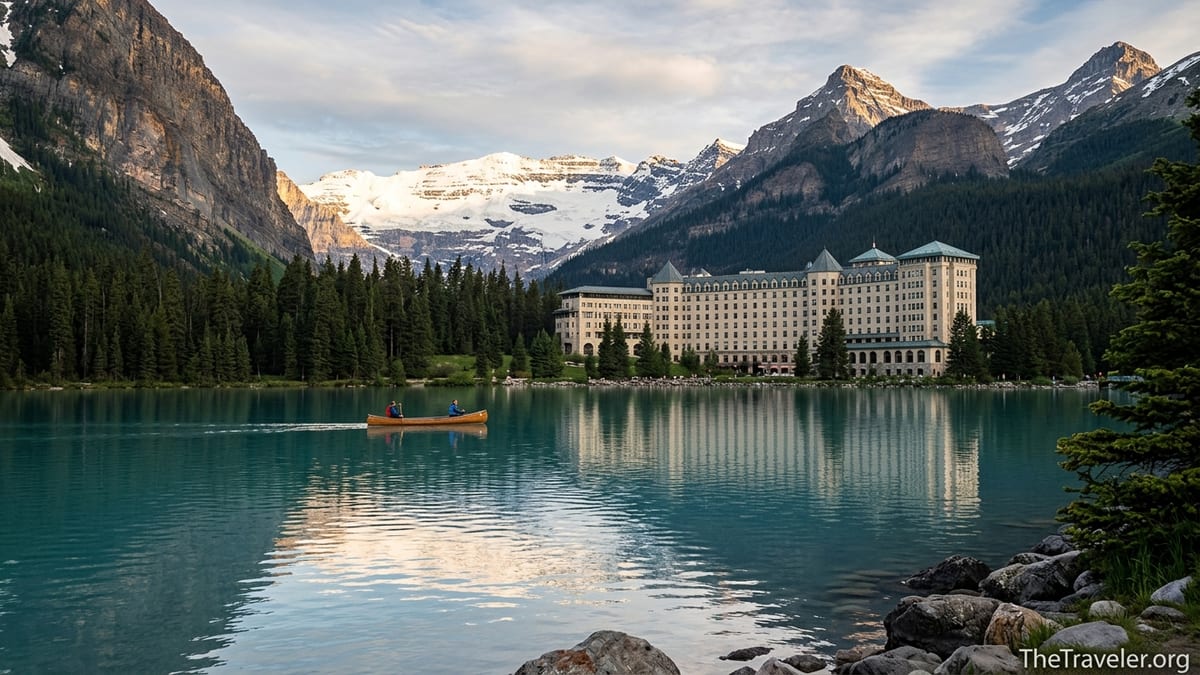
The single biggest thing you pay for at Fairmont Chateau Lake Louise is not a marble bathroom or a butler. It is geography. The hotel sits directly on the eastern shore of Lake Louise inside Banff National Park, a UNESCO World Heritage site, with its windows framing one of the most photographed alpine scenes on the planet. On summer mornings, guests can walk out the lobby doors and be on the lakeshore trail in under a minute while day-trippers are still queuing for Parks Canada shuttles from distant parking lots.
That location comes at a premium. Standard rooms without a lake view commonly price in the 600 to 900 Canadian dollar range per night in popular summer and fall dates, while true lakeview rooms often run several hundred dollars more on the same night and can nudge or exceed 1,200 Canadian dollars when demand spikes. Guests regularly describe the site as “expensive but worth every penny” for the setting, while others note that if you remove the view, the physical room feels more like an upscale chain than an ultra-luxury palace.
Beyond the address, the rate also buys the ability to experience Lake Louise in its quietest moments. Staying on-site means you can be on the shoreline at sunrise, when the water is often glassy and the tour buses have not yet arrived, or walk outside at 10 p.m. in winter to watch stars over the frozen lake and ice castle. For some travelers, those uncrowded hours are precisely what justifies the cost.
Rooms, Views and the “Lakeview Premium”
Rooms at Fairmont Chateau Lake Louise are comfortable but not overly flashy. Recent refurbishments have introduced lighter, contemporary decor and modern amenities, but many travelers familiar with other global luxury brands find the interiors tasteful rather than jaw-dropping. Entry-level Fairmont rooms typically look out toward the parking area or surrounding forested slopes. These can be the better value if you plan to be outdoors all day and only need a comfortable base.
The real debate centers on whether to pay for a lakeview category. Lakeview rooms and suites face directly across the turquoise water to Victoria Glacier, turning your window into a live landscape painting. Travelers who have paid for the upgrade often say waking up, pulling back the curtains and seeing sunrise on the peaks was the trip’s defining moment. Others argue that because you can enjoy that same view from the lakeshore walkway, the lobby picture windows and the cafes, the premium is hard to justify on a tight budget.
At the top end, Fairmont Gold floors and suites add another layer of cost and perks. Gold guests get a dedicated check-in area, a private lounge with breakfast and evening canapés included, and some of the best vantage points in the building. For couples planning a once-in-a-decade celebration who will actually use the lounge for meals and downtime, the extra spend can replace restaurant breakfasts and some dinners, partially offsetting the higher room rate.
What You Will Spend On Top of the Room Rate
Room rates are only part of the bill at Chateau Lake Louise. On-site self-parking currently carries a nightly fee, and valet costs more again, which can surprise road-trippers who are used to free hotel lots elsewhere in the Rockies. Guests also pay a daily resort-style fee folded into the room rate structure that supports the extensive activities program and facility upkeep in a high-altitude, protected environment.
Food and drink at the resort are almost universally described as good to very good, but costly. A casual dinner for two at one of the hotel’s restaurants, such as Alpine Social, can easily approach or exceed 150 Canadian dollars with drinks. Afternoon tea in the lake-facing lounge, a signature experience with tiered trays and that iconic view, is priced at a level many visitors call a “special-occasion splurge.” A hotel breakfast buffet for two can cost what some nearby village properties charge for a full night’s stay in shoulder season.
Activities add another layer. In summer, canoe rentals operated from the hotel’s boathouse are significantly more expensive than paddling on many comparable lakes in Western Canada. A one-hour rental for two or three people routinely runs into the low hundreds of Canadian dollars. In winter, horse-drawn sleigh rides along the lakeshore, guided snowshoe walks and access to the hotel’s new Basin Glacial Waters thermal spa all carry additional fees. It is entirely possible for a couple to spend several hundred dollars in a day on meals and experiences without leaving the property.
Signature Experiences You Cannot Easily Replicate Elsewhere
For travelers willing to embrace the resort setting, there are a number of experiences at Fairmont Chateau Lake Louise that are genuinely difficult to replicate without staying overnight. One example is the Sunrise Canoe Experience, which is offered exclusively to registered guests and lets a small group paddle out onto the lake in the quiet early morning, often before day visitors even reach the shoreline. That calm, with mountains mirrored on the still water, is markedly different from the midday crowds.
The hotel also curates a busy schedule of guided hikes, wellness classes, and seasonal programming led by in-house experts. In autumn, that might mean interpretive walks through larch forests as they turn gold; in winter, it could be avalanche-awareness outings or beginner-friendly snowshoe loops. While independent hikers can tackle the same trails, having a guide, clear meeting point inside the hotel, and easy return to a hot drink by the lobby fireplace can make the outdoors feel more accessible, especially for less experienced visitors.
Another unique draw is the Basin Glacial Waters spa complex, carved into the slope below the hotel. The design centers on thermal pools and relaxation zones that open toward Lake Louise and its surrounding peaks, blending spa culture with the landscapes outside. Access is priced as a separate half-day or full-day experience, but guests can combine a morning in the pools with an afternoon ski at Lake Louise Ski Resort or a lakeshore walk without ever needing to move their car.
How It Compares to Staying in Banff, Canmore or the Village
When travelers question whether the Chateau is worth the price, they are often comparing it with more moderately priced hotels in Banff, Canmore or the small Lake Louise village area. Properties in Banff town such as Moose Hotel and Suites or mid-range chains in Canmore can cost a fraction of peak Chateau rates, especially outside major holidays, while still providing comfortable rooms, restaurants within walking distance and lively streetscapes.
The trade-off is location relative to the lake. From Banff, reaching Lake Louise by car or shuttle takes around 45 minutes in light traffic each way, more during busy summer weekends or snowy conditions. Day visitors typically arrive mid-morning and leave by late afternoon when parking lots fill and shuttle schedules dictate. That means they rarely see the lake at dawn or under a late-evening alpenglow sky. For some, accepting that trade and using Banff as a base for day trips makes budgetary sense and still delivers a rich Rockies experience.
Closer to the lake, a handful of simpler lodgings in Lake Louise village offer lower rates and a quieter atmosphere, but they still require a short drive or shuttle ride to the water. Dining choices in the village are limited compared to Banff, so many guests there end up driving or taking transit elsewhere for variety. By contrast, the Chateau clusters multiple restaurants, bars and a deli under one roof, at the expense of higher menu prices and a more insulated, resort-focused feel.
Who Is Likely to Feel It Was Worth Every Dollar
Travelers celebrating a special milestone often report that the stay felt entirely worth the splurge. Honeymooners, couples marking a major anniversary, or families gathering for a once-in-a-generation reunion tend to value the convenience of having scenery, dining, and activities all in one dramatic setting. For them, paying more to wake up directly on the lakeshore and not worry about daily driving and parking logistics feels like money well spent.
Serious photographers and sunrise or sunset chasers also gain particular value from being on-site. When you can simply step outside your room at dawn with your camera instead of catching a pre-dawn shuttle from Banff, the likelihood of capturing the soft, pastel light on Victoria Glacier increases. Winter visitors who plan to skate frequently on the maintained lake rink, explore the hotel’s elaborate ice sculptures, or slip repeatedly between the cold outdoors and the spa or fireplaces get extra use from the property’s facilities.
Finally, travelers who view the Chateau itself as a destination will likely appreciate the cost more. If your ideal holiday is lingering over a multi-course dinner with lake views, spending an afternoon in the spa, then listening to live music in the lounge rather than packing in multiple day trips around the park, the resort’s self-contained nature plays to your preferences and justifies a higher nightly rate.
Who May Leave Feeling It Was Overpriced
On the other hand, budget-conscious travelers who mainly want a clean room between long days of hiking or skiing often conclude that the Chateau’s price does not match the value they personally receive. If you plan to be away from the hotel from early morning until dark, rarely dine in the restaurants, and simply need comfortable beds and hot showers, a mid-range hotel in Banff or Canmore can meet those needs for far less. The additional money saved can then be redirected into guided excursions, rental cars, or an extra day or two in the region.
Travelers who place a high priority on urban-style vibrancy may also find the property lacking. While the Chateau offers multiple bars and live music in the evenings, it is still an isolated alpine resort. Once night falls, there are no pedestrian streets of shops and restaurants to explore outside, and reaching other venues requires a drive or shuttle ride. Those who imagined a lively ski-town feel may be disappointed by the relative quiet after dark.
Finally, guests who expect super-luxury hardware in line with some of the world’s most exclusive resorts can be underwhelmed by some of the physical details. Reviews sometimes mention that certain rooms feel smaller than expected, hallway carpets show wear, or service does not always match the price tag during peak rush periods. For travelers who equate high nightly rates with meticulous, boutique-level attention at every turn, the combination of big-resort scale and eye-watering prices can feel out of balance.
Strategies to Get More Value From a Stay
If you are leaning toward staying at Fairmont Chateau Lake Louise but hesitating at the numbers, there are practical ways to boost the value you receive. One common strategy is to book just one or two nights at the Chateau for the “on the lake” experience, then spend the rest of the trip at a more affordable property in Banff or Canmore. That way, you still enjoy a sunrise from your room and the resort ambiance without carrying the highest nightly rate across the entire vacation.
Travelers with flexible dates can look for shoulder-season windows such as early June before school holidays, late September after the height of the larch season, or midweek stays during non-festive winter weeks. During these periods, base rates often soften compared to peak summer weekends or Christmas and New Year dates. Residents of nearby provinces occasionally benefit from regional discounts that reduce nightly costs for Albertans, British Columbians and Saskatchewan residents.
Another way to stretch value is to be selective about paid add-ons. For instance, you might choose one signature splurge, such as afternoon tea or a single sunrise canoe outing, and keep other meals casual at the hotel’s deli or lobby lounge. Bringing refillable water bottles, simple snacks and a thermos for hot drinks can reduce incidental spending, while still allowing you to say yes to the experiences that really matter to you.
The Takeaway
Whether Fairmont Chateau Lake Louise is worth its often hefty price tag is less about the hotel in the abstract and more about how you like to travel. If your dream is to linger over coffee while watching mist drift off the lake at dawn, to skate or paddle steps from your room, and to retreat to a grand, historic property rather than drive away at the end of the day, the premium can feel justified, especially for a milestone trip.
If, however, you see accommodation primarily as a place to sleep between adventures, are willing to trade doorstep access for driving time, or prefer a livelier town atmosphere with more dining choices at a lower cost, you may find better personal value in Banff, Canmore or Lake Louise village. In that case, visiting the Chateau for an afternoon tea, a drink with a view, or a walk along the lakeshore can still provide a taste of the iconic setting without absorbing the full expense of an overnight stay.
In the end, the Chateau is both a splurge and, for the right traveler, worth the price. The key is to be clear-eyed about what you are buying: not just a bed in a room, but privileged time in one of the Rockies’ most extraordinary locations. If that specific combination of scenery, convenience and atmosphere aligns with your priorities, the memories may outlast the sting of the bill.
FAQ
Q1. How much does it typically cost to stay at Fairmont Chateau Lake Louise?
The cost varies widely by season and room type, but many dates see standard rooms in the mid-hundreds of Canadian dollars and lakeview rooms significantly higher during peak periods.
Q2. Is it really necessary to pay extra for a lakeview room?
It depends on your priorities. The lakeview premium buys a spectacular in-room panorama, but you can still enjoy the same scenery from public areas and the lakeshore without the upgrade.
Q3. Are there more affordable alternatives nearby?
Yes. Hotels and lodges in Banff, Canmore and Lake Louise village usually cost less than the Chateau, though you trade direct lakeshore access for extra driving or shuttle time.
Q4. Do I have to stay at the hotel to enjoy the lake and the views?
No. Day visitors can access the lakeshore, hiking trails and public viewpoints, but they will rely on parking availability or shuttles and miss the quieter early-morning and late-evening hours on the water.
Q5. What extra costs should I budget for beyond the room rate?
Expect to pay for parking, meals, drinks, spa access, activities like canoe rentals or sleigh rides, and any guided excursions you choose to book through the hotel.
Q6. Is the food at the Chateau worth the prices?
Most guests find the food to be good quality with beautiful settings, but many also describe it as expensive, so it is best approached as a resort-priced dining experience.
Q7. Is one night at Fairmont Chateau Lake Louise enough?
For many travelers, one or two nights provide ample time to enjoy sunrise or sunset at the lake, explore nearby trails and experience the hotel’s atmosphere without overwhelming the trip budget.
Q8. How far is the hotel from Banff town if I stay elsewhere?
By car, the drive from Banff town to Lake Louise typically takes around 45 minutes in good conditions, longer during peak traffic or winter weather.
Q9. Is the hotel family-friendly or better for couples?
The Chateau caters to both, with family-sized rooms, seasonal kids’ activities and plenty of outdoor adventures, as well as romantic dining rooms, spa experiences and quiet corners for couples.
Q10. When is the best time of year to stay for value?
Shoulder seasons such as early June, parts of fall and some midweek winter dates often offer better value than peak summer holidays or festive periods, while still showcasing the lake and mountains.