


Wales is one of the most rewarding parts of the United Kingdom for a first-time visitor: compact enough to cross in a few hours, yet dense with castles, mountains, coastline and culture. Three national parks, hundreds of miles of shore, and a living Celtic language give it a distinct identity from England and Scotland. For international travelers planning a 5 to 14 day trip, the challenge is less whether to go and more how to narrow down the choices.
Get the latest updates straight to your inbox!
What Makes Wales Different
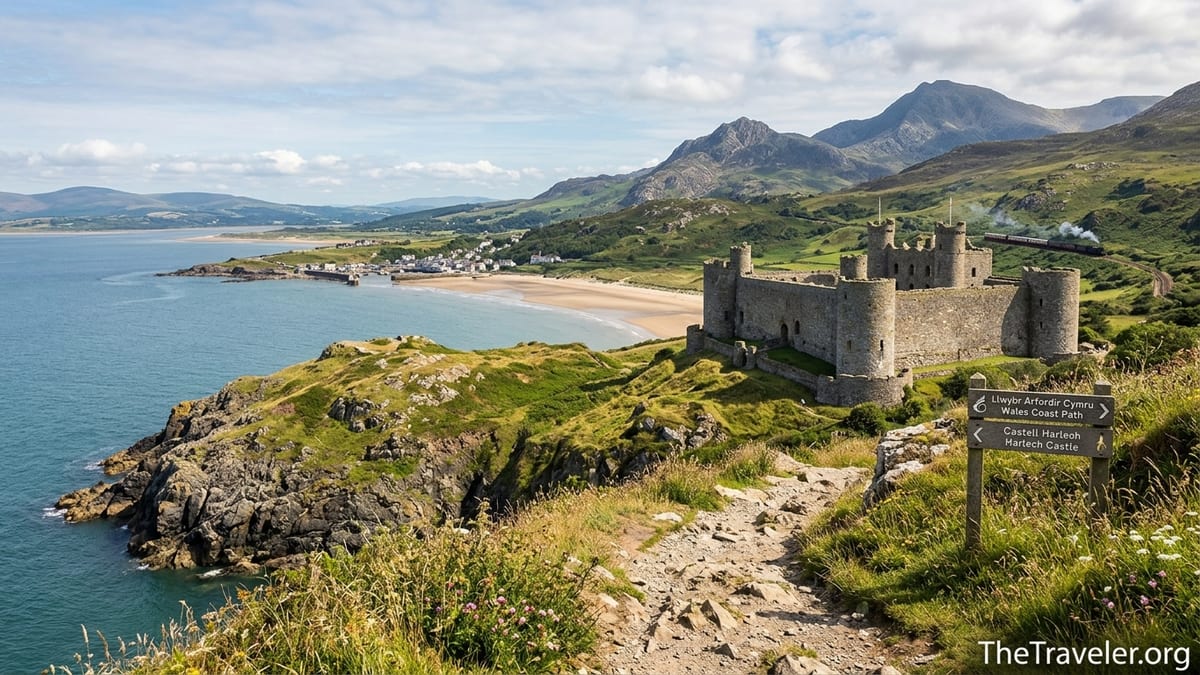
Compared with much of the UK, Wales feels strikingly concentrated. Within a country about the size of the US state of New Jersey, you can hike high peaks, ride heritage railways, explore medieval castles and relax on sandy beaches, often in the same week. Eryri National Park in the north, Bannau Brycheiniog in the south and the Pembrokeshire Coast in the west provide three contrasting protected landscapes, each with well-established walking routes and visitor infrastructure.
Wales is one of Europe’s most castle-rich countries, with famous strongholds such as Conwy, Caernarfon and Harlech in the north, and Caerphilly and Cardiff Castle in the south. Many date from the thirteenth and fourteenth centuries and together form a UNESCO-recognised defensive ring in North Wales. This concentration of historic fortifications, combined with intact town walls and compact historic centres, makes the country especially appealing to history lovers.
The coastline is another defining feature. The Wales Coast Path, which runs close to the shore around almost the entire country, links fishing villages, resort towns and sweeping bays. Sections around the Gower Peninsula, Pembrokeshire and the Llŷn Peninsula are particularly popular with first-time visitors, offering a mix of clifftop walks, surfing beaches and quieter coves still used by local communities.
Finally, Wales is a bilingual nation, with Welsh and English both widely used. Road signs, place names and public announcements often appear in both languages, and you will see and hear Welsh in everyday life, particularly in parts of North and West Wales. Experiencing this living culture, from community choirs and local festivals to rugby matches and pub sessions, is a major part of what makes a trip here feel different from a visit elsewhere in Britain.
The Main Regions First-Time Visitors Focus On
Official tourism bodies commonly present Wales in four broad visitor regions: North Wales, Mid Wales, West Wales (often referred to as Pembrokeshire and the wider southwest), and South Wales. Each has its own character and a set of destinations that tend to appear repeatedly in guidebooks and itineraries for first-time visitors.
North Wales centres on Eryri National Park and the castles and coastal resorts around Conwy Bay. Typical bases include Llandudno and Conwy, which combine seaside promenades with easy access to Conwy Castle, Bodnant Garden and the heritage railways and hiking trails of Eryri. Across the Menai Strait, the island of Anglesey offers quieter villages, beaches and prehistoric sites while still being reachable by road and rail.
West Wales is anchored by Pembrokeshire Coast National Park, known for colourful harbour towns such as Tenby and the tiny cathedral city of St Davids, as well as dramatic sea cliffs and sandy bays. Nearby, Carmarthenshire and Swansea Bay, including the Gower Peninsula, broaden this region into a wider coastal arc of beaches and estuaries. Visitors often combine one or two bases here with walking sections of the coast path or trying activities such as coasteering or sea kayaking.
Mid Wales is less visited and feels more remote, with the Cambrian Mountains, reservoirs, market towns and quieter stretches of the Ceredigion coast. Towns such as Aberystwyth and Aberaeron on the shore, and inland hubs such as Rhayader or Llanidloes, suit travelers seeking slower-paced stays, scenic drives and wildlife rather than big-ticket attractions. South Wales, by contrast, is more urban, built around Cardiff and Swansea, the industrial heritage of the Valleys, and the hills and waterfalls that roll towards Bannau Brycheiniog National Park.
Who Wales Suits and How Long to Stay
Wales is particularly well suited to hikers and outdoor enthusiasts who want varied landscapes without extremely long distances. In a one-week trip, you could feasibly spend several days walking in Eryri or Bannau Brycheiniog, then move to the coast for cliff-top paths or beach days. Waymarked trails, national park visitor centres and a growing network of outdoor operators make it accessible to relatively new walkers as well as experienced hikers.
Road-trippers and photographers will appreciate the density of scenic routes: the coastal roads of the Llŷn Peninsula and Pembrokeshire, the passes through Eryri, and the quieter mountain lanes of Mid Wales. Families are drawn by accessible castles, beaches, narrow-gauge steam railways and activity centres, with many attractions designed to appeal to children as well as adults.
For a first visit, many international travellers opt for about 5 to 7 days if combining Wales with London or another part of the UK, or 10 to 14 days if focusing primarily on Wales. Shorter trips are best kept to one or two bases, for example Cardiff and Bannau Brycheiniog, or Llandudno and Eryri. Longer itineraries can comfortably link three or four regions, such as a loop taking in Cardiff, Pembrokeshire, Mid Wales and North Wales.
Wales also suits history enthusiasts and culture seekers. Castle touring, industrial heritage sites, literary festivals and contemporary arts venues, particularly in Cardiff and Swansea, can easily fill a week even without extensive hiking. Rugby fans often time visits for international matches or regional games, when cities take on a particularly lively atmosphere.
North Wales: Mountains, Castles and Coastal Resorts
North Wales is the most obvious choice for a first-time visitor who wants iconic Welsh scenery. Eryri National Park offers rugged peaks, glacial valleys and lakes, with routes ranging from strenuous mountain ascents to gentler low-level circuits. Heritage railways, such as those running from Porthmadog deeper into the mountains, provide a scenic way to experience the landscape without hiking every day.
Along the coast, Llandudno and Conwy make excellent bases. Llandudno is a Victorian seaside town with a promenade, pier and easy access to cable car and tram rides up the Great Orme headland. Conwy, a short distance away, is dominated by its thirteenth-century castle and near-complete town walls, both managed with visitor facilities that make them straightforward to explore in a half day.
Anglesey, reachable by road and rail bridges, adds quieter beaches, coastal paths and prehistoric sites to a North Wales itinerary. Many visitors split a week between a town such as Conwy or Llandudno and a more rural base in or near Eryri, allowing for day trips to castles, railways and hiking areas without excessive driving.
Public transport is relatively good along the North Wales coast, with mainline rail services linking towns such as Holyhead, Bangor, Llandudno Junction and Conwy to Chester and onward to larger English cities. However, reaching individual valleys and trailheads in Eryri is easier with a car, as bus services can be limited or seasonal. For a car-free trip, basing in a coastal town and using organised excursions or selected bus routes works best.
West Wales and Pembrokeshire: Coastal Wales at Its Classic Best
West Wales is where many visitors fall in love with Welsh coastline. Pembrokeshire Coast National Park combines colourful harbour towns like Tenby with long beaches and rugged headlands. Sections of the coast path between popular access points can be walked in half or full days, often with seasonal local bus services allowing linear walks without returning on the same route.
The small city of St Davids, often described as the smallest city in Britain, makes a strong base for coastal walking and boat trips to nearby islands known for sea birds and marine life. Elsewhere, resort towns such as Saundersfoot or towns like Fishguard and Newport (Pembrokeshire) provide quieter alternatives. Inland, the countryside of Carmarthenshire offers castles, gardens and river valleys that contrast with the coast.
Further east, Swansea Bay and the Gower Peninsula provide another cluster of beaches and cliffs within reach of a city. Gower was the first area in Britain to be designated an Area of Outstanding Natural Beauty, and its bays appeal both to surfers and to families seeking broad sandy beaches backed by dunes or cliffs. Swansea itself, with its museums, galleries and waterfront, can work as an urban base for day trips onto the peninsula.
Public transport access to West Wales is reasonable to key hubs: mainline trains serve Swansea and Carmarthen, and there are rail links to some Pembrokeshire towns, with buses filling in the gaps. For a flexible coastal itinerary that strings together several beaches and remote coves, though, hiring a car is highly advantageous, especially outside peak summer when seasonal bus frequencies drop.
Mid Wales and the Ceredigion Coast: Rural Heartlands
Mid Wales has a very different feel, with upland landscapes, dams and reservoirs, small market towns and less development. The Cambrian Mountains offer empty-feeling moorland, forest and river valleys that appeal to those who prefer solitude and scenic drives to crowded summits. Dark skies in many areas also make this region attractive to stargazers.
On the coast, Aberystwyth is the main hub, combining a university town atmosphere with a promenade, cliff railway and access to sections of the Ceredigion Coast Path. Smaller settlements such as Aberaeron and New Quay offer a gentler pace, with harbours, pastel townhouses and opportunities for boat trips in season to look for dolphins and other wildlife.
Rail access in Mid Wales is more limited than along the north and south coasts, with a handful of main routes and many areas served only by infrequent buses. This is one region where having a car most obviously transforms what you can realistically see in a short visit, allowing access to scenic minor roads, remote viewpoints and trailheads that would be challenging to reach by public transport.
Because Mid Wales sees fewer visitors than the coasts and major national parks, it can also be a good choice for travellers who prefer to avoid crowds, particularly in the main summer school holiday period. Accommodation and attractions may be more dispersed, so planning ahead is important, especially if you are travelling outside peak months when opening hours can be shorter.
South Wales: Cardiff, Valleys and Bannau Brycheiniog
South Wales is the easiest part of the country to reach from London and many English cities, and it offers a compact mix of culture, history and accessible outdoor scenery. Cardiff, the capital, combines a revived waterfront at Cardiff Bay with a lively city centre built around Cardiff Castle, Victorian and Edwardian arcades and major sporting venues. Museums, galleries and performance spaces give enough to fill several days even without day trips.
North of the city, the former coal mining valleys have heritage railways, museums and walking routes across former industrial hillsides. They can be visited on day trips using the suburban rail network and buses, or as part of a wider driving tour. Swansea, further west along the coast, is another urban stop with good rail connections and ferry and coach links to other parts of Wales.
Bannau Brycheiniog National Park, traditionally known in English as the Brecon Beacons, lies within reach of South Wales cities and is a classic choice for first-time hikers. The central Beacons offer rounded peaks, waterfalls and upland plateaus, while the park’s fringes include market towns such as Brecon, Abergavenny and Crickhowell. Many visitors treat this area as a long-weekend add-on to a Cardiff city break, combining two to four days of walking and sightseeing.
South Wales benefits from strong public transport along the main east–west corridor. Electrified rail services link Cardiff and Swansea with London and other parts of England, and the Valleys have dense commuter rail coverage. Reaching trailheads and smaller settlements in Bannau Brycheiniog still usually requires a car or organised excursions, but for a city-focused short break in Cardiff or Swansea you can rely entirely on trains, buses and walking.
Getting To and Around Wales
Most international visitors to Wales arrive by air into major UK or Irish airports, then continue by rail, coach or a short onward flight. As of late 2026, there are no widely advertised non-stop flights from North America to Wales that operate year-round. Routes and carriers change frequently, and there have been periodic limited transatlantic services, so writers should check current airline schedules at the time of publication and clearly state the month and year of verification.
The most common patterns are to fly into London airports, Manchester, Birmingham or Irish gateways such as Dublin, then travel by train or coach into Wales. High-frequency trains link London with Cardiff and Swansea, with typical journey times measured in a few hours rather than a full day, while other lines connect northern England with the North Wales coast. Ferries run from Ireland to Welsh ports, often linking conveniently to rail or bus connections inland.
Within Wales, the rail network is focused on coastal and border corridors, with main lines running across the North Wales coast and along the south from the Severn Tunnel through Cardiff and on to Swansea and West Wales. Branch lines reach inland towns and some coastal settlements, but there is no single north–south spine entirely within Wales. Buses and long-distance coach routes fill in many gaps, especially along key tourist corridors and to national park gateways.
Whether you need a car depends heavily on your itinerary. For a Cardiff city break, or a stay in a well-connected coastal town such as Llandudno, Conwy or Swansea, public transport plus walking and taxis is usually sufficient. If you plan to spend significant time in the national parks, on rural stretches of the coast, or in Mid Wales, renting a car substantially increases your flexibility, particularly outside the summer peak when bus frequencies can drop. Always factor in that driving is on the left, and that some rural roads are narrow and winding.
Best Time to Visit Wales
Wales is a year-round destination, but the experience changes markedly by season. Summer, from roughly late June through August, brings the warmest temperatures and the longest daylight, making it prime time for hiking, beaches and festivals. It is also the busiest and most expensive period, especially in national park villages and popular coastal towns. Accommodation in these hotspots can book out well in advance, particularly during UK school holidays.
Spring and autumn are often ideal for walking and scenic touring. In roughly April, May, September and early October, you tend to find quieter trails, more availability in small inns and guesthouses, and landscapes that feel especially fresh or colourful. Weather can be variable at any time of year, and conditions in the hills change quickly, so up-to-date forecasts are essential. Writers should verify any climate averages or rainfall patterns they cite against current data from a reputable UK meteorological source and clearly date the information.
Winter brings shorter days and a higher chance of storms, particularly along the coast, but it can be an atmospheric time to visit cities such as Cardiff and Swansea, where cultural attractions, restaurants and bars are in full swing. Rural areas and some seaside towns may feel very quiet, with a number of attractions operating reduced hours or closing altogether, but accommodation prices are often lower, and you can experience the coastline and hills in a wilder mood.
For a first-time visitor, a shoulder-season trip often strikes the best balance between decent chances of good weather, manageable prices and less crowded trails and beaches. If you are tied to specific dates, particularly in high summer, booking accommodation and any key activities well ahead becomes especially important.
Entry, Practicalities and Typical Trip Budgets
Wales is part of the United Kingdom, and the same border and immigration rules apply as in England and Scotland. Travelers need a valid passport to enter the UK, and depending on nationality and the purpose and length of stay, may also require a visa or a form of electronic travel authorisation. Entry rules, permitted lengths of stay and documentary requirements change from time to time, so writers must check the latest official UK government guidance close to publication and explicitly state the month and year to which their information applies.
For most visitors, on-the-ground costs in Wales are generally lower than in central London, particularly for accommodation and dining. However, popular national park villages and coastal resorts can still be expensive in peak season, especially for last-minute bookings. Mid Wales and some inland areas of West Wales often offer better value, with smaller guesthouses, farm stays and self-catering cottages providing comparatively affordable bases.
When discussing typical budgets, it is important to give only indicative bands, as prices vary with season, exchange rates and demand. Writers should research a small, up-to-date table of sample costs from reliable sources, for example: a representative nightly range for a midrange hotel or well-rated bed-and-breakfast in Cardiff and in one rural area; a typical price range for a pub main course and drink; a ballpark daily rate for standard car hire; and a sample adult admission for a major castle. Any such figures should be clearly labelled as approximate, vary by location and season, and be dated to the month and year of research.
Many paid attractions in Wales, such as castles and heritage railways, offer family tickets, concessions for children or seniors, and advance-booking discounts. National museums in Cardiff and some other cities do not charge general admission, which helps balance costs if you are combining paid historic sites with city sightseeing. Rural travel can increase your daily spend if you rely on taxis due to limited public transport, another reason to weigh up the value of car rental for your particular itinerary.
Example Itinerary Structures for a First Trip
For travelers with around 5 to 7 days, a practical first itinerary is to focus on South Wales or North Wales rather than trying to cross the whole country. One classic option is a 3 to 4 night stay in Cardiff, including a castle-focused day and a museum or sport-focused day, followed by 2 to 3 nights near Bannau Brycheiniog. This allows time for one or two full days of walking in the national park, plus short stops in market towns on the way.
Another popular one-week structure is to base entirely in North Wales. You might spend several nights in Llandudno or Conwy for castles, coastal walks and heritage railways, then add a couple of nights in or close to Eryri National Park for more intensive hiking. With careful planning, this can be done car-free, using trains and buses to reach coastal towns, then local services or organised excursions into the mountains.
If you have 10 to 14 days, consider a loop that includes at least one coastal region and one inland or mountain region. For example, you could start in Cardiff, travel west to Pembrokeshire for beaches and coastal paths, then head into Mid Wales for a few quieter days among the Cambrian Mountains and Ceredigion coast, before finishing in North Wales for castles and Eryri. This kind of route works best with a rental car, which lets you connect smaller towns and scenic byways without backtracking.
In planning any of these itineraries, be realistic about travel times between bases, and keep the number of hotel changes manageable. Many visitors find that two or three main bases over a week, or three to four over two weeks, offer the right balance between variety and not feeling perpetually in transit. With that structure in mind, you can then adjust which regions to prioritise based on whether your emphasis is hiking, coastal scenery, castles and history, or city culture and sport.
Bringing Your Wales Trip Together
Planning a first visit to Wales is ultimately about matching regions and bases to your interests and appetite for movement. If your priority is culture, food and sport with a taste of nearby hills, a shorter trip focused on Cardiff and Bannau Brycheiniog or Swansea and the Gower Peninsula may be ideal. If you dream of mountains and castles, North Wales with Eryri, Conwy and Anglesey should rise to the top of your list. For quieter landscapes and a slower rhythm, Mid Wales and the Ceredigion coast are particularly rewarding.
Deciding whether to rent a car hinges on how rural your plans are. A city break or a single coastal base can be enjoyable without driving, relying on trains, buses and walking, especially in summer when services are fuller. If you want to string together national parks, small coastal villages and upland areas, especially in shoulder or low season, a car will significantly expand your options and reduce time spent managing complex bus connections.
Finally, think in terms of broad structures rather than detailed, hour-by-hour schedules. Two or three bases over a week, or three or four over two weeks, allow you to get to know each area while still sampling the diversity that makes Wales special. With its compact size, deep history and rich landscapes, Wales rewards both spontaneous detours and careful planning, and it is easy to see why so many first-time visitors end up planning a return.